Imagine that in 2026, 18% of your boutique hotel's room revenue in Antalya goes straight to OTA commissions. Between post-pandemic recovery and rising operational costs, this rate directly undermines your profitability. For independent hoteliers, high commissions and the manual management burden caused by constant staff turnover are among the biggest obstacles to sustainable growth. But this doesn't have to be your fate. A modern channel manager is far more than just a connectivity tool; it allows you to reshape your distribution strategy, significantly cut commission expenses, and boost your net RevPAR by increasing operational efficiency. This article will explain step by step how to use your channel manager as a strategic weapon and maximize your hotel's profitability through data-driven decisions.
What You Will Learn
- Why a Channel Manager Is a Necessity Right Now
- Increase Profit with a Strategic Channel Mix
- Maximize Revenue with Dynamic Pricing and Rate Parity
- Reduce Hidden Costs Through Operational Efficiency and Guest Satisfaction
- Develop Data-Driven Distribution Strategies with PMS Integration
- Frequently Asked Questions
Why a Channel Manager Is a Necessity Right Now
Distribution Pressures of 2026 and the Hoteliers' Dilemma
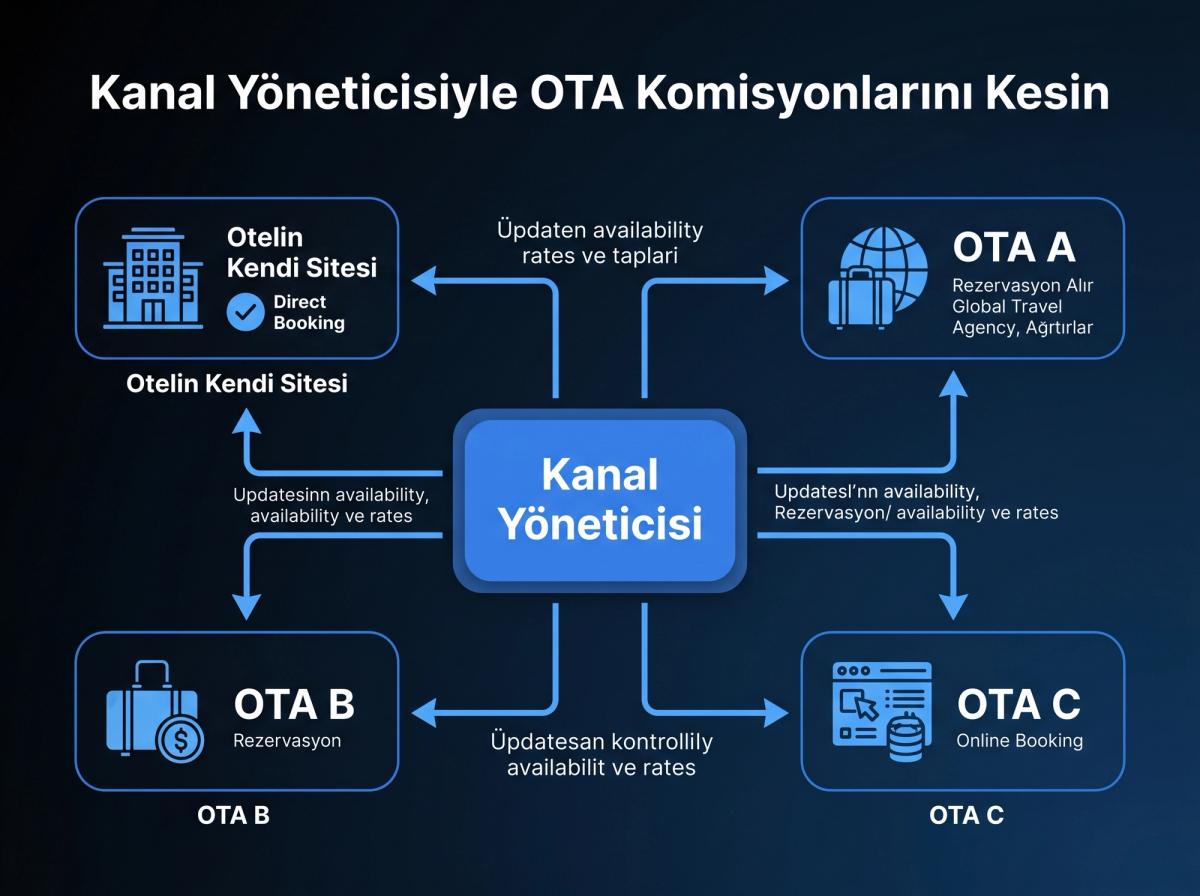
By 2026, the challenges faced by independent hotels are becoming even more complex. Rising energy and supply costs, difficulties in finding qualified staff, and the overwhelming market power of OTAs are squeezing profit margins like never before. In this environment, the customer acquisition cost of every single booking is critically important. At this point, a modern channel manager ceases to be just a 'pipe' connecting channels and becomes a strategic 'control center' where you manage your entire distribution network. This means having the power to proactively attract the most profitable guest to your hotel at the lowest cost, rather than reactively filling empty rooms.
Hidden Costs of Manual Management and Lost Efficiency
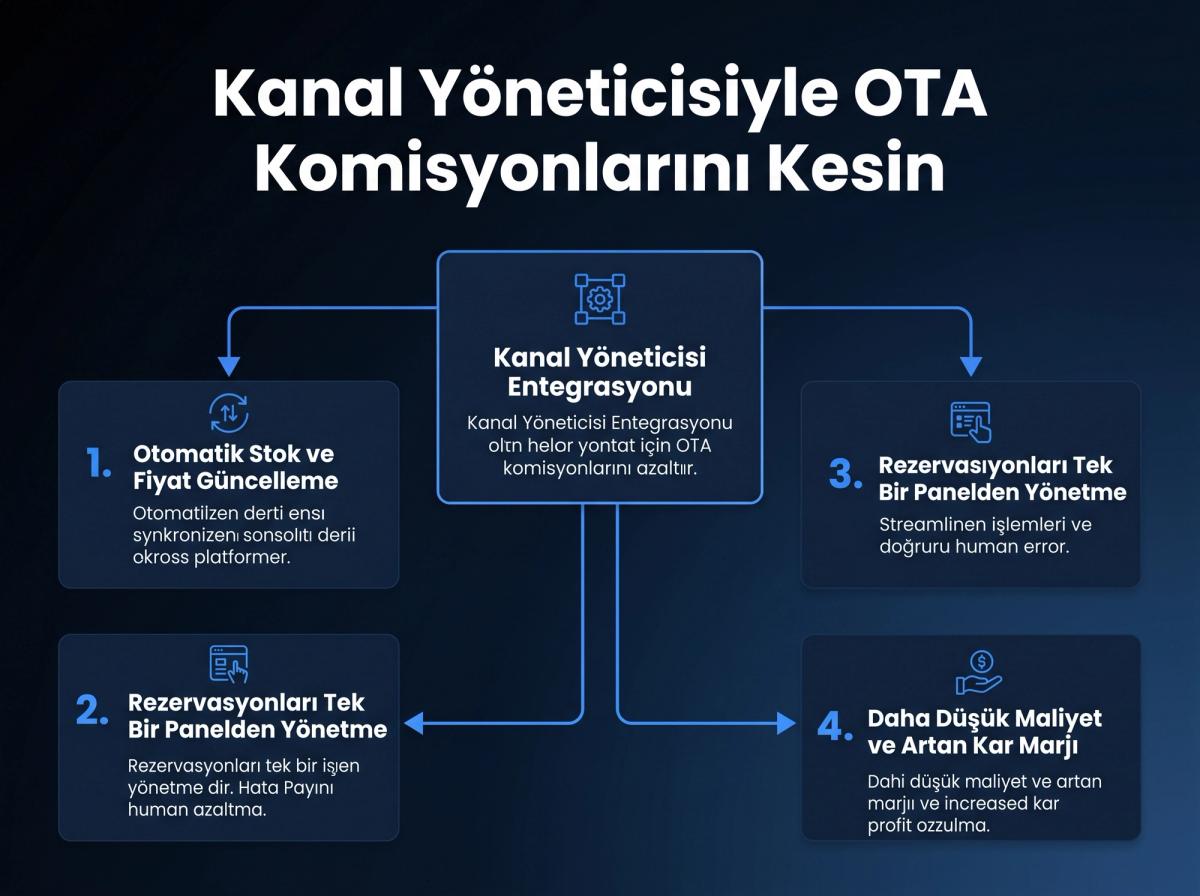
Manually updating rates and allotments across each OTA extranet is not only time-consuming; it is also a serious operational risk. A single typo on a busy day can cause you to sell a room well below what it should be priced at, or worse, lead to an overbooking. The cost of an overbooking is not just the expense of walking the guest to another hotel, but also the lasting damage to your online reputation. A channel manager eliminates these risks by synchronizing all channels from a single screen. This automation allows your staff to focus on improving the guest experience or developing strategies to drive direct bookings, instead of getting lost between extranet screens.
Example: Suppose that in a 50-room hotel, the reservation agent spends just 1 hour a day on manual channel updates. This amounts to roughly 22 hours of labor costs per month. A channel manager reduces this time to nearly zero, enabling you to direct your staff toward higher value-add tasks.
Increase Profit with a Strategic Channel Mix
Steering to High-Profit Channels and Inventory Optimization
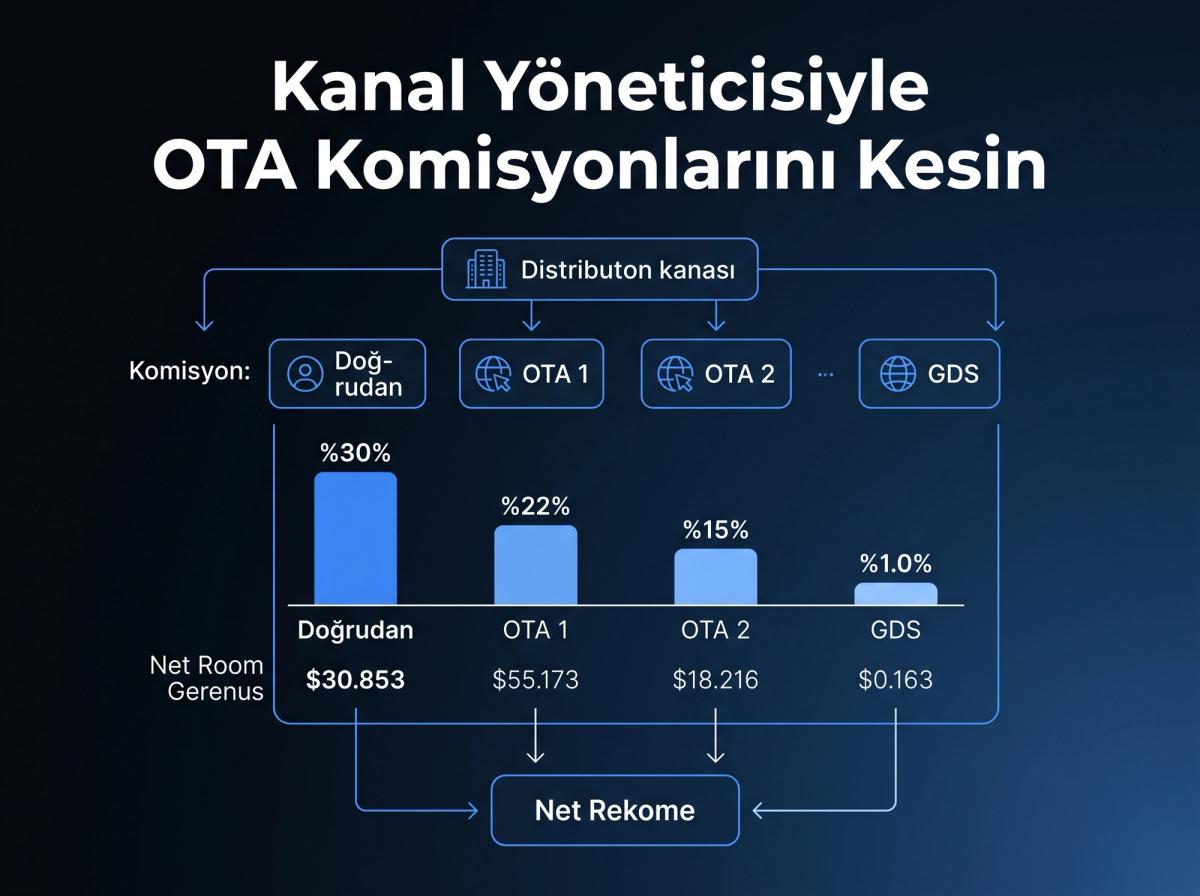
Not all bookings are created equal. Between a 1,000 TL booking from an OTA charging an 18% commission and a 1,000 TL booking from your own website with a 3% processing cost, there is a 150 TL difference in net revenue. A channel manager enables you to turn this difference in your favor. During high-demand periods, you can strategically steer your inventory toward lower-commission channels or your direct booking engine. For example, when you have your last 5 rooms left, you can open them for sale only on the most profitable channels, lowering your average acquisition cost.
This strategy relies on understanding the impact of different channels on net revenue. By calculating the true cost of each channel (commission + transaction fees + marketing expenses), you can clearly see which channel contributes the most to your GOPPAR.
Understanding Commission Rates and Increasing Your Negotiating Power
Go into your next meeting with your OTA market manager prepared. The data from your channel manager is your strongest bargaining tool. Reports showing how much volume and revenue each channel brings you, cancellation rates, and booking windows strengthen your position. For example, if you can prove with data that an OTA delivers high volume but also suffers from the highest cancellation rate, you can negotiate for a commission discount or better terms. A channel manager allows you to comparatively analyze the performance of different channels, helping you determine which partnerships are truly valuable.
Maximize Revenue with Dynamic Pricing and Rate Parity
Real-Time Price Adjustments and Demand Management
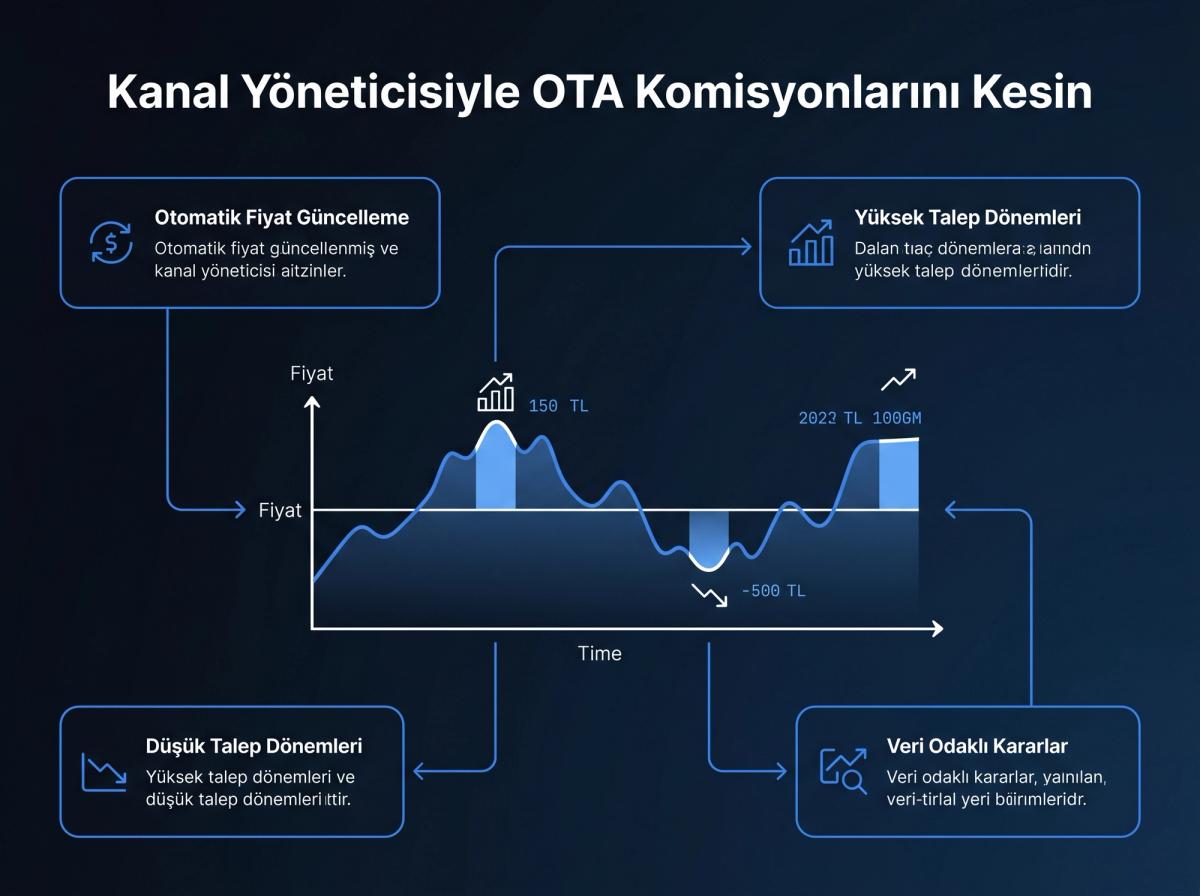
The market can change overnight. A competitor dropping their rates, an unexpected event announced in the city, or an airline launching a new route impacts demand instantly. A channel manager lets you respond to these changes in seconds. Integrated with your PMS or Revenue Management System, a channel manager reflects dynamic pricing strategies shaped by demand signals across all your channels instantly and error-free. This eliminates the hassle of manually logging into 10 different extranets to update rates, along with the risk of human error in the process.
Maintaining or Strategically Breaking Rate Parity
Rate parity is the practice of offering the same price for the same room type across all online channels. This is essential for protecting your brand image and preventing guest confusion caused by seeing conflicting rates on different websites. A channel manager helps you maintain rate parity effortlessly by ensuring that your set rates are applied consistently across every channel.
Sometimes, however, strategically "breaking" rate parity is the most effective way to drive direct bookings. This does not necessarily mean offering a lower rate outright. You can achieve this by providing exclusive perks to your guests.
Pro Tip: Offer an exclusive "loyalty package" for guests who book direct. Keep the rate identical to OTAs, but provide value-add perks that make a tangible difference upon arrival—such as complimentary breakfast, a room upgrade, or late check-out. This makes your direct channel far more appealing without breaching rate parity agreements.
Cut Hidden Costs Through Operational Efficiency and Guest Satisfaction
Eliminating Manual Errors and Freeing Up Staff Time
One of the most tangible benefits of a channel manager is increased operational efficiency. Overbookings are among the costliest and most stressful issues hoteliers face. Beyond the direct expense of relocating a guest, the long-term cost of a negative review from a disgruntled traveler is significantly higher. A channel manager resolves this issue at its root by synchronizing your inventory across all channels in real time. This automation frees up your front desk and reservations team to focus on tasks that directly impact revenue—such as attending to in-house guests, upselling services, or driving positive reviews.
Building Guest Trust with a Frictionless Booking Experience
For guests, the booking process is the first step of the hotel experience. Seeing a room available on one channel but sold out on another, or watching rates fluctuate inconsistently, breeds mistrust. The consistent and accurate information delivered by a channel manager simplifies the guest's booking decision. They can rest assured their reservation is confirmed and that there will be no surprises. This seamless digital experience builds guest trust and establishes a positive brand perception before they even step through the door.
Develop Data-Driven Distribution Strategies with PMS Integration
A Single Source of Truth: PMS and Channel Manager Synchronization
The true power of a channel manager emerges when it is deeply integrated with your Property Management System (PMS). A two-way, real-time integration turns your PMS into the "single source of truth" for inventory and reservations. Whenever a booking lands on any channel, the channel manager pushes it straight to your PMS, updates available room counts, and pushes the new inventory back out to all other channels. This uninterrupted data flow completely removes the need for manual data entry and the discrepancies that come with it. This is the bedrock of data-driven hotel management.
Using Data for Continuous Optimization and Performance Analysis
Thanks to this integration, revenue managers can analyze from a single dashboard which channel generates how much revenue, which market segments it delivers, and what its average length of stay is. This data enables you to continuously refine your distribution strategy. An OTA might charge a higher commission, but it might also bring guests with the longest stays and highest ancillary spend. Alternatively, another channel might have lower volume but deliver your most profitable last-minute bookings. You can only make these strategic decisions when armed with reliable data from an integrated system.
Watch For: Avoid the "set it and forget it" trap. A channel manager is not a tool you configure once and ignore. Market conditions, demand, and channel performances shift constantly. Review your channel performance reports at least once a month and adjust your inventory allocation and pricing strategies based on this data. A channel that was once your top performer might no longer be as profitable.
In 2026, a modern channel manager is not just a tech tool for independent hotels—it is a strategic imperative to drive profitability and regain operational control. By eliminating the hidden costs of manual processes, intelligently optimizing your distribution channels, and managing rate parity with dynamic pricing, you can significantly reduce OTA commissions. This does not just cut costs; it also boosts your GOPPAR and delivers a more consistent guest experience. Integrating your channel manager with Otelciro's PMS and Revenue Management modules allows you to make data-driven decisions and proactively shape your hotel's future. So, when will you take the first step to regain control over your hotel's distribution strategy?
Action Step: This week, analyze your hotel's current channel mix to identify the top three OTA channels with the highest commission rates, and use your channel manager's inventory allotment tools to work on strategies that shift demand from these channels toward direct bookings.
Share this post
Frequently Asked Questions
What is a channel manager and why is it important for hotels?
A channel manager is software that allows hotels to manage room inventory and rates across all online distribution channels—including OTAs like Booking.com and Expedia, GDS, and their own websites—from a single central platform. It is important for hotels because it increases operational efficiency by eliminating manual updates, prevents costly mistakes like double bookings, and ensures revenue management strategies are instantly applied across all channels.
How do you reduce OTA commission rates?
The most effective way to lower OTA commissions is to increase direct bookings. Additionally, you can use channel manager data to negotiate better terms with your OTA market manager and strategically steer demand toward channels that offer lower commission rates or deliver stronger performance.
Is rate parity mandatory for my hotel?
Many OTA contracts include rate parity clauses, which prevent you from publicly offering a lower price than what is listed on the OTA for the same room. However, this does not stop you from offering exclusive packages or value-added perks (free breakfast, room upgrades, etc.) to guests who book direct. This is a smart way to incentivize your direct channel without violating rate parity.
Does a channel manager work without a PMS?
Yes, a channel manager can operate standalone without a PMS, but it will function far below its full potential. Integration between the two systems automates bookings and inventory updates, eliminates manual data entry, and guarantees data consistency by establishing a "single source of truth." For peak efficiency and strategic benefits, PMS integration is critical.