
Imagine your post-pandemic revitalized boutique hotel in Bodrum suddenly receiving a 500,000 TL administrative fine from the Personal Data Protection Authority (KVKK). Or imagine noticing your direct booking conversion rates dropping in the AI-driven world of 2026 because guests, increasingly conscious of data privacy, perceive your hotel as less secure than a competitor. This is not a distant threat; it is a tangible operational reality for hoteliers in Türkiye. The issue is not just the cost of non-compliance directly eroding your GOPPAR, but also the silent erosion of guest trust and future revenues. This article will show how a KVKK-compliant hotel operating system turns this legal burden into a powerful competitive advantage, protects your financials, and elevates your brand.
What You Will Learn
- kvkk-your-hotels-new-shield-against-financial-and-reputational-risks
- operasyonlari-iyilestirmek-kvkk-uyumlu-misafir-yolculugu
- building-trust-increasing-direct-bookings-kvkk-advantage
- technology-stack-and-partner-ecosystem-ensuring-end-to-end-compliance
- proaktif-koruma-olay-mudahalesi-ve-surekli-uyumluluk
- sıkça-sorulan-sorular
KVKK: Your Hotel's New Shield Against Financial and Reputational Risks
Beyond being a legal requirement, KVKK compliance is an essential protection mechanism for your hotel's financial health and market positioning. The costs of non-compliance are both immediate and long-term, directly impacting the heart of your operations.
Direct Costs of Non-Compliance: Fines and Lawsuits
The administrative fines imposed by the KVKK Board are substantial and can reach millions of liras. These fines directly impact your profitability. For instance, for an 80-room hotel operating with a 35% GOPPAR margin, a 500,000 TL fine means wiping out the profit earned from hundreds of room night sales at an Average Daily Rate (ADR) of 4,000 TL. This is not just an accounting line item; it is the loss of money earned through your operational efficiency. In addition, compensation lawsuits that may be filed by guests whose data has been mishandled can further increase this financial burden.
Beyond Fines: Protecting Your Brand and Profitability
The real risk lies beyond financial penalties. News of a data breach or rumors of KVKK non-compliance can rapidly damage your hotel's reputation. In 2026, guests are extremely selective about whom they entrust with their personal information. A hotel perceived as untrustworthy may experience sudden drops in occupancy and struggle to maintain ADR in the face of competition. A KVKK-compliant hotel operating system serves as a proactive line of defense against these threats. By securing data, controlling access, and automating legal processes, it protects you not only from fines, but also from the revenue loss brought by reputational damage.
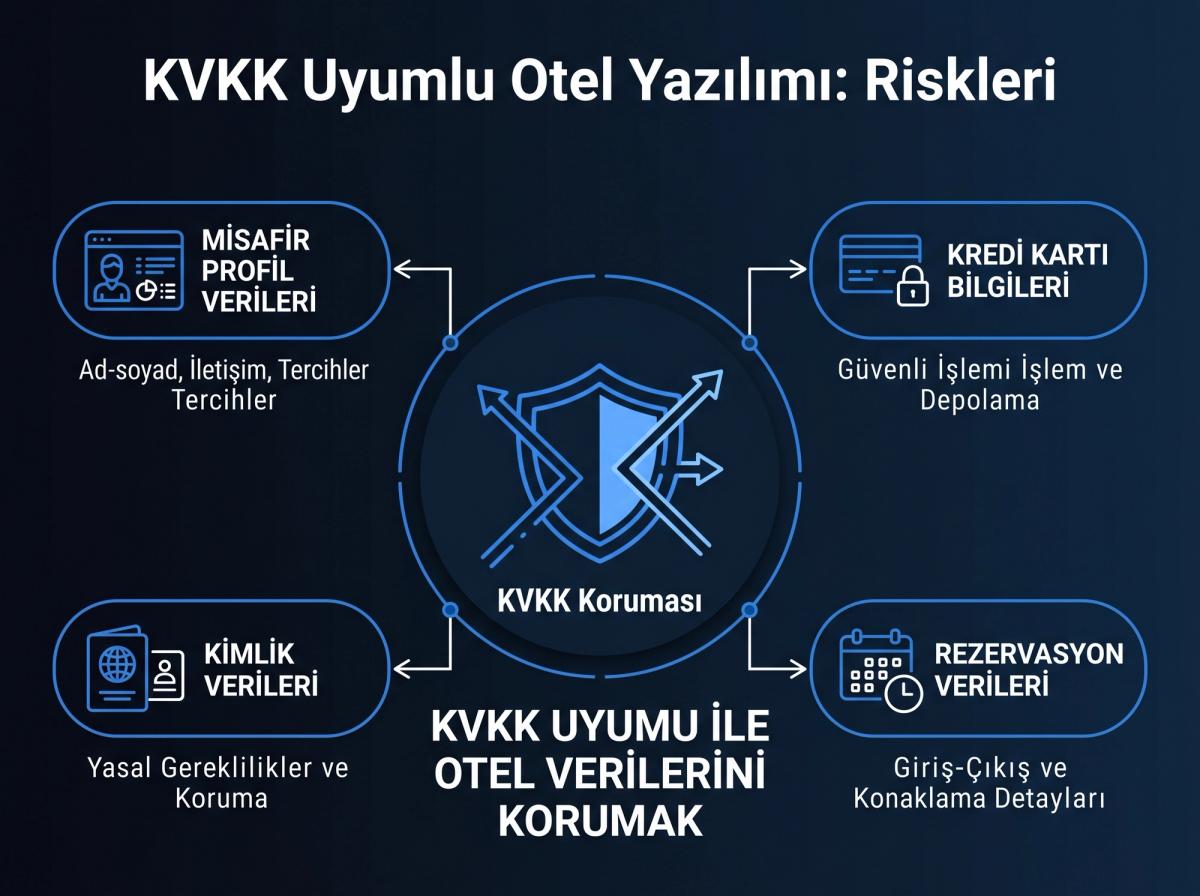
Example: Following a data leak, a city hotel that received negative reviews on social media experienced a 10% drop in its direct bookings in the subsequent quarter. This situation not only drove up commission costs, but also caused them to lose part of their loyal guest base.
Improving Operations: A KVKK-Compliant Guest Journey
KVKK compliance requires rethinking how guest data is managed at every touchpoint in your hotel. With the right technology, this process can cease to be a burden and turn into operational efficiency.
Secure Data Collection and Storage Workflows
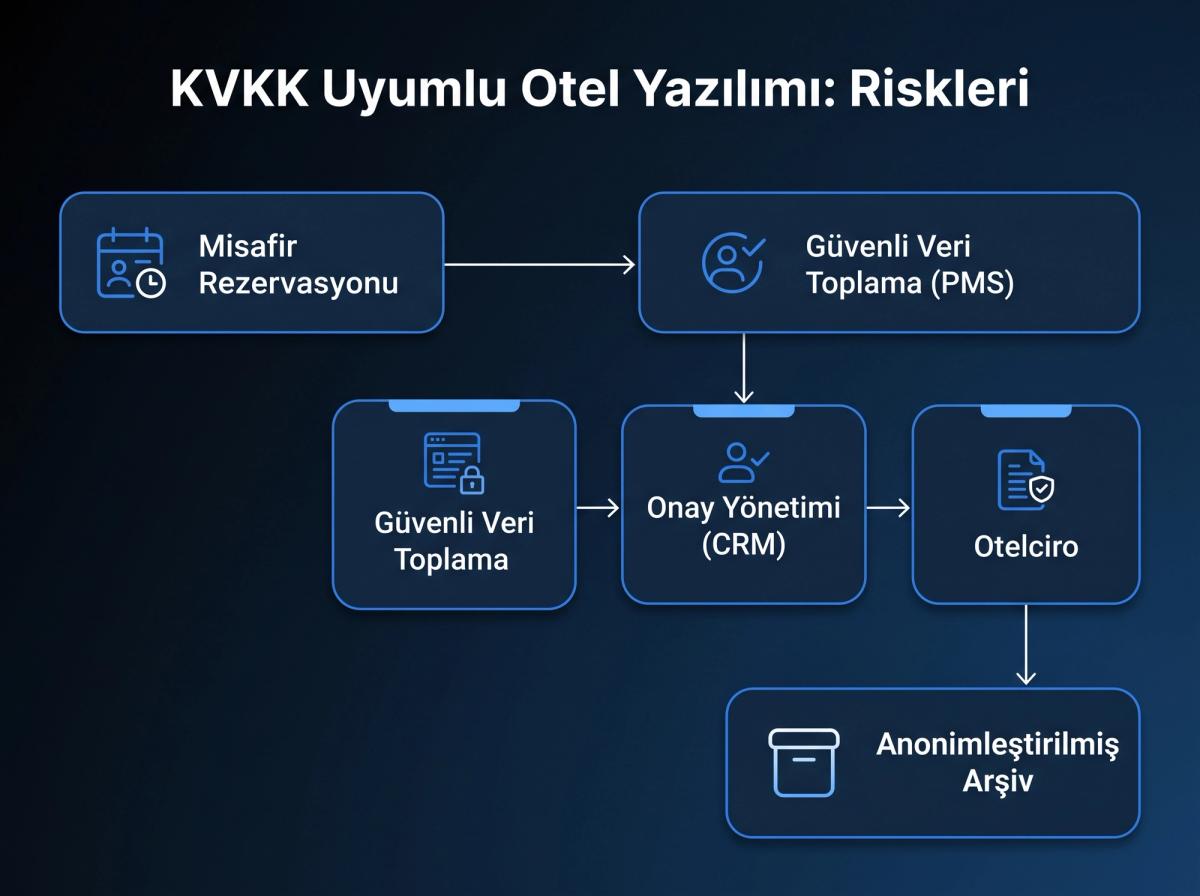
A compliant guest journey begins at check-in. Instead of paper forms, using tablet-based registration systems that include KVKK privacy notices and digitally record guest consent both speeds up the process and makes it secure. These systems can transmit collected ID information directly and securely to KBS (Identity Reporting System). Once the data enters the PMS, secure storage becomes critical:
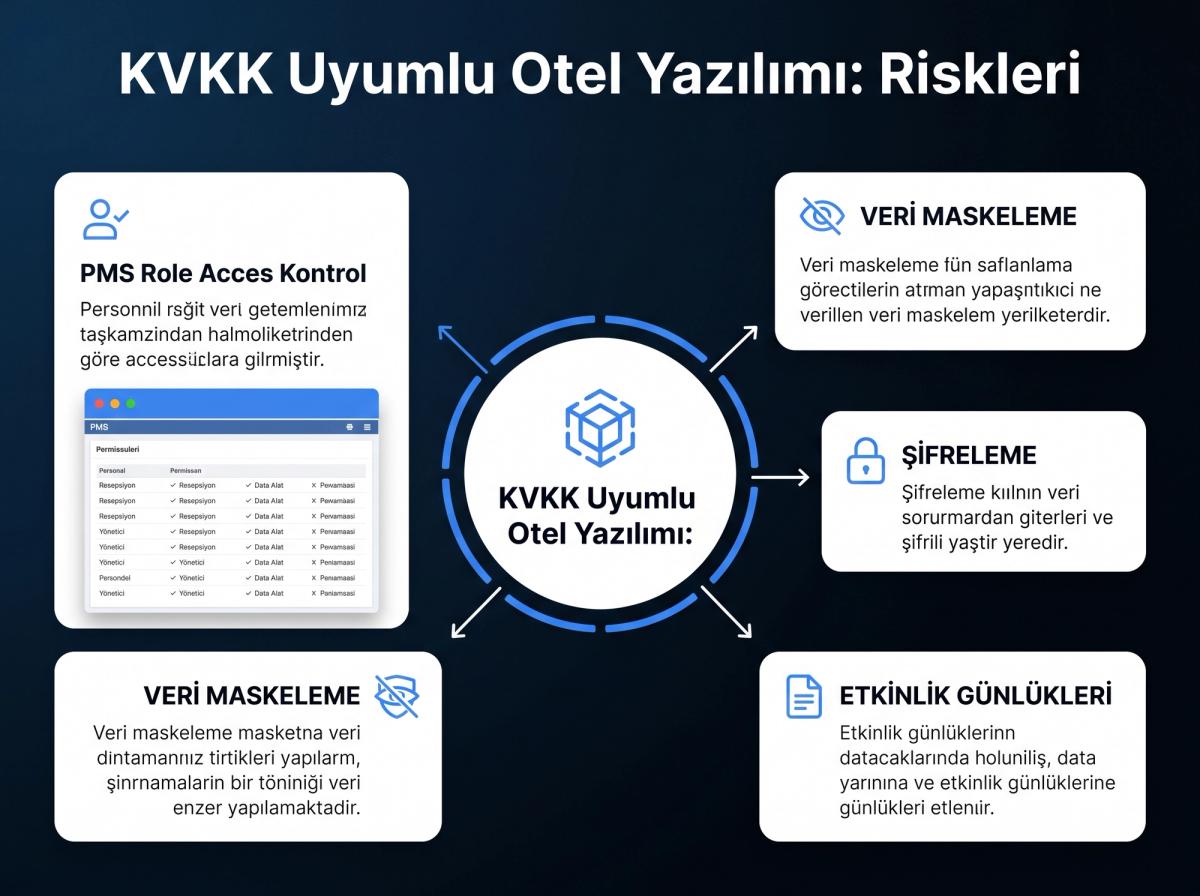
- Access Control: Role-based permissions ensuring front desk agents can only access the information necessary for their duties.
- Data Anonymization: Automatic anonymization of guest profiles whose statutory retention period has expired (for example, after 2 years), eliminating the risk of unnecessary data retention.
- Secure Infrastructure: Storing data on encrypted, professionally managed cloud servers rather than on a server in the hotel's back office.
Easily Managing Guest Consent and Rights
KVKK grants guests the right to control their data. An integrated system makes managing these rights straightforward. Obtaining "explicit consent" for marketing (email, SMS) can be automated via a Guest Experience module connected to the PMS. The guest can clearly specify which communication channels they permit during booking or at check-in, and this preference is saved to the guest profile with a timestamp. When a guest requests access to, correction of, or deletion of their data, authorized staff can process this request in seconds through a single centralized system. This prevents staff across different departments (front desk, reservations, sales) from getting lost in complex spreadsheets or disparate systems.
Pro Tip: Train your staff to explain to the guest why data is being collected. A transparent approach like, "We are collecting your email for your e-Fatura and post-stay survey; would you also like us to send you special offers?" builds far more trust than silently sliding over a form.
Building Trust, Increasing Direct Bookings: The KVKK Advantage
Complying with KVKK does not just manage risks; it also offers a powerful opportunity to build your most valuable asset: guest trust. This trust can directly translate into profitability.
Differentiating Your Direct Channel Through Transparency
For privacy-conscious guests, your hotel's website can be positioned as the most secure booking channel. Create a section on your website and in your booking engine clearly stating your commitment to KVKK and how you protect guest data. This sets your hotel apart from less transparent OTAs and competitors. Guests feel more secure knowing their data is entrusted directly to you rather than circulating among third parties. This sense of trust will become a key factor in the booking decision, especially in 2026 as AI-powered search engines become widespread.
From Trust to Repeat Stays and Higher ADR
Trust is the foundation of loyalty. A guest who feels their data is respected is more likely to choose you again, join your loyalty program, and leave positive reviews for your hotel. This not only increases your occupancy rates, but also boosts long-term guest lifetime value.
An increase in direct bookings directly improves financial performance:
Example: Consider a 75-room boutique hotel that increases its direct booking share from 25% to 35%. This 10% increase means saving on 15–20% OTA commissions. That translates into tens of thousands of liras in additional monthly revenue, flowing directly to GOPPAR.
Technology Stack and Partner Ecosystem: Ensuring End-to-End Compliance
KVKK compliance is not limited to your PMS; it requires an ecosystem-wide approach covering all technology and service providers your hotel uses. As the data controller, the responsibility always lies with you.
Auditing Your PMS and Core Technology Partners
Keep in mind that your hotel's tech stack (PMS, CRM, channel manager, RMS) is the cornerstone of KVKK compliance. Ask these questions when evaluating your current systems:
- Can the system automatically anonymize past guest data?
- Does it provide detailed access logs showing which staff member accessed what data and when?
- Does it feature granular consent management capabilities for marketing communications?
- Does it provide secure integration with local systems such as e-Fatura and ÖKC?
When selecting a new software partner, request documentation proving KVKK compliance and, even more importantly, a Data Processing Agreement (DPA). This agreement establishes a legal framework outlining how data will be processed and protected, and who bears liability in the event of a breach.
Watch For: Beware of tech providers that claim to be "fully KVKK compliant" but fail to provide detailed documentation or a Data Processing Agreement. In the event of an audit, ultimate liability rests with your hotel.
Managing Data Sharing Across Distribution and Service Channels
Guest data is shared with numerous third parties throughout your operations: OTAs, GDSs, payment gateways, and POS systems in your spa or restaurant. A compliant PMS acts as the central control hub for this data flow, ensuring data is shared only when necessary and via encrypted, secure channels. This minimizes your hotel's legal liability by ensuring not only your own systems but also your partners meet KVKK standards. Selecting reliable technology partners mitigates legal risks while boosting operational efficiency.
Proactive Protection: Incident Response and Ongoing Compliance
KVKK compliance is not a one-and-done project. It is an ongoing effort and a state of readiness that must become embedded in your hotel's operational culture.
Building Your KVKK-Compliant Data Breach Response Plan
Even with the best safeguards in place, data breaches can happen. What matters is knowing what to do when one occurs. KVKK mandates that the Board be notified within 72 hours of identifying a breach. An effective response plan must include the following steps: detection, containment, assessment, notification (to the Personal Data Protection Board and affected guests), and recovery. A robust PMS supports this response process by providing audit trails and access logs, helping you quickly identify what data was compromised, when, and by whom.
The Path to Sustained KVKK Resilience and Operational Efficiency
Here is a foundational roadmap to achieve and maintain KVKK compliance:
- Conduct a Data Audit: Identify what personal data you collect, where you store it, and who you share it with.
- Develop Internal Policies: Establish clear rules for data processing, retention, and disposal workflows.
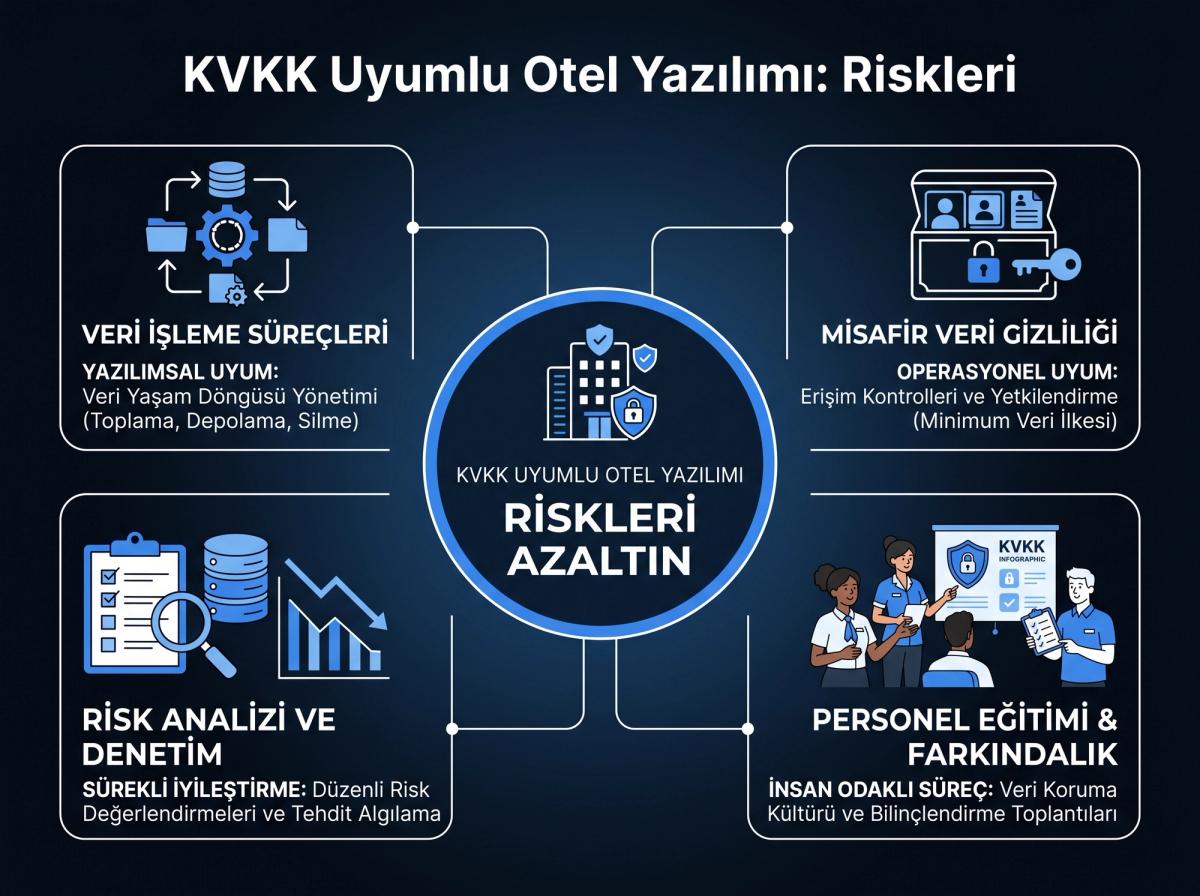
- Train Your Staff: Ensure your entire team is well-versed in their KVKK responsibilities.
- Upgrade Your Systems: Choose a modern, compliant tech stack that ensures you are ready for a KVKK audit.
- Monitor Continuously: Conduct regular risk assessments and review your processes.
While this process impacts operational costs and resource allocation over the long term, it is a critical investment that safeguards your hotel's future.
Often seen as a bureaucratic hurdle, KVKK compliance is actually a strategic imperative for independent hotels in Türkiye. By adopting a KVKK-compliant hotel operating system, you not only avoid heavy fines, but you also build unmatched guest trust, differentiate your direct booking channels, and secure your property’s financial future in an increasingly data-conscious world. This is not just about checking boxes; it is about operational excellence and competitive advantage. Otelciro's integrated PMS, Guest Experience, and OtelGPT modules are designed to seamlessly integrate KVKK compliance into your daily operations, from secure check-ins to consent management. So, how will you turn your hotel's data privacy from a risk into your strongest asset this week?
Take Action
Audit your current guest check-in and data collection processes for KVKK compliance. Pay particular attention to how guest consent is obtained and recorded, and identify three immediate areas for improvement.
Share this post
Frequently Asked Questions
How long can a hotel retain guest identification data under KVKK?
Pursuant to the Identity Declaration Law, guest information is reported instantaneously to law enforcement authorities. In terms of KVKK, data must be retained only for as long as necessary for the purpose for which it was processed. Once legal obligations end (e.g., 5 years under tax laws), the data must be deleted or anonymized.
Is VERBİS registration mandatory for my hotel?
Data controllers with more than 50 employees annually or an annual balance sheet total exceeding 25 million TL, as well as foreign-based data controllers, are required to register with the Data Controllers Registry (VERBİS). Many hotels fall under this scope, making registration mandatory.
How does KVKK-compliant hotel software assist daily operations?
KVKK-compliant software securely collects, stores, and manages guest data starting right from check-in. It automatically logs marketing consents, easily manages guest data access/deletion requests, and provides granular user permissions to prevent unauthorized access. This reduces legal risk while boosting staff efficiency.
What is the difference between a Privacy Notice and Explicit Consent?
A Privacy Notice fulfills the legal obligation to inform guests about why and how their data will be processed and must be provided in all cases. Explicit Consent, on the other hand, is a specific, freely given, and informed consent from the guest to process their data (such as sending marketing SMS messages) outside the exceptions specified by law.