Even if your hotel's occupancy rates look good in 2026, do you feel like the profit you make from each booking is melting away? High OTA commissions and rising operating costs make it harder than ever for independent hotels to maintain profitability. Perhaps the concept of 'Revenue Management' evokes the complex strategies of large chains and feels out of reach for your own property. But that is not the case. This guide offers the core revenue management principles and practical steps you can implement to get maximum value from every room in your hotel, increase your share of direct bookings, and survive in a competitive market. Instead of simply raising prices, discover how to maximize your operational profitability by selling the right room to the right guest at the right time and for the right price.
What You Will Learn in This Article
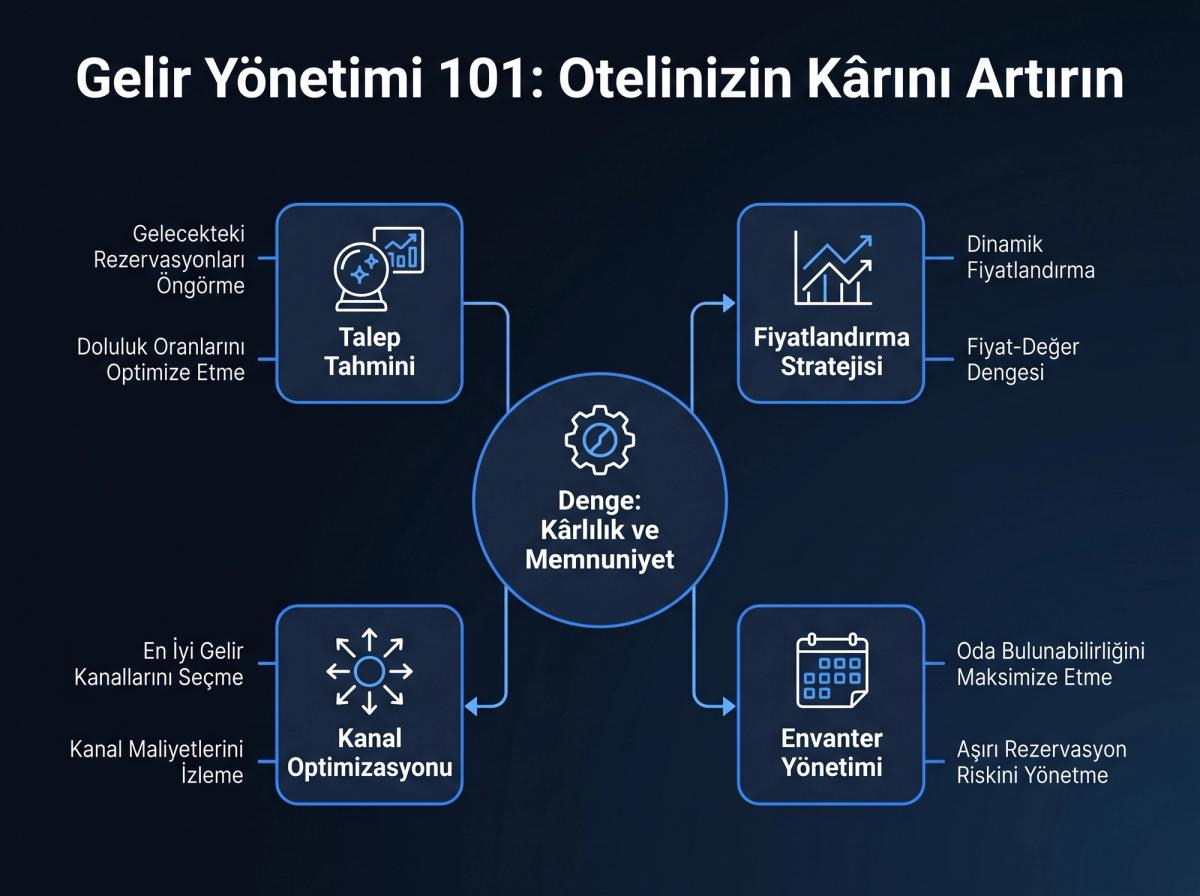
- Revenue Management: Smart Growth, Not Just Raising Prices
- The Compass of Revenue Management: Understanding and Tracking Key KPIs
- Pricing According to Demand and Market: Dynamic Strategies
- The Path to Increasing Profitability: Optimizing Distribution Channels
- Data-Driven Decision Making: Balancing PMS, RMS, and Guest Experience
- Frequently Asked Questions
Revenue Management: Smart Growth, Not Just Raising Prices
Revenue management is the art of strategically managing a hotel's inventory (rooms) and prices to maximize its profit. This is not merely about seasonal price hikes or blindly copying competitors. On the contrary, it is the discipline of analyzing market data to sell the right room to the right guest, at the right time, through the right channel, and at the right price.
Core Definition and Misconceptions
The most common misconception is that revenue management consists solely of raising prices. In reality, lowering prices to stimulate demand or creating special packages to attract specific guest segments is also part of this strategy. The goal is to optimize three core metrics in a balanced way:
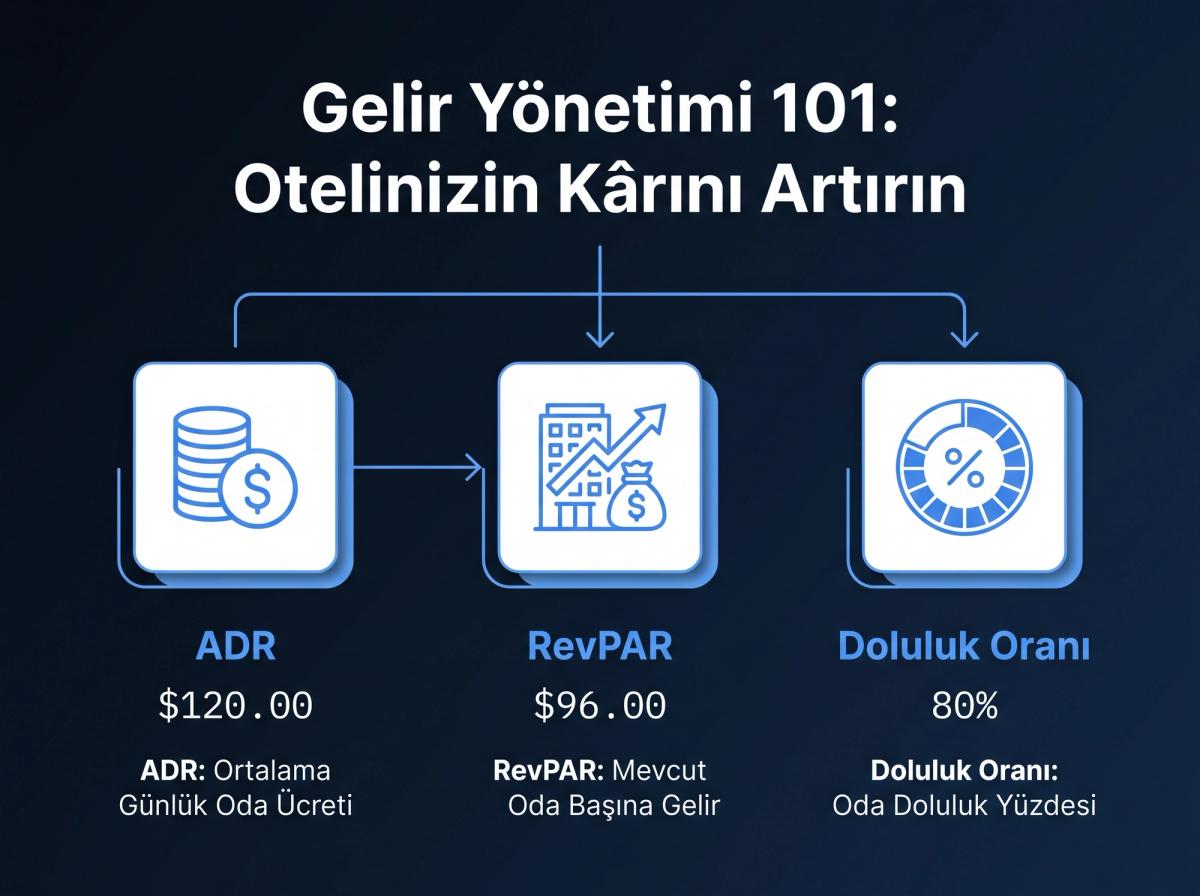
- Occupancy Rate: The ratio of rooms sold to the total number of available rooms.
- Average Daily Rate (ADR): The average revenue earned from rooms sold.
- Revenue Per Available Room (RevPAR): Calculated by dividing total room revenue by the total number of available rooms, this is the most critical metric showing the combined impact of occupancy and ADR.
Balancing these three metrics requires strategic thinking and fast decision-making on a daily basis. Which rate will you apply on which channel today? When should you increase your rates for an event taking place next month?
Why Is It an Essential Strategy in 2026?
As we reach 2026, the hospitality industry faces rising operational costs (energy, labor, supplies) and OTA commissions ranging from 15% to 25%. Simply filling rooms no longer guarantees profitability. According to Skift, slowing demand and rising costs are squeezing hoteliers' margins. This is precisely where revenue management becomes an independent hotel's strongest weapon. Through strategic pricing and channel management, you can lower commission costs, boost direct bookings, and maximize the profit potential of every single room. This is no longer a luxury reserved for large chains, but a necessity for survival.
Pro Tip: Start every morning with a 15-minute revenue management check. Review yesterday's performance (pickup, ADR, RevPAR), the 14-day occupancy forecast, and the rates of your three closest competitors. This simple habit allows you to develop proactive strategies rather than reactive decisions.
The Compass of Revenue Management: Understanding and Tracking Key KPIs
To measure the success of your revenue management strategy, you need the right metrics: Key Performance Indicators (KPIs). These metrics act as a compass showing your hotel's financial health. Without understanding and regularly tracking them, you cannot know whether your strategies are working.
Occupancy, ADR, RevPAR: Calculations and Meanings
These three KPIs are the cornerstones of revenue management. Let's examine each one with simple formulas:
-
Occupancy Rate (%):
(Number of Rooms Sold / Total Number of Rooms) x 100
This metric shows how full your hotel is. High occupancy is good, but it is not enough on its own. -
Average Daily Rate (ADR):
Total Room Revenue / Number of Rooms Sold
This shows how much revenue you earn on average for each room sold. It measures the effectiveness of your pricing strategy. -
Revenue Per Available Room (RevPAR):
Total Room Revenue / Total Number of Rooms(OrADR x Occupancy Rate)
This is the most important metric because it factors in both occupancy and rate. It shows how efficiently your hotel generates revenue from its total room inventory. Gaining an in-depth understanding of the Revenue Per Available Room (RevPAR) metric is the first step toward reaching your profitability goals.
Example: You have a 100-room hotel. In one night, you sold 80 rooms and generated €12,000 in room revenue.
The Power of Daily/Weekly KPI Tracking
Tracking these metrics daily or at least weekly, rather than looking at a report at the end of the month, is critical. Daily reports from your PMS (Property Management System) allow you to make quick adjustments to your strategies. For instance, if your expected occupancy rate is low, you can roll out last-minute offers or channel-specific promotions. If demand is higher than anticipated, you can raise prices on remaining rooms. This agility is key to maximizing your revenue potential.
Pricing According to Demand and Market: Dynamic Strategies
Working with a fixed rate card means leaving money on the table. At the heart of revenue management lies dynamic pricing, where you continuously adjust your rates based on market conditions, demand, and competition. This is one of the most effective ways to optimize your hotel's revenue.
Fundamentals of Dynamic Pricing
Dynamic pricing is a strategy where hotel room rates are not fixed, but rather fluctuate based on various factors. The goal is to maximize revenue by raising rates during high-demand periods and stimulate occupancy by lowering rates during low-demand periods. The main factors influencing your rates are:
- Seasonality: Summer and winter seasons, holidays.
- Days of the Week: Midweek corporate travel, weekend leisure getaways.
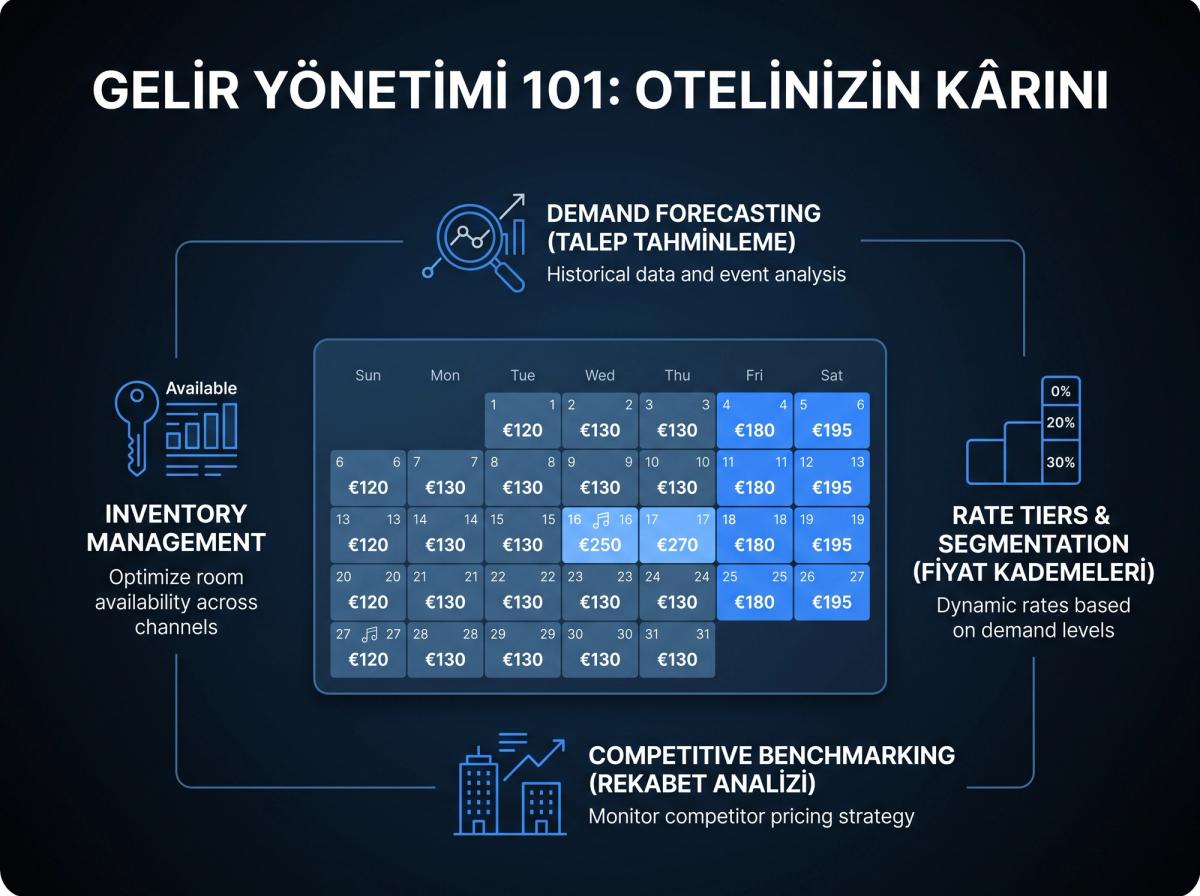
- Special Events: Concerts, festivals, sports events, major conferences.
- Booking Window: How far in advance guests book.
- Competitor Rates: The pricing strategies of comparable hotels around you.
Simple Demand Forecasting Techniques and Application
You don't need complex algorithms. You can start with simple techniques:
- Review Historical Data: Look at occupancy and ADR data from your PMS for the same period last year. What was your occupancy this week last year? At what rate did you sell? This is an essential starting point.
- Analyze Forward-Looking Data (On-the-Books): Track the pace (pickup) of your existing bookings for the next 30-60-90 days. If bookings for a specific date are coming in faster than usual, this signals high demand and presents an opportunity for a rate increase.
- Use the Local Calendar: Closely follow the event calendar in your city or region. A festival or conference can significantly drive up demand and therefore your pricing power. For example, when considering regional revenue strategies for Istanbul hotels, you cannot ignore the dates of marathons, shopping festivals, or international trade fairs.
Using this data, you can manually adjust your rates via the calendar in your PMS or channel manager. Increase your base rate (BAR - Best Available Rate) for dates where you anticipate high demand, and lower it to a more competitive level for slower periods.
Watch For: Copying competitors' rates might seem like an easy shortcut, but it is dangerous. You don't know your competitor's cost structure, room quality, or guest mix. While they might be dropping rates because of a group booking, you could be unnecessarily sacrificing your profit margin. Monitor competitors, but stay true to your own data and strategy.
The Path to Increasing Profitability: Optimizing Distribution Channels
Every channel you use to sell your rooms carries a cost and a value. A critical part of revenue management is focusing not just on top-line revenue, but on the net profit of each booking. This means managing your distribution channels strategically.
Cost-Value Analysis of Channels
Bookings from different channels are not created equal. Each has a different impact on your profitability:
- Online Travel Agencies (OTAs): Channels like Booking.com and Expedia allow you to reach a broad audience and boost your visibility. However, this visibility comes at a price: high commission rates typically ranging between 15% and 25%.
- Direct Website: This is your most profitable channel. There are no commission costs (only website maintenance and marketing expenses). It also offers the opportunity to build a direct relationship with the guest and foster brand loyalty.
- Global Distribution Systems (GDS): Typically used by corporate travel agents, these are crucial for attracting guests from the business travel segment.
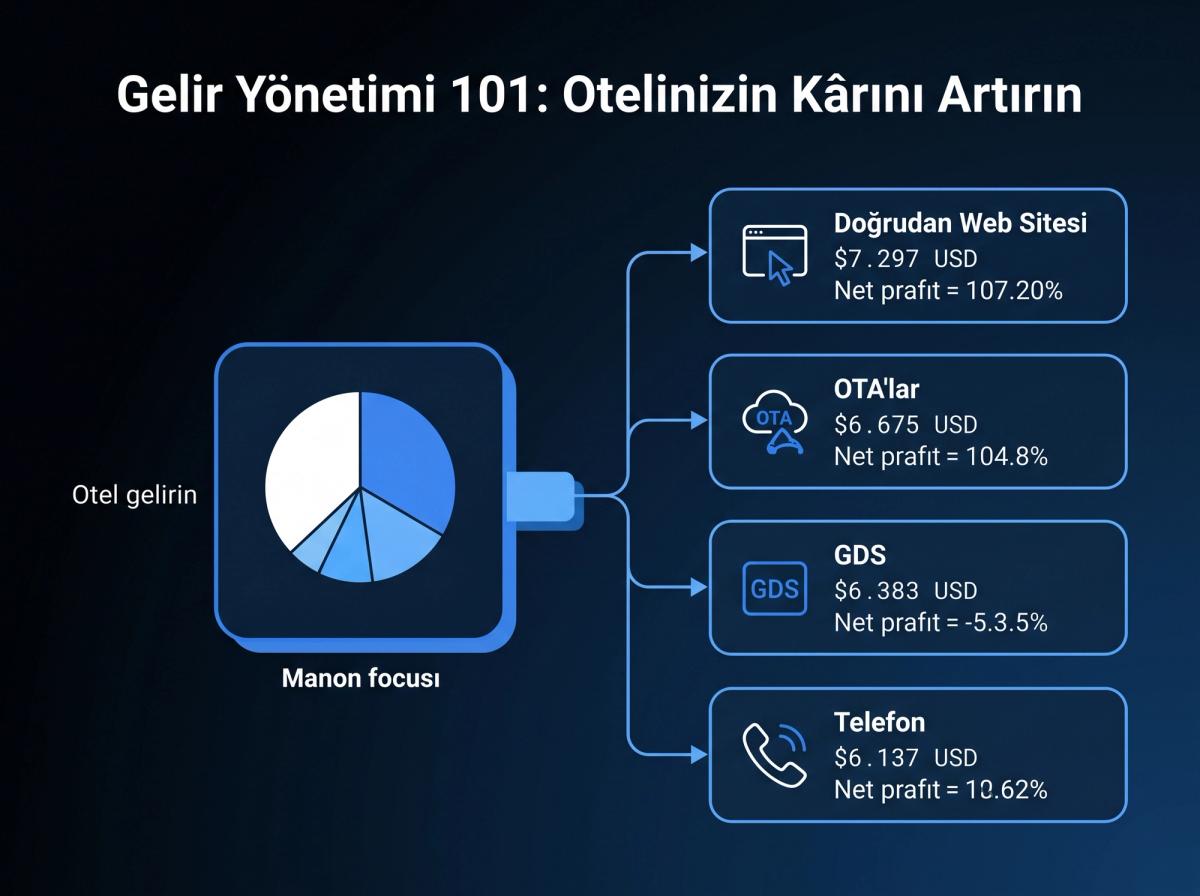
- Phone/Email (Walk-in): Traditional yet still valuable, these channels are also direct and commission-free.
Your strategy should be to strike a profitable balance across these channels. While using OTAs to build visibility and generate demand, you should guide guests toward your more profitable direct channels. Understanding the cost of different distribution channels is the first step toward increasing your net revenue.
Strategies to Drive Direct Bookings
Growing your direct booking share is the most reliable way to lower commission costs and drive profitability. Here are some practical steps:
- Best Rate Guarantee: Always offer the best rate on your website. Ensure guests know they won't find a better deal on OTAs.
- Direct Booking Perks: Offer exclusive perks available only to guests who book through your website: such as complimentary breakfast, late check-out, a room upgrade, or a welcome drink.
- User-Friendly Website and Booking Engine: Make sure your website is mobile-friendly, fast, and that the booking process is simple. A convoluted checkout will send potential guests right back to an OTA.
- Loyalty Program: Build a simple loyalty program that rewards repeat guests. Even offering an exclusive promo code for their next stay can deliver strong results.
Pro Tip: Using your hotel's PMS and channel manager together simplifies channel optimization. An integrated system like Otelciro lets you manage rates and inventory across all channels from a single place, helping you maintain rate and allotment parity while easily implementing exclusive offers for your direct channel.
Data-Driven Decision Making: Balancing PMS, RMS, and Guest Experience
An effective revenue management strategy relies on data, not intuition. Your hotel's technology infrastructure, especially your Property Management System (PMS), plays a central role in collecting, analyzing, and turning this data into actionable insights. But the goal is not just maximizing profit—it is also preserving guest satisfaction.
The Power of PMS and RMS Integration
- Property Management System (PMS): The source of the raw data required for revenue management. Your PMS records valuable information about every reservation: booking date, stay dates, channel, rate paid, guest profile, room type preference, and more. This historical data forms the foundation for forecasting future demand patterns.
- Revenue Management System (RMS): An RMS takes data from your PMS, market data (competitor rates, events), and demand forecasts to provide pricing recommendations. Modern platforms like Otelciro integrate these capabilities with the PMS and channel manager, allowing hoteliers to make smart, automated rate adjustments from a single dashboard.
Operationally, the most critical factor is accurate and consistent data entry into the PMS. Mislabeling a booking source or failing to enter special rate codes can mislead all your analyses and strategies.
Balancing Profitability and Guest Satisfaction
Revenue management is not just about numbers; it is also closely tied to the guest experience. Aggressive pricing or overly restrictive policies can alienate guests and damage your brand reputation over the long run. Here is how to strike the right balance:
- Create Value, Don't Just Raise Rates: If you are raising rates during high-demand periods, make sure the guest receives real value in return. This could be seamless service, a personalized touch, or a small complimentary amenity.
- Offer Personalized Deals: Use your PMS data to provide tailored offers to your guests. For example, you can offer a guest who previously stayed in a suite a discounted suite upgrade for their next stay. Personalized offers on your hotel's website and targeted communication strategies both boost revenue and elevate guest satisfaction.
- Transparent Communication: Be clear and transparent about your cancellation policies and extra fees. Guests dislike running into surprise charges at check-in.
- Staff Training: Your front desk team is an integral part of your revenue management strategy. Train them on upselling and cross-selling, but ensure they present these options as a service rather than high-pressure sales.
A successful revenue management strategy unites profitability goals with the mission of delivering an exceptional guest experience.
In the challenging conditions of 2026, hotel revenue management is not just an option for independent hotels—it is a necessity. The core principles covered in this guide—accurate KPI tracking, dynamic pricing, channel optimization, and data-driven decision-making—are concrete steps you can take to increase your hotel's profitability. Remember, revenue management does not have to be a complex process reserved for major chains; with accessible technology like Otelciro's integrated PMS, Channel Manager, and Revenue Management modules, hotels of any size can easily implement these strategies. Are you ready to take the first step toward unlocking your hotel's hidden revenue potential?
Take Action: This week, calculate your hotel's RevPAR, ADR, and occupancy rates for the past 3 months. Then, identify the distribution channel with your highest commission rate and plan a website-exclusive offer to drive direct bookings.
Share this post
Frequently Asked Questions
What is revenue management in hospitality?
Hotel revenue management is the strategy of selling the right room to the right guest at the right time, for the right price, through the right channel to maximize profit. It is not simply about raising prices, but analyzing demand and market data to optimize occupancy, ADR, and RevPAR.
What is the difference between ADR and RevPAR?
ADR (Average Daily Rate) measures only the average price of rooms actually sold. RevPAR (Revenue Per Available Room), on the other hand, measures revenue generated per total available room in the hotel, whether sold or not. Because RevPAR accounts for both occupancy and rate, it is a more comprehensive metric for assessing a hotel's overall revenue performance.
How can a small boutique hotel implement revenue management?
Small hotels can start with the basics: analyzing historical performance using PMS data, tracking local event calendars to identify high-demand periods, and adjusting rates manually accordingly. Offering exclusive deals to encourage direct bookings through their own website—the most profitable channel—is also an effective first step.
Does dynamic pricing upset guests?
Much like with airlines and event tickets, guests today are accustomed to demand-based pricing. As long as pricing is fair, transparent, and aligned with the value delivered, it is generally well accepted. Avoiding sudden, extreme rate spikes and offering consistent value to loyal guests helps prevent any negative perception.