
Imagine your boutique hotel in Antalya, a beloved fixture for years, suddenly surrounded by three new, gleaming properties opening their doors in 2026. This isn't a hypothetical; with 354 new hotels slated for Türkiye, thousands of new rooms will flood the market. The immediate operational challenge? Your occupancy rates and ADR are under direct threat, and the pressure from OTAs to lower rates will intensify, potentially eating an even larger chunk of your room revenue. This article isn't about fear-mongering; it's your actionable blueprint. We'll equip you with data-driven strategies and integrated technology insights to not just weather this storm but emerge as a stronger, more profitable independent hotel.
What You'll Learn
- Navigating the New Supply Wave: Understanding Your Market Shift
- Crafting Your Unforgettable Story: Beyond Price Wars
- Mastering Your Channels: Boost Direct Bookings & Operational Flow
- Unlocking Agility: Data-Driven Decisions & Personalized Guest Journeys
- Building a Resilient Team: Talent & Technology for 2026 and Beyond
- Frequently Asked Questions
Navigating the New Supply Wave: Understanding Your Market Shift
The arrival of new inventory isn't a distant threat; it’s a direct challenge to your RevPAR. Understanding the specific impact on your property is the first step toward building a resilient strategy. This isn't about guesswork; it's about data-driven foresight.
The Turkish Hospitality Landscape: Regional Impact Analysis
The impact of 354 new properties, a figure highlighted in recent hospitality industry reports, won't be uniform. A new 300-room resort in Belek has a different effect than three 50-room boutiques in Karaköy, Istanbul. Your first task is to analyze your immediate competitive set. Are the new entrants targeting your core guest segment—leisure, corporate, bleisure? Are they positioned as luxury, mid-scale, or economy? This analysis directly informs how you adjust your pricing and marketing.
Forecasting Pressure: Occupancy, ADR, and RevPAR
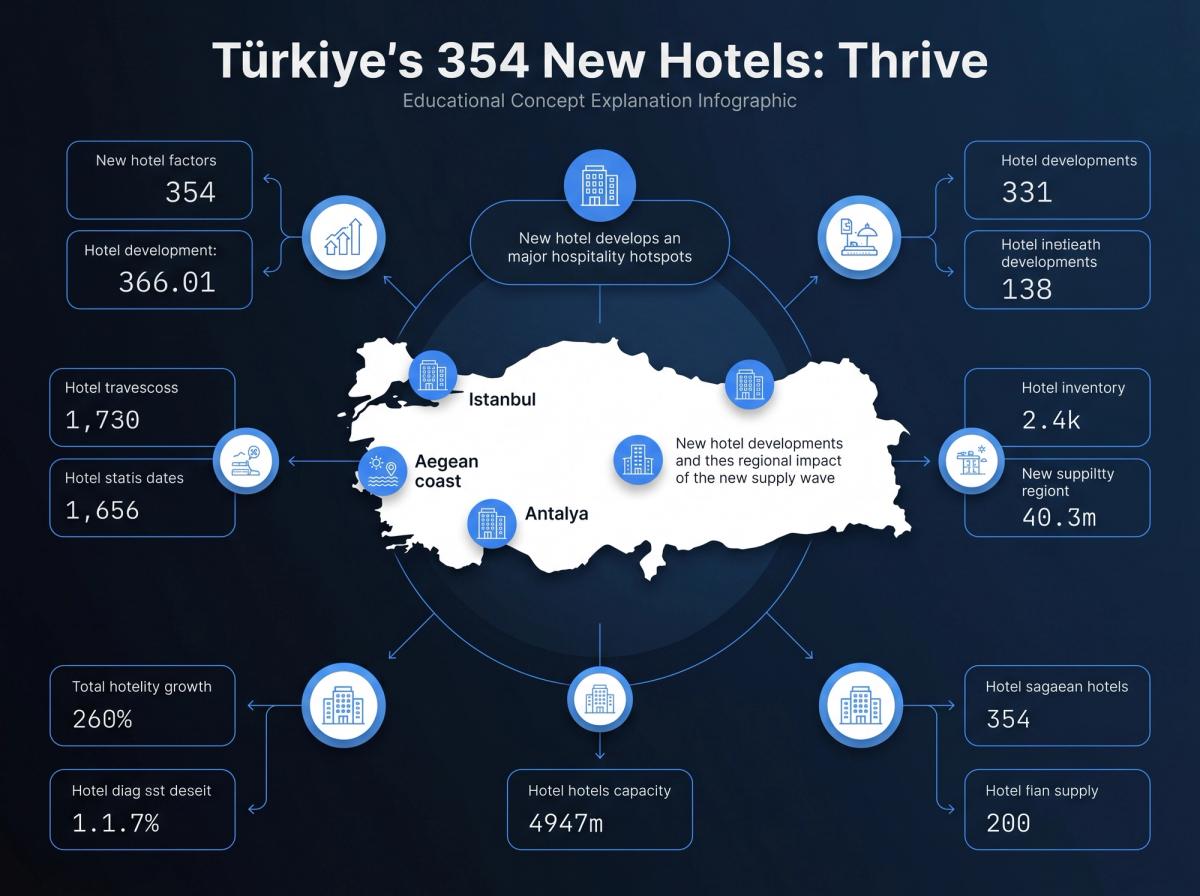
Increased supply almost always puts downward pressure on occupancy and ADR. If a market like Bodrum, which typically sees 85% occupancy in August, adds 1,000 new rooms, that absorption has to come from somewhere. Without a proactive strategy, your property could see its occupancy dip to 75%, forcing you into a price war to capture the remaining demand. This is a direct threat to your Gross Operating Profit Per Available Room (GOPPAR).
Example: A 100-room hotel in a coastal resort running at 80% occupancy with a €180 ADR generates €14,400 in daily room revenue. A 10-point drop in occupancy to 70% due to new supply cuts that revenue to €12,600. To compensate, some might drop their ADR to €160 to regain the 80% occupancy, but this still results in lower revenue (€12,800) and potentially attracts a less profitable guest mix. The key is to protect ADR through other means.
An integrated Revenue Management System (RMS) is your primary tool here. By connecting to market intelligence data, you can benchmark your performance and run forecasts that model the impact of new supply. This allows you to adjust your dynamic pricing strategy proactively, identifying compression dates and demand troughs weeks or months in advance, rather than reacting when it’s too late.
Crafting Your Unforgettable Story: Beyond Price Wars
When the market is flooded with new, often standardized rooms, the most powerful defense for an independent hotel is its unique identity. Competing on price is a race to the bottom; competing on experience is how you build a loyal following that is less price-sensitive.
Defining Your Unique Value Proposition in a Crowded Market
Start with an honest internal audit. What makes your property irreplaceable? Is it your historic building in Çeşme, your rooftop terrace with unparalleled Bosphorus views, or your team's legendary service? These are your Unique Selling Points (USPs). New chain hotels often struggle to replicate genuine local character. Your story, your history, and your connection to the community are your most defensible assets.
Targeting Niche Segments with Precision
Instead of competing for the same mass-market tourists as the new mega-resort down the road, focus on niche segments that value what you offer. Are you perfectly suited for a wellness retreat? A culinary tourism base? A quiet haven for digital nomads?
Pro Tip: Use your CRM data to identify your most profitable guest segments. If you notice a growing number of guests who are passionate about local cuisine, partner with a local chef to create an exclusive “Taste of the Aegean” package. This creates a bookable experience that new, larger competitors can't easily offer and justifies a premium rate.
By creating targeted packages and marketing them directly to these niches, you move away from the OTA-driven volume game and into a higher-margin, value-driven strategy. This is about attracting the right guests, not just any guest.
Mastering Your Channels: Boost Direct Bookings & Operational Flow
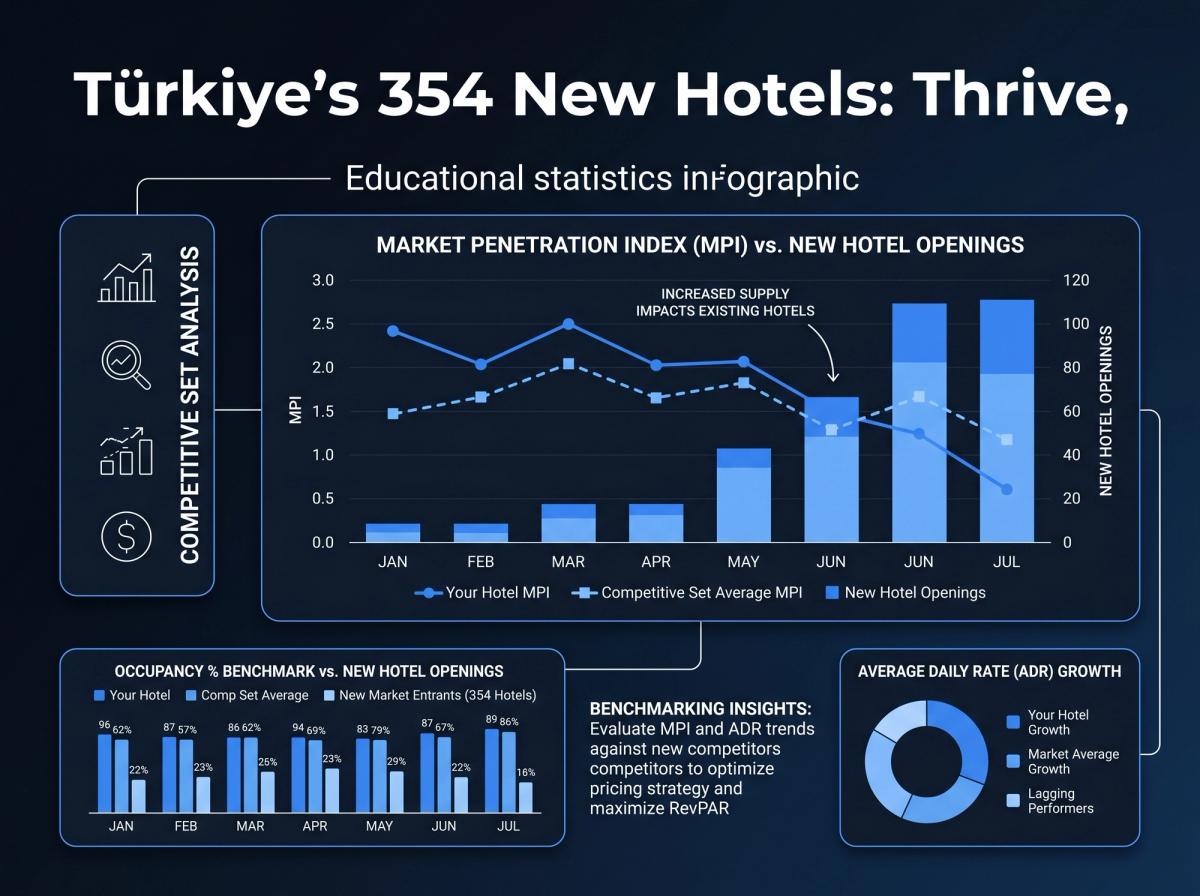
In a crowded market, OTAs gain leverage. They will push for lower rates and higher commissions to fill the new rooms. Your defense is a two-pronged approach: an aggressive direct booking strategy and hyper-efficient operations to protect your margins.
Reclaiming Your Revenue: Aggressive Direct Booking Strategies
Your website and booking engine are your most profitable channels. Every booking you shift from an OTA to your direct channel is a significant win for your GOPPAR. A robust multi-channel distribution strategy is essential, but the priority must be direct.
Watch For: A poorly optimized mobile booking engine. If a guest can book a room on an OTA app in three taps, but your website takes five minutes and requires a desktop, you are losing high-value direct bookings. Your booking process must be seamless, fast, and secure.
Launch targeted metasearch campaigns and create a simple loyalty program that offers real value for booking direct—think complimentary breakfast, a room upgrade, or late check-out. These small perks often cost you very little but are powerful incentives that OTAs cannot match.
Streamlining Operations for Leaner Profits
With potential pressure on your top-line revenue, controlling operational costs becomes critical. An integrated PMS like Otelciro is the central nervous system of your hotel. It helps you streamline front-desk operations, housekeeping, and maintenance, reducing manual errors and optimizing staff allocation.
For example, using your PMS to manage housekeeping schedules based on real-time check-in/check-out data ensures rooms are turned around faster and labor is used efficiently. AI-powered tools like OtelGPT can take this a step further by helping with demand forecasting for F&B, reducing waste, and suggesting optimal staffing levels for the front desk based on predicted arrival patterns.
Unlocking Agility: Data-Driven Decisions & Personalized Guest Journeys
Thriving in a more competitive market requires you to be smarter and faster than your competition. This agility comes from leveraging your data to make informed decisions and create personalized experiences that foster loyalty.
Leveraging Business Intelligence for Market Insight
Your PMS and RMS are goldmines of data. Use their business intelligence (BI) dashboards to move beyond daily reports. Analyze booking pace by segment, lead times by channel, and source market profitability. Are you seeing a surge in bookings from a new market? Is your corporate segment's lead time shrinking? These insights allow you to make surgical adjustments to your marketing and pricing strategies.
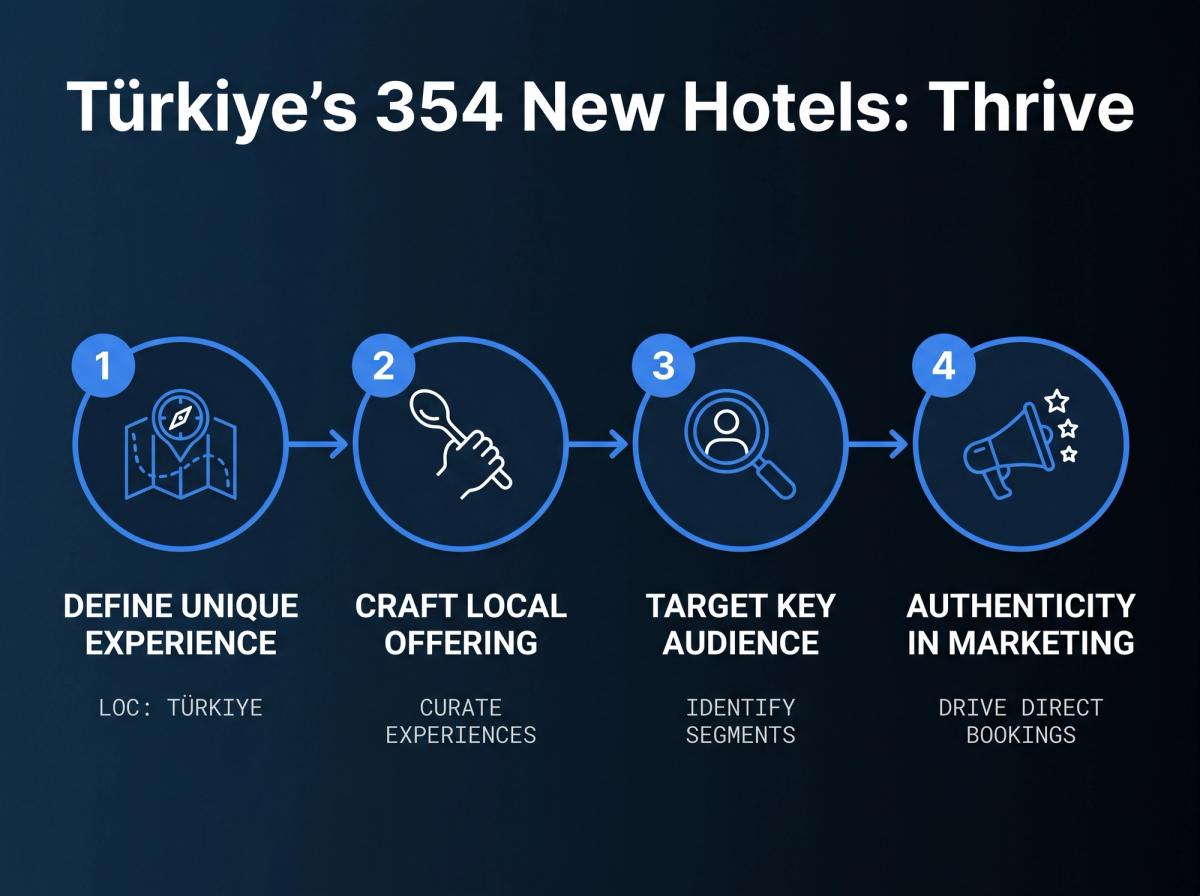
Integrating STR data directly into your system provides the ultimate benchmark, allowing you to see how your performance stacks up against your compset in real-time. This is how you spot opportunities before anyone else.
Delivering Exceptional, Personalized Guest Experiences
In a sea of options, guests remember how you made them feel. Use your CRM to build detailed guest profiles. Did a guest mention they were celebrating an anniversary upon booking? A simple handwritten note and a small local treat in their room upon arrival transforms a standard stay into a memorable experience. This is the foundation of delivering exceptional guest experiences that drive repeat business and glowing reviews.
This personalization extends across the entire journey. Use pre-arrival emails to offer tailored ancillary services, and post-stay communications to solicit feedback and present a compelling offer for their next visit. This creates a loyalty loop that is difficult for larger, less personal competitors to break.
Building a Resilient Team: Talent & Technology for 2026 and Beyond
Ultimately, your hotel's success rests on two pillars: your people and the technology that empowers them. The influx of new hotels will not only create competition for guests but also for skilled hospitality talent.
Attracting & Retaining Top Hospitality Talent
Prepare for a more competitive labor market. The best staff will be drawn to properties that offer a positive work environment, opportunities for growth, and modern, efficient tools. No one enjoys working with outdated, clunky software that makes their job harder. Investing in a modern, integrated tech stack is also an investment in your team's satisfaction and retention.
Pro Tip: Use the scheduling and labor management tools within your PMS to create flexible, fair schedules. This helps manage your largest operational cost effectively while also improving employee morale—a critical factor in reducing staff turnover.
Integrating Technology for Sustainable Growth
Siloed systems are the enemy of efficiency and agility. A channel manager that doesn't talk to your PMS, which in turn is disconnected from your CRM, creates data gaps and manual work. A truly integrated platform like Otelciro, combining PMS, Channels & Revenue, and Guest Experience modules, provides a single source of truth.
This unified view allows you to see the entire guest journey, understand the true cost of acquisition by channel, and make holistic decisions that benefit the entire operation. This isn't an expense; it's the foundational investment that enables every strategy discussed in this article.
Your Blueprint for Thriving
The influx of 354 new hotels by 2026 presents a significant challenge, but also a profound opportunity for independent Turkish hoteliers. Survival, and indeed thriving, hinges on agility, hyper-local differentiation, and a relentless focus on data-driven decision-making. By leveraging integrated technology like Otelciro's PMS, Channels & Revenue management, and Guest Experience modules, you can move beyond reactive price wars. Instead, you'll proactively craft unique guest stories, optimize your distribution to favor direct bookings, and streamline operations for maximum profitability. This isn't just about adapting; it's about redefining your competitive edge.
Your next step this week: Audit your current direct booking conversion rate and identify your top three unique selling points. Are you ready to transform this challenge into your greatest advantage?
Share this post
Frequently Asked Questions
What is a hotel competitive set (compset)?
A hotel's competitive set is a group of 4-6 nearby properties that are your most direct competitors. They are typically similar in terms of price point, service level, amenities, and target guest segment. Analyzing your compset's performance is crucial for effective revenue management.
How can I increase direct bookings for my hotel in Türkiye?
To increase direct bookings, ensure your hotel's website has a seamless, mobile-friendly booking engine. Offer a small, exclusive perk for booking direct, like a complimentary welcome drink or late check-out. Invest in metasearch marketing and build a guest loyalty program to encourage repeat direct business.
What is RevPAR and why is it important for hotels?
RevPAR stands for Revenue Per Available Room and is a key performance metric in the hotel industry. It is calculated by multiplying your Average Daily Rate (ADR) by your occupancy rate. RevPAR provides the clearest picture of your hotel's ability to fill its rooms at a profitable rate.
How do I prepare my hotel for new competition in the market?
Start by analyzing the new hotels entering your market to understand their positioning. Then, focus on differentiating your property by defining your unique selling points and creating memorable local experiences. Finally, leverage technology like an integrated PMS and RMS to optimize pricing, distribution, and operational efficiency.