Imagine your charming boutique hotel in Kaş. For years, you've watched your shoulder season bookings erode due to unregulated short-term rentals (STRs). While nearby apartments operated with minimal overhead and no licensing burden, you lost 18-25% of your room revenue to OTA commissions. What if 2026 presents a pivotal moment, offering a chance to reclaim this lost market share and boost your profitability? The upcoming Turkey Airbnb Law 2026 is not just a regulation; it's a strategic opportunity for independent hotels. This article will show you how to proactively leverage this new regulation to increase occupancy, encourage direct bookings, and optimize revenue; transforming legal compliance into a powerful profit strategy for your property.
What You Will Learn?
- STR Law 2026: An Opportunity to Reclaim Your Market Share
- Increasing Direct Bookings and Optimizing Your Distribution Channel
- Operational Readiness and Experience for a New Guest Segment
- Competitive Advantage with Integrated Technology and Legal Compliance
- Data-Driven Market Intelligence and Agile Strategies
- Frequently Asked Questions
STR Law 2026: An Opportunity to Reclaim Your Market Share
After years of unregulated competition, the new law, expected to come into force in 2026, is rewriting the rules of the game. This is not just a bureaucratic change, but a development that will fundamentally alter market dynamics.
What Does the New Regulation Mean?
The STR Law 2026 introduces standards to the short-term rental market. Key changes include:
- Licensing Requirement: Every short-term rental unit will now need to obtain an official license. This means a portion of the market supply will be eliminated by failing to meet legal requirements.
- Taxation: STR operators will now also be required to fulfill tax obligations, just like hotels. This will significantly reduce their pricing advantages.
- Safety and Quality Standards: Requirements such as fire safety, hygiene, and basic accommodation standards will increase operational costs and create a safer environment for guests.
These three elements level the playing field between hotels and STRs. When the advantage of low cost and zero regulation is removed, hotels' inherent advantages such as professional service and reliability will become even more prominent.
Opportunities for Hotels
A hotelier looking at a market analysis graph on a laptop. The graph compares hotel occupancy rates with STR supply.
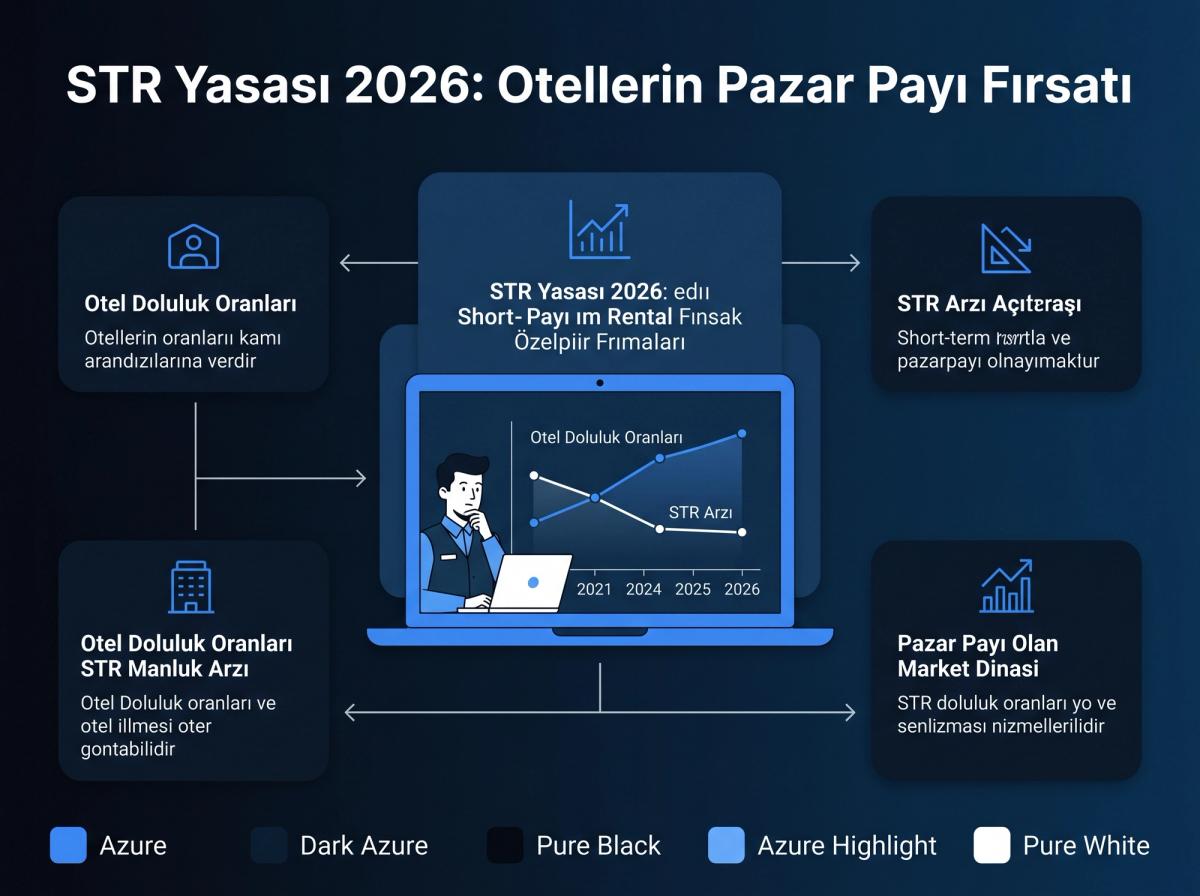
This regulation creates tangible revenue opportunities for hotels. With a decrease in STR supply and an increase in their prices, guests who previously preferred these units will turn back to hotels. The reflection of this situation on your hotel metrics is inevitable:
Example: In a coastal resort, if your shoulder season occupancy is around 65%, a 15-20% reduction in STR supply in the market could easily push your occupancy to the 70-75% range as demand shifts to you. For an 80-room hotel, this 5% increase with a 120€ ADR means approximately 14,400€ in additional monthly room revenue.
To capture this new wave of demand, you should focus on specific segments:
- Families: The security, 24-hour reception, and controlled environment offered by hotels are a strong alternative to the uncertainty of an unlicensed apartment.
- Business Travelers: The ability to issue invoices, standard service quality, and legal compliance are indispensable for corporate guests.
- Long-Term Stays: When STRs' price advantage diminishes, the housekeeping services, F&B amenities, and professional services offered by hotels can become more attractive for long-term stays.
Increasing Direct Bookings and Optimizing Distribution Channels
The rebalancing of market competition is an excellent time to review your distribution channel mixes. You no longer have to rely solely on high-commission channels for occupancy. With a strategic approach, you can increase your profitability.
Re-evaluating Your Channel Mix
In a scenario where STRs are losing market share, demand pressure on OTAs may increase. However, this does not mean you should accept commission rates without question. On the contrary, your bargaining power increases. The reliable and legal accommodation option your hotel offers becomes more valuable for OTAs as well.
Pro Tip: Analyze your annual channel performance report. Identify the top three OTAs with the highest commission costs. Aim to use the demand increase brought by the new law as a bargaining chip to reduce commission rates on these channels by %1-2 points.
Direct Booking Strategies
The real opportunity is to attract guests directly to your channel. Eliminating commission costs has an immediate impact on GOPPAR (Gross Operating Profit Per Available Room). Here are some strategies you can implement immediately:
- Optimize Your Website: A mobile-friendly, fast, and user-friendly website is essential. The booking process should not take longer than three steps. Tools like Otelciro's integrated booking engine streamline this process, increasing conversion rates.
- Offer Special Deals: Create exclusive packages for guests who book directly. Small perks like free breakfast, room upgrades, or late check-out can encourage guests to choose you over an OTA.
- SEO and Content Marketing: Ranking high in search engines for keywords like "Fethiye family hotel" or "Istanbul long-term accommodation" opens the door to commission-free bookings.
A pie chart or bar graph. Shows the hotel's distribution channel mix: %55 OTA, %25 Direct, %10 GDS, %10 Other. The 'Direct' slice is highlighted.
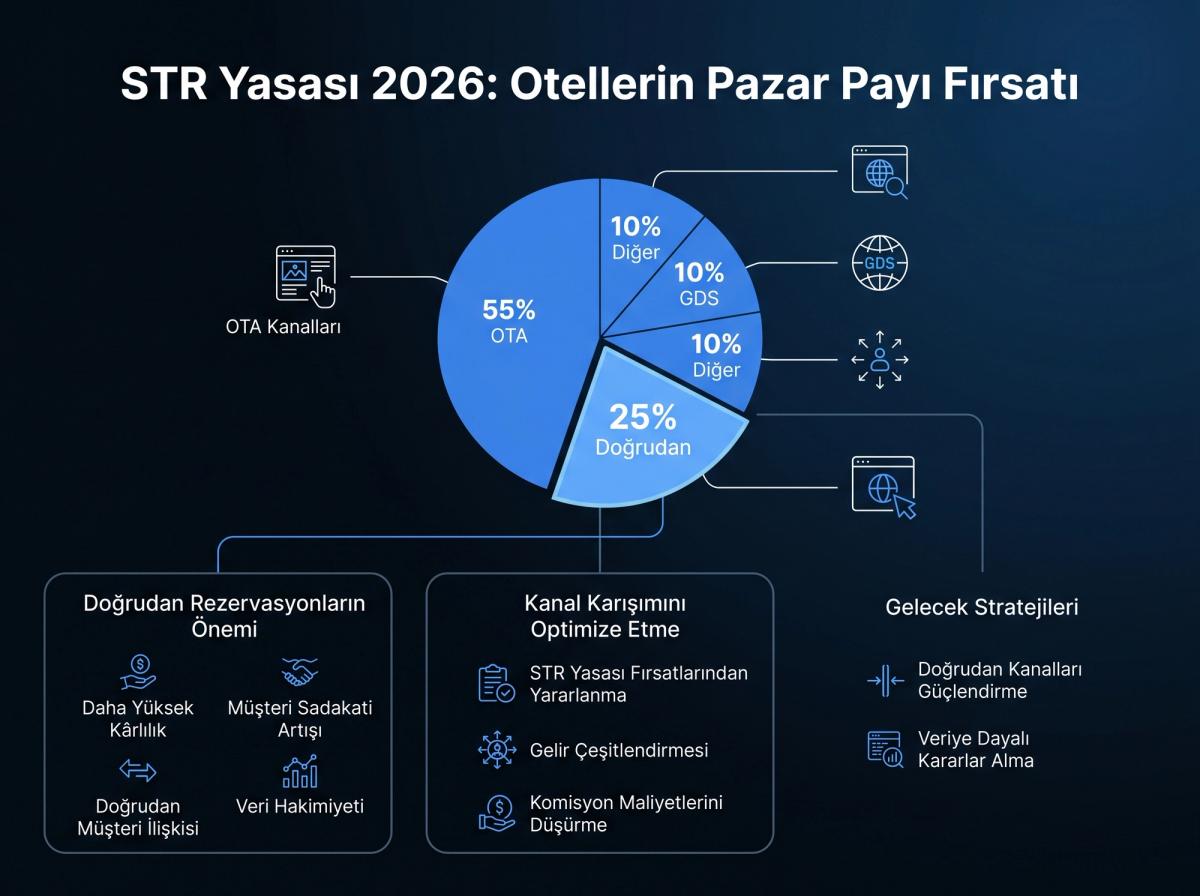
- Leverage the Billboard Effect: More than %50 of guests visit your website after seeing your hotel on an OTA. To convert this traffic into bookings, display a clear "Best Price Guarantee" message on your site.
Otelciro's Channel Manager allows you to manage your rates and inventory across all channels from a single place, while its direct booking engine provides the necessary infrastructure to implement these strategies.
Operational Readiness and Experience for a New Guest Segment
Guests shifting from the STR market to hotels may have different expectations. You must be operationally ready to win over this new segment and convert them into loyal customers. A successful transition is not just about filling empty rooms, but also about delivering a superior guest experience.
Adjusting Staffing and Service Standards
Increased occupancy creates operational pressure. Take proactive steps to meet this demand:
- Staff Planning: Re-evaluate your housekeeping and front desk staffing levels based on the expected increase in occupancy. For example, a %10 increase in occupancy might require adding 1-2 extra staff to the housekeeping team.
- Cross-Training: Train your staff to be proficient in multiple roles. During busy check-in times, having F&B staff assist the front desk can significantly reduce guest waiting times.
Meeting Guest Expectations
Guests accustomed to staying in STRs may expect different things from hotels. Understanding and meeting their needs will set you apart from the competition.
- Flexibility and Space: STR guests often seek more space and "home comforts". Market your family suites or connecting rooms towards this segment. Consider adding a small kitchenette or microwave for long-term stays.
- Service Offerings: Services like laundry facilities, grocery shopping assistance, or easy takeout from local restaurants combine the sense of independence offered by STRs with hotel comfort.
Watch For: Guests coming from STRs may not be accustomed to standard hotel service flows. Clearly explaining hotel amenities during check-in (breakfast hours, room service, Wi-Fi password, etc.) prevents potential misunderstandings and complaints from the outset.
Most importantly, don't hesitate to market the inherent advantages of hotels: 24-hour security, professional cleaning standards, readily available staff, and the assurance of a legal establishment. These elements are crucial decision factors, especially for guests sensitive to security and hygiene.
Competitive Advantage with Integrated Technology and Legal Compliance
To succeed in this new market, it's not limited to operational readiness. The ability to transform the right technology infrastructure and legal compliance into a marketing tool is key to maximizing your profitability.
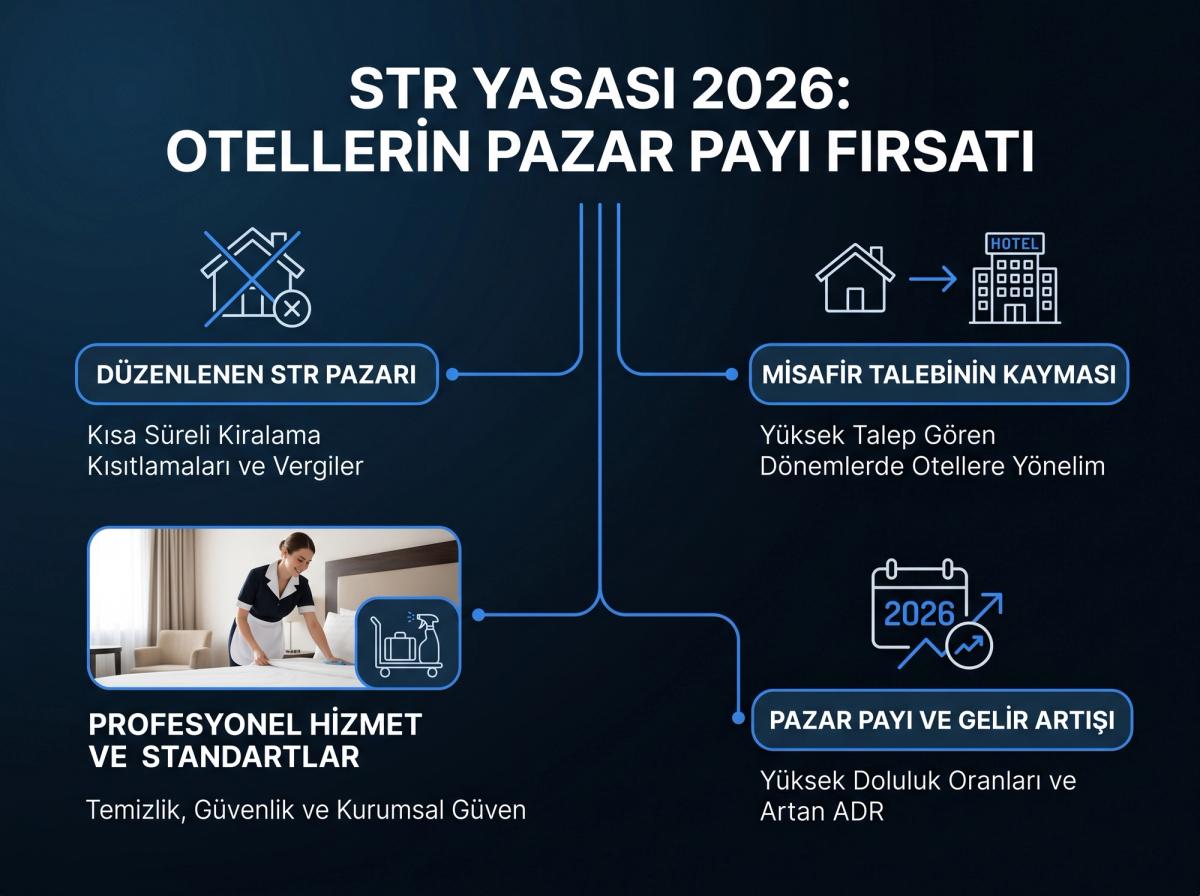
A photograph of a smiling housekeeping staff member meticulously making a bed in a hotel room. The environment is clean and tidy.
Dynamic Pricing and Demand Management
While market demand changes instantly, you lose revenue with static pricing. To turn the demand increase created by the contraction in STR supply into profit, you must adopt an agile revenue management strategy.
- Real-Time Data: An integrated system like Otelciro collects reservation data from all distribution channels in a single hub. This allows you to monitor market demand instantly and adjust your prices dynamically.
- Automated Rules: Set rules that automatically increase prices when certain occupancy thresholds are exceeded or when the booking pace accelerates. For example, if occupancy for a weekend exceeds %80, you can automatically increase the price of remaining rooms by %15.
Otelciro's integrated PMS, Revenue Management, and Distribution modules allow you to manage this process without manual effort, so you can focus on strategy.
Turning Compliance into Marketing Power
Legal compliance is not a cost item or a liability, but a strong competitive advantage. Guests seek trust and transparency, especially during uncertain times. Emphasizing that your hotel meets all legal requirements is a strong signal of trust.
- Marketing Messages: Use phrases like "T.C. Ministry of Culture and Tourism Approved Facility" or "Compliant with All Safety and Hygiene Regulations" on your website, social media, and reservation confirmation emails.
- Trust Factor: Highlight guest feedback that emphasizes your property's professionalism and legal status on guest review sites or your OTA profiles.
Pro Tip: Use Otelciro's reporting tools to generate all necessary data for tax reports and legal notifications with a single click. This both reduces your administrative burden and makes it easier to prove your full compliance. This compliance provides a critical advantage when making agreements with corporate clients and government institutions.
Data-Driven Market Intelligence and Agile Strategies
The changes brought by the STR Law 2026 will not be a one-off event. The market will enter a continuous process of change and adaptation with the law's enactment. In this dynamic environment, maintaining a competitive advantage means making agile decisions using data-driven market intelligence.
Monitor STR Data
Your competitors are no longer just the hotel next door; they are also legally operating STR units. Monitoring their supply, pricing, and occupancy data is vital for determining your own strategy.
- Market Analysis Tools: Utilize market analysis tools that track how the STR supply in your region is changing, their average nightly prices, and during which periods their occupancy increases. This data will guide you in creating your own pricing and promotion calendar.
- Understanding Demand Models: Analyze how demand is distributed between hotels and STRs during specific events or holiday periods. For example, if STRs fill up quickly during a festival period, this is a signal to increase your prices.
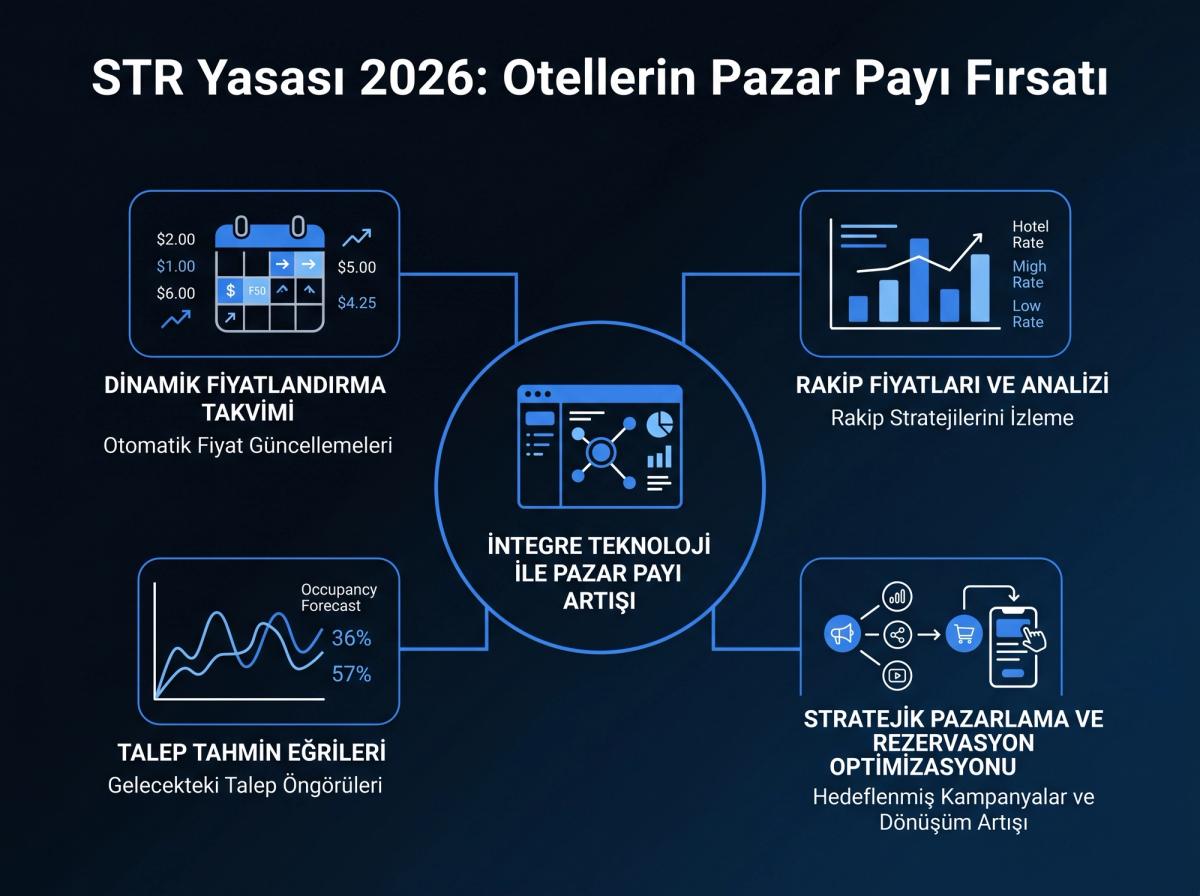
A screenshot of Otelciro's revenue management dashboard. It shows elements such as a dynamic pricing calendar, competitor prices, and demand forecast curves.
Agile Marketing and Pricing
Collecting data alone isn't enough. What's important is to quickly and effectively turn this data into action.
Example: Your market analysis shows that competitor STRs are significantly lowering their weekday prices. In response, you can immediately counter this competition by targeting the weekday business travel segment with a campaign like "Stay 3 Nights, Pay for 2" valid only through your direct website.
Otelciro's business intelligence and reporting dashboard combines all this data (internal reservation data, channel performance, market data) on a single screen. This allows you to instantly grasp market dynamics, update your pricing strategies with a few clicks, and seize new opportunities before your competitors. This agility will be the most valuable competency of the new era.
In this article, we saw that Turkey's Airbnb Law 2026 is not a threat for independent hotels, but a golden opportunity to regain market share, increase direct bookings, and optimize revenues. By transforming legal compliance into a strategic profit driver, hotels can gain a competitive advantage and enter a new period of growth. Otelciro's integrated PMS, Revenue Management, and Channel Manager modules offer the insights and tools you need to make this transition smoothly; from optimizing your direct booking engine to dynamically adjusting rates based on real-time market data. So, are you ready to turn regulation into your most powerful revenue driver?
Take Action
Using Otelciro's Channel Manager reports, analyze your current distribution costs and identify your 3 most expensive channels. Then, develop concrete strategies to shift 10% of bookings from these channels to direct bookings in the upcoming quarter.
Share this post
Frequently Asked Questions
How will the STR Law 2026 affect hotels?
The STR Law 2026 will create a fairer competitive environment for hotels by introducing licensing, tax, and safety standards for short-term rentals. This will lead to a reduction in unregulated STR supply and a shift in demand towards hotels, offering significant growth potential for occupancy, ADR, and RevPAR.
How can I increase the direct booking rate at my hotel?
To increase direct bookings, make your website mobile-friendly, offer a simple booking process, and create special offers valid only through the direct channel (e.g., free breakfast, room upgrade). Additionally, encourage guests to choose you over OTAs by offering a "Best Price Guarantee" on your website.
What is dynamic pricing in hotel revenue management?
It is the strategy of adjusting room rates in real-time based on market demand, occupancy rates, competitor prices, and booking pace. This approach helps maximize revenue during periods of high demand while encouraging occupancy during low periods.
How can I turn legal compliance into an advantage for my hotel?
Actively emphasize in your marketing materials (website, social media) that you are fully compliant with all legal regulations, tax obligations, and safety standards. This builds trust with guests and positions your hotel as a reliable and professional option against alternatives that carry uncertainty.