You get out of bed at 6 AM and notice that your hotel's occupancy has jumped from 60% to 95%, but your rates remain low. You need to intervene quickly, but you must go to the office to access your current on-premise system. This scenario highlights one of the biggest operational challenges independent hoteliers face in 2026: a lack of agility. For hoteliers caught between high OTA commissions and rising operating costs, being able to manage operations anytime, anywhere is key to preventing revenue loss and increasing profitability. This article will explain in concrete steps how cloud-based Property Management Systems (PMS) can help independent hotels operate more efficiently, maximize revenue, and transform the guest experience.
What You'll Learn
- Boosting Profitability: The Power of Shifting from CapEx to OpEx
- Management from Anywhere: Enhancing Operational Agility
- Maximizing Revenue: An Integrated Tech Ecosystem
- Peace of Mind: Lightening the IT Burden and Ensuring Security
- Future-Proofing: Transforming the Guest Experience
- Frequently Asked Questions
Boosting Profitability: The Power of Shifting from CapEx to OpEx
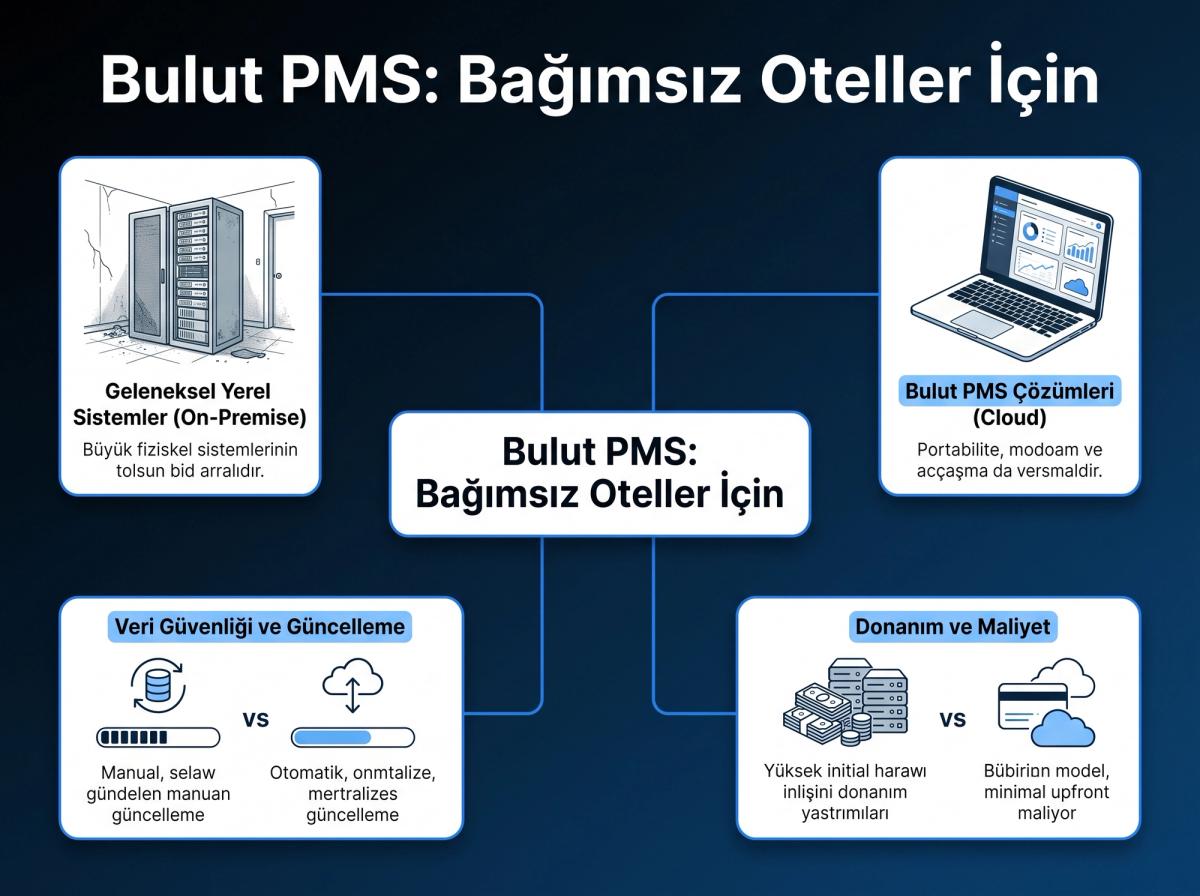
One of the biggest challenges for an independent hotelier is managing heavy capital expenditures (CapEx). Installing an on-premise PMS sits right at the heart of this problem. It requires an initial investment of tens of thousands of euros for servers, software licenses, installation, and IT consulting. This directly impacts cash flow and drains capital that could otherwise be allocated to other critical areas—such as room renovations or marketing.
A cloud PMS completely transforms this financial model. It allows you to transition from a massive upfront investment to predictable, manageable monthly operating expenses (OpEx). This simplifies the budgeting process and protects the hotel's financial health.
Uncovering Hidden IT Costs
The cost of on-premise systems doesn't end with the initial purchase. There are "invisible" costs such as electricity to cool the server room, annual maintenance contracts, replacing failed hardware, and the IT support needed for regular software updates. For a 75-room boutique hotel, these hidden costs can add an extra burden of €3,000 to €5,000 per year.
Example: Consider the initial investment cost of an on-premise PMS for a 50-room hotel: server hardware (€4,000), software licenses (€6,000), installation and configuration (€2,000). That is a total CapEx of €12,000. In contrast, a cloud-based PMS for the same property operates at an OpEx starting at around €300 per month. The annual cost comes to €3,600, keeping capital right in the hotel's reserves.
Optimizing Cash Flow and Budgeting
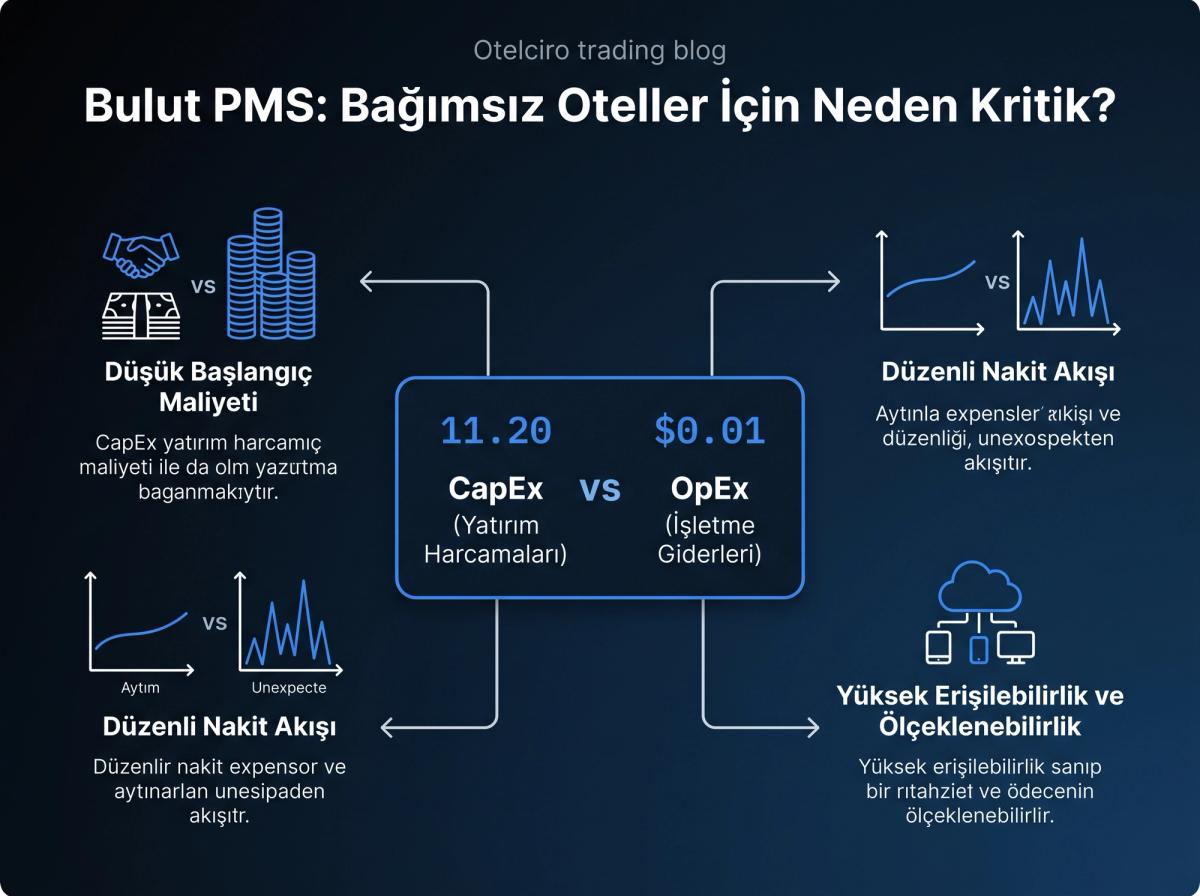
Shifting to an OpEx model makes IT spending predictable. You know exactly what you will pay each month, eliminating unexpected hardware breakdown costs. This predictability directly impacts the hotel's GOPPAR. Reduced IT infrastructure expenses flow straight to the bottom line. This improvement in cash flow gives your hotel the flexibility to invest more in revenue-generating initiatives like marketing campaigns or staff training.
Management from Anywhere: Enhancing Operational Agility
In the hospitality world of 2026, speed is the most valuable asset. Market conditions can shift in an instant: a festival announcement, a competitor's price drop, or a sudden group cancellation. An on-premise PMS ties you physically to the hotel, limiting your ability to react immediately to these changes. A cloud PMS, on the other hand, puts your operations in your pocket, on your tablet, or on your home computer.
Real-Time Decision-Making Capability
Imagine a revenue manager attending a conference who notices their hotel's occupancy is climbing faster than anticipated. Logging into the PMS from a smartphone, they can bump up the rate for the last remaining rooms by 15%. This simple action takes just a few minutes and can generate hundreds of euros in incremental revenue for that night. With an on-premise system, that opportunity would have slipped away long before they returned to the office.
Pro Tip: Make mobile PMS access a daily habit. Running a quick check on occupancy, ADR, and competitor pricing over your morning coffee or at the end of the day is a critical ritual for proactive management. It shifts you from reactive firefighting mode into strategic decision-making mode.
Building Efficient, Lean Teams
Independent hotels typically operate with smaller teams. A cloud PMS turns this lean structure into an advantage. A general manager can oversee multiple properties from a single centralized dashboard. This is a game-changer, especially for small hotel groups looking to boost profitability across multiple properties in their portfolio. In the event of a staff shortage, a manager can assist with check-ins remotely or respond to booking requests, ensuring operational continuity. This flexibility means higher productivity with fewer staff and hands you back your most valuable resource: time.
Maximizing Revenue: An Integrated Tech Ecosystem
Modern hospitality cannot be run on siloed software solutions. Profitability lies in an integrated ecosystem where technologies communicate seamlessly with one another. By their very nature, cloud PMS platforms are built to deliver this integration. Unlike on-premise systems, whose integration processes are often clunky and expensive, cloud-based solutions connect effortlessly to other mission-critical systems via APIs.
Strategies to Drive Direct Bookings
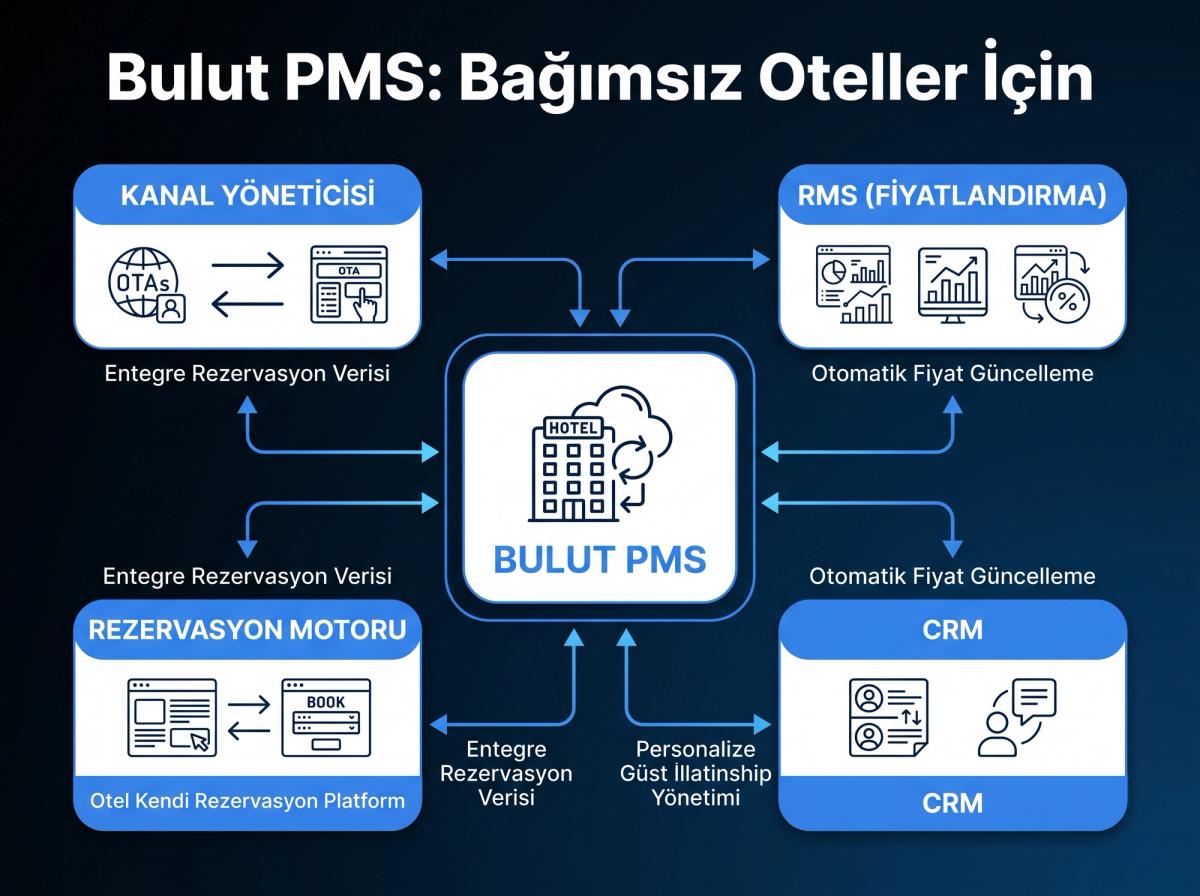
A cloud PMS exchanges real-time data with your website's booking engine (IBE), channel manager, and CRM. This ensures that the guest always sees the most up-to-date rate and inventory on your website. Direct booking killer scenarios, such as a room appearing on an OTA showing as 'sold out' on your own site due to a channel manager lag, are eliminated. An integrated CRM allows you to present personalized offers using past guest data, boosting direct revenue by saving on OTA commissions.
Dynamic Pricing and Distribution Strategies
Revenue management is where integration is at its strongest. When your cloud PMS integrates with a Revenue Management System (RMS), your pricing strategy shifts from reactive to proactive. The RMS analyzes market demand, competitor rates, and your hotel's occupancy data. It then automatically pushes optimum rate recommendations to the PMS, and from there to all your distribution channels.
Example: Consider an 80-room city hotel with an ADR of €150 and an occupancy of 75%. That means approximately €112.5 RevPAR. Achieving just a 5% increase in ADR with machine learning-based dynamic pricing can add approximately €11,000 to monthly revenue. This is a result that is nearly impossible to achieve manually with an isolated on-premise system.
Peace of Mind: Lightening the IT Burden and Ensuring Security
Running a hotel is complex enough; you don't need to be an IT manager on top of it. An on-premise PMS burdens you with technical responsibilities such as hardware maintenance, software updates, data backups, and cybersecurity. A server crash means all your operations grind to a halt. This risks both lost revenue and damage to your reputation.
Automating System Maintenance and Updates
With a cloud PMS, all these burdens shift to your service provider. Software updates and new features are installed automatically in the background without you noticing. Your data is securely backed up across multiple servers in geographically diverse locations. This maximizes system uptime and reduces the risk of data loss to virtually zero.
Watch For: In on-premise systems, data backup is often a manual process and can easily be neglected. Realizing after a system failure that your last backup is from a week ago is a hotelier's nightmare. Cloud providers, on the other hand, implement continuous and automated backup protocols.
Data Integrity and Security Protocols
Cyberattacks are becoming an increasing threat to the hospitality industry. As Skift points out, hotels are attractive targets because they store guests' personal and financial data. It is financially impossible for an independent hotel to build a security infrastructure on the scale offered by major cloud providers. Cloud PMS providers invest millions of dollars in cutting-edge firewalls, encryption standards (such as PCI DSS compliance), and intrusion detection systems. This means both your data and your guests' data are safe, giving you peace of mind when it comes to protecting your hotel's digital assets.
Future-Proofing: Transforming the Guest Experience
Technology does not merely make operations efficient; it also forms the foundation of the guest experience. The guest of 2026 expects a digital, personalized, and seamless journey. On-premise systems, with their legacy technology, often fall short of meeting these expectations and stand as an obstacle to innovation.
Growth-Ready Infrastructure and Innovative Technologies
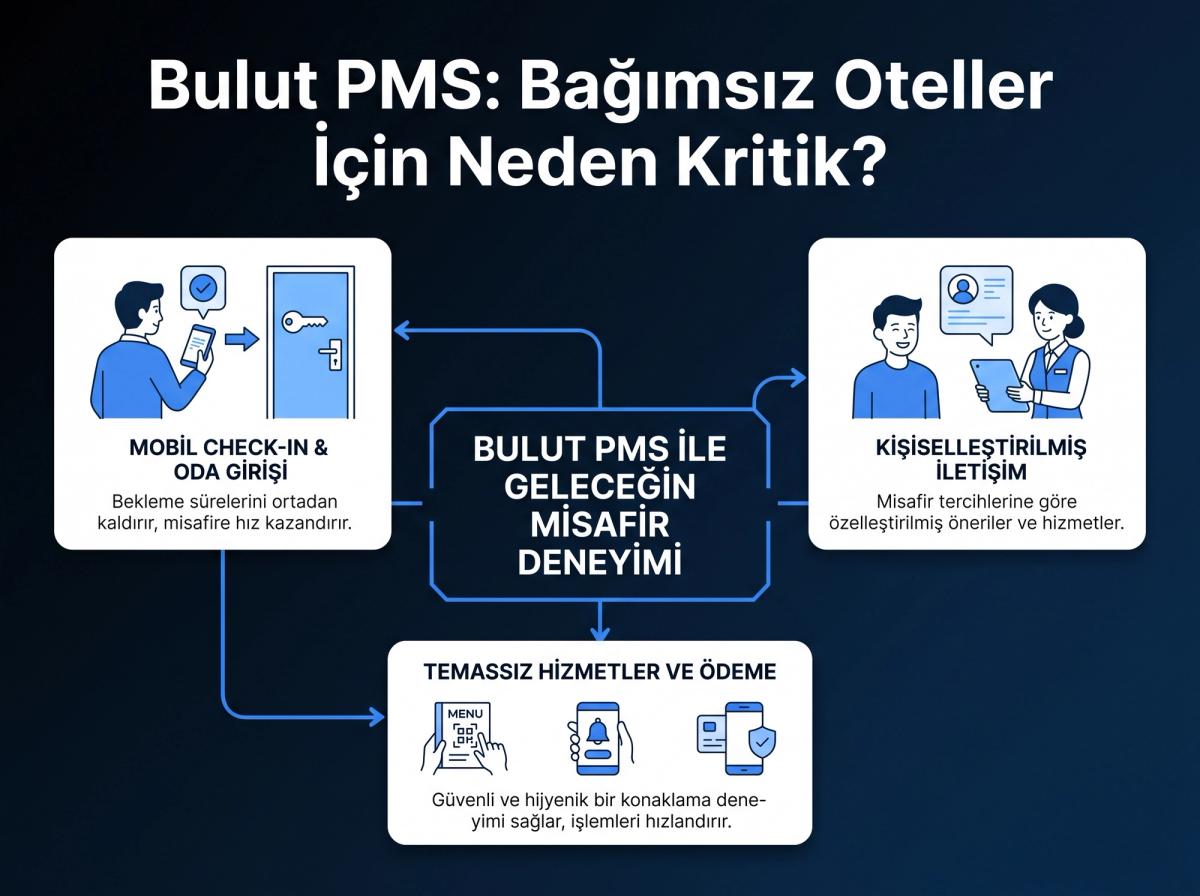
Imagine adding a new floor to your hotel or opening a second property. With an on-premise system, this can mean an expensive hardware upgrade and a complex setup process. With a cloud PMS, scaling is as simple as changing your subscription plan. Furthermore, it offers a flexible infrastructure to integrate next-generation technologies such as mobile check-in, digital keys, in-room tablets, or AI-driven search optimization. The cloud prepares your hotel not just for today's needs, but for tomorrow's opportunities.
Personalizing the Digital Guest Journey
A cloud PMS centralizes guest data, opening up opportunities for personalization at every stage of the stay. You can send a pre-check-in email offering a room upgrade, allow them to book a spa appointment via a mobile app during their stay, or send a special discount code for their next stay after check-out. Access to real-time guest data lets you resolve issues proactively. For instance, seeing immediately that a guest reported a Wi-Fi issue allows you to dispatch the maintenance team right away. These small touches boost guest satisfaction, drive positive reviews, and build loyalty.
As we head toward 2026, gaining a competitive edge for independent hotels requires not only delivering great service, but also investing in the right technology. The costs, operational constraints, and security risks of on-premise systems pale in comparison to the agility, integration power, and guest experience transformation offered by cloud-based Property Management Systems. Cloud PMS allows hoteliers to shift from CapEx to OpEx to increase profitability, optimize distribution strategies with Otelciro's PMS and Channel & Revenue Management modules, boost efficiency with OtelGPT/AI-powered operations, and create memorable moments with the Guest Experience module. The future of hospitality is built on a tech-enabled, guest-centric, and accessible-anywhere structure. How ready is your hotel for this transformation?
Call to action: Audit your current PMS's integration capabilities, remote access features, and annual maintenance costs. Request a free demo to discover how Otelciro's cloud-based solutions can boost your hotel's operational efficiency and revenue potential.
Share this post
Frequently Asked Questions
What are the main advantages of a cloud PMS over an on-premise PMS?
Cloud PMS offers key advantages such as lower upfront costs (OpEx vs. CapEx), operational flexibility through access from anywhere, automatic updates, and top-tier data security. It also integrates much more easily with other hospitality technologies.
How complex is the migration process to a cloud PMS?
Modern cloud PMS providers work with dedicated teams to make the migration process as smooth as possible. Data migration, staff training, and setup can typically be completed within a few weeks with minimal disruption to hotel operations.
Is a cloud PMS really necessary for an independent hotel?
Yes, absolutely. Independent hotels need technological agility even more to compete with major chains. A cloud PMS allows even properties with limited resources to leverage the latest technology to maximize revenue, boost efficiency, and enhance the guest experience.
Is data security in a cloud PMS better than on-premise systems?
Yes. Reputable cloud PMS providers invest heavily in industry-standard security protocols, continuous monitoring, and disaster recovery plans that an independent hotel could not afford on its own. This provides a far more secure environment for protecting guest data.