![Middle East Crisis: Turkey's Hotel Opportunity [2026]](https://cdn.sanity.io/images/1la98t0z/production/3c8cd1f63bba930eea22799e7e9de638fa451297-1200x1200.png?w=1920&q=65&auto=format&fit=max)
Regional Crisis Is Redrawing the Global Tourism Map
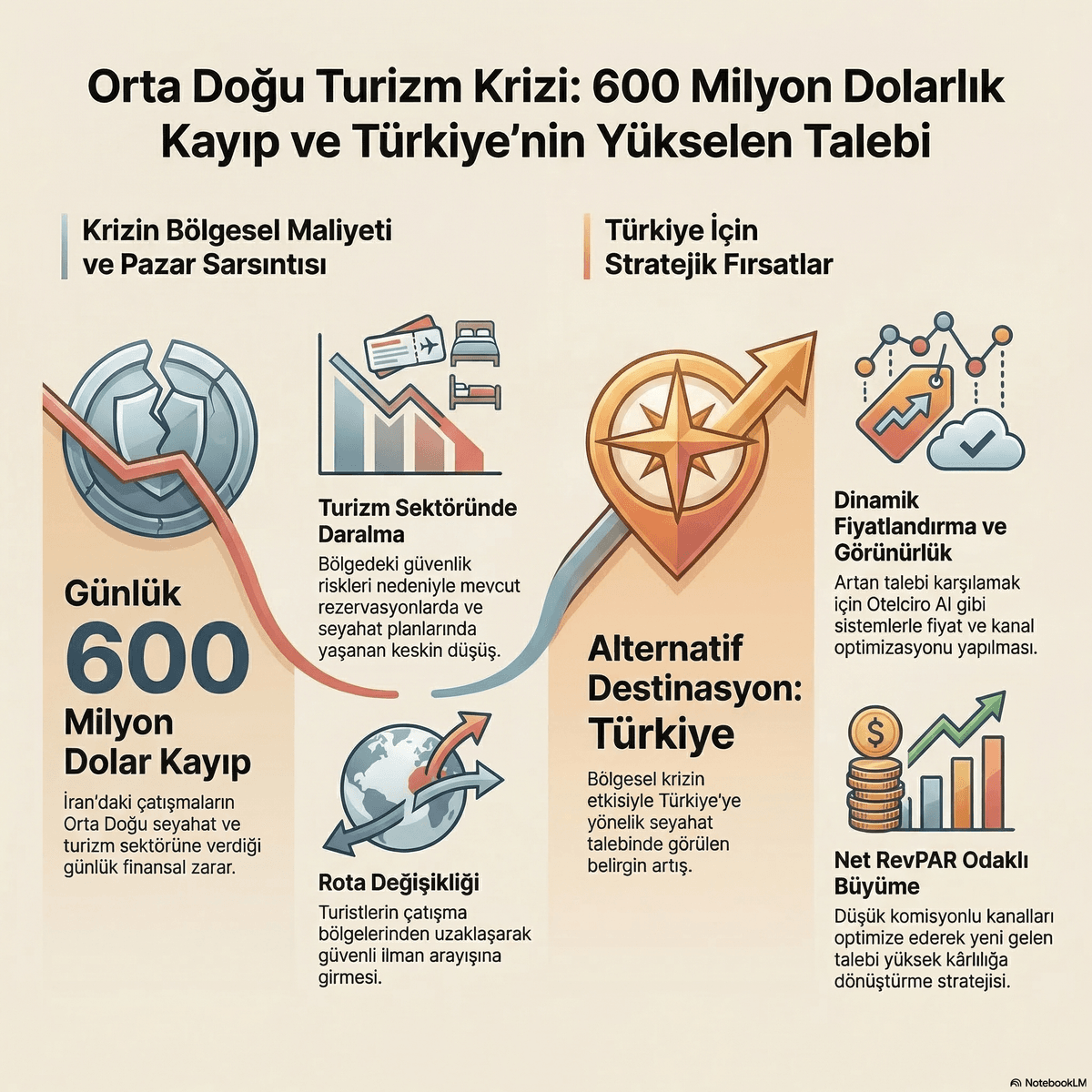
Iran-centered conflicts in the Middle East are costing the regional tourism economy $600 million per day. This figure covers not just direct tourism revenues but the combined impact across airlines, accommodation, food and beverage, retail, and transportation sectors.
Embed this image on your site
<a href="https://otelciro.com/en/news/orta-dogu-turizm-krizi-turkiye">
  <img src="https://cdn.sanity.io/images/1la98t0z/production/3c8cd1f63bba930eea22799e7e9de638fa451297-1200x1200.png" alt="Middle East tourism crisis 600 million dollar loss and Turkey opportunity infographic" width="800" />
</a>
<p>Source: <a href="https://otelciro.com">OtelCiro</a> — AI Hotel Revenue Management</p>
The tourism industry is one of the most sensitive to security risks. Regional instability causes sharp drops in existing reservations while redirecting potential travelers toward alternative destinations. This "route change" spells crisis for some countries and unprecedented opportunity for others.
Turkey stands as the most advantageously positioned country in this equation by a wide margin.
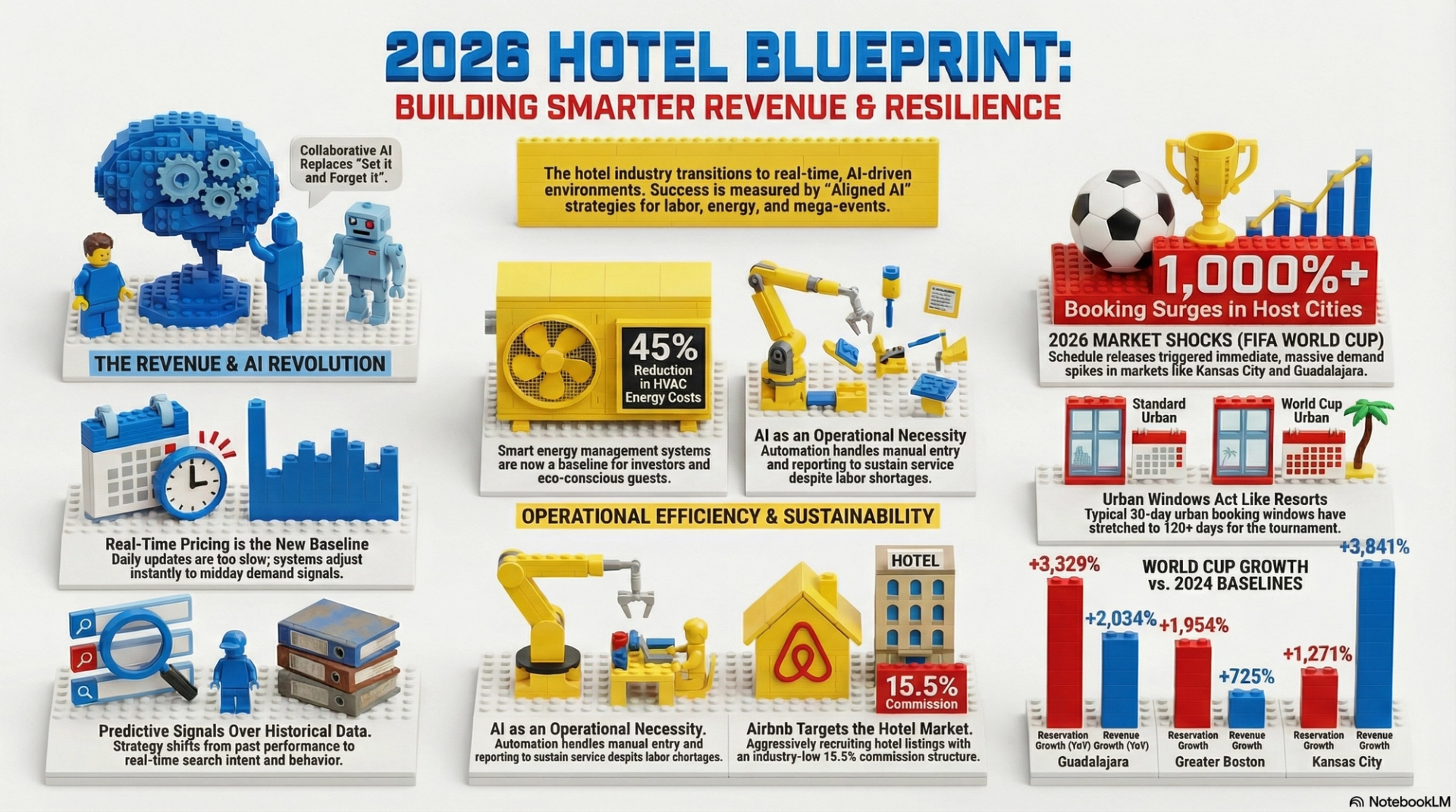
Related reading: FIFA 2026 World Cup: Hotel Strategy Guide
Anatomy of the Crisis: Impacts on Tourism
Direct Effects
Reservation cancellations and declines:
- 40-60% reservation cancellations in destinations near the conflict zone
- 70-80% decline in new bookings (countries closest to the crisis)
- 80%+ cancellations in group travel and MICE (meetings, incentives, conferences, events) segment
- Cruise lines rerouting or canceling itineraries
Airline impacts:
- Flight route changes to avoid conflict airspace
- Rising insurance costs reflected in ticket prices
- Some airlines suspending regional flights
- Disruption of connecting flight networks
Investment climate:
- Regional hotel investment projects suspended or postponed
- Insurance premium increases
- Rising operational costs (security, staffing)
Route Changes: Where Are Travelers Heading?
Tourist flows moving away from conflict zones are concentrating on specific "safe harbor" destinations:
Primary alternative: Turkey
- Geographic proximity (similar climate, similar cultural appeal)
- Strong infrastructure (airports, hotels, transportation network)
- Price competitiveness
- Visa convenience (e-visa for many countries)
Secondary alternatives:
- Greece (Mediterranean segment)
- Georgia / Azerbaijan (Caucasus segment)
- Egypt (partially — dependent on its own security perception)
- North Africa (Morocco, Tunisia)
Embed this image on your site
<a href="https://otelciro.com/en/news/orta-dogu-turizm-krizi-turkiye">
  <img src="https://cdn.sanity.io/images/1la98t0z/production/8a93e1fc60466341571b6624007b4e830262ba56-1200x670.png" alt="OtelCiro ecosystem all-in-one platform overview" width="800" />
</a>
<p>Source: <a href="https://otelciro.com">OtelCiro</a> — AI Hotel Revenue Management</p>
Turkey's Strategic Advantages
Turkey's positioning as an alternative destination isn't mere "crisis opportunism" — it's a sustainable growth potential built on structural strengths:
1. Infrastructure Power
- Istanbul Airport: One of the world's largest airports, direct flights to 200+ destinations
- Antalya Airport: One of Europe's busiest charter destinations
- Hotel capacity: 1.5 million+ bed capacity, properties across every segment
- Transportation network: High-speed rail, domestic flights, bus network
2. Product Diversity
Turkey can deliver most of the experiences offered by Middle Eastern destinations:
- Cultural tourism: Istanbul, Cappadocia, Ephesus (alternative to Dubai's luxury shopping appeal)
- Beach tourism: Antalya, Bodrum, Cesme (coastline diversity)
- Wellness and spa: Thermal springs, spa hotels
- Gastronomy: UNESCO gastronomy cities (Gaziantep, Hatay)
- MICE: Istanbul congress capacity, Antalya resort MICE
3. Price Advantage
Analysis of global traveler profiles shows that price-to-value ratio is decisive in destination choice:
- Average 5-star hotel night in Turkey: 40-60% of Western Europe, 50-70% of Dubai
- Food, beverage, and activity costs: Half of comparable destinations
- Exchange rate advantage: TRY position against EUR and USD creates extra value for foreign guests
4. Security Perception
NATO membership, professional tourism security infrastructure, and international-standard insurance coverage differentiate Turkey's security perception from regional crises.
Related reading: Hilton Enters the AI Race with AI Planner: The Chain Hotel AI Arms Race Heats Up
Strategy for Converting Demand Growth Into Revenue
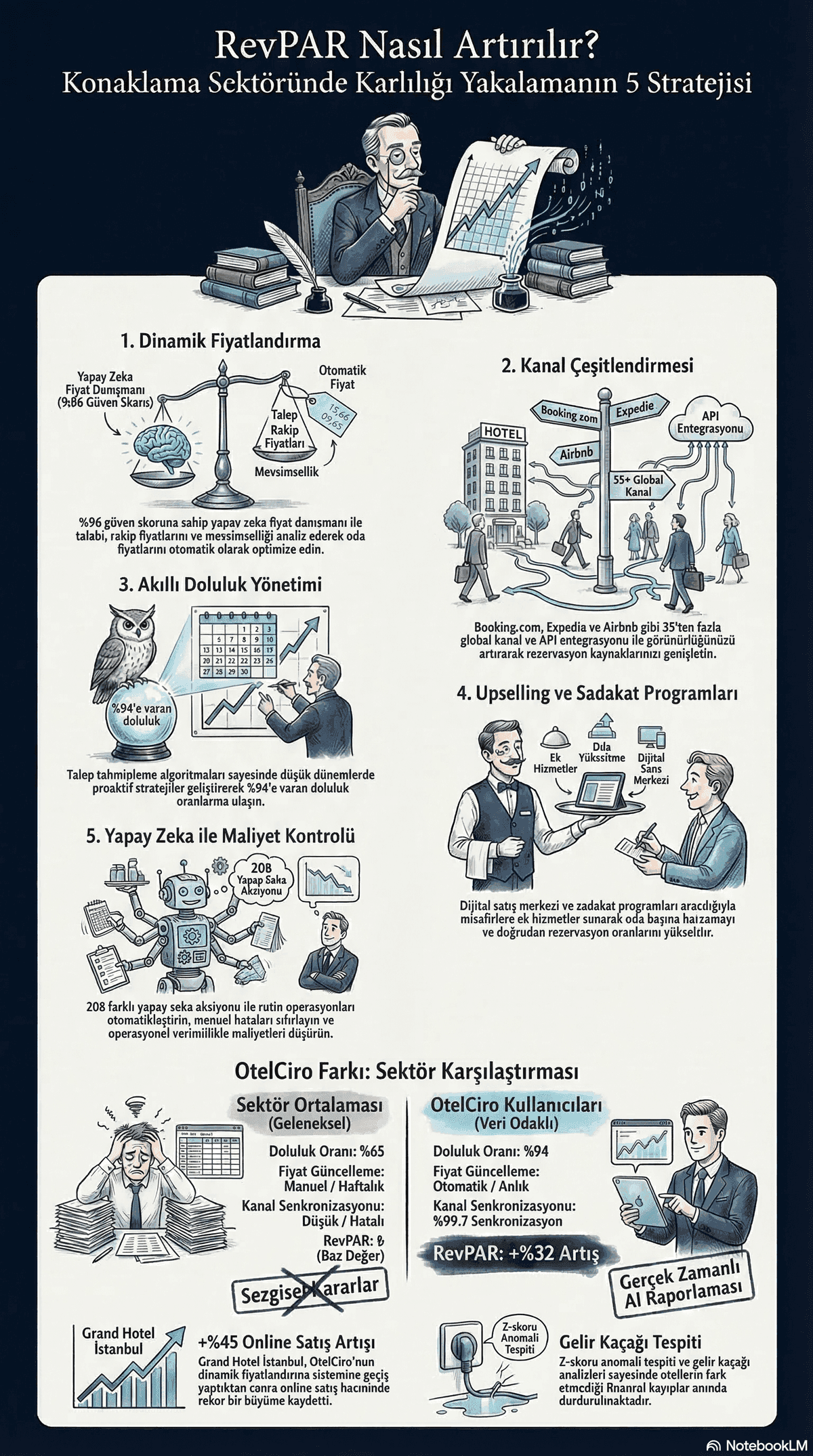
Capturing increased demand not just as "occupancy" but as "profitability" is critical. Here's a Net RevPAR-focused growth strategy:
Dynamic Pricing for Demand Management
During crisis periods, demand rises suddenly and unpredictably. Dynamic pricing is the only way to convert this volatility into revenue:
Crisis-period pricing principles:
- The opportunity window is short: Crisis-driven demand surges may not be permanent — the first 30-60 days are critical
- Market segmentation: Which source markets are showing demand increases? (Israel, Gulf states, Iran?)
- Room-type optimization: Premium room demand may spike (the luxury segment is relocating)
- Minimum length of stay: Apply 2-3 night minimums during high-demand periods
- Early booking incentives: Attractive advance rates to spread demand across future months
Channel Optimization: Steer Toward Low-Commission Channels
Meeting increased demand through low-commission or commission-free channels rather than high-commission OTAs maximizes Net RevPAR:
Channel priority order:
- Direct website: 0% commission — drive traffic via SEO, Google Ads, social media
- Google Hotels: Low CPC model — with a 5-channel optimization strategy
- Metasearch (Trivago, Kayak): Low-medium commission
- OTAs (Booking.com, Expedia): High commission but high volume — for billboard effect
- Tour operators: Long-term contracts, guaranteed occupancy
Net RevPAR-Focused Growth
Hotels aware of the cost of empty rooms focus not just on occupancy increases but on net profitability:
Net RevPAR formula:
- Gross RevPAR - OTA commissions - customer acquisition cost = Net RevPAR
- Target: Optimize channel mix alongside occupancy growth to increase Net RevPAR by 15-25%
Embed this image on your site
<a href="https://otelciro.com/en/news/orta-dogu-turizm-krizi-turkiye">
  <img src="https://cdn.sanity.io/images/1la98t0z/production/7aad3e230cde611ee176402d03b7bcf0a35316f2-1200x2150.png" alt="RevPAR improvement strategies and tactics" width="800" />
</a>
<p>Source: <a href="https://otelciro.com">OtelCiro</a> — AI Hotel Revenue Management</p>
European Hotel Investment Radar: Turkey in Focus
The reshaping of tourism flows by regional crisis has also shifted investor radars.
2025: A Record Year
European hotel investments hit a record 14.65 billion EUR in 2025. This volume demonstrates how high investor confidence in tourism remains.
Global Chains' New Route: TURKEY
International hotel chains have accelerated their investment plans for Turkey:
- Accor: Planning 20 new hotels by 2030 (Istanbul, Antalya, Izmir, Cappadocia)
- IHG Vignette Collection: Entering Istanbul Karakoy — boutique luxury segment
- Marriott / Hilton: Plans to expand existing portfolios
- Wyndham: Growing midscale hotel network
Chains' AI and Loyalty Power
Global chains are entering the Turkish market with two critical advantages:
1. AI infrastructure:
- Centralized revenue management (global RMS)
- Dynamic pricing automation
- Guest behavior analytics (CRM)
- Channel optimization (global distribution agreements)
2. Loyalty programs:
- Marriott Bonvoy: 190+ million members
- Hilton Honors: 170+ million members
- IHG One Rewards: 120+ million members
- This member base pushes direct booking rates to 50-70%
Independent Hotels' Digital Defense
As seen in the Booking.com vs. Expedia comparison, OTAs represent both opportunity and threat for independent hotels. The growing presence of global chains intensifies competition further.
The defense strategy for independent Turkish hotels:
- AI-native revenue management: Pricing intelligence at the same level as chains
- Direct booking-focused strategy: Reducing OTA dependency
- Personalized experience: Unique guest experiences countering chains' standardized approach
- Local storytelling: Boutique, authentic, local — values chains cannot replicate
- Technology parity: Operational efficiency through AI-native systems like OtelCiro
Related reading: Bleisure 2026: Business + Leisure Travel Merges, Are Hotels Ready?
Marketing Strategy During Crisis Periods
Message Tone
Marketing during a crisis requires a delicate balance:
What to do:
- Convey the "safe harbor" message indirectly and elegantly
- Highlight Turkey's positive attributes (culture, gastronomy, nature)
- Run targeted campaigns by source market (toward travelers from affected regions)
- Communicate flexibility and reassurance (flexible cancellation, travel insurance)
What to avoid:
- Explicitly referencing other destinations' crises
- Using aggressive or opportunistic tones
- Direct phrases like "crisis discount"
Digital Marketing Tactics
Google Ads:
- Source market-based search campaigns
- "Alternative destination" + country name targeting
- Dynamic Search Ads (DSA) for broad coverage
Social Media:
- Turkey experience content (video, stories, reels)
- Influencer partnerships (travel influencers in target markets)
- User-generated content (UGC) campaigns
Email Marketing:
- "Return to Turkey" campaign to existing guest database
- Early booking opportunities
- Personalized destination recommendations
2026 Vision: From Crisis to Permanent Growth
2026 hospitality vision reports indicate that demand shifts created by regional crises can have lasting effects. Once a traveler discovers Turkey as an "alternative," the probability of returning remains high even after the crisis ends.
Strategy for Permanent Gains
- Make the first experience perfect: Exceeding the expectations of a crisis-driven guest means winning a lifetime customer
- CRM and loyalty: Maintain the relationship after the first visit (email, special offers, reminders)
- Source market diversification: Crisis periods are opportunities to discover new markets
- Product development: Packages and experiences suited to new guest profiles
- Digital presence strengthening: SEO, social media, OTA profiles — permanent visibility
Regional Crisis Readiness Checklist
An immediate action plan every Turkish hotel should implement:
Immediate (1-2 Weeks)
- Update pricing strategy (is dynamic pricing active?)
- Audit OTA profiles (are content, photos, and rate plans current?)
- Launch source market-based Google Ads campaigns
- Create target market-specific landing pages on the website
- Activate flexible cancellation policies
Short-Term (2-4 Weeks)
- Optimize channel mix (increase direct booking weight)
- Add Turkey experience content to social media calendar
- Send "Return to Turkey" campaign to existing guest database
- Contact tour operators and MICE organizers
- Prepare multilingual content (Arabic, Hebrew, Farsi)
Medium-Term (1-3 Months)
- Measure RevPAR impact and calibrate strategy
- Analyze guest profiles from new source markets
- Adapt product and service packages to new segments
- Update CRM strategy (new guest segments)
- Evaluate investment and growth opportunities
Conclusion: Their Crisis, Turkey's Opportunity
The regional crisis in the Middle East creates an opportunity for Turkish tourism to capture a share of the $600 million daily loss pool. However, treating this opportunity as mere "occupancy growth" is insufficient.
True success lies in meeting increased demand with a Net RevPAR-focused strategy: capturing the optimal price point through dynamic pricing, steering toward low-commission channels, and winning permanent customers by delivering a flawless first experience.
The 14.65 billion EUR investment wave from Europe and global chains' Turkey plans prove the industry sees this opportunity. Independent Turkish hotels can position strongly in this competition with AI-native technology and smart channel strategy.
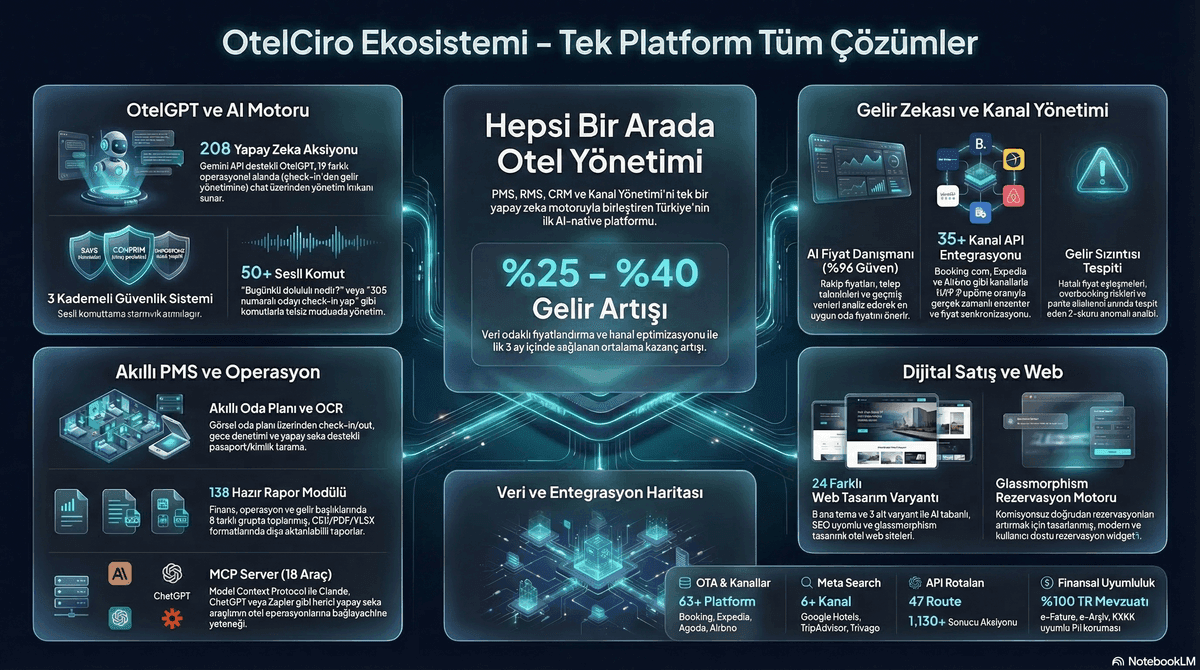
OtelCiro's AI engine and channel manager enable you to manage dynamic pricing that adapts to instant demand changes during crisis periods and multi-channel optimization from a single platform. To make the most of this opportunity, get in touch now.
![Hilton AI Planner: The Hotel AI Arms Race [2026]](https://cdn.sanity.io/images/1la98t0z/production/68d57604b4e1fdcb0fd2bdc641a6507a7edddd01-1200x1200.png?w=1920&q=50&auto=format&fit=max)
![FIFA World Cup [2026]: Essential Hotel Strategy](https://cdn.sanity.io/images/1la98t0z/production/b3ab34c06f2d2dbe4e4bdc0bb510e1b0f5b373b0-1200x670.png?w=1920&q=50&auto=format&fit=max)