
![What Is Dynamic Pricing? Hotel Guide [2026]](https://cdn.sanity.io/images/1la98t0z/production/d86debe7faa583fa0023f7b4fb5d1a9bc7ff30ea-1376x768.jpg?w=1920&q=65&auto=format&fit=max)
Introduction to Dynamic Pricing
Dynamic pricing is a revenue management strategy where room rates are continuously adjusted based on real-time market conditions, demand patterns, and competitive landscape. Unlike static pricing with fixed seasonal rates, dynamic pricing treats every day — and sometimes every hour — as a unique pricing opportunity.
Related reading: How Many Hours a Year Does Your Hotel Run Empty? The True Cost of Unsold Rooms
How Dynamic Pricing Works
The Core Principle
At its foundation, dynamic pricing follows the economic principle of supply and demand. When demand is high and supply is limited, prices increase. When demand drops, prices decrease to stimulate bookings.
Data Inputs
Modern dynamic pricing systems analyze multiple data streams simultaneously:
- Historical booking data: Patterns from previous years, including lead times and booking curves
- Competitor pricing: Real-time rates from competing properties
- Market events: Conferences, festivals, sports events, and holidays
- Weather forecasts: Particularly relevant for resort and leisure properties
- Day-of-week patterns: Business vs. leisure demand fluctuations
- Booking pace: How fast reservations are coming in compared to expectations
AI-Powered Decision Making
In 2026, the most effective dynamic pricing systems use machine learning models that can identify complex patterns humans might miss. These models process thousands of data points to recommend optimal prices for each room type, each night.
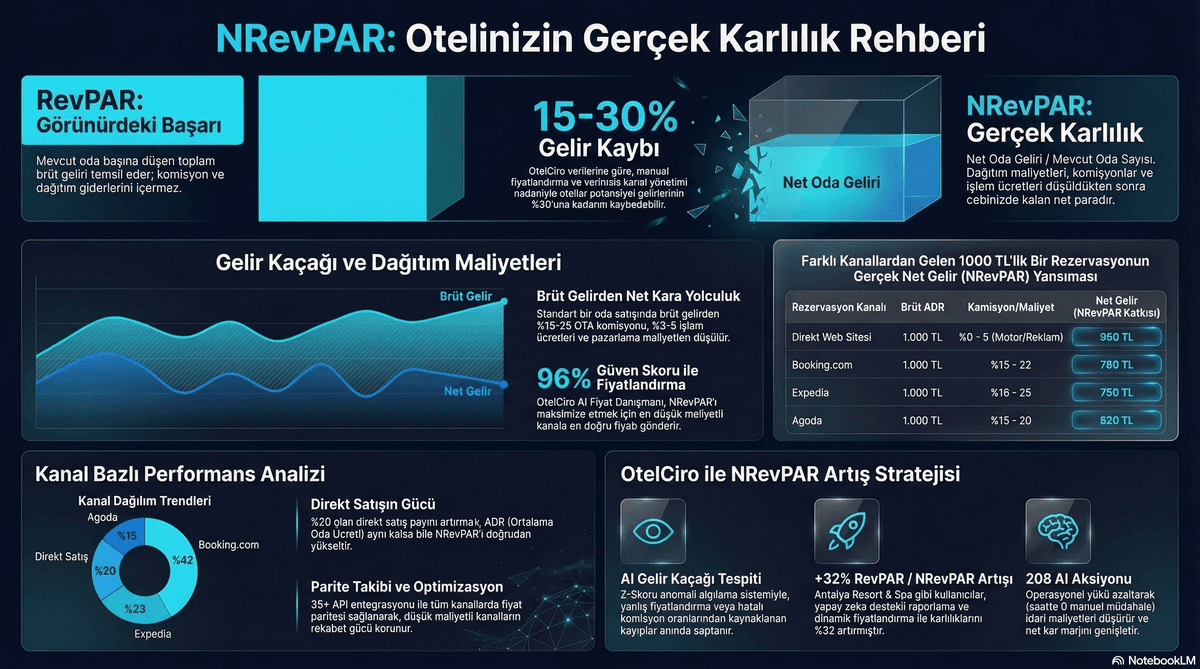
Embed this image on your site
<a href="https://otelciro.com/en/news/what-is-dynamic-pricing">
  <img src="https://cdn.sanity.io/images/1la98t0z/production/bbd5fe1bd7958fd95861b71905cdb9701e352e80-1200x669.png" alt="NRevPAR (Net Revenue) calculation method" width="800" />
</a>
<p>Source: <a href="https://otelciro.com">OtelCiro</a> — AI Hotel Revenue Management</p>
Benefits of Dynamic Pricing
Revenue Optimization
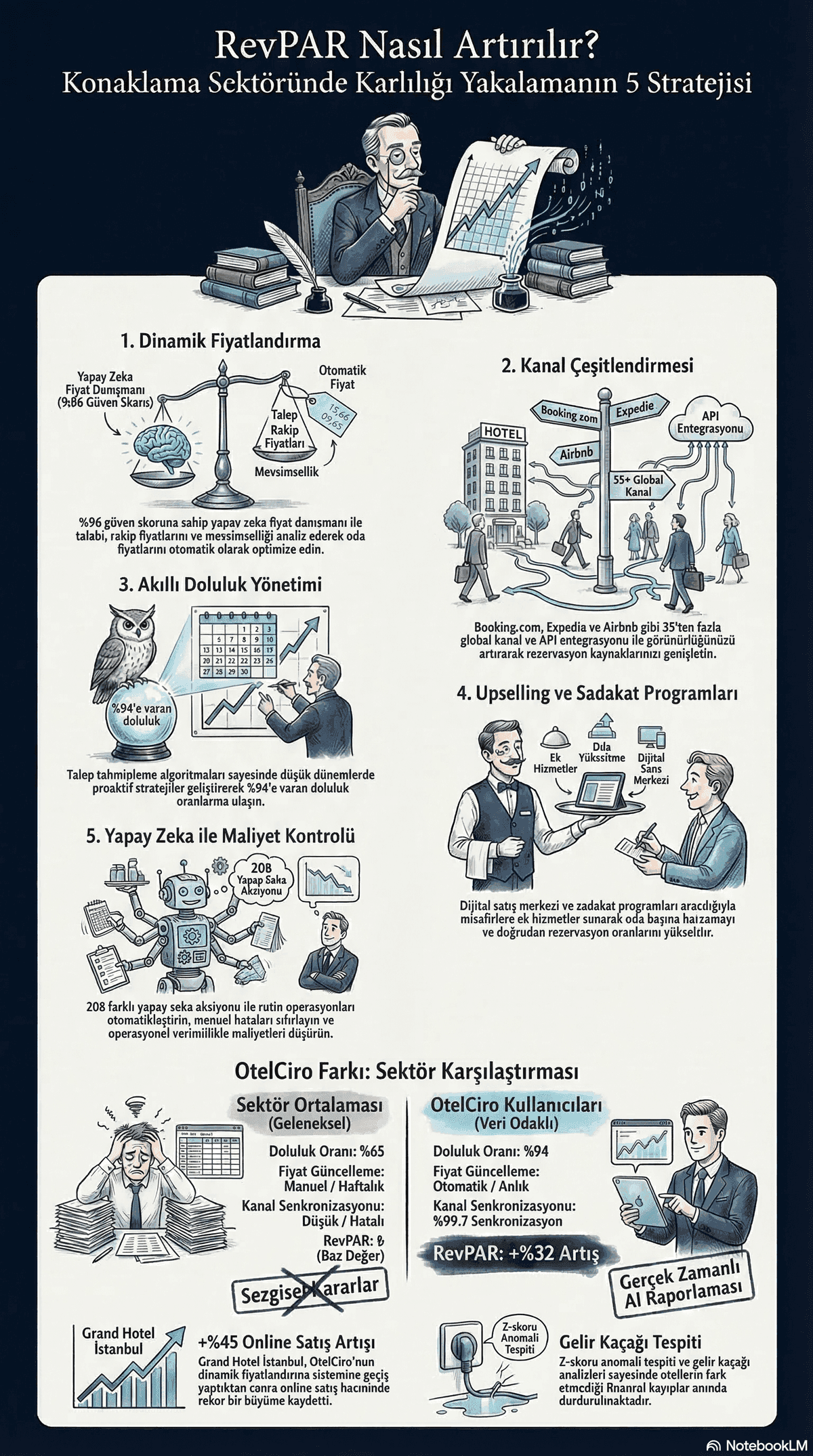
Hotels implementing dynamic pricing typically see a 15-30% increase in RevPAR (Revenue Per Available Room) within the first year. This increase comes from both higher ADR during peak periods and improved occupancy during slow periods.
Competitive Advantage
Hotels still using manual or seasonal pricing are increasingly at a disadvantage. Dynamic pricing ensures your rates are always aligned with current market conditions.
Better Demand Management
By adjusting prices in real-time, hotels can smooth out demand peaks and valleys, leading to more consistent occupancy and better resource planning.
Related reading: Dynamic vs. Static Pricing: How the Taylor Swift Effect Can Skyrocket Your Revenue
Implementation Steps
1. Data Collection
Before implementing dynamic pricing, ensure you have at least 12 months of historical booking data, including rates, occupancy, and revenue metrics.
2. Market Analysis
Identify your competitive set and establish data feeds for monitoring their pricing. Understanding your market position is essential for setting price boundaries.
3. Technology Selection
Choose a revenue management system (RMS) that integrates with your PMS and channel manager. The system should offer automated price recommendations with the ability to set manual overrides.
4. Staff Training
Train your revenue team to understand and trust the system's recommendations while maintaining the ability to apply local knowledge and judgment.
Embed this image on your site
<a href="https://otelciro.com/en/news/what-is-dynamic-pricing">
  <img src="https://cdn.sanity.io/images/1la98t0z/production/7aad3e230cde611ee176402d03b7bcf0a35316f2-1200x2150.png" alt="RevPAR improvement strategies and tactics" width="800" />
</a>
<p>Source: <a href="https://otelciro.com">OtelCiro</a> — AI Hotel Revenue Management</p>
Common Mistakes to Avoid
- Over-discounting: Dropping prices too quickly during low-demand periods
- Ignoring rate parity: Different prices across channels erode trust
- No minimum rate floors: Always set a minimum acceptable rate
- Reactive instead of proactive: Update prices based on forecasts, not just current demand
Conclusion
Dynamic pricing is no longer optional for hotels competing in the digital marketplace. With the right technology and strategy, it becomes a powerful tool for maximizing revenue while maintaining competitive positioning.

![Hotel Upselling: AI-Driven Revenue Growth [2026]](https://cdn.sanity.io/images/1la98t0z/production/9850350573fc466b95b1490c7f689e8ac39c4f11-1200x669.png?w=1920&q=50&auto=format&fit=max)