![Booking.com vs Expedia [2026]: Who Wins Europe?](https://cdn.sanity.io/images/1la98t0z/production/87cc9338fe5c0a3b97adcabbced615a1d5f89b55-1200x1200.png?w=1920&q=65&auto=format&fit=max)
Two Giants, Two Radically Different Strategies
The two dominant forces in the European travel market — Booking.com and Expedia Group — have chosen fundamentally divergent paths for 2025-2026. This strategic split creates significant opportunities and risks for hoteliers navigating channel management.
Booking.com is building a massive consumer-facing "super app," while Expedia Group is executing a quiet but powerful infrastructure revolution on the B2B side.
Related reading: Hotel Channel Management Guide: Maximize Revenue Across OTAs
Booking.com: The B2C Fortress and Connected Trip Vision
Booking.com's strategy is shaped by its Connected Trip vision. The goal is to own the traveler's entire journey — flights, hotels, car rentals, and activities — within a single platform.
Key strengths:
- 28.9 million listings: The world's largest accommodation inventory
- Brand recognition: The most recognized travel brand in Europe
- AI investment: AI Trip Planner and personalization engines
- Genius loyalty program: A three-tier loyalty system that locks in repeat guests
However, Booking.com faces serious regulatory headwinds from the DMA regulation. The EU's Digital Markets Act has classified Booking.com as a "gatekeeper," restricting its ability to enforce rate parity.
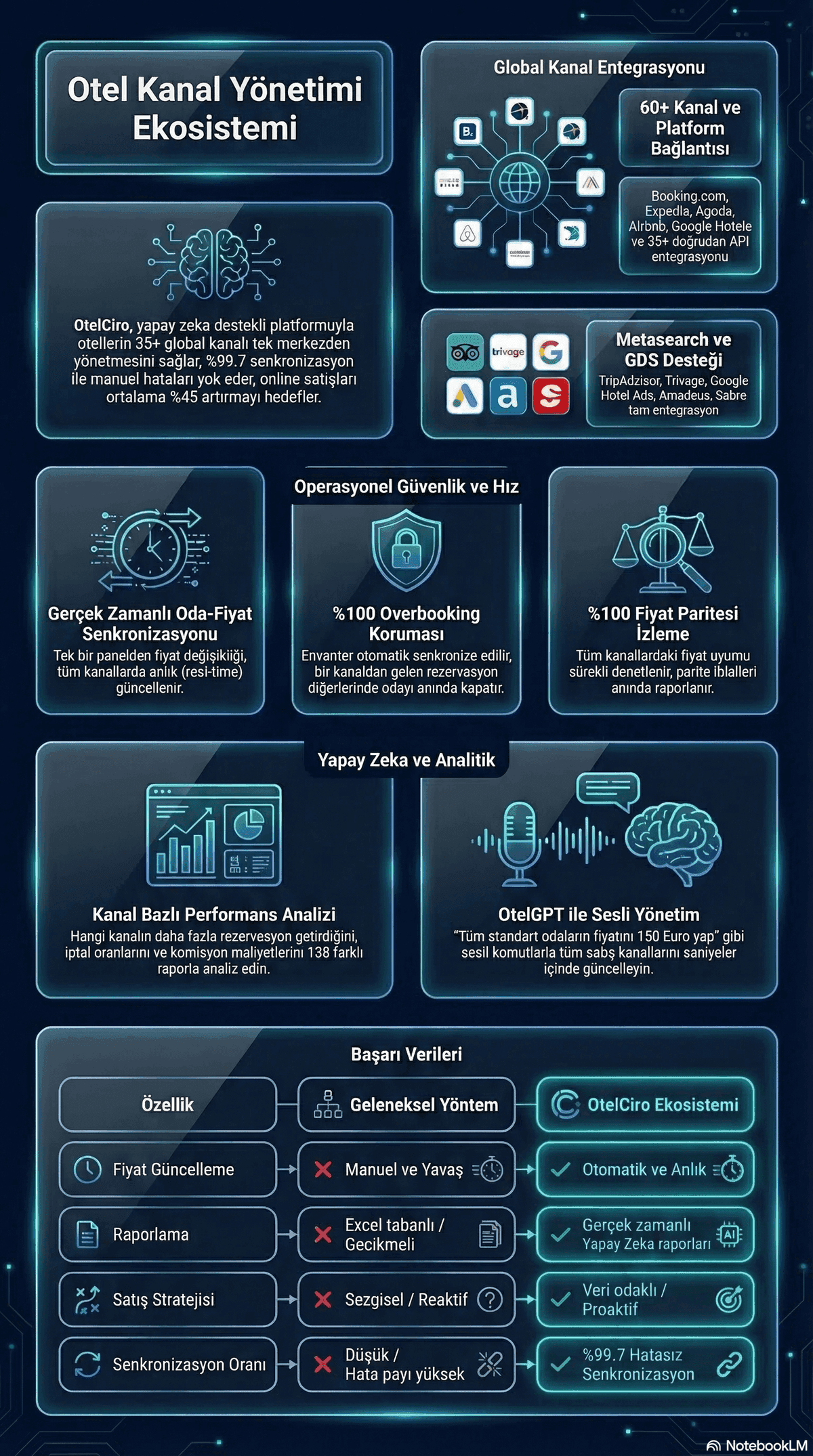
Embed this image on your site
<a href="https://otelciro.com/en/news/booking-vs-expedia">
  <img src="https://cdn.sanity.io/images/1la98t0z/production/1c2859c1cc6c68b376c0574bfa625f0cca22ed90-1200x2150.png" alt="Channel management and OTA distribution flow" width="800" />
</a>
<p>Source: <a href="https://otelciro.com">OtelCiro</a> — AI Hotel Revenue Management</p>
Expedia: The Back-Door Conquest Through B2B
Expedia Group's strategy is far less visible but potentially more disruptive. Rather than selling directly to consumers under its own brand, Expedia is repositioning itself as the infrastructure provider that enables other companies to sell travel.
Expedia's B2B partnerships:
| Partner | Partnership Type | Impact |
|---|---|---|
| Ryanair | Flight + hotel packages | Access to budget airline customers |
| Revolut | Fintech integration | Accommodation sales to 45M+ users |
| British Airways | Loyalty program | Hotel bookings via Avios points |
| Mastercard | Payment integration | Exclusive offers for cardholders |
| Walmart | Retail media | New customer segment in the US |
Through these partnerships, Expedia reaches users who never visit its own website. A Ryanair passenger booking a hotel through the airline's app is actually using Expedia's infrastructure — without knowing it.
Related reading: How to Reduce Booking.com Commissions: 7 Proven Strategies for Hotels (2026)
2025 Stock Performance: What the Market Is Saying
The 2025 stock market performance reveals which strategy investors believe in:
- Expedia Group (EXPE): +55.6% share price increase
- Booking Holdings (BKNG): +10.3% share price increase
This dramatic gap signals that the market is rewarding Expedia's B2B ecosystem play. Investors see the infrastructure-provider role as more sustainable and more scalable over the long term.
Embed this image on your site
<a href="https://otelciro.com/en/news/booking-vs-expedia">
  <img src="https://cdn.sanity.io/images/1la98t0z/production/035f1be486aeebcd0d836f5cf5613dac8e2510db-1200x669.png" alt="Booking.com commission management and optimization" width="800" />
</a>
<p>Source: <a href="https://otelciro.com">OtelCiro</a> — AI Hotel Revenue Management</p>
Strategic Comparison for Hoteliers
Each platform offers hoteliers distinct advantages and risks:
Being on Booking.com
- Advantage: High traffic, powerful brand, massive audience reach
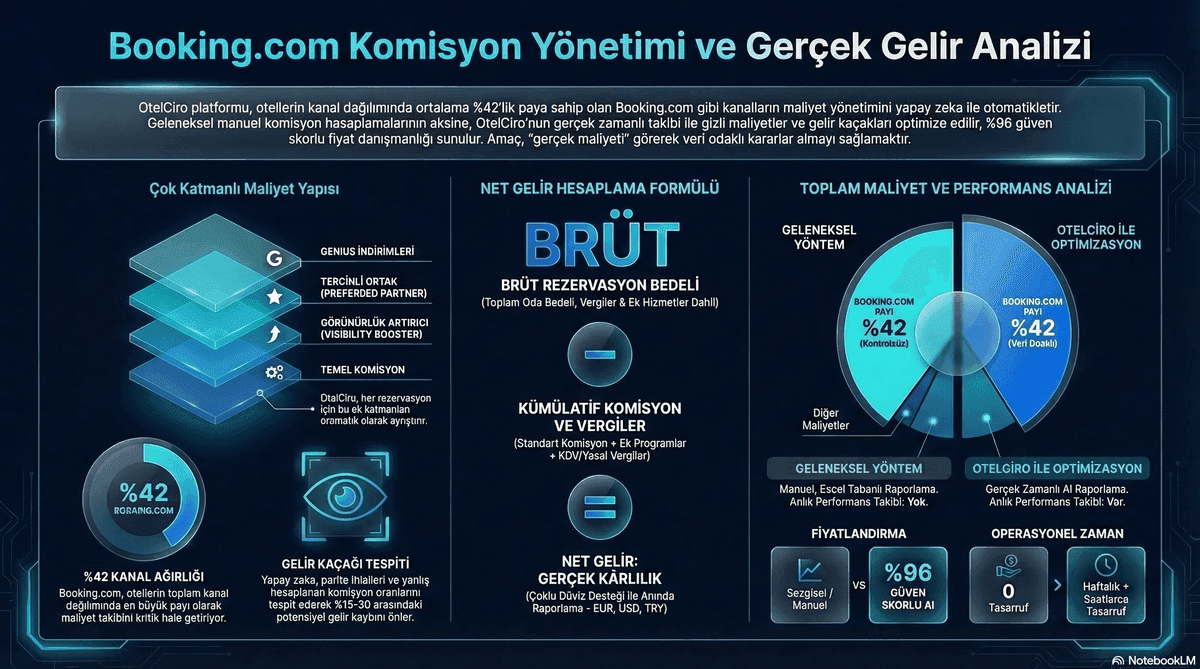
- Risk: High commissions (15-25%), rate parity pressure, loss of guest data ownership
- Strategy: Master the Booking.com algorithm, maximize your content score
Being in the Expedia Ecosystem
- Advantage: Multi-channel visibility, access to diverse customer segments
- Risk: Lower brand visibility (partner brands take the spotlight), lower direct traffic
- Strategy: Optimize your EPC (Expedia Partner Central) profile, strengthen package offerings
Dual-Platform Strategy: Finding the Balance
When building your 5-channel optimization strategy, it is advisable to include both platforms. However, resource allocation should vary by hotel type:
City hotels: Booking.com-heavy (60-70% OTA share), Expedia as supplement Resort hotels: Expedia packages stronger (flight+hotel), Booking.com as supplement Boutique hotels: Maintain presence on both but prioritize the direct channel
Looking Ahead: 2026-2027 Outlook
Following Booking.com's 2025 strategic shift, several trends will intensify:
- Booking.com will accelerate AI investment to advance its Connected Trip vision
- Expedia will expand B2B partnerships into Africa and South Asia
- Both platforms will intensify competition with direct booking channels
- Alternative OTAs (Trip.com, MakeMyTrip) will push for European market share
Frequently Asked Questions
Which platform should small hotels prioritize?
For small hotels operating in the European market, Booking.com remains the primary OTA. However, do not overlook the traffic potential from Expedia's B2B ecosystem — channels like Ryanair and Revolut can deliver guests you would never reach otherwise.
Does it make sense to switch from Booking.com to Expedia?
Diversification, not migration, is the right approach. Dependence on a single OTA creates both pricing and policy risk. Stay active on both platforms while focusing on growing your direct channel share.
Will OTA commission rates decrease?
The DMA regulation and increasing competition are exerting downward pressure on commission rates. However, dramatic short-term reductions are unlikely. Hoteliers should focus on increasing direct channel share rather than negotiating commission cuts.
OtelCiro enables you to manage all your OTA channels from a single dashboard, comparing Booking.com and Expedia performance side by side. Optimize your channel strategy by exploring OtelCiro.