
The Numbers Tell a More Complicated Story
The Airbnb-versus-hotels narrative has become a fixture of hospitality industry debate. But the data in 2026 paints a picture that is far more nuanced than either side typically acknowledges. Hotels are not dying, and Airbnb is not slowing down. Both are growing, but in different ways and for different travelers.
Understanding the actual competitive dynamics -- not the headlines -- is essential for any hotel operator making strategic decisions.
Scale vs. Revenue: Two Different Competitions
The most important distinction is between supply scale and revenue capture:
| Metric | Airbnb | Hotels |
|---|---|---|
| Global listings/properties | 8.1 million | 187,000 (branded chains) |
| Total rooms/bedrooms | ~12 million | ~18.5 million |
| Average nightly rate | $137 | $167 |
| Revenue per available unit | Lower (variable occupancy) | Higher (consistent occupancy) |
| Global accommodation revenue share | ~18% | ~72% |
Airbnb has more individual listings than there are branded hotel properties in the world. But hotels still capture roughly four times more revenue because they operate at higher occupancy rates, higher average daily rates, and with larger room inventories per location.
Market Share Trajectory: The Trend Line Matters
The real concern for hotels is not Airbnb's current market share but its trajectory:
| Year | Airbnb Share of Accommodation Market | Hotel Share |
|---|---|---|
| 2019 | 28% | 62% |
| 2021 | 35% | 54% |
| 2023 | 40% | 49% |
| 2024 | 44% | 47% |
| 2026 (projected) | 48% | 43% |
Airbnb's share has grown from 28% to an estimated 48% in just seven years. If this trajectory continues, short-term rentals will hold majority market share in accommodation bookings by 2027.
However, these numbers require context. Much of Airbnb's growth has come from creating new demand -- travelers who would not have taken a trip at all if a $90/night apartment had not been available -- rather than directly cannibalizing hotel bookings.
Consumer Preference: Hotels Still Win on Trust
Despite Airbnb's growth, hotel preference remains strong among key traveler segments. According to recent survey data:
- 53% of American travelers prefer hotels over short-term rentals for their next trip
- 71% of business travelers choose hotels when their employer covers the cost
- 64% of international travelers prefer hotels in unfamiliar destinations
- 58% of travelers aged 55+ choose hotels for reliability and service
The preference gap narrows significantly among younger travelers and groups. For families of four or more, Airbnb's space and kitchen advantages make it the preferred choice for 61% of respondents.
Where Airbnb Wins
Airbnb's strongest competitive advantages are:
- Space: Average Airbnb listing offers 2.3x the square footage of a standard hotel room
- Kitchen access: Critical for families and extended stays
- Unique properties: Treehouses, houseboats, and historic homes that hotels cannot replicate
- Group economics: A $300/night house split four ways beats four $167/night hotel rooms
- Extended stays: Weekly and monthly discounts make Airbnb significantly cheaper for stays of 7+ nights
Where Hotels Win
Hotels maintain decisive advantages in:
- Consistency: A Hilton in Tokyo delivers a predictable experience; an Airbnb is a gamble
- Services: 24-hour front desk, concierge, room service, housekeeping, fitness centers
- Location: Hotels occupy prime urban and resort locations that residential properties cannot match
- Cancellation flexibility: Hotel cancellation policies are generally more traveler-friendly
- Loyalty programs: Points, status, and perks create switching costs that Airbnb lacks
- Safety and compliance: Licensed, inspected, and insured properties reduce traveler risk
Related reading: Booking Holdings B2B Consolidation: What Hotels Need to Know
The Price Gap Is Narrowing
One of the most significant trends is the convergence of pricing between Airbnb and hotels:
| Year | Avg. Airbnb Nightly Rate | Avg. Hotel ADR | Price Gap |
|---|---|---|---|
| 2019 | $98 | $131 | 25.2% |
| 2021 | $117 | $128 | 8.6% |
| 2023 | $128 | $152 | 15.8% |
| 2025 | $137 | $167 | 18.0% |
After narrowing dramatically in 2021 (when hotels cut rates to stimulate demand), the gap has stabilized at approximately 18%. But in many urban markets, the gap is even smaller -- and in some cities, Airbnb has actually become more expensive than comparable hotel rooms once cleaning fees are included.
This pricing convergence reduces Airbnb's primary value proposition for solo and couple travelers, pushing its competitive advantage toward groups and extended stays.
The Premium Room Opportunity
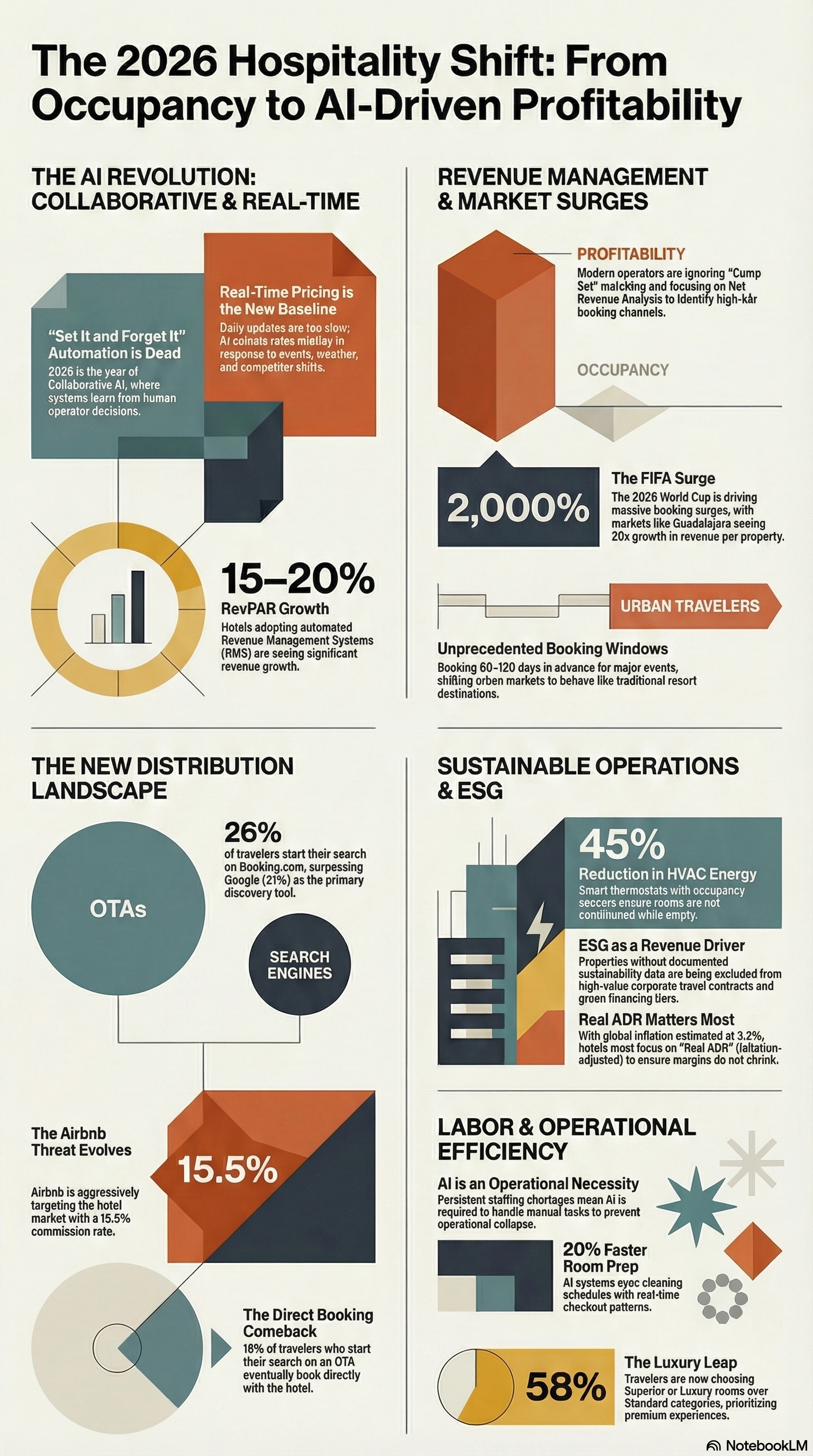
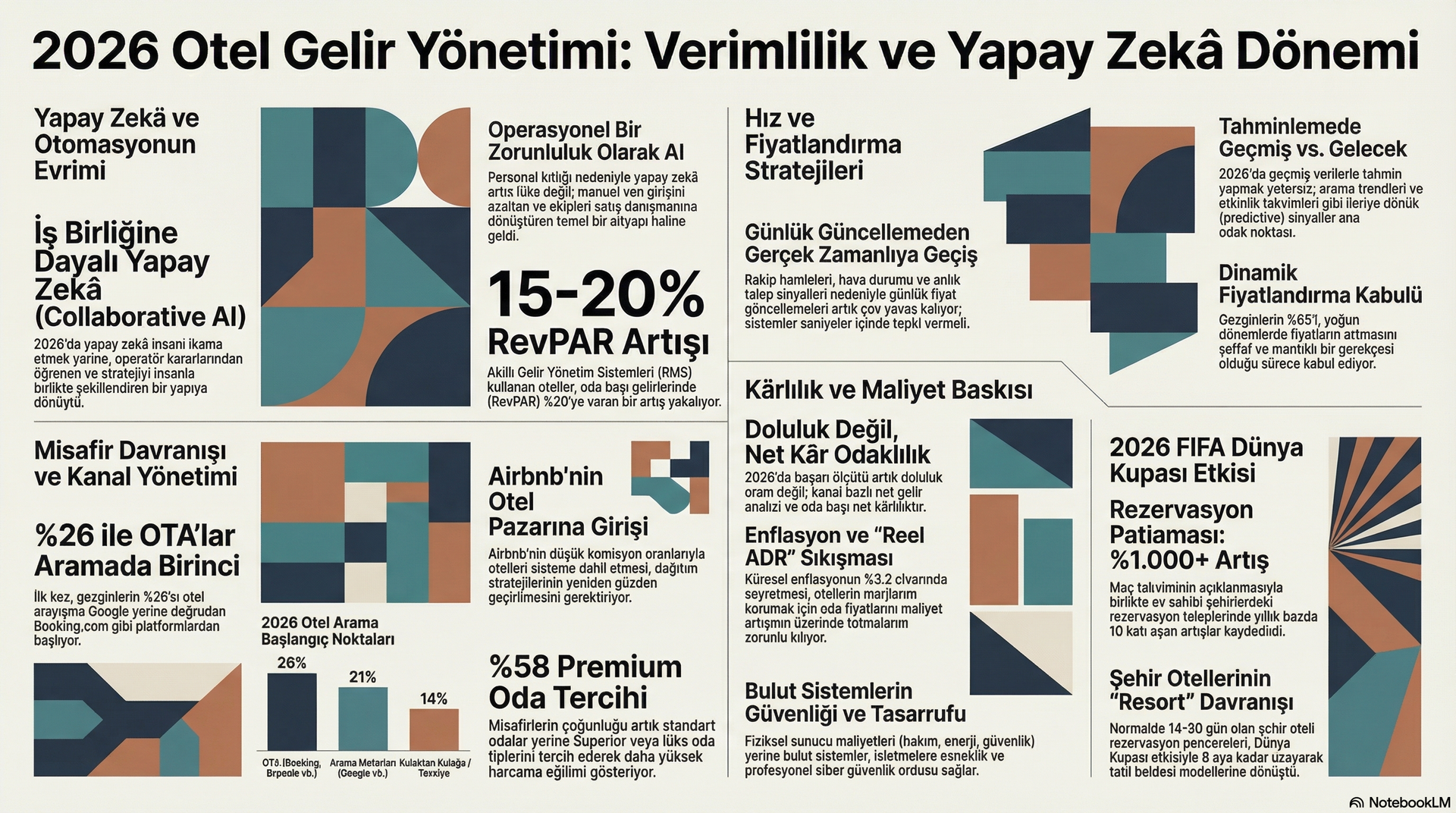
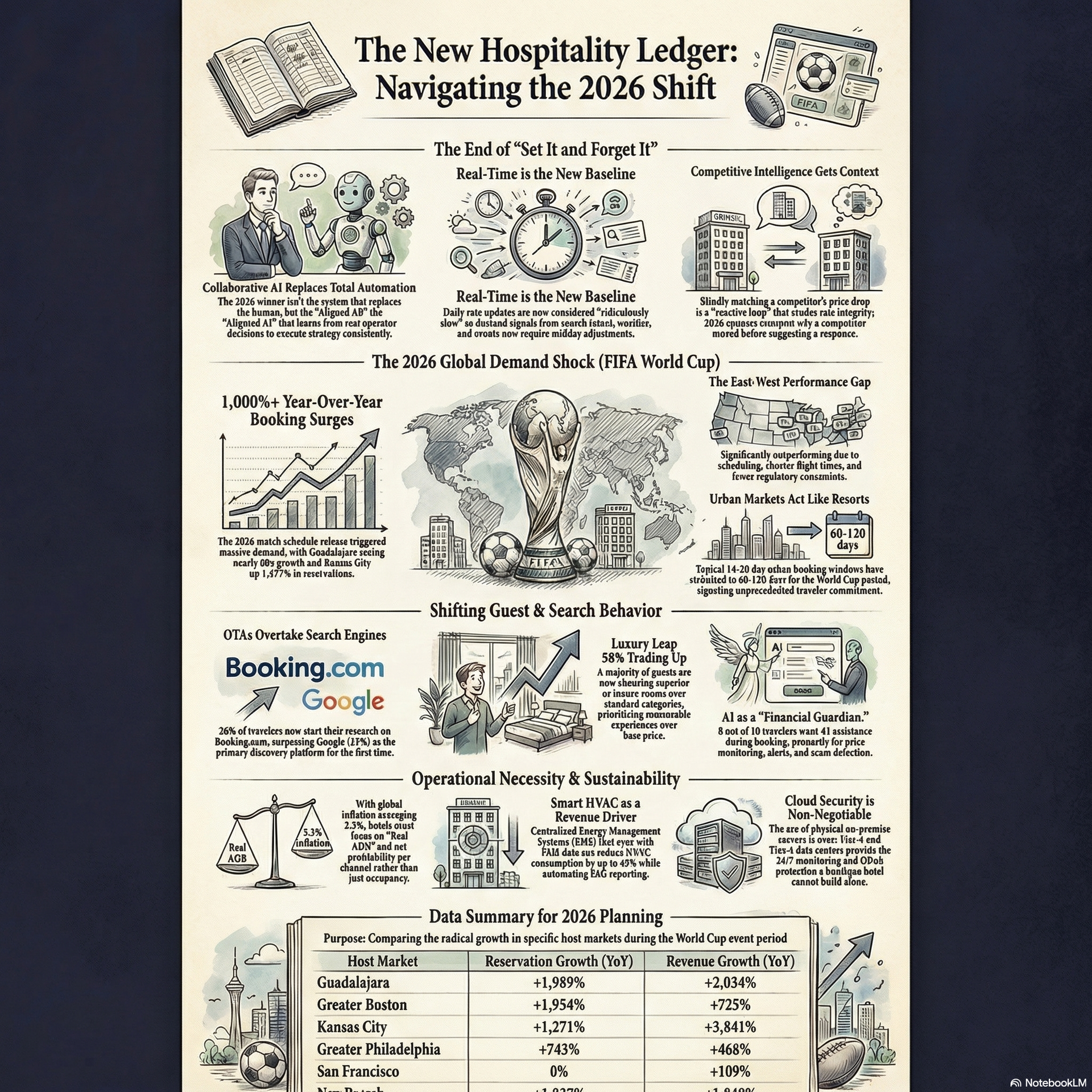
A counterintuitive trend is emerging: 58% of travelers are now choosing premium room categories, up 4 percentage points year-over-year. This suggests that when travelers choose hotels, they are increasingly willing to spend more for a superior experience.
The implication for hotel operators is clear. Competing with Airbnb on price is a losing strategy. Competing on experience quality, service, and premium offerings is where hotels have a structural advantage.
Hotels that invest in:
- Suite and premium room inventory
- Upgraded in-room amenities and technology
- Distinctive F&B concepts
- Wellness and spa experiences
- Personalized service delivery
...will capture the growing segment of travelers who choose hotels specifically because they want something Airbnb cannot provide.
Related reading: Total Revenue Management in 2026: Beyond the Room Rate
Regulatory Headwinds for Airbnb
An often-overlooked factor in the hotels-versus-Airbnb dynamic is regulation. Cities worldwide are tightening restrictions on short-term rentals:
- Barcelona has announced a complete ban on tourist apartment licenses by 2028
- New York City requires hosts to register and limits entire-home rentals to 30+ day stays
- Paris enforces a 120-night annual limit with mandatory registration
- Amsterdam has reduced the maximum rental period from 60 to 30 nights per year
- Tokyo limits Airbnb operations to 180 days per year in residential zones
These regulations constrain Airbnb's supply growth in precisely the high-demand urban markets where hotels face the most competition. As enforcement improves, some markets may see a meaningful reduction in Airbnb inventory.
Strategic Recommendations for Hotels
Rather than viewing Airbnb as an existential threat, hotels should treat it as a competitive force that clarifies their own value proposition:
- Stop competing on price -- Airbnb will always offer cheaper options for groups and extended stays; focus on value, not rate
- Invest in experience differentiation -- premium rooms, unique F&B, and service quality are your moat
- Target your strongest segments -- business travelers, international visitors, and luxury seekers prefer hotels for clear reasons
- Leverage loyalty programs -- recurring guests are your most profitable segment and the one Airbnb cannot easily replicate
- Monitor local regulation -- STR restrictions in your market may reduce competitive pressure over time
- Use technology to personalize -- AI-powered personalization can deliver the "unique experience" feel that attracts some travelers to Airbnb
The Coexistence Reality
The data suggests that hotels and Airbnb are settling into a permanent coexistence rather than a winner-take-all battle. Each serves different traveler needs, and the most successful hotel operators will be those who understand exactly where their competitive advantage lies.
The biggest risk is not Airbnb itself. It is the hotel that tries to be everything to everyone and ends up offering a mediocre experience that loses to Airbnb on price and to premium competitors on quality.
OtelCiro helps hotels identify their competitive positioning and optimize revenue strategy for the segments where hotels win. Start your free analysis today.
![Reduce Booking.com Commissions: 7 Proven Tips [2026]](https://cdn.sanity.io/images/1la98t0z/production/64127ef2c1c822e43014834c83ff5e3da025ae9b-1376x768.jpg?w=1920&q=50&auto=format&fit=max)