Imagine a guest checks into your independent boutique hotel in 2026. Before they even reach the front desk, your system has already noted their preferred room temperature from a past stay, flagged their interest in local hiking trails from a recent website interaction, and proactively offered a complimentary coffee from your cafe – their usual order. This isn't science fiction; it's the operational reality of hyper-personalization driven by dynamic identity. For too long, independent hotels have struggled to compete with large chains on personalized service, often seeing OTA commissions eat 18% or more of their room revenue, and staff stretched thin by reactive guest requests. This article will reveal how leveraging real-time AI and integrated data allows your property to move beyond static guest profiles, anticipate needs, and deliver a 'wow' experience that directly boosts direct bookings, enhances loyalty, and optimizes your GOPPAR, positioning you as a leader in the guest experience.
What You'll Learn
- From Static Profiles to Dynamic Guest Identity
- Drive Direct Bookings & Boost ADR with Tailored Offers
- Create 'Wow' Moments & Cultivate Lasting Loyalty
- Streamline Operations & Elevate GOPPAR with AI Insights
- Build Your Foundation: Integrated Tech & Trustworthy Data
- Frequently Asked Questions
From Static Profiles to Dynamic Guest Identity
For years, hotel personalization meant noting a guest's preference for a foam pillow or a high-floor room in a static PMS profile. This approach is reactive and incomplete. The future, driven by AI, is about understanding the guest in real-time—their context, intent, and unstated needs. This is the shift from a static profile to a living, dynamic guest identity.
The AI-Powered Shift: Beyond Basic Preferences
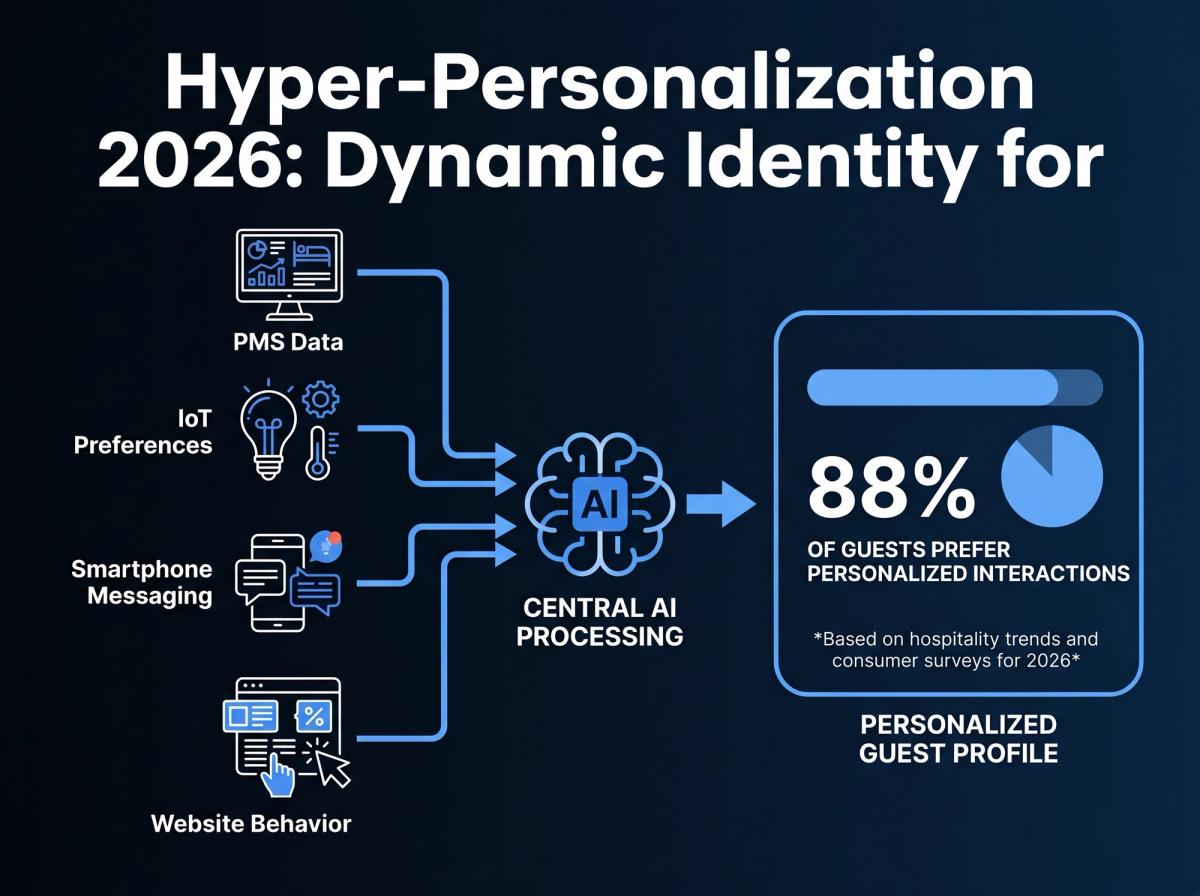
Instead of just storing past booking data, a modern, AI-powered system processes a continuous stream of information. This isn't just about what a guest did on their last stay; it's about what they are doing right now. Data sources converge to paint a complete picture:
- PMS & Booking Engine: Stay history, room type preferences, booking window, and past ancillary purchases.
- Website & App Behavior: Pages viewed (spa, restaurant menu), searches performed ('family activities'), and time spent on specific offers.
- In-Stay Interactions: IoT data from smart room controls (temperature set to 21°C), guest messaging requests, and in-room tablet usage.
- Contextual Data: Geolocation, flight arrival times, local weather forecasts, and city-wide event calendars.
An AI engine, like Otelciro's OtelGPT, synthesizes these disparate points into a predictive model of the guest's current journey.
Real-Time Data: Your New Crystal Ball
This dynamic understanding allows you to move from reaction to anticipation. Instead of waiting for a request, you can proactively shape the guest's experience and capture revenue opportunities.
Example: A guest who booked a standard room for a 3-night weekend stay is browsing your hotel's website, lingering on the 'Suites with Balconies' page two days before arrival. A static system does nothing. A dynamic system flags this interest and triggers an automated, personalized email offering a suite upgrade for a modest €40 per night—a high-margin offer that feels exclusive and meets an unexpressed desire.
Similarly, a guest who frequently orders room service for breakfast on past stays can be sent a pre-arrival offer for a discounted breakfast package. This secures ancillary revenue before check-in and makes the guest feel recognized and valued.
Drive Direct Bookings & Boost ADR with Tailored Offers
Hyper-personalization is your most powerful tool for shifting share from OTAs to your direct channel. When you know what a guest truly values, you can craft offers that OTAs, with their standardized platforms, simply cannot match. This directly impacts your top-line revenue and bottom-line profitability.
Crafting Irresistible Pre-Arrival & Booking Offers
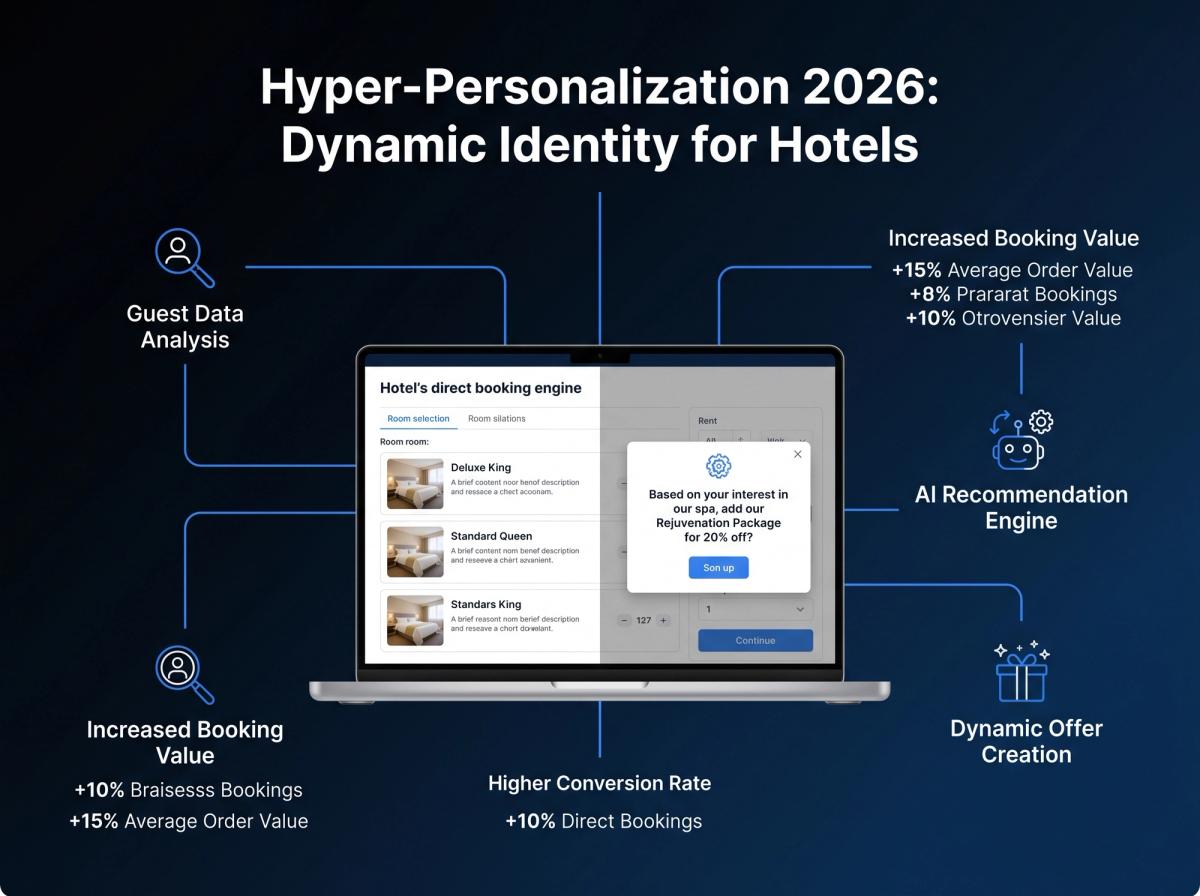
The direct booking process is a critical battleground. Instead of just competing on rate, you can compete on value. By analyzing a potential guest's browsing behavior and comparing it to similar guest profiles, an AI-driven booking engine can present tailored packages.
- For the Business Traveler: 'Based on your short, mid-week stay patterns, add our Express Breakfast & Late Check-Out package for €25.'
- For the Leisure Couple: 'Guests who book our Deluxe King often enjoy our Romance Package, including sparkling wine and a spa credit. Add it now for 15% off.'
These targeted offers can increase direct booking conversion rates by 5-10% and significantly lift the total value of the booking, reducing your reliance on high-commission channels.
Dynamic Upselling & Cross-Selling In-Stay
The opportunity doesn't end at check-in. The guest's context during their stay provides constant cues for relevant, timely offers delivered via your guest experience app or messaging.
Example: Your hotel is in a coastal resort town. On a day when the weather forecast unexpectedly turns rainy, your system can automatically send a targeted message to families with children: 'Rainy day? Get 20% off at our indoor pool-side cafe and enjoy our new board game library.' This simple, context-aware offer converts a potentially negative experience into a revenue-generating, positive memory.
This approach has a measurable impact on your key metrics. A consistent, personalized upselling strategy can increase a property's ADR by 3-7% purely from higher-value room types and ancillary purchases. This incremental revenue flows directly into a higher RevPAR and ultimately, a healthier GOPPAR.
Create 'Wow' Moments & Cultivate Lasting Loyalty
In a crowded market, memorable service is what transforms a first-time guest into a lifelong advocate. Hyper-personalization allows you to create these 'wow' moments at scale, moving beyond a transactional relationship to build genuine emotional connection and loyalty.
Proactive Service: Anticipating Every Need
True luxury isn't about extravagance; it's about effortlessness. When you use data to anticipate needs, the guest experience feels seamless and intuitive.
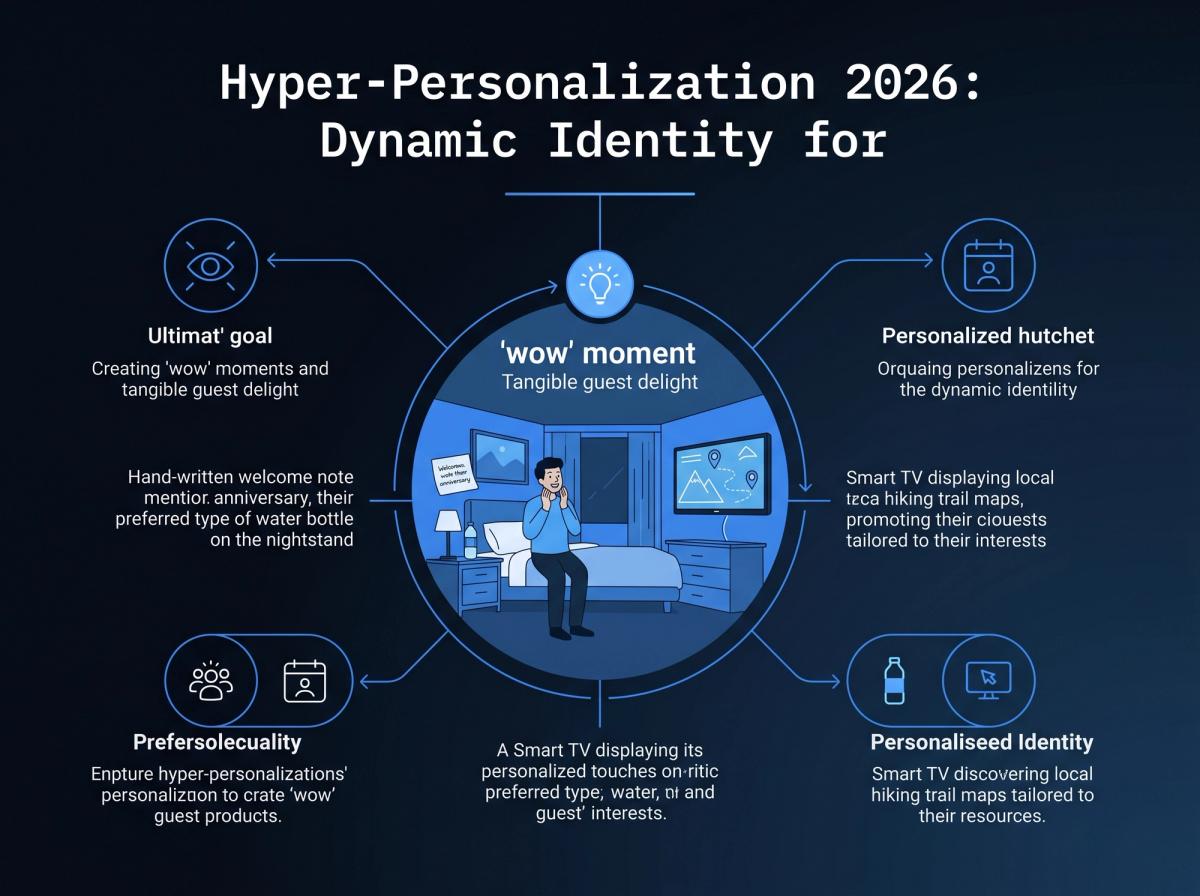
- Pre-set Ambiance: The guest who always sets their room temperature to 20°C finds their room already at that temperature upon arrival.
- Personalized Welcome: The welcome message on the in-room TV greets them by name and references their interest in local art galleries, suggesting a new exhibit nearby.
- Relevant Recommendations: A guest who previously booked a wine-tasting tour receives a notification about a special winemaker's dinner in your restaurant.
These small, proactive touches demonstrate that you see them as an individual, not just a reservation number. According to research from sources like Skift, travelers increasingly expect this level of recognition from hospitality providers.
Fostering Engagement & Turning Guests into Advocates
When guests feel genuinely cared for, their loyalty deepens. This translates into hard metrics:
- Increased Repeat Bookings: A personalized experience can lift repeat direct booking rates by over 15%.
- Longer Stays: Guests who feel a connection are more likely to extend their stay or book longer trips in the future.
- Positive Reviews: 'Wow' moments are the fuel for glowing reviews on TripAdvisor and Google, which in turn drives new bookings.
This cycle is reinforced with smart post-stay communication. Instead of a generic 'thank you' email, send a personalized offer for their next stay based on what they enjoyed most—'Next time you visit, your first coffee is on us'—or an exclusive rate for their anniversary. This continues the conversation and keeps your property top-of-mind.
Streamline Operations & Elevate GOPPAR with AI Insights
Hyper-personalization isn't just a guest experience initiative; it's a powerful tool for operational efficiency. By predicting guest behavior, you can allocate resources more intelligently, reduce waste, and empower your staff to focus on what matters most—delivering exceptional service.
Predictive Staffing & Resource Allocation
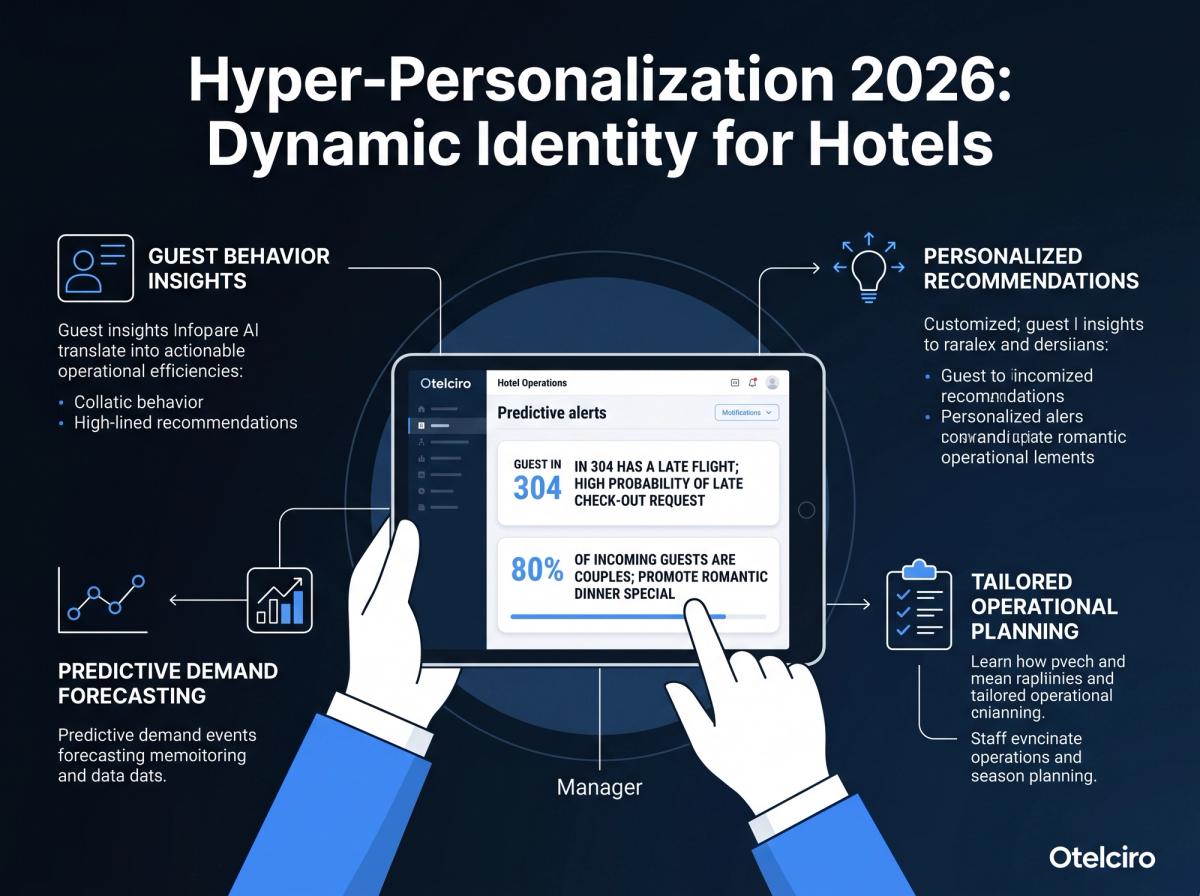
AI insights can transform your daily operational huddle. Instead of reacting to guest needs, your team can prepare for them. This is a game-changer, especially when navigating the ongoing labor shortages discussed in 2026 hotel trend reports.
- Smarter Housekeeping: The system flags that a VIP guest who always requests extra towels is checking in. Housekeeping can stock the room accordingly during the initial cleaning, avoiding a follow-up call and extra trip.
- Anticipatory Front Desk: Data indicates a high percentage of incoming guests from a delayed flight. The front desk can prepare for a late rush of check-ins and even pre-arrange a welcome drink.
This predictive approach reduces the number of reactive tasks, smoothing out workflows and freeing staff from repetitive chores to engage in higher-value, personalized interactions with guests.
Maximizing Ancillary Revenue & Cost Savings
Every operational improvement driven by data has a direct line to your bottom line. Optimizing your Gross Operating Profit Per Available Room (GOPPAR) is about both revenue generation and cost control.
Pro Tip: Use personalization data to refine your F&B inventory. If you know that a large group of guests arriving are past bookers who prefer red wine, you can adjust your stock order accordingly, maximizing sales opportunities while minimizing the risk of overstocking less popular items.
By connecting the dots, the financial benefits become clear: reduced OTA commissions from more direct bookings, higher ancillary spend from targeted offers, and improved operational efficiency all contribute to a stronger, more resilient profit margin.
Build Your Foundation: Integrated Tech & Trustworthy Data
Hyper-personalization is not a single feature; it's an outcome of a well-integrated technology strategy. You cannot deliver a seamless, dynamic experience if your guest data is trapped in disconnected silos. The foundation for this entire strategy is a unified tech stack with a powerful PMS at its core.
The Central Role of Your PMS as the Intelligence Hub
Think of your Property Management System as the central nervous system of your hotel. To enable dynamic identity, it must be able to freely receive and send data to all other key systems: your channel manager, revenue management system (RMS), CRM, guest messaging platform, and any on-property IoT devices.
When these systems are seamlessly integrated, the magic happens. A rate adjustment in the RMS can trigger a personalized offer sent via the messaging platform, with the guest's response recorded in the PMS and CRM. This free-flowing data is what allows for the creation of a single, holistic view of the guest across their entire journey. This is why the process of a modern PMS selection is so critical; it's not just about managing rooms, but about managing guest intelligence.
Navigating Data Privacy & Building Guest Trust
With great data comes great responsibility. The power of hyper-personalization is built entirely on a foundation of guest trust. Violate that trust, and the entire strategy crumbles. Operating ethically is not optional.
Watch For: Assuming you have permission to use guest data in any way you see fit. Regulations like GDPR in Europe and KVKK in Turkey have strict requirements for consent, transparency, and data security. Failure to comply can result in severe penalties and irreparable damage to your brand's reputation.
Building trust requires a commitment to:
- Transparency: Be clear and upfront with guests about what data you are collecting and how you are using it to improve their experience.
- Consent: Implement clear opt-in strategies. Give guests control over their data and make it easy for them to manage their preferences.
- Security: Invest in robust data security practices to protect guest information from breaches.
When guests understand the value they receive in exchange for their data—a more seamless, personalized, and enjoyable stay—they are far more likely to grant you that trust.
The Future is Anticipatory, Not Reactive
The era of static guest profiles is over. In 2026, hyper-personalization, powered by AI and dynamic identity, is not just a luxury for large chains but an accessible, actionable strategy for independent hotels to thrive. By embracing an integrated tech stack that leverages your PMS as the central intelligence hub, you can unlock unprecedented opportunities to drive direct bookings, elevate ADR, cultivate profound guest loyalty, and significantly optimize your GOPPAR. The future of hospitality isn't just about smart rooms; it's about smart, empathetic service that anticipates and delights. The question isn't whether your hotel can afford to personalize, but whether it can afford not to.
Your Next Step: Audit your current PMS and tech stack to identify data silos and integration gaps that prevent a holistic, real-time view of your guests. Prioritize solutions like Otelciro that offer robust integration capabilities across all modules—from PMS and revenue management to guest experience and operations—to lay the groundwork for dynamic identity.
Share this post
Frequently Asked Questions
What is hyper-personalization for hotels?
Hyper-personalization in hotels is the use of real-time data and artificial intelligence (AI) to deliver experiences, offers, and services tailored to an individual guest's current context and predicted needs. It goes beyond a static profile (e.g., pillow preference) to adapt dynamically throughout the guest journey.
How does AI help increase hotel direct bookings?
AI analyzes a guest's browsing behavior, past stay data, and lookalike profiles to present personalized offers and packages during the direct booking process. By showcasing unique value that OTAs cannot, such as a tailored spa credit or a room upgrade based on specific interests, AI increases conversion rates and reduces reliance on third-party channels.
What is a dynamic guest identity in hospitality?
A dynamic guest identity is a comprehensive, real-time understanding of a guest that continuously updates based on new data from various touchpoints like the PMS, website interactions, in-room IoT devices, and guest messaging. Unlike a static profile, it allows hotels to anticipate needs and personalize the experience in the moment.
Can hyper-personalization improve my hotel's GOPPAR?
Yes, absolutely. Hyper-personalization improves GOPPAR in three key ways: by increasing high-margin direct bookings (reducing OTA commissions), by driving ancillary revenue through targeted upsells (F&B, spa, activities), and by improving operational efficiency through predictive resource allocation (smarter staffing and inventory).