The Regulatory Landscape Has Shifted
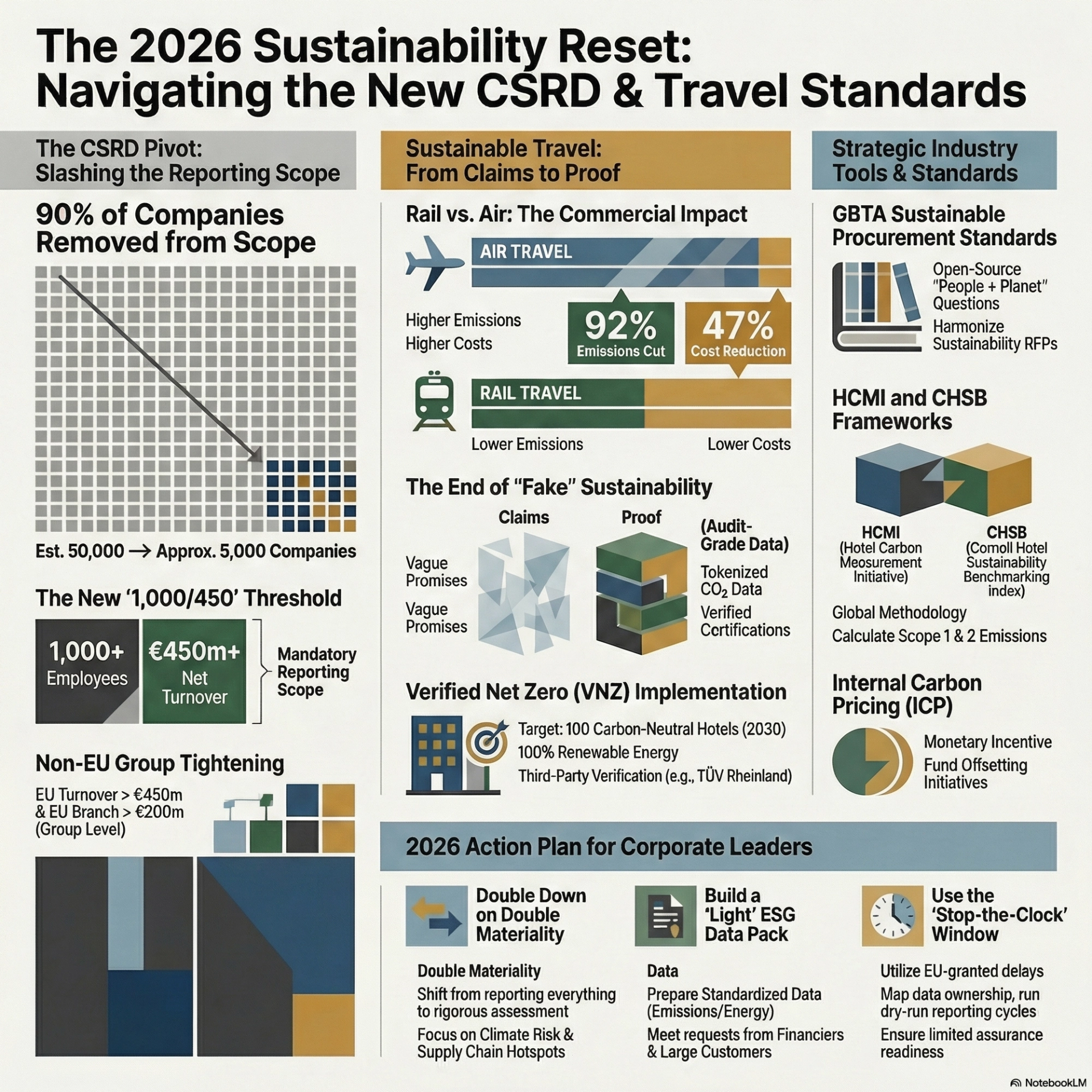
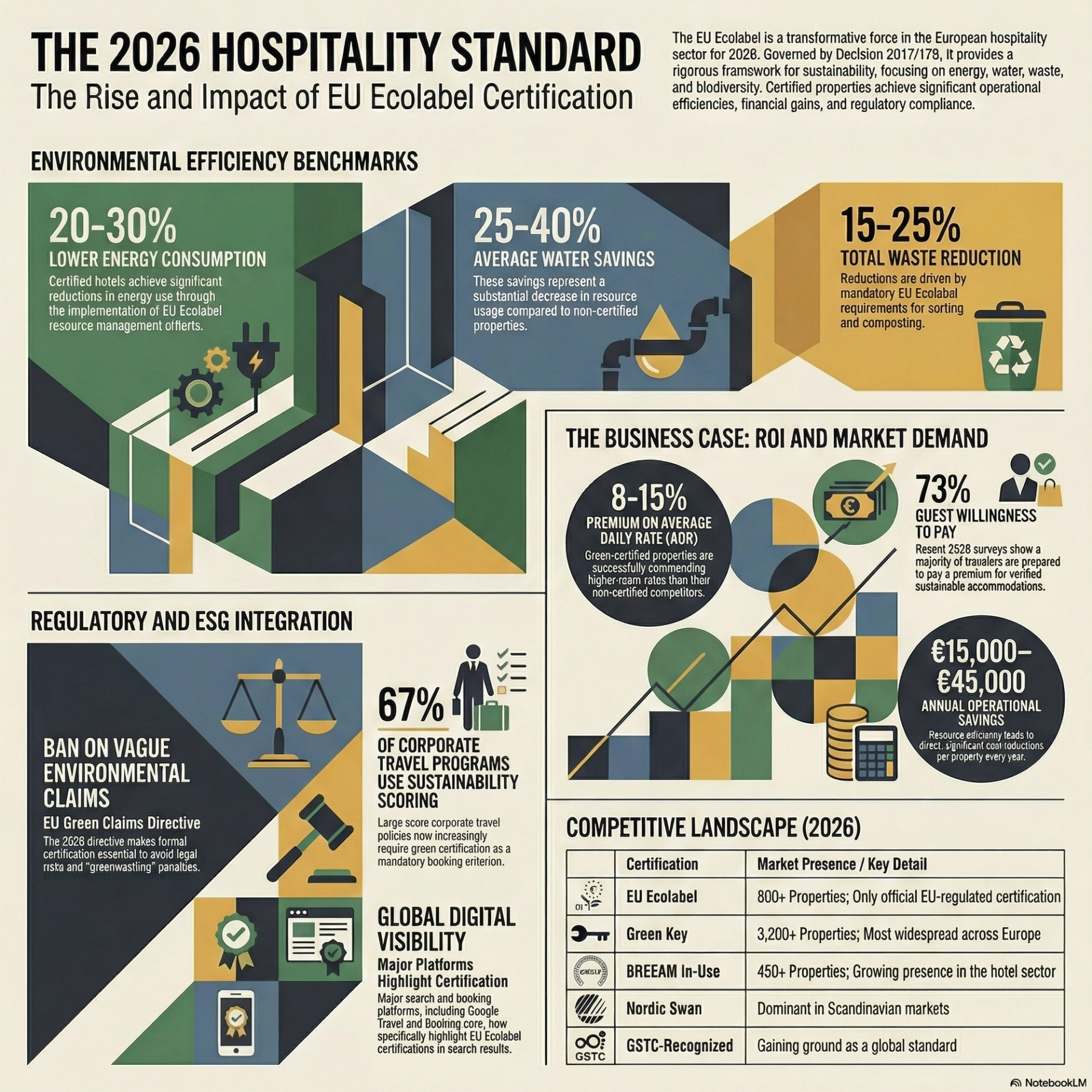
For years, sustainability in hospitality was voluntary. Hotels that invested in green initiatives earned certifications, attracted eco-conscious travelers, and enjoyed favorable press coverage. In 2026, the equation has fundamentally changed. Zero waste and sustainability documentation are becoming prerequisites for participation in preferred vendor programs, green financing instruments, and corporate travel procurement.
The shift is driven by three converging forces: tightening EU environmental regulations that affect Turkish tourism operators serving European guests, corporate travel policies that now mandate sustainability credentials from hotel suppliers, and financial institutions offering preferential lending rates tied to ESG (Environmental, Social, and Governance) compliance.
What "Zero Waste" Actually Means for Hotels
Zero waste in hospitality does not mean eliminating all waste — an impossible standard for any operating business. The operational definition, aligned with the Zero Waste International Alliance framework, targets diverting 90% or more of solid waste from landfill through reduction, reuse, recycling, and composting.
For a typical 200-room hotel, the waste profile looks like this:
| Waste Category | % of Total Waste | Primary Diversion Method |
|---|---|---|
| Food waste (kitchen + guest) | 35-45% | Composting, donation programs |
| Single-use plastics | 15-20% | Elimination, refillable alternatives |
| Paper and cardboard | 12-18% | Recycling |
| Linens and textiles | 5-8% | Donation, upcycling partnerships |
| Glass and metal | 8-12% | Recycling |
| Hazardous (chemicals, batteries) | 2-4% | Specialized disposal |
| Other (construction, mixed) | 5-10% | Sorting, material recovery |
Food waste alone accounts for the largest share, making kitchen waste management the highest-impact intervention point. Hotels implementing food waste tracking systems — weighing and categorizing waste at each meal service — typically achieve a 30-40% reduction within six months through menu engineering, portion optimization, and prep waste reduction.
Compliance: The New Non-Negotiable
Preferred vendor program exclusions
Major online travel agencies and corporate booking platforms are implementing sustainability filters in their vendor qualification processes. Properties without documented waste reduction programs, energy efficiency certifications, or third-party sustainability audits are being deprioritized or excluded from preferred listings.
This is not a hypothetical future scenario. In Q1 2026, several global corporate travel management companies updated their hotel sourcing criteria to require at minimum:
- A documented waste management policy with measurable targets
- Annual energy and water consumption reporting
- Third-party sustainability certification (Green Key, EarthCheck, LEED, or equivalent)
- Evidence of staff training on sustainability practices
Hotels that cannot provide this documentation are removed from preferred vendor lists, losing access to corporate rate programs that can represent 20-35% of a business hotel's revenue.
Green financing tiers
Turkish and international banks are structuring hotel financing with sustainability-linked pricing. Properties that meet defined ESG criteria — including waste diversion rates, energy efficiency benchmarks, and water consumption targets — qualify for interest rate reductions of 25-75 basis points.
For a hotel with a TRY 50 million loan, a 50 basis point reduction translates to TRY 250,000 in annual interest savings. Over a typical 10-year financing term, this represents a meaningful economic incentive.
Conversely, properties that cannot demonstrate sustainability progress face higher borrowing costs and, increasingly, difficulty securing financing at all. Lenders are incorporating climate risk into their underwriting models, and a hotel without a sustainability roadmap is a higher-risk asset.
Corporate RFP requirements
The corporate travel segment has moved decisively. An estimated 65% of Fortune 500 companies now include sustainability criteria in their hotel RFPs. The questions are specific and auditable:
- What percentage of waste is diverted from landfill?
- What is the property's energy consumption per occupied room night?
- Does the hotel have a carbon offset program?
- Are single-use plastics eliminated from guest rooms?
Vague commitments to "being green" no longer satisfy procurement teams. They want data, third-party verification, and year-over-year improvement trajectories.
Real-Time Dashboards: Transparency as Strategy
A growing trend among sustainability-forward hotels is the installation of real-time energy and water consumption dashboards in public areas — typically the lobby or reception area. These displays show live data on the property's resource consumption, renewable energy generation (where applicable), and waste diversion metrics.
Why it works
Guest engagement: Travelers who select hotels based on sustainability credentials want visible evidence that the property practices what it promotes. A lobby dashboard transforms abstract commitments into tangible, real-time proof.
Staff accountability: When resource consumption is visible to everyone — guests, management, and line staff — there is a natural incentive to optimize. Properties with public dashboards report 8-12% reductions in energy waste from behavioral changes alone.
Corporate client assurance: Meeting planners and corporate travel managers conducting site visits can see sustainability performance without requesting reports. The dashboard serves as continuous, passive verification.
Implementation
Modern dashboards integrate with building management systems (BMS) to pull real-time data from electricity meters, water flow sensors, HVAC systems, and waste tracking platforms. The display typically shows:
- Current electricity consumption vs. same day last year
- Water usage per occupied room (real-time)
- Percentage of energy from renewable sources
- Waste diverted from landfill (month-to-date)
- Carbon footprint per guest night
The technology investment is modest — typically EUR 5,000-15,000 for hardware and integration — relative to the compliance and marketing value it delivers.
Building a Zero Waste Program: Practical Steps
Phase 1: Audit and baseline (Month 1-2)
Conduct a comprehensive waste audit. Weigh and categorize every waste stream for a minimum of 30 days. Establish baseline metrics for total waste per occupied room night, diversion rate, and waste composition by category. Without a baseline, you cannot measure progress — and without measurable progress, you fail compliance requirements.
Phase 2: Quick wins (Month 2-4)
Target the interventions with the highest impact and lowest implementation cost:
- Eliminate single-use plastics from guest rooms: Replace miniature toiletries with refillable dispensers (saves $2-4 per room per month and eliminates 80% of bathroom plastic waste).
- Implement food waste tracking in the kitchen: Daily weigh-ins by waste category, with data visible to the culinary team. The measurement alone drives a 15-20% reduction.
- Upgrade recycling infrastructure: Ensure back-of-house areas have clearly labeled, accessible sorting stations. Poor sorting infrastructure is the primary reason recyclable materials end up in landfill.
Phase 3: Systemic changes (Month 4-12)
- Composting program: Partner with a local composting facility or install an on-site bio-digester for food waste. This addresses the single largest waste stream.
- Procurement policy: Shift to suppliers who use minimal packaging, offer take-back programs, and provide bulk delivery options.
- Linen and textile lifecycle: Establish donation partnerships for retired linens. Worn towels and sheets have high demand from animal shelters, cleaning companies, and charitable organizations.
- Staff training: Sustainability must be embedded in onboarding and ongoing training for every department. Housekeeping, F&B, and engineering staff need specific, actionable protocols — not generic awareness sessions.
Phase 4: Certification and reporting (Month 12+)
Pursue a recognized third-party certification. The most relevant for Turkish hotels include:
| Certification | Focus | Recognition |
|---|---|---|
| Green Key | Comprehensive sustainability | Global, 3,200+ properties |
| EarthCheck | Benchmarking + certification | Global, scientific methodology |
| Travelife | Tour operator supply chain | Strong in European markets |
| LEED | Building efficiency | Global, construction-focused |
| Turkey Green Star | National standard | Required for government programs |
Certification provides the third-party verification that corporate clients and financing institutions require. It also creates a structured framework for continuous improvement, with annual audits that prevent sustainability programs from stagnating.
The Financial Case
Hotels that have implemented comprehensive zero waste programs report measurable financial returns beyond compliance benefits:
- Waste disposal cost reduction: 25-40% lower waste hauling fees through volume reduction and diversion
- Energy savings: Properties with integrated sustainability programs (waste + energy + water) reduce utility costs by 15-25%
- Revenue premium: Sustainability-certified hotels in comparable markets achieve 3-7% higher ADR and 5-10% higher occupancy from eco-conscious segments
- Insurance benefits: Some insurers offer reduced premiums for properties with documented environmental risk management programs
The Compliance Clock Is Running
The transition from voluntary sustainability to compliance requirement is not a gradual evolution — it is happening now. Hotels that begin building their zero waste programs today will have documented track records, established supplier relationships, and operational muscle memory when the next wave of requirements arrives.
Those that wait will find themselves scrambling to meet criteria that their competitors have already embedded into daily operations. In a market adding 354 new hotels in 2026, many of which are designed with sustainability built into their infrastructure, existing properties cannot afford to treat zero waste as optional.