Key Takeaways
- Green-certified hotels outperform peers by 17.9% in RevPAR, translating to roughly €600,000 in additional annual revenue for a 100-room property (Cornell Hospitality Research, 2026).
- OTAs now reward certification: Booking.com's Travel Sustainable badge delivers 23% more search visibility, while Expedia's green filter usage surged 340% in 2025.
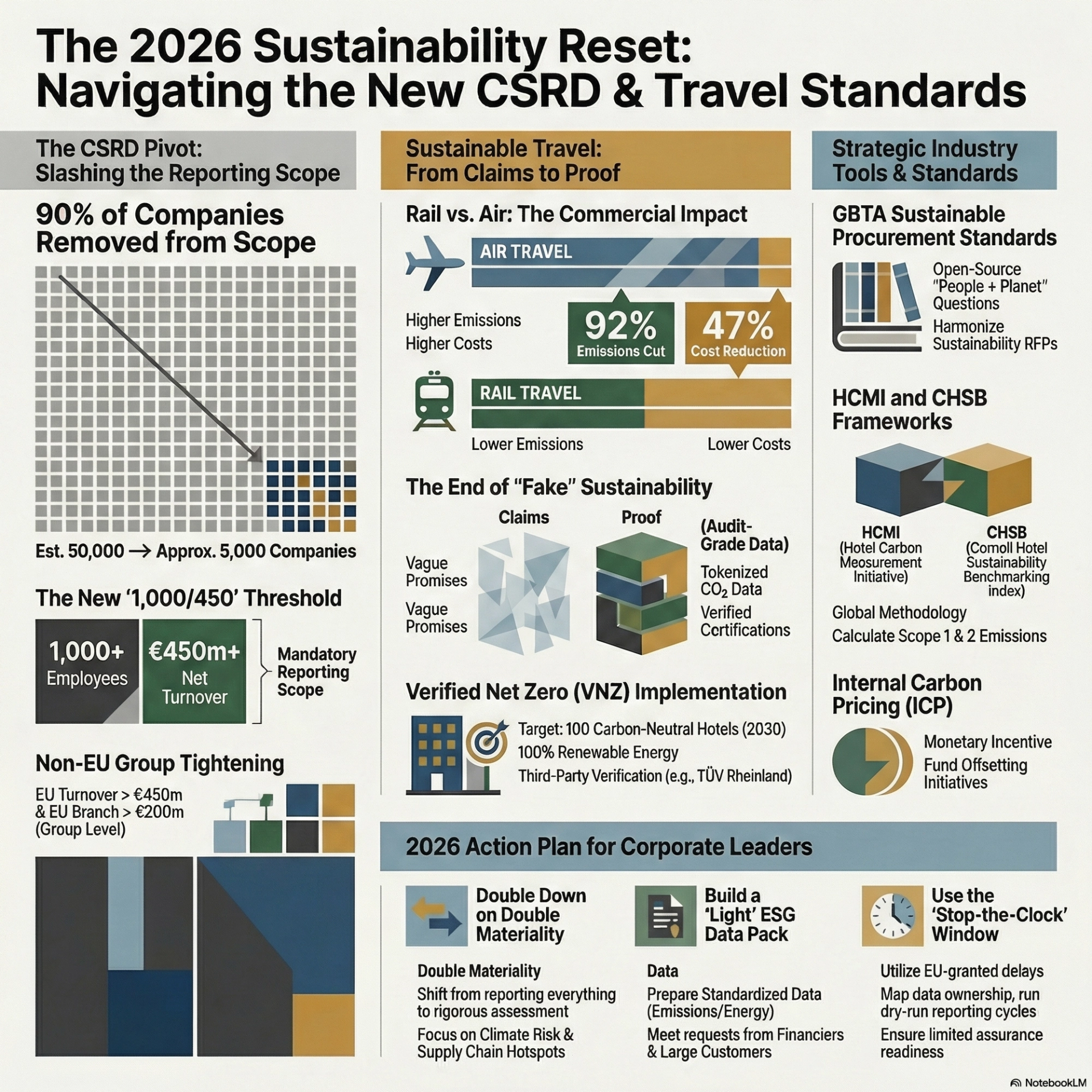
- Corporate travel is forcing the issue: 68% of travel managers require ESG-compliant accommodation, and 41% of Fortune 500 companies have dropped non-certified hotels from preferred lists.
- Payback is fast: Total investment for a mid-size hotel runs €30,000–€75,000, with ROI achieved in 3–5 months through higher rates, occupancy, and operational savings.
- The March 2026 EU Ecolabel update introduces digital verification, mandatory food-waste targets, and social sustainability criteria for the first time.
EU Ecolabel Is Redefining the Hospitality Industry
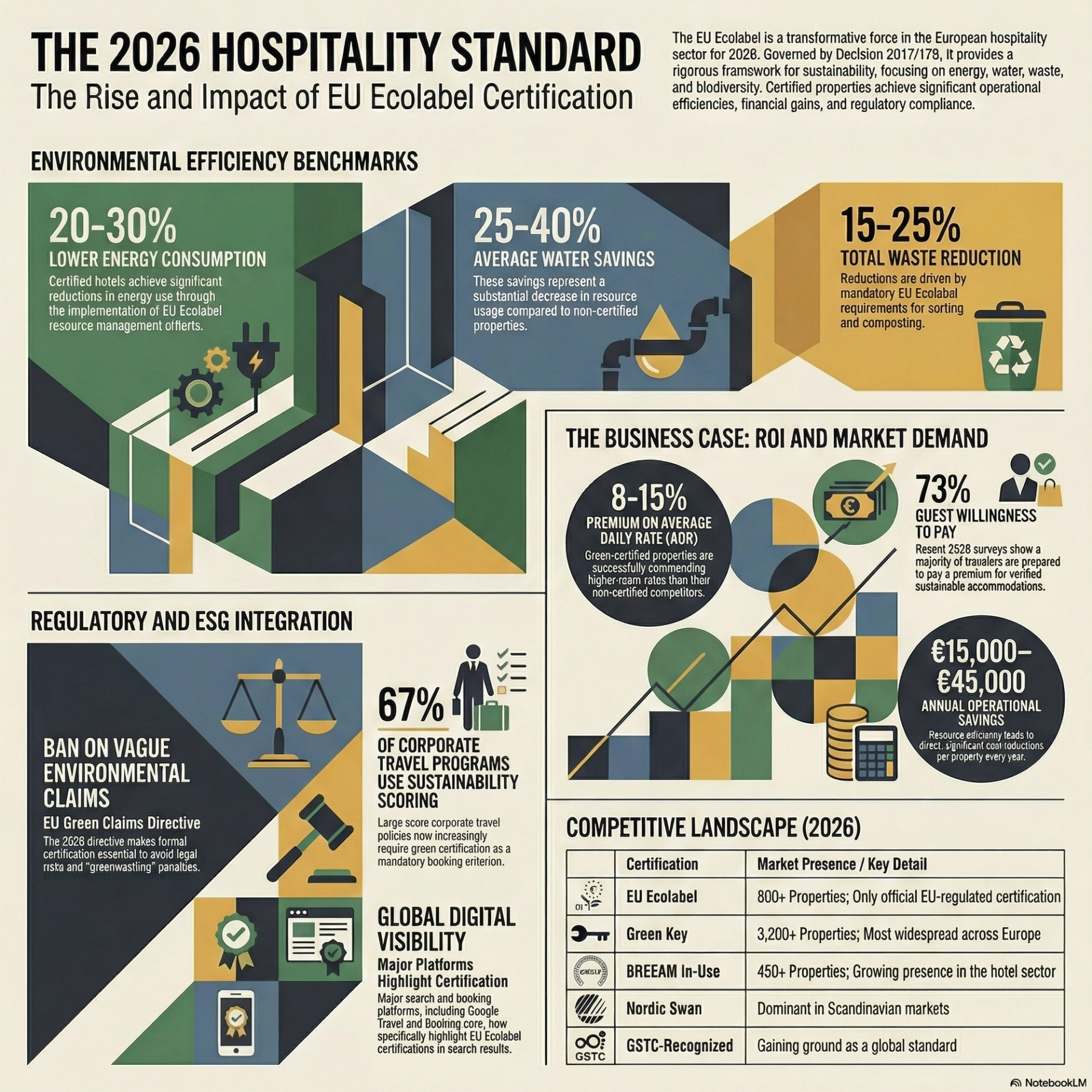
In March 2026, the European Commission published updated EU Ecolabel criteria for accommodation services. This update fundamentally changes how hotels are assessed on sustainability performance. The new framework spans 67 criteria — from energy efficiency and water consumption to chemical use and waste management — elevating the importance of green certification to an entirely new level.
But the real impact is not regulatory; it is commercial. OTAs are prioritizing green-certified hotels in search results, corporate travel managers are mandating ESG-compliant accommodation, and conscious travelers are willing to pay 12–18% more for certified properties.
Market Size of Green Certification
The global hotel sustainability certification market is growing rapidly:
| Year | Certified Hotels (Europe) | Market Value | Annual Growth |
|---|---|---|---|
| 2022 | 14,200 | €1.8 billion | — |
| 2023 | 18,500 | €2.3 billion | 27.8% |
| 2024 | 23,800 | €3.1 billion | 34.8% |
| 2025 | 31,200 | €4.2 billion | 35.5% |
| 2026 (forecast) | 42,000 | €5.8 billion | 38.1% |
By end of 2026, approximately 15% of European hotels are expected to hold at least one green certification — up from just 5% in 2022.
OTAs Are Rewarding Green Certification
Digital distribution channels have started using green certification as a ranking factor:
Booking.com — Travel Sustainable Program
Hotels enrolled in Booking.com's Travel Sustainable program see an average of 23% more search visibility. As of 2026, the platform has labeled over 680,000 properties under this program.
Expedia — Green Travel Filter
Expedia's green travel filter saw 340% more usage starting in 2025. When the filter is active, only certified hotels are displayed — uncertified properties lose this traffic entirely.
Google Travel — Eco-certified Badge
Google hotel search results show an "eco-certified" badge that increases click-through rates (CTR) by an average of 17%. The badge is automatically granted to hotels enrolled in GSTC-recognized certification programs.
Corporate Travel and ESG Pressure
The revenue impact of green certification is most visible in the corporate segment. According to Global Business Travel Association (GBTA) data:
- 68% of corporate travel managers require ESG compliance from accommodation suppliers as of 2026
- 41% of Fortune 500 companies have removed non-certified hotels from their preferred lists
- Green certification premiums in corporate contracts average 8–14%
This directly affects city hotels that rely heavily on business travel. A hotel without certification risks losing a significant share of corporate contracts.
Certification Programs Compared
A comparison of the five most common green certification programs for hotels:
| Certification | Scope | Duration | Cost (Mid-size Hotel) | GSTC Recognized | OTA Visibility |
|---|---|---|---|---|---|
| EU Ecolabel | Europe | 4 years | €3,000–8,000 | Yes | High |
| Green Globe | Global | Annual | $5,000–12,000 | Yes | High |
| EarthCheck | Global | Annual | $4,500–10,000 | Yes | Medium–High |
| LEED (Building) | Global | Permanent | $25,000–75,000 | No (building-focused) | Medium |
| Green Key | Global | Annual | €1,500–4,000 | Yes | Medium |
Which Certification Should You Choose?
The right certification depends on your target market:
- Europe-focused properties: EU Ecolabel + Green Key is the most cost-effective combination
- Global corporate segment: Green Globe or EarthCheck — programs recognized by Fortune 500 companies
- New construction or major renovation: LEED certification creates long-term value
- Budget-constrained properties: Green Key offers the highest OTA visibility at the lowest cost
Measurable ROI: Green Certification by the Numbers
According to Cornell Hospitality Research Center's 2026 study, here is how certified hotels compare:
| Metric | Certified Hotels | Non-certified Hotels | Difference |
|---|---|---|---|
| Average ADR | €142 | €128 | +10.9% |
| Occupancy Rate | 76.3% | 71.8% | +4.5 pts |
| RevPAR | €108.35 | €91.90 | +17.9% |
| Guest Satisfaction Score | 8.7/10 | 8.1/10 | +0.6 pts |
| Repeat Stay Rate | 34% | 26% | +8 pts |
The 17.9% RevPAR gap translates to approximately €600,000 in additional annual revenue for a 100-room hotel.
Investment Payback Period
Payback timelines for green certification investment vary by hotel size:
| Hotel Size | Total Investment | Annual Additional Revenue | Payback Period |
|---|---|---|---|
| Small (30–60 rooms) | €15,000–30,000 | €45,000–90,000 | 4–6 months |
| Medium (60–150 rooms) | €30,000–75,000 | €120,000–350,000 | 3–5 months |
| Large (150+ rooms) | €75,000–200,000 | €400,000–900,000 | 2–4 months |
When operational savings are included (energy 18–25%, water 15–20%, waste 30–40%), the payback period shortens even further.
What's New in the EU Ecolabel 2026 Update
The March 2026 update introduces three critical innovations over the previous version:
1. Digital Verification System
Hotels can now report energy and water consumption data in real time through a digital platform. This system cuts audit costs by 40% while improving transparency.
2. Food Waste Criterion
For the first time, food waste reduction targets are included as mandatory criteria. Hotels must measure food waste in their F&B operations and set an annual 10% reduction target.
3. Social Sustainability
Employee welfare and community impact criteria have been added alongside environmental requirements. Fair wages, training hours, and local procurement ratios are now part of the scoring system.
A Roadmap for Hotels in Turkey — and Beyond
The majority of hotels in Turkey do not yet hold an international green certification. According to the Turkish Ministry of Culture and Tourism, only 3.2% of Turkish hotels have a GSTC-recognized certification — well behind the European average of 15%. This gap represents both a risk and an opportunity for early movers in emerging markets worldwide.
Step-by-Step Implementation Plan
Month 1–2: Baseline Assessment
- Collect current energy, water, and waste consumption data
- Calculate carbon footprint
- Select the target certification program
Month 3–4: Infrastructure Upgrades
- LED lighting conversion (ROI: 8–14 months)
- Water-saving fixtures (ROI: 4–8 months)
- Waste separation system installation
Month 5–6: Certification Application
- Prepare documentation
- Conduct internal audit and address gaps
- Submit application and begin the evaluation process
Month 7+: Marketing and Revenue Optimization
- Update OTA profiles with green certification badges
- Provide ESG materials to corporate sales teams
- Create a dedicated sustainability page on your website
Revenue Management and Green Certification Integration
Green certification creates a multiplier effect when combined with dynamic pricing. AI-powered revenue management systems can automatically identify sustainability-conscious segments and apply targeted pricing strategies.
OtelCiro's revenue management platform analyzes which segments respond to green certification premiums, helping hotels accelerate the return on their sustainability investments.
Conclusion
The EU Ecolabel update and OTA adoption of green certification have transformed sustainability from a cost center into a revenue driver. The data is clear: certified hotels achieve higher ADR, better occupancy, and stronger RevPAR performance.
For hotels — whether in Turkey, across Europe, or in any emerging market — the message is unambiguous: green certification is no longer a "nice to have" but a prerequisite for staying competitive. With payback achievable in 3–6 months, the cost of inaction grows every day.
Ready to see how AI-powered revenue management can maximize the ROI of your green certification? Book a free demo and discover how OtelCiro helps hotels turn sustainability into measurable profit.