![What Is RevPAR? The Hotel Metric Every GM Must Track [2026]](https://cdn.sanity.io/images/1la98t0z/production/9b981b83601ab9b3b5d18cb6e8819bb539b4d2f7-1200x630.png?w=1920&q=65&auto=format&fit=max)
RevPAR: The One Number That Tells the Whole Story
If you could track only one metric in your hotel, it should be RevPAR — Revenue Per Available Room.
RevPAR is the universal benchmark that investors, brands, and revenue managers use to compare hotel performance across properties, markets, and segments. It answers a deceptively simple question: How well are you monetizing your total room inventory?
Unlike occupancy rate (which ignores price) or ADR (which ignores empty rooms), RevPAR captures both dimensions in a single figure.
The RevPAR Formula
There are two ways to calculate RevPAR — both give the same result:
Method 1: ADR × Occupancy Rate
RevPAR = Average Daily Rate × Occupancy Rate
Method 2: Total Room Revenue ÷ Total Available Rooms
RevPAR = Total Room Revenue ÷ Total Available Rooms
Quick Example
A 120-room boutique hotel in Istanbul:
- ADR: €95
- Occupancy: 72%
- RevPAR: €95 × 0.72 = €68.40
That €68.40 is the revenue generated per room in your building — including the empty ones. That's what makes RevPAR powerful: it penalizes you for unsold inventory.
Why RevPAR Matters More Than Occupancy or ADR
Here's why experienced hoteliers obsess over RevPAR instead of its components:
| Scenario | Occupancy | ADR | RevPAR | Winner? |
|---|---|---|---|---|
| Hotel A (discount strategy) | 92% | €75 | €69.00 | |
| Hotel B (value strategy) | 68% | €115 | €78.20 | ✅ |
Hotel A looks busier. Hotel B makes more money per room in the building. RevPAR reveals the truth that occupancy alone hides.
The Three RevPAR Levers
- Raise ADR — through dynamic pricing, upselling, better positioning
- Raise occupancy — through distribution optimization, marketing, loyalty
- Optimize both simultaneously — the holy grail, typically achieved with AI-powered revenue management
2026 RevPAR Benchmarks by Segment
Where does your property stand?
| Segment | Global Avg. RevPAR (2026) | Europe | Turkey |
|---|---|---|---|
| Luxury (5★) | $195 | €175 | €140 |
| Upper Upscale (4★+) | $118 | €105 | €85 |
| Upscale (4★) | $95 | €82 | €65 |
| Midscale (3★) | $68 | €58 | €45 |
| Economy (2★) | $45 | €38 | €28 |
Source: STR Global, Q1 2026 preliminary data
Pro tip: Compare your RevPAR to your comp set, not the global average. A 3-star hotel in Antalya should benchmark against similar properties in the same market, not luxury resorts.
RevPAR vs. TRevPAR vs. GOPPAR: Which to Use?
RevPAR only counts room revenue. For a complete picture:
| Metric | What It Measures | Best For |
|---|---|---|
| RevPAR | Room revenue per available room | Daily pricing decisions, comp set comparison |
| TRevPAR | Total revenue (rooms + F&B + spa + events) per available room | Total revenue management |
| GOPPAR | Gross operating profit per available room | Profitability analysis |
| NRevPAR | Net room revenue (after commissions) per available room | True distribution cost analysis |
For day-to-day revenue management, RevPAR remains the standard. For strategic decisions, layer in TRevPAR and GOPPAR.
How to Improve Your RevPAR
The most effective RevPAR improvement strategies in 2026:
1. Dynamic Pricing
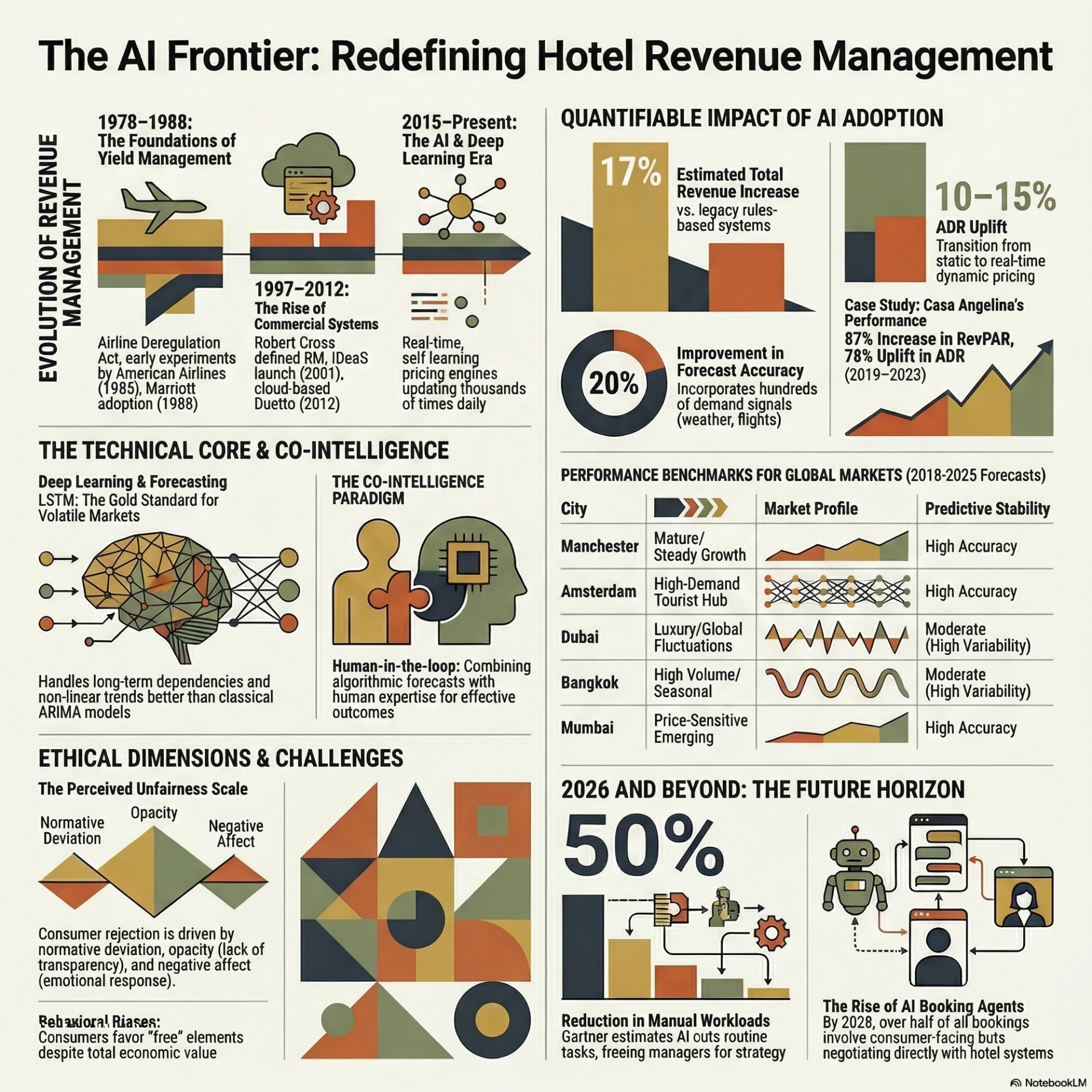
Move away from fixed seasonal rates. AI-powered dynamic pricing adjusts rates in real-time based on demand, competition, events, and booking pace. Hotels using dynamic pricing see 12-18% RevPAR improvement on average.
2. Channel Mix Optimization
OTA commissions eat into your effective RevPAR. Every direct booking at the same rate gives you 15-25% more net revenue. Balance visibility (OTAs) with profitability (direct).
3. Length-of-Stay Controls
Setting minimum stay requirements during peak periods ensures you don't sell Tuesday night at a discount when the real demand is the full weekend.
4. Demand Forecasting
You can't optimize what you can't predict. Modern forecasting models use booking pace, historical patterns, event calendars, and competitor rates to predict demand 90+ days out.
5. AI-Powered Revenue Management
The gap between hotels using AI revenue management and those doing it manually is widening. AI analyzes thousands of data points per rate decision — something no human revenue manager can match at scale.
Related reading: How to Increase RevPAR: 8 Proven Strategies
Common RevPAR Mistakes
- Chasing occupancy at the expense of rate — selling rooms too cheap destroys RevPAR even at 95% occupancy
- Ignoring displacement — accepting a group booking at a low rate when transient demand would have filled those rooms at higher rates
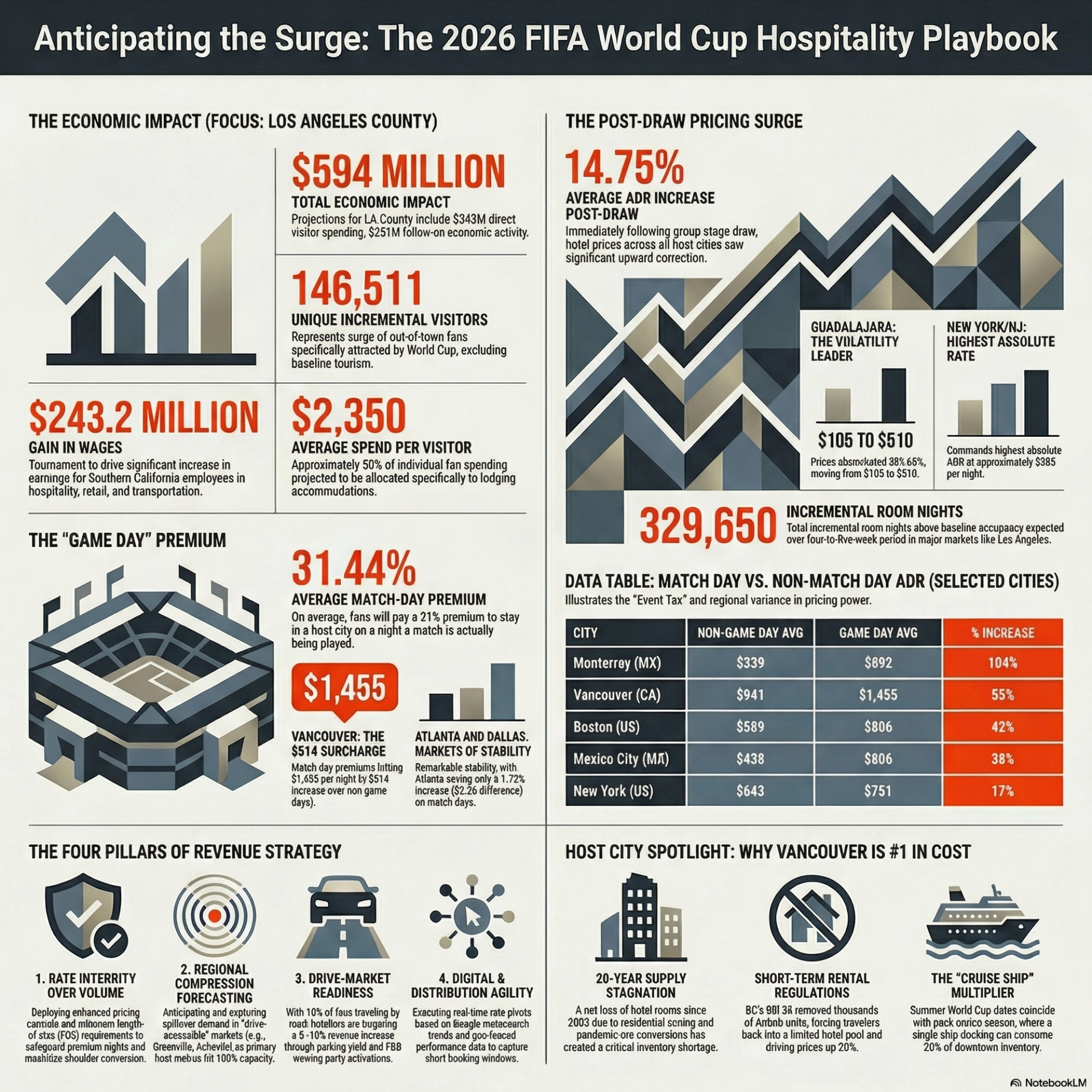
- Static pricing during events — FIFA 2026, conferences, and local events create demand spikes. Hotels with dynamic pricing capture the upside; static-price hotels leave money on the table
- Not calculating NRevPAR — if your RevPAR is €80 but 60% comes from Booking.com at 18% commission, your NRevPAR is significantly lower than a competitor at €75 with 40% direct bookings
RevPAR and AI: The 2026 Reality
The hotels seeing the fastest RevPAR growth in 2026 share one characteristic: they've adopted AI-powered revenue management systems that:
- Analyze competitor rates in real-time
- Adjust pricing multiple times per day
- Factor in 50+ demand signals (weather, events, flights, booking pace)
- Optimize across room types, not just a single BAR
The result? 15-25% RevPAR improvement within the first 6 months, according to industry benchmarks.
Key Takeaways
- RevPAR = ADR × Occupancy — the single best measure of room revenue performance
- Track RevPAR daily, compare against your comp set monthly
- The three levers: raise rate, raise occupancy, or optimize both with AI
- In 2026, the RevPAR gap between AI-managed and manually-managed hotels continues to widen
- Layer TRevPAR and GOPPAR for strategic decisions
Want to see how AI revenue management can improve your RevPAR? Try OtelCiro's AI-powered pricing engine — it analyzes competitor rates, demand signals, and booking pace to optimize your rates automatically.