The Revenue Opportunity of a Generation
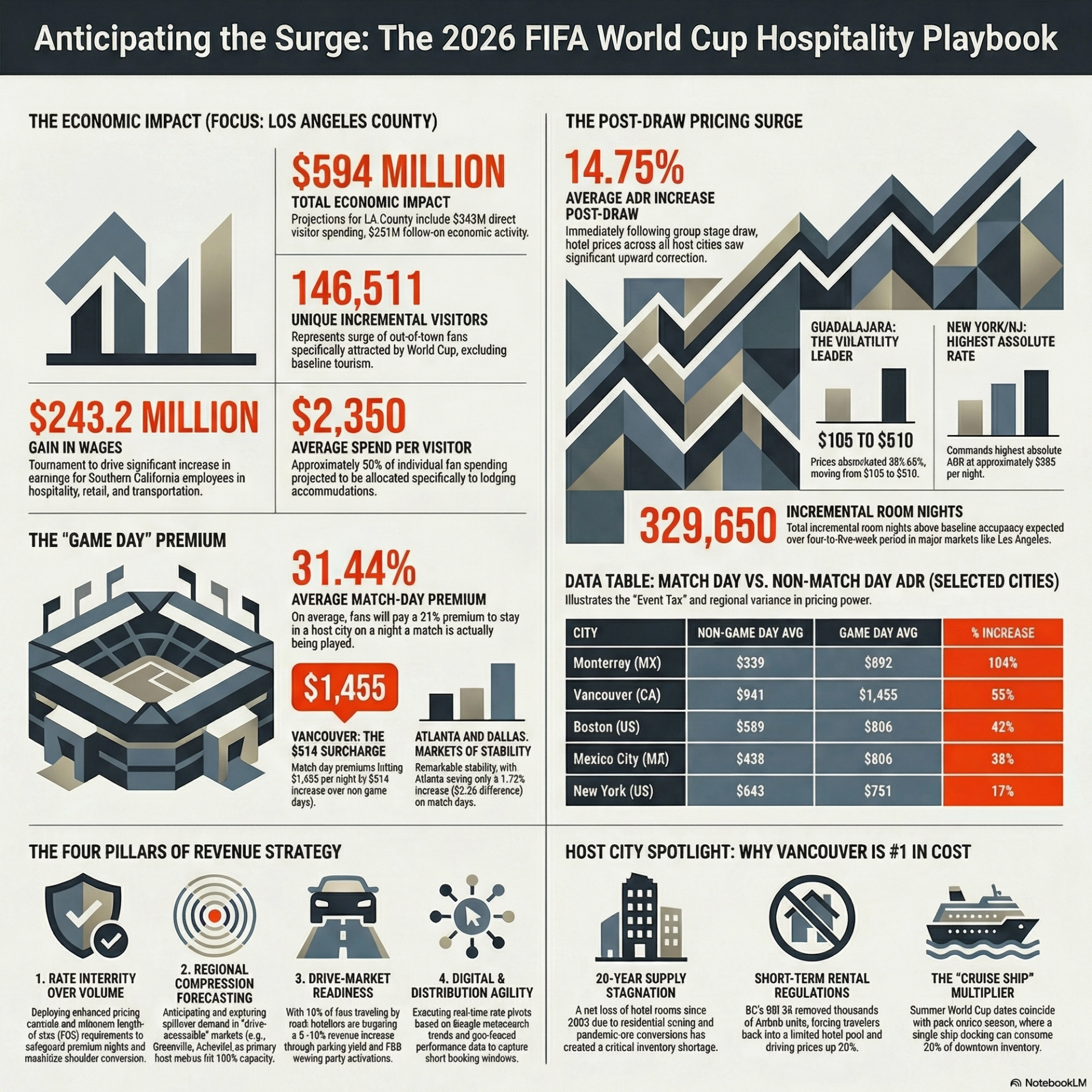
The FIFA World Cup 2026 represents the single largest demand event most North American hotel revenue managers will encounter in their careers. Spread across 16 host cities in the United States, Canada, and Mexico, the tournament will draw an estimated 5.5 million in-person spectators across 104 matches over 39 days — from June 11 to July 19, 2026.
For hotels in host cities, the pricing challenge is not whether rates will increase. The challenge is executing a dynamic pricing strategy precise enough to capture maximum revenue without leaving money on the table or pricing out of the market entirely.
The Data Behind World Cup Hotel Demand
Analysis of previous World Cup events and current forward-looking booking data for 2026 host cities reveals clear pricing patterns that revenue managers can exploit.
The Game-Night Premium
Hotels within a 10-mile radius of match venues command an average 31.44% premium on game nights compared to non-game nights during the tournament period. This premium varies significantly by city and match significance.
| Match Type | Average Rate Premium | Booking Lead Time | Cancellation Rate |
|---|---|---|---|
| Group stage | 22-28% | 4-6 months | 12-15% |
| Round of 16 | 30-38% | 3-5 months | 8-10% |
| Quarter-final | 42-55% | 2-4 months | 5-7% |
| Semi-final | 60-80% | 1-3 months | 3-5% |
| Final (MetLife Stadium, NYC) | 90-150%+ | 6-12 months | 2-3% |
The pattern is consistent with previous mega-events: premiums escalate with match significance, booking windows compress for knockout rounds (fans wait to see if their team advances), and cancellation rates drop as match importance increases.
The 5.5-6 Month Sweet Spot
Forward booking data shows that the optimal window for setting initial World Cup rates is 5.5 to 6 months before the tournament — approximately December 2025 through January 2026. Properties that set rates too early risk underpricing as demand signals strengthen. Properties that wait too long find competitors have already captured early-booking demand.
The critical insight: high initial rates function as filters for low-yield bookings, not as final selling prices. Properties that open with aggressive rates and adjust downward based on pace attract higher-value guests while retaining the flexibility to optimize as the event approaches.
City-by-City Rate Intelligence
Not all host cities face the same demand dynamics. Revenue managers must calibrate strategies to local market conditions.
| Host City | Hotel Rooms (metro) | Expected Daily Visitors | Supply Pressure | Recommended Strategy |
|---|---|---|---|---|
| New York/New Jersey | 120,000+ | 85,000-100,000 | Moderate | Premium positioning, minimum 3-night stays |
| Vancouver | 14,000 | 40,000-55,000 | Very High | Maximum rate, strict cancellation, holdback inventory |
| Boston | 18,000 | 35,000-45,000 | High | Aggressive pricing, group block protection |
| San Francisco Bay Area | 35,000 | 45,000-60,000 | Moderate-High | Zone-based pricing (proximity tiers) |
| Los Angeles | 55,000 | 55,000-70,000 | Moderate | Event-night spikes, shoulder date optimization |
| Mexico City | 50,000 | 60,000-80,000 | Moderate | Currency advantage positioning for international visitors |
| Houston | 22,000 | 30,000-40,000 | High | Corporate crossover strategy (business + event) |
| Dallas | 25,000 | 35,000-45,000 | Moderate-High | Extended stay packages, family-oriented bundling |
| Miami | 30,000 | 40,000-50,000 | Moderate | Resort premium, beach + match packaging |
| Toronto | 20,000 | 45,000-55,000 | High | Exchange rate marketing to US visitors |
Vancouver and Boston face the most acute supply pressure — limited hotel inventory relative to expected visitors. Properties in these markets can implement the most aggressive pricing strategies with minimal demand risk.
The Dynamic Pricing Playbook
Strategy 1: Inventory Holdback
The most powerful lever available to revenue managers is inventory holdback — deliberately keeping a percentage of rooms off-sale during the initial booking period to sell at peak rates closer to match dates.
Recommended holdback allocation:
- 60% of inventory: Available at initial rates, 5-6 months out
- 25% of inventory: Released 60-90 days before tournament, at adjusted rates based on pace
- 15% of inventory: Released 14-30 days before specific match dates, at maximum rates
This phased release captures both early-booking demand (typically leisure travelers and tour operators) and late-booking demand (fans whose teams qualified for knockout rounds, last-minute corporate hospitality).
Strategy 2: Minimum-Stay Requirements
Minimum-stay restrictions are essential for maximizing revenue during compressed demand periods. A single-night stay on a game night represents a significant opportunity cost when surrounding nights have lower demand.
Recommended minimum stays by period:
| Period | Minimum Stay | Rationale |
|---|---|---|
| Group stage game nights (weekday) | 2 nights | Captures pre/post-game night demand |
| Group stage game nights (weekend) | 3 nights | Weekend travelers more likely to extend |
| Knockout round game nights | 3 nights | Higher willingness to pay, longer trips |
| Semi-final / Final week | 4-5 nights | Peak demand justifies longer minimums |
| Non-game nights during tournament | No minimum | Maintain flexibility to fill gaps |
Properties that implement minimum-stay requirements during the 2022 Qatar World Cup reported 18-24% higher total revenue per available room compared to properties that sold on a night-by-night basis.
Strategy 3: Rate Fencing and Segmentation
Different guest segments have dramatically different willingness to pay during the World Cup. Effective rate fencing captures surplus value from high-yield segments while maintaining accessibility for standard demand.
Segment-specific strategies:
- Corporate hospitality groups: Premium rates with dedicated services (shuttle to venue, private dining, late checkout). Margins of 40-60% above standard corporate rates are achievable.
- Tour operators: Negotiated allotments at 15-20% below rack rate, with strict cut-off dates and non-refundable terms. Volume offsets the rate discount.
- Fan travel packages: Bundled rates including transportation to venue, fan zone access, and F&B credits. Packages command 25-35% premiums over room-only rates.
- Standard leisure: Dynamic market rates with standard cancellation policies. The baseline against which premiums are measured.
Strategy 4: Shoulder Date Optimization
The most overlooked revenue opportunity is the shoulder period — the 7-10 days before and after the tournament in each city. These dates see elevated demand from early arrivals, late departures, and travelers combining World Cup attendance with broader tourism.
Revenue managers should implement graduated rate increases for shoulder dates:
- 7-10 days before first match: 8-12% above normal seasonal rates
- 3-6 days before first match: 15-20% above normal
- 1-2 days before first match: 25-35% above normal (approaches game-night levels)
- 1-3 days after last match: 15-25% above normal (departing fans + lingering tourism)
Technology Requirements for World Cup Revenue Management
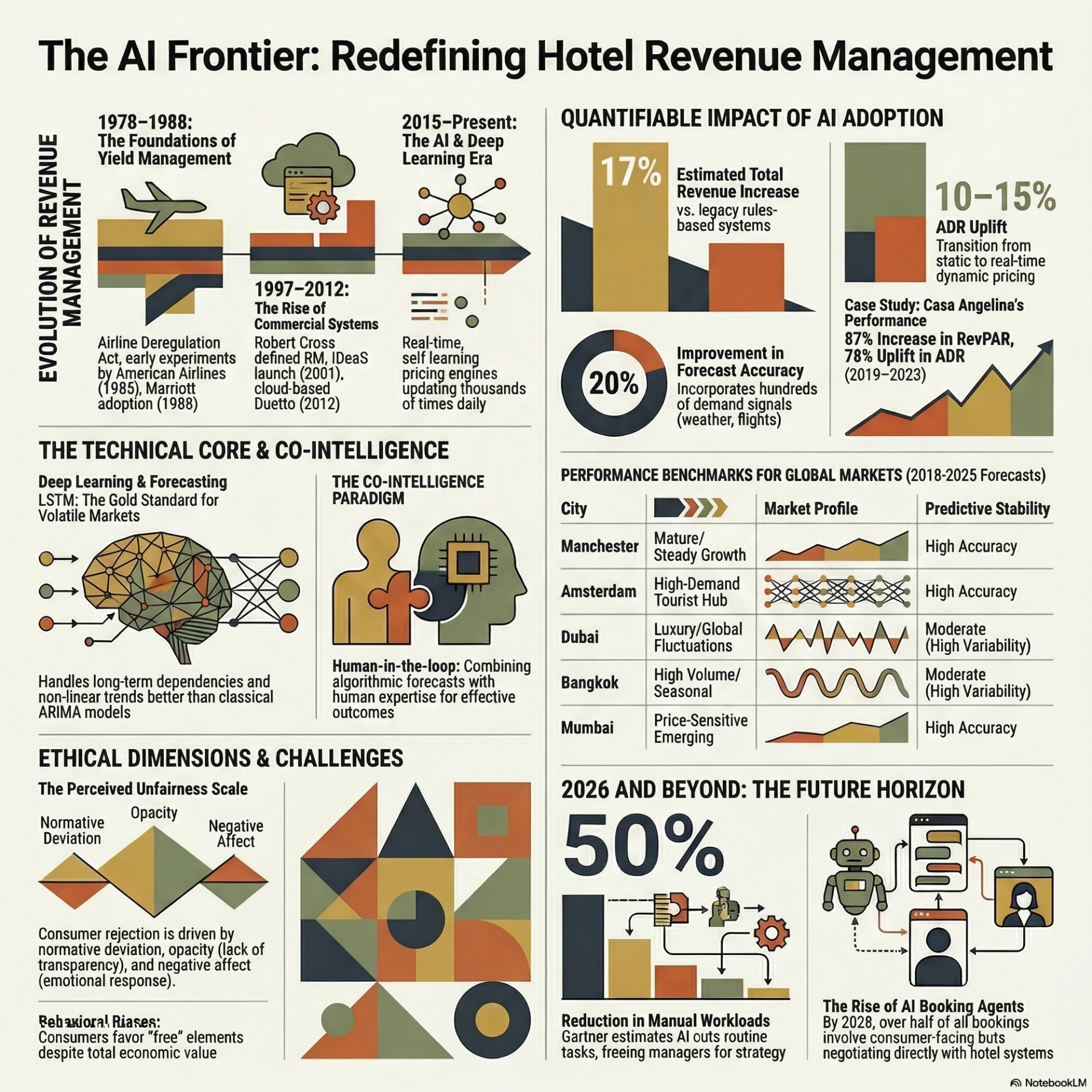
Manual rate management is insufficient for World Cup-scale demand volatility. Revenue managers need AI-powered systems capable of processing multiple data streams simultaneously:
- Real-time competitor rate monitoring across all distribution channels, updated at minimum every 4 hours during the tournament period
- Demand forecasting models calibrated to mega-event patterns, not standard seasonal curves
- Automated rate adjustments with human approval gates for changes exceeding predefined thresholds
- Channel-specific pricing that maintains rate parity while optimizing distribution costs
- Cancellation pattern analysis to identify and re-sell inventory from cancellations within hours, not days
Properties using AI-driven revenue management platforms during the 2024 Paris Olympics reported 22-30% higher RevPAR compared to properties relying on manual rate management. The complexity and pace of World Cup demand will amplify this advantage further.
The Mistakes to Avoid
Three common mistakes cost hotels significant revenue during mega-events:
Pricing too conservatively early. Revenue managers who set modest initial rates "to build pace" find they have sold their best inventory at below-market prices by the time demand peaks. Start high and adjust based on data.
Ignoring non-game nights. The tournament creates elevated demand across all nights, not just game nights. Properties that price game nights aggressively but leave non-game nights at standard rates miss 30-40% of the revenue opportunity.
Over-allocating to OTAs. Commission costs on OTA bookings during peak demand periods represent pure margin erosion. Properties should shift inventory allocation toward direct channels, metasearch, and corporate direct agreements during the tournament.
Preparing Now
The 5.5-6 month optimal pricing window means revenue managers should be finalizing their World Cup pricing strategies by December 2025. The properties that capture the most revenue will be those that combine data-driven dynamic pricing with disciplined inventory management and channel optimization.
The World Cup comes once. The revenue management decisions made in the next 60 days will determine whether your property captures its fair share of the opportunity.