![Booking.com Connected Trip: Hotel Threats [2026]](https://cdn.sanity.io/images/1la98t0z/production/2a73352e15c72a5c8ab4a5010057f65361c99a94-1200x1200.png?w=1920&q=65&auto=format&fit=max)
Booking.com on the Path to Becoming a Super App
Booking.com is no longer just a hotel reservation platform. With its Connected Trip vision, the platform aims to become a super app that consolidates flights, car rentals, transfers, activities, and restaurant recommendations under a single roof.
This transformation carries serious threats for hotels, but it also presents opportunities that can be leveraged with the right strategy.
Related reading: How to Reduce Booking.com Commissions: 7 Proven Strategies for Hotels (2026)
What Is Connected Trip?
Connected Trip is an integrated system designed to keep the entire travel planning journey within the Booking.com ecosystem:
- Flight + hotel package reservations
- Car rental integration
- Airport transfer bookings
- Destination activities and tour sales
- Restaurant recommendations and reservations
Once a guest enters Booking.com, they can complete every aspect of their trip within the platform. This dramatically reduces the likelihood of the guest making direct contact with the hotel.
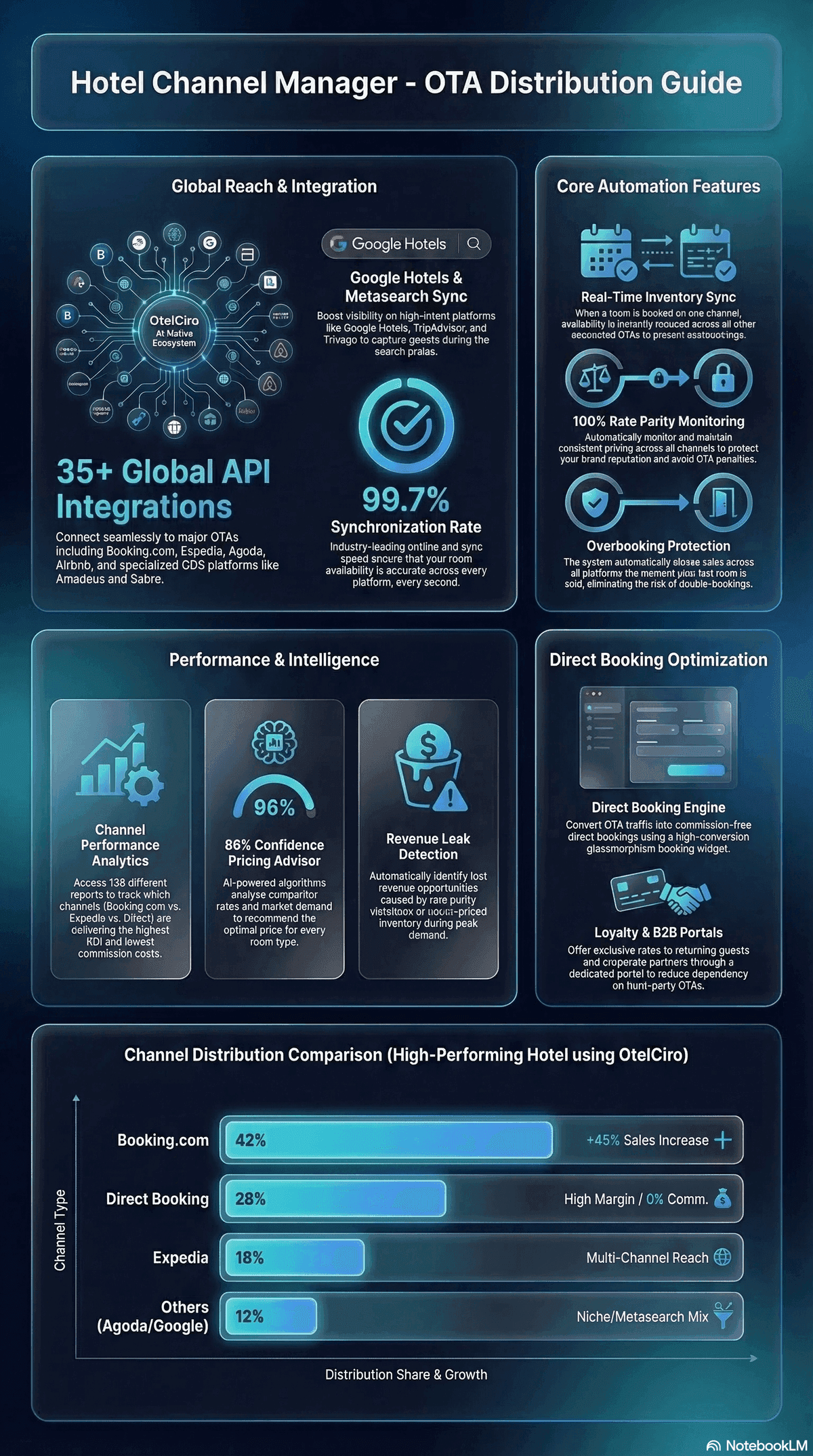
Embed this image on your site
<a href="https://otelciro.com/en/news/booking-connected-trip">
  <img src="https://cdn.sanity.io/images/1la98t0z/production/b9cee47e03a0891ad8e615048e78be166bc641de-1200x2150.png" alt="Hotel channel management and OTA distribution strategy" width="800" />
</a>
<p>Source: <a href="https://otelciro.com">OtelCiro</a> — AI Hotel Revenue Management</p>
Threats: What Hotels Stand to Lose
1. Loss of the Guest Relationship
In Connected Trip, the guest communicates with Booking.com, not with the hotel. Pre-check-in questions, special requests, and post-stay feedback are all managed through the platform. The hotel cannot reach the guest directly.
This situation:
- Makes building loyalty programs difficult
- Limits cross-selling opportunities (spa, restaurant, room upgrades)
- Reduces repeat visit rates
2. Increased Commission Burden
In Connected Trip, the hotel is listed not just at the room commission rate but as part of a package, often at lower prices. The effective commission rate can climb as high as 30%.
3. AI-Directed Preferences
Booking.com's AI engine directs guests toward the platform's interests, not the hotel's. Properties paying higher commissions and offering more program benefits are pushed to the top.
Related reading: Booking Connected Trip vs AI Disruption: What Hotels Should Do
Opportunities: Gaining Advantage with the Right Strategy
1. The Billboard Effect
The most important indirect benefit of Connected Trip is the billboard effect. Research shows that 52% of travelers who see your hotel on Booking.com subsequently visit the hotel's website directly.
This means Booking.com is effectively advertising your hotel for free. Using the billboard effect strategically can offset high commission costs.
2. DMA Price Freedom
The European Union's Digital Markets Act (DMA) guarantees hotels the right to offer lower prices on their own websites than on OTAs. The DMA price freedom regulation is the strongest legal tool for encouraging direct bookings.
This right is your most powerful weapon against the Connected Trip threat: the "Best price guaranteed on our website" message.
3. Loyalty Loops
It is possible to pull some Connected Trip guests into your direct channel. Offering exclusive deals at check-in, capturing email addresses, and launching a loyalty program can boost repeat visit rates.
Embed this image on your site
<a href="https://otelciro.com/en/news/booking-connected-trip">
  <img src="https://cdn.sanity.io/images/1la98t0z/production/acae4d068a81e17758f103e608a54f376cdac169-1200x669.png" alt="Booking.com ranking algorithm optimization tips" width="800" />
</a>
<p>Source: <a href="https://otelciro.com">OtelCiro</a> — AI Hotel Revenue Management</p>
OTA vs. Direct: A Numbers Comparison
| Criterion | OTA (Booking.com) | Direct Channel |
|---|---|---|
| Commission rate | 15-30% | 0% |
| Cancellation rate | 40% | 14% |
| Profit margin difference | Base | 60% higher |
| Guest data access | Limited | Full |
| Loyalty building | Difficult | Possible |
| Cross-sell opportunity | None | High |
This table makes it clear: the direct channel is more profitable in every dimension. However, abandoning OTA traffic entirely is not realistic either. The right strategy is to position OTAs as your storefront and the direct channel as your point of sale.
Related reading: Booking.com Stock Drop: AI Threat or Real Risk?
5-Step Defense Strategy Against Connected Trip
- Strengthen your website: Mobile-friendly, fast, secure, and easy booking flow
- Best price guarantee: Exercise your DMA rights and offer the lowest price on your website
- Leverage the billboard effect: Perfect your OTA profile to increase website traffic
- Build a guest database: Collect email and contact information during check-in
- Launch a loyalty program: Offer incentives that encourage repeat visits
Frequently Asked Questions
Does not joining Connected Trip affect ranking?
There is no direct ranking penalty. However, hotels that join Connected Trip receive additional traffic from package sales, creating an indirect advantage. You can explore the details in Booking.com's 2025 strategic shifts.
How can I measure the billboard effect?
Compare your website's traffic source analysis — specifically "direct traffic" and "organic search" growth — against your Booking.com profile visibility. You can use campaign tracking parameters in Google Analytics to measure the billboard effect approximately.
What is the payback period for direct channel investment?
Website optimization, booking engine setup, and digital marketing campaigns typically deliver a combined payback period of 3-6 months. Positive ROI from commission savings begins from the first month.
Conclusion
Booking.com Connected Trip is a strategic move that is shifting the distribution balance in the hospitality industry. Rather than ignoring the threats, building a counter-strategy with the billboard effect, DMA price freedom, and loyalty loops will preserve your hotel's independence and profitability.
OtelCiro helps hotels reduce OTA dependency and grow direct channel revenue. Request a free consultation to develop a customized strategy against the Connected Trip threat for your hotel.