Key Takeaways
- HVAC systems are the second largest operational cost for hotels, consuming 50-60% of total energy.
- AI-powered HVAC optimization leverages real-time data from PMS, weather APIs, and room sensors to dynamically manage climate control.
- Hotels implementing AI HVAC optimization achieve significant savings: 50-60% in energy costs, 40% in maintenance, and a 75% reduction in guest temperature complaints.
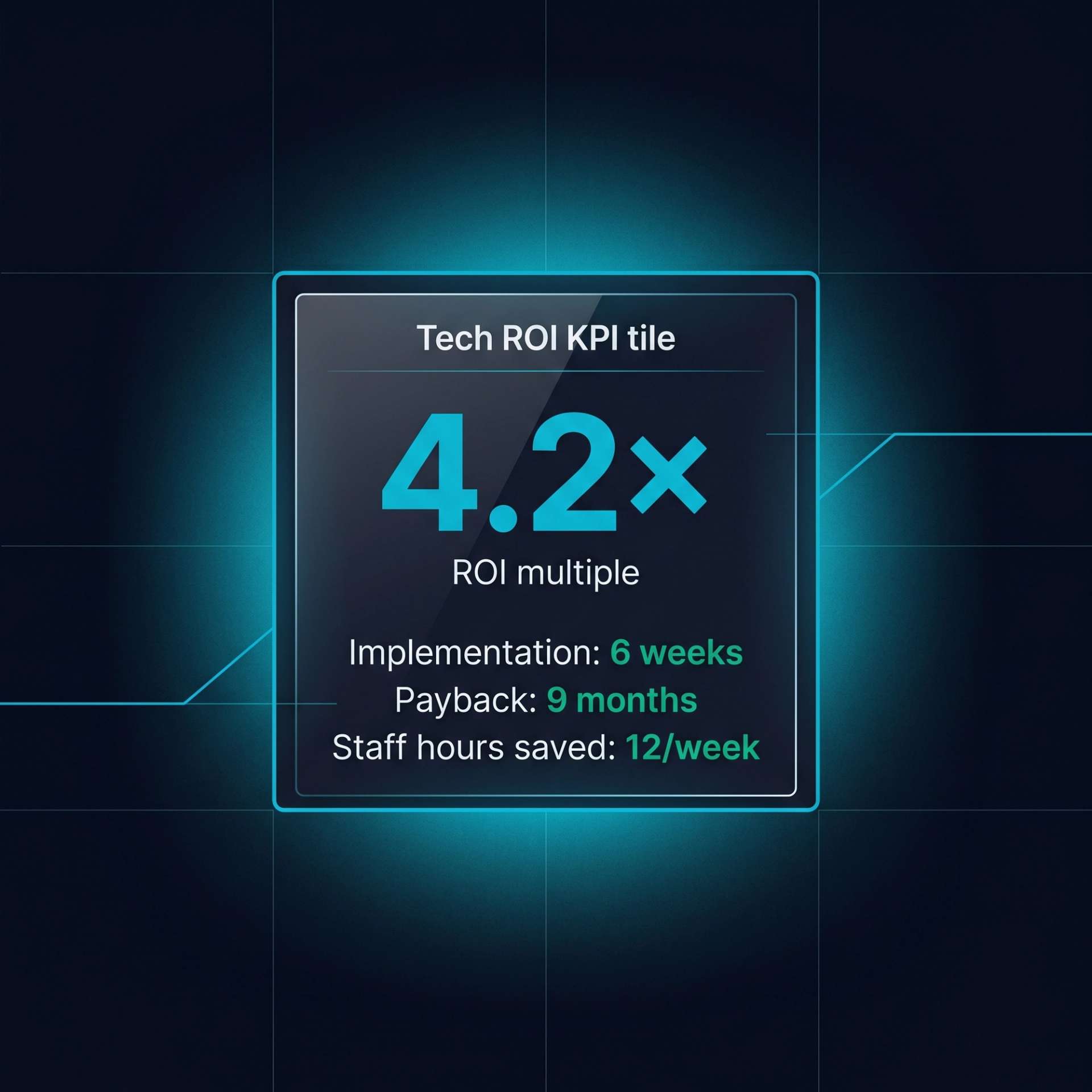
- The return on investment (ROI) for AI HVAC systems is exceptionally fast, typically ranging from 5-8 months.
- Beyond cost savings, AI optimization enhances the guest experience through personalized temperatures, quieter operation, and improved indoor air quality.
Embed this image on your site
<a href="https://otelciro.com/en/news/ai-hvac-optimization-for-hotels-50-60-energy-savings-2026-guide">
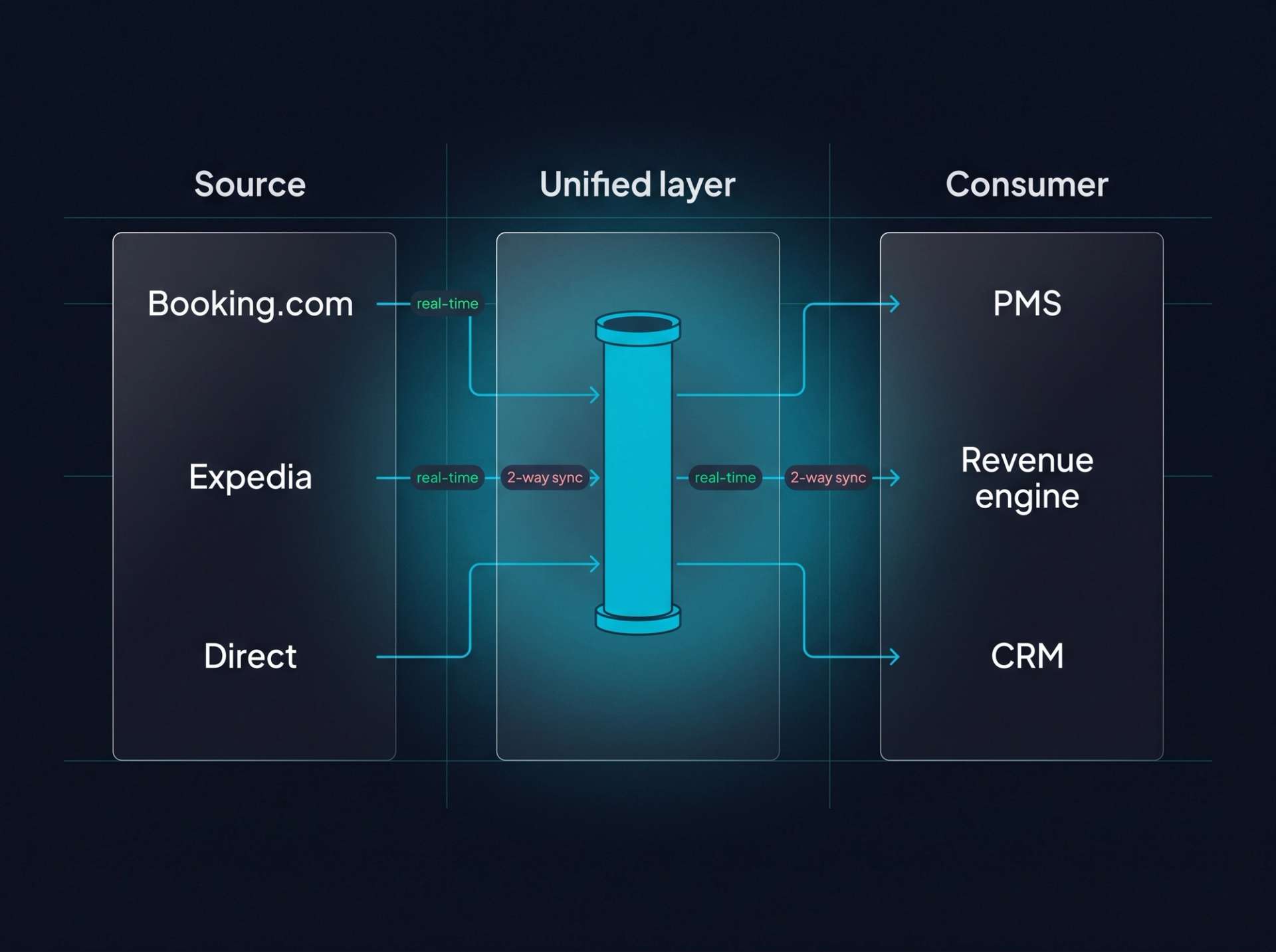
  <img src="https://cdn.sanity.io/images/1la98t0z/production/f8a8067656ea93ee803600163f00228d084f5df3-2400x1792.jpg" alt="Data integration flow. Sources Booking.com, Expedia, Direct feed a central cyan unified layer; the layer feeds PMS, Revenue engine, CRM. Real-time, 2-way sync labels." width="800" />
</a>
<p>Source: <a href="https://otelciro.com">OtelCiro</a> — AI Hotel Revenue Management</p>
Hotels' Largest Energy Consumer: HVAC
In hotel operations, energy costs are the second largest expenditure after personnel expenses. And 50-60% of this energy bill originates from a single system: HVAC (Heating, Ventilation, and Air Conditioning).
For a 200-room hotel in Antalya, the average annual energy bill ranges between 180,000-280,000 EUR. Of this, 90,000-170,000 EUR comes from HVAC systems. This figure explains why AI optimization offers hoteliers the fastest and most measurable return on investment in sustainability.
Problems with Traditional HVAC Management
Most hotels still manage HVAC systems reactively or on a timer-based schedule:
Common Issues
1. Fixed Timer Schedules: All rooms are heated or cooled at the same times, regardless of occupancy. Empty rooms are unnecessarily conditioned.
2. Manual Temperature Settings: Guests often set the air conditioning to maximum cooling and leave windows open. Energy flows directly outside.
3. Lack of Predictive Maintenance: Clogged filters, refrigerant leaks, or compressor inefficiency are only noticed when a breakdown occurs — by then, 15-30% more energy has been consumed.
4. Regional Imbalance: Rooms on sun-facing facades operate with the same settings as those on shaded sides; some rooms become excessively cold while others are not cooled sufficiently.
Embed this image on your site
<a href="https://otelciro.com/en/news/ai-hvac-optimization-for-hotels-50-60-energy-savings-2026-guide">
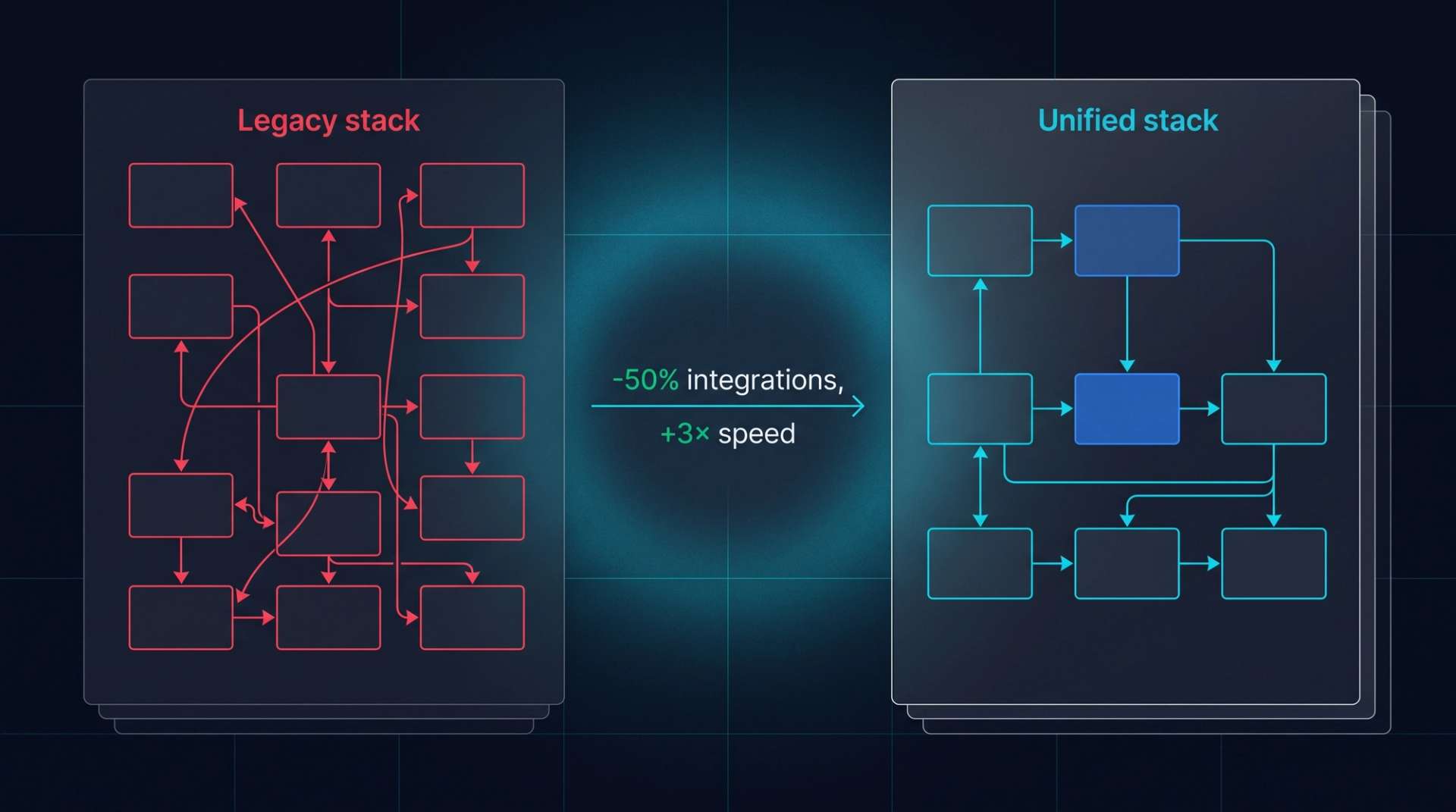
  <img src="https://cdn.sanity.io/images/1la98t0z/production/204c96241f603ae521d019b69981a201477c48df-2752x1536.jpg" alt="Legacy vs unified stack. Left in rose: 12 disconnected boxes with chaotic arrows. Right in cyan: 6 integrated boxes with orderly arrows. Center label: '-50% integrations, +3× speed'." width="800" />
</a>
<p>Source: <a href="https://otelciro.com">OtelCiro</a> — AI Hotel Revenue Management</p>
How AI HVAC Optimization Works
AI-powered HVAC systems analyze multiple data sources in real-time to calculate optimal energy usage:
Data Sources Analyzed
| Data Source | Purpose of Use |
|---|---|
| PMS occupancy data | Which rooms are occupied, which are vacant |
| Reservation forecasts | Occupancy projection for the next 72 hours |
| Weather API | Outdoor temperature, humidity, solar radiation forecast |
| Room sensors | Indoor temperature, humidity, CO₂ levels, window/door status |
| Guest preferences | Past stay temperature preferences |
| Building orientation | Solar heat gain calculation by facade |
| Energy tariffs | Hourly electricity price (peak/off-peak rates) |
| Historical energy data | Seasonal consumption patterns and anomalies |
Optimization Cycle
The AI system continuously processes this data to automatically make the following decisions:
1. Pre-cooling/Pre-heating Scheduling: Initiating room temperature adjustment to the target 30-45 minutes before check-in. Neither too early (energy waste) nor too late (guest dissatisfaction).
2. Vacant Room Management: Setting the room temperature to "standby mode" after check-out. Instead of completely shutting down, maintaining an acceptable temperature range with minimum energy.
3. Zonal Balancing: Directing more cooling capacity to rooms on sun-facing facades while saving energy on shaded sides.
4. Peak Hour Avoidance: Reducing cooling load during high electricity tariff hours, utilizing thermal mass by pre-cooling during off-peak tariff hours.
Energy Savings Metrics: Real-World Results
Performance data from hotels implementing AI HVAC optimization:
| Metric | Pre-Optimization | Post-Optimization | Improvement |
|---|---|---|---|
| Daily energy consumption per room | 18-25 kWh | 8-12 kWh | -50-55% |
| HVAC energy cost (annual, 200 rooms) | 150,000 EUR | 65,000 EUR | -57% |
| Peak demand load | 480 kW | 320 kW | -33% |
| Maintenance cost | 25,000 EUR/year | 15,000 EUR/year | -40% |
| Guest temperature complaints | 12 complaints/month | 3 complaints/month | -75% |
| Carbon emissions | 280 tons CO₂/year | 125 tons CO₂/year | -55% |
These figures demonstrate that AI HVAC optimization excels in terms of both cost and comfort. While energy savings are achieved, guest complaints also decrease because the system adapts better to individual preferences.
Occupancy Patterns and Energy Forecasting Model
One of AI's most powerful aspects is its ability to correlate occupancy patterns with energy consumption:
Scenario Analysis
Scenario 1 — High Occupancy Week (90%+):
- All HVAC units are active, but AI optimizes the central system with load balancing
- Common area air conditioning systems operate at full capacity
- Energy saving focus: peak hour avoidance and thermal storage
- Estimated savings: 25-30%
Scenario 2 — Medium Occupancy Week (50-60%):
- Vacant rooms are in standby mode, with only humidity control active
- Floor-based HVAC zoning: vacant floors operate with minimum energy
- Energy saving focus: vacant room management and zonal shutdown
- Estimated savings: 45-55%
Scenario 3 — Low Occupancy Period (20-30%):
- HVAC zones are shut down by concentrating guests on specific floors
- Common areas operate at minimum capacity
- Energy saving focus: full floor shutdown and central system optimization
- Estimated savings: 60-70%
Implementation Roadmap
Step 1: Energy Audit (Week 1-2)
Determine the energy consumption profile of your existing HVAC system:
- Energy distribution by department
- Hourly consumption patterns
- Seasonal variation analysis
- Existing BMS (Building Management System) capacity
Step 2: Sensor Infrastructure (Week 3-6)
Establish a data collection infrastructure for AI optimization:
- Room temperature and humidity sensors
- Window/door open-closed sensors
- CO₂ and air quality sensors
- Energy meters (floor and zone-based)
Estimated cost: 80-150 EUR per room (sensor + installation)
Step 3: AI Platform Integration (Week 6-10)
Integrate the AI engine with your existing BMS and PMS:
- PMS occupancy and reservation data connection
- Weather API integration
- BMS control interface connection
- Energy tariff API integration
Step 4: Learning Period (Week 10-14)
The AI system learns existing patterns in the first 4 weeks:
- Building thermal behavior (heating/cooling rates)
- Guest behavior patterns
- Seasonal energy profile
- Equipment performance characteristics
Step 5: Active Optimization (Week 14+)
After the learning period, AI begins active control. Savings of 20-30% are expected in the first month, reaching 45-60% by the 6th month.
Return on Investment Analysis
Typical AI HVAC optimization investment for a 200-room Mediterranean hotel:
| Item | Cost |
|---|---|
| Sensor infrastructure (200 rooms) | 20,000-30,000 EUR |
| AI platform license (annual) | 12,000-18,000 EUR |
| BMS integration and setup | 8,000-15,000 EUR |
| Training and commissioning | 3,000-5,000 EUR |
| Total first-year cost | 43,000-68,000 EUR |
Annual energy savings: 75,000-105,000 EUR
Payback period: 5-8 months
This is one of the fastest payback periods among hotel technology investments. From the second year onwards, net savings are projected to be 60,000-90,000 EUR after deducting the annual license cost.
Impact on Guest Experience
While energy savings alone are a sufficient motivation, the impact of AI HVAC optimization on guest experience should not be overlooked:
- Personalized temperature: Automatic room temperature adjustment based on guest preference history
- Silent operation: AI optimizes compressor run times, reducing nighttime noise
- Air quality: Automatic ventilation with CO₂ sensors improves indoor air quality
- Humidity control: Optimal humidity levels (40-60%) are maintained, enhancing comfort
Embed this image on your site
<a href="https://otelciro.com/en/news/ai-hvac-optimization-for-hotels-50-60-energy-savings-2026-guide">
  <img src="https://cdn.sanity.io/images/1la98t0z/production/95f0fd8308382663d48aae974ee55311a4dab479-2048x2048.jpg" alt="Tech ROI tile. 4.2× ROI headline with sub-rows: 6-week implementation, 9-month payback, 12 staff hours saved per week." width="800" />
</a>
<p>Source: <a href="https://otelciro.com">OtelCiro</a> — AI Hotel Revenue Management</p>
Conclusion
AI optimization in hotel HVAC systems is the fastest ROI sustainability investment available to hoteliers in 2026. The combination of a 5-8 month payback period, 50-60% energy savings, and increased guest satisfaction elevates this technology from a "nice-to-have" to a "must-have." In an environment where energy costs continue to rise, AI HVAC optimization is one of the rare investments that protects both the budget and the planet.
OtelCiro enhances hotels' total operational efficiency by combining energy management data with revenue optimization. Request a demo and turn your energy costs into revenue.
![Europe's Hotel Construction Boom: 2026 Oversupply Risks [Market Analysis]](https://cdn.sanity.io/images/1la98t0z/production/6dfe59137f56aa14bfcba86d9db3cf05ff89f406-2752x1536.jpg?w=1920&q=50&auto=format&fit=max)