
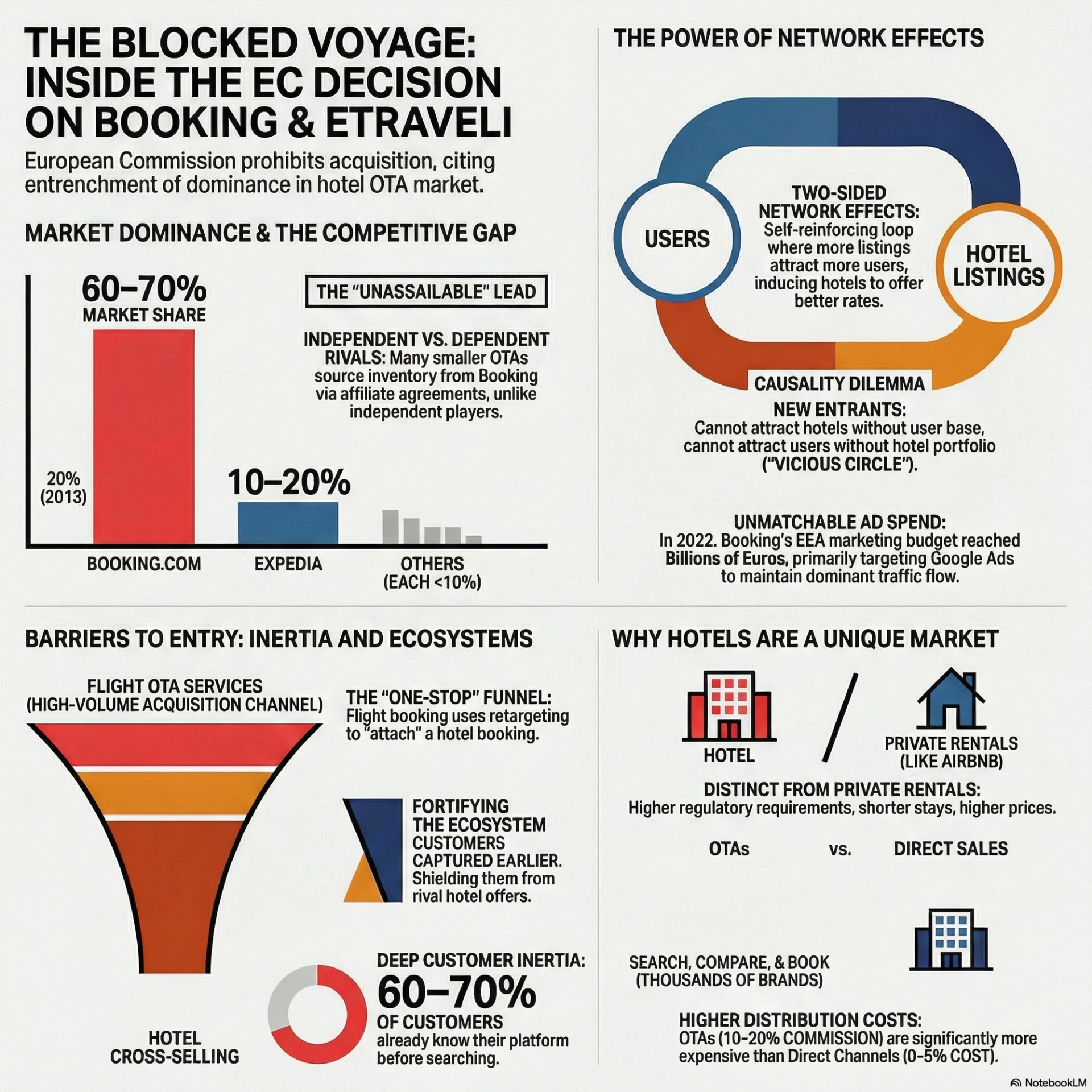
The Bundling Offensive Hotels Cannot Afford to Ignore
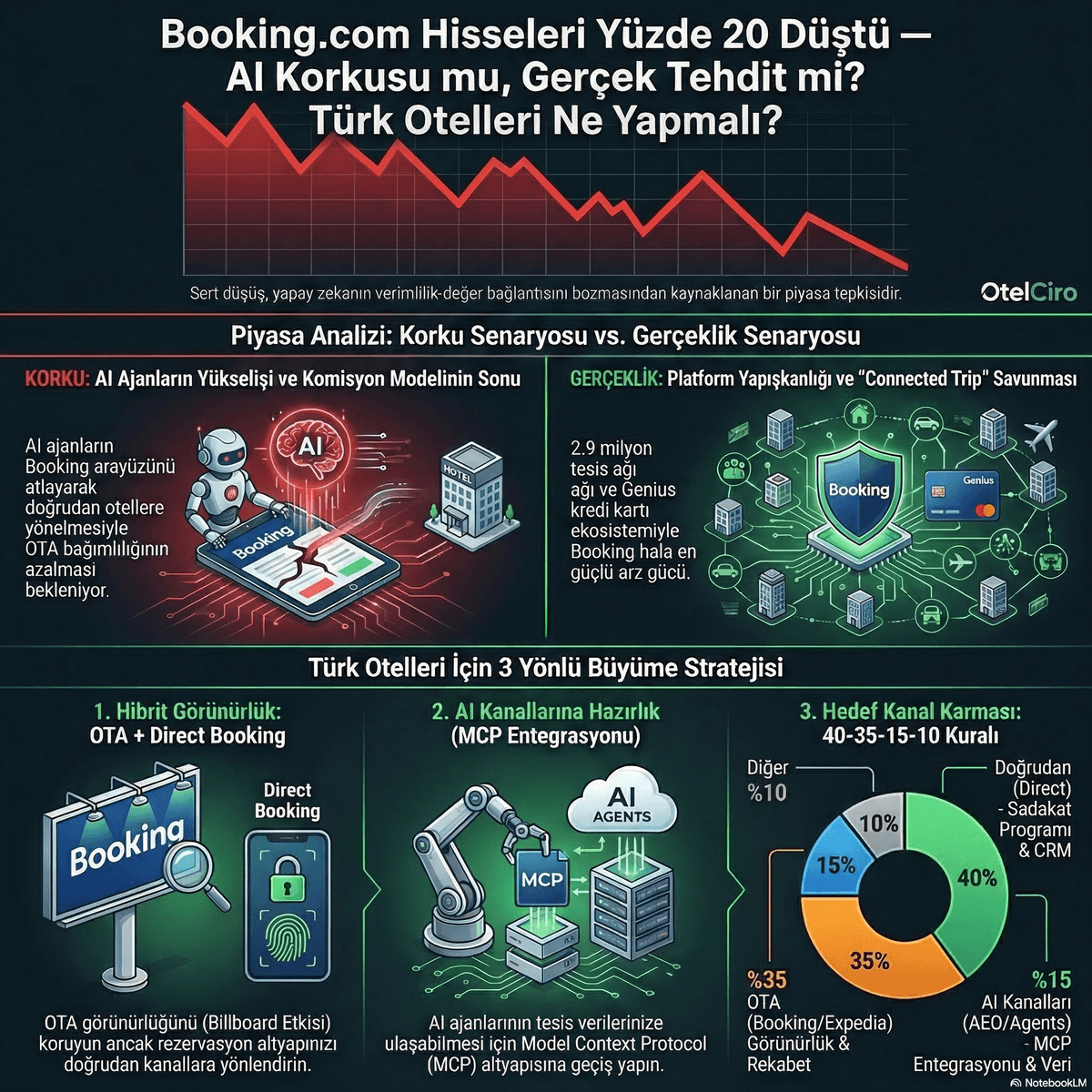
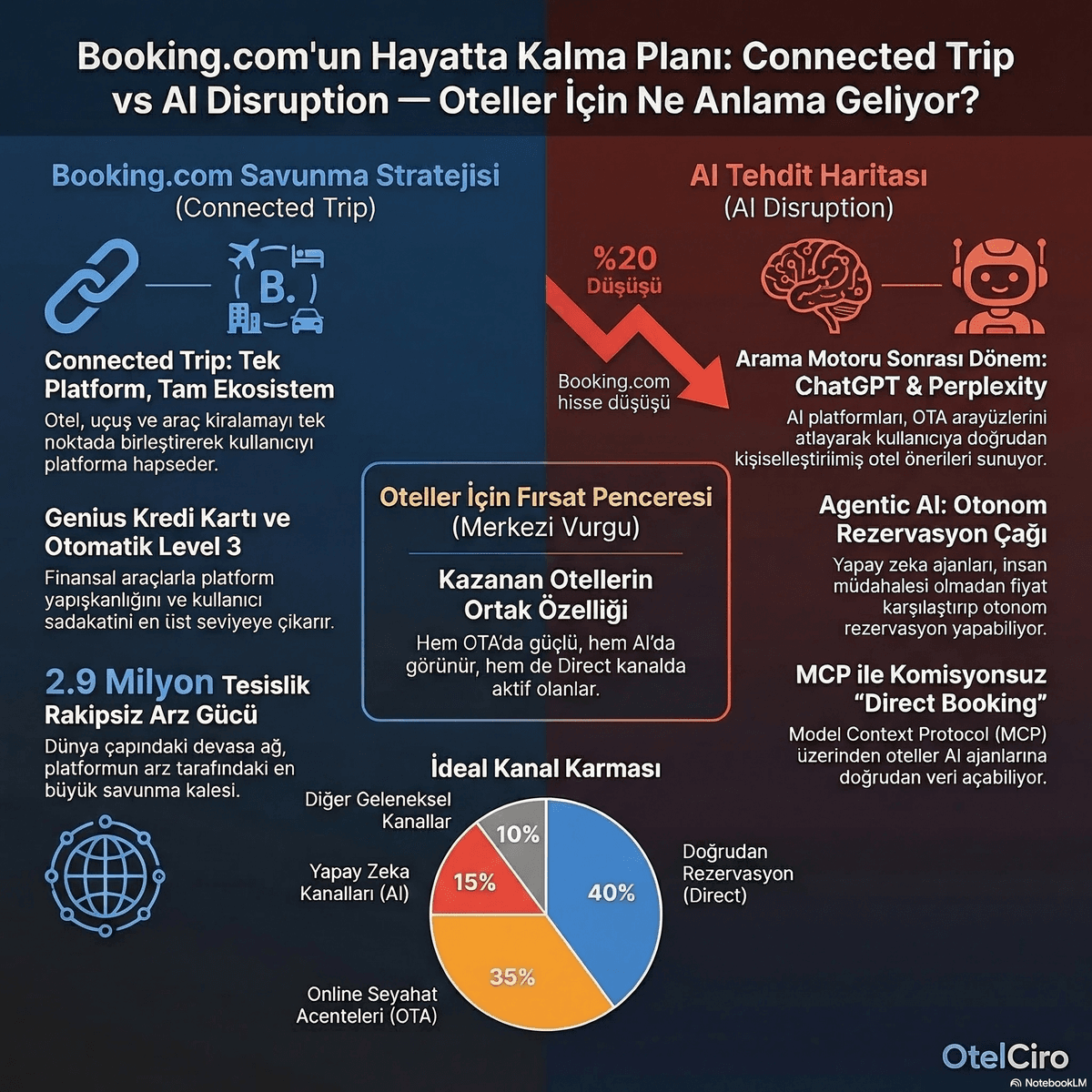
Booking Holdings has spent the last three years engineering what may be the most consequential shift in online travel distribution since the rise of metasearch. Connected Trip — the platform's integrated booking experience combining flights, hotels, car rentals, and activities into a single, AI-powered itinerary — is no longer a beta experiment. It is now the default experience for millions of travelers across 43 countries.
For hotel revenue managers, this represents a strategic inflection point. The question is no longer whether OTAs will bundle. The question is how aggressively hotels must respond to preserve their direct guest relationships.
The Numbers Behind the Shift
The hotel distribution landscape has been trending in favor of direct channels for several years. OTAs now generate approximately 22% of total hotel bookings globally, down from roughly 30% five years ago. Direct channels — brand websites, loyalty programs, and direct phone/email bookings — have been steadily gaining ground.
| Distribution Channel | 2021 Share | 2026 Projected Share | 2030 Projected Revenue |
|---|---|---|---|
| Direct (brand.com, loyalty, phone) | 38% | 45% | $409B |
| OTA (Booking, Expedia, etc.) | 30% | 22% | $333B |
| GDS / Corporate | 18% | 17% | $155B |
| Metasearch / Other | 14% | 16% | $143B |
On paper, this looks favorable for hotels. But Connected Trip threatens to reverse the momentum by creating a bundling dynamic that makes OTA bookings stickier and harder to disintermediate.
How Connected Trip Changes the Game
Traditional OTA bookings are transactional. A guest searches for a hotel, compares options, and books. The hotel retains some ability to convert that guest into a direct booker on their next stay through loyalty programs, email marketing, and superior on-property experiences.
Connected Trip fundamentally alters this dynamic in three ways.
1. The Bundle Creates Lock-In
When a traveler books a flight, hotel, rental car, and restaurant reservations through a single Connected Trip itinerary, the hotel becomes one component of a larger purchase. Changing or canceling the hotel means disrupting the entire trip. This creates switching costs that never existed with standalone hotel bookings.
Booking.com reports that Connected Trip users complete their bookings at a 35% higher rate than single-product shoppers. The bundle reduces comparison shopping and compresses the decision window.
2. AI-Powered Personalization Owns the Relationship
Connected Trip's AI assistant learns traveler preferences across all verticals — not just lodging. It knows a guest prefers morning flights, boutique hotels, and local dining experiences. This cross-category intelligence creates a personalization advantage that no single hotel brand can match.
The platform's recommendation engine now influences 61% of ancillary bookings within a Connected Trip itinerary. Hotels appear as suggested components rather than actively chosen destinations.
3. Loyalty Shifts to the Aggregator
Booking.com's Genius loyalty program has over 180 million members. Connected Trip gives Genius members additional incentives — bundled discounts, priority support, free cancellation on packages — that strengthen loyalty to the platform rather than to individual hotel brands.
The Direct Channel Counteroffensive
Hotels are not powerless. The projected $409B direct channel revenue by 2030 reflects genuine consumer preference for direct relationships, but only if hotels invest in the right counter-strategies.
Price Parity Enforcement
Rate parity remains the foundation. Properties that allow OTAs to undercut their direct rates on bundled packages will lose the value proposition argument entirely. Revenue managers must monitor bundle-inclusive rates, not just standalone room rates, across all OTA channels.
Hotels using AI-powered rate intelligence tools report 12-18% improvements in rate parity compliance when monitoring is expanded to include bundled pricing.
Loyalty Programs That Compete on Experience
Points-based loyalty programs alone cannot compete with Connected Trip's convenience bundling. The most effective counter-strategies layer experiential benefits — guaranteed room upgrades, early check-in, local experience access — that are impossible to replicate through an OTA intermediary.
Properties with enhanced loyalty benefits see direct booking rates 23% higher than those offering points-only programs.
Own the Pre-Arrival Journey
Connected Trip's power lies in controlling the full trip planning experience. Hotels that proactively engage guests between booking and arrival — with personalized itinerary suggestions, local recommendations, and upsell opportunities — can establish a direct relationship even when the initial booking comes through an OTA.
| Counter-Strategy | Implementation Cost | Expected Direct Booking Lift | Timeline to Impact |
|---|---|---|---|
| Bundle-aware rate monitoring | $200-500/month | 8-12% | 1-2 months |
| Experiential loyalty enhancements | $5-15/guest | 15-23% | 3-6 months |
| Pre-arrival engagement automation | $300-800/month | 10-18% | 2-4 months |
| Direct booking price guarantee | Revenue neutral | 12-20% | Immediate |
| Metasearch investment (Google, TripAdvisor) | 8-12% of digital budget | 20-30% | 1-3 months |
Metasearch as the Battleground
Google Hotel Ads and TripAdvisor remain critical channels where hotels can intercept travelers before they enter the OTA bundling funnel. Properties that invest 8-12% of their digital marketing budget in metasearch consistently outperform on direct booking acquisition.
The key insight: metasearch captures demand at the research phase, before Connected Trip's bundling mechanics take effect. Hotels that appear prominently in metasearch results with competitive rates and compelling direct booking incentives can redirect traffic away from the OTA ecosystem entirely.
The Revenue Management Implications
Connected Trip creates pricing complexity that traditional revenue management approaches are not equipped to handle. When a hotel's rate is embedded within a flight+hotel+car bundle, the guest perceives total trip cost rather than nightly room rate.
This means hotels must think about competitive positioning differently:
- Rate positioning must account for bundle context, not just standalone competitors
- Minimum stay restrictions during peak periods become more critical when bundled travelers book longer itineraries
- Cancellation policies must balance flexibility expectations set by the OTA bundle with revenue protection
- Channel mix optimization must factor in the lifetime value differential between bundled OTA guests (low repeat direct) and standalone OTA guests (convertible to direct)
What This Means for Independent Hotels
Independent and boutique properties face the sharpest edge of this threat. Without the brand recognition and loyalty infrastructure of major chains, independents rely more heavily on OTA visibility. Connected Trip's bundling creates an additional layer of intermediation that makes it harder for these properties to build direct guest relationships.
The most effective response for independents is technology adoption. Properties using integrated revenue management platforms that combine rate intelligence, channel management, and guest engagement automation can compete effectively against the OTA bundling machine — without the marketing budgets of global chains.
The Path Forward
Booking.com's Connected Trip is not the end of hotel direct bookings. The $409B direct channel projection remains achievable. But it requires hotels to evolve their distribution strategy from passive rate management to active relationship building.
The properties that thrive will be those that treat every guest touchpoint — from metasearch impression to post-stay email — as an opportunity to demonstrate why booking direct delivers superior value. Connected Trip bundles convenience. Hotels must bundle experience, personalization, and trust.
The battle for hotel distribution is no longer about rates alone. It is about who owns the guest relationship. And that battle is happening right now.
![Booking.com Algorithm [2026]: Rank Higher Fast](https://cdn.sanity.io/images/1la98t0z/production/ccb90c2900ebf8f0a53ccc0bd8757bf20f324b7c-1376x768.jpg?w=1920&q=50&auto=format&fit=max)