Key Takeaways
- By 2026, fragmented hotel technology ecosystems will be unsustainable due to evolving guest demands, intense operational efficiency needs, and the imperative for real-time revenue optimization.
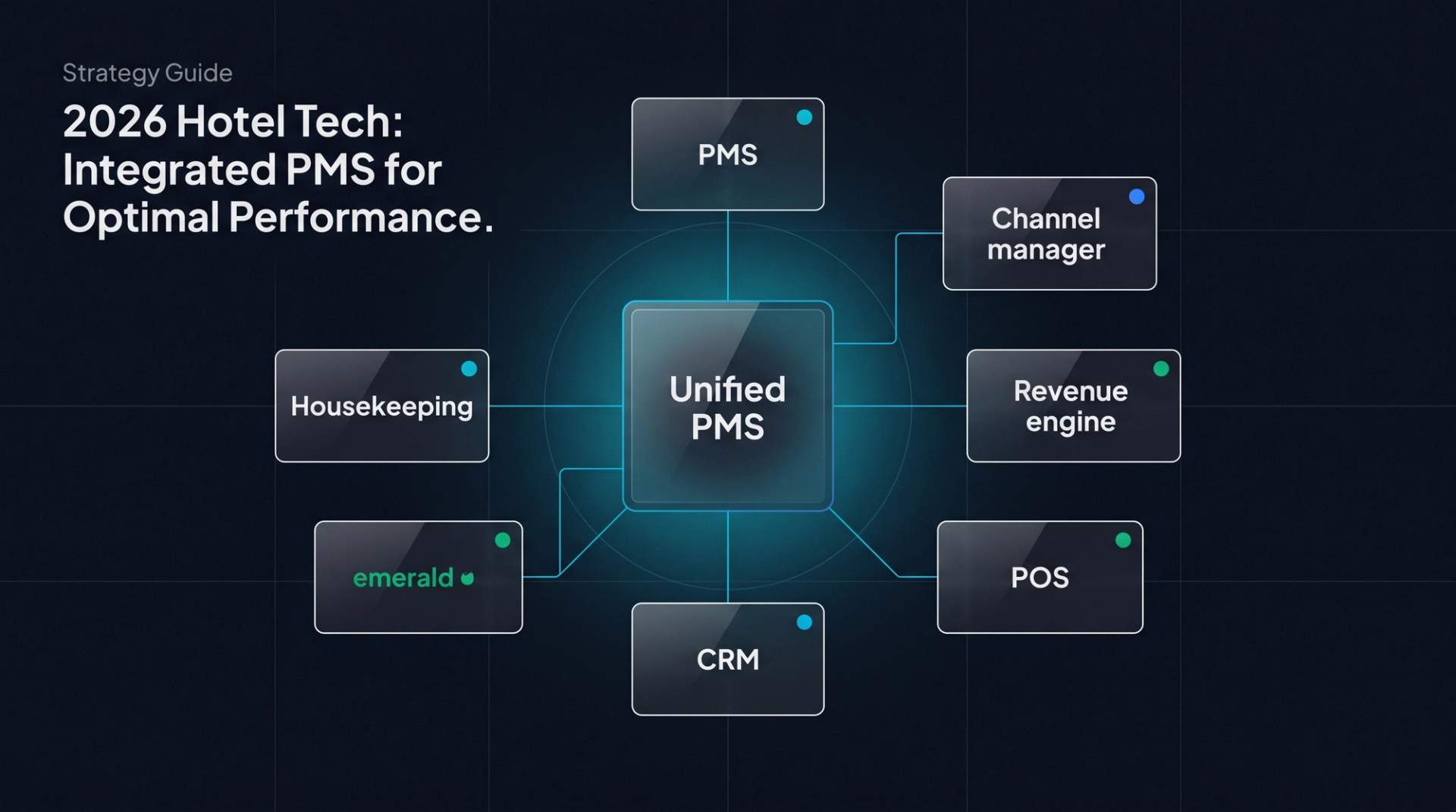
- An integrated PMS architecture establishes a "single source of truth," enabling smart orchestration across 5 key layers: central data, intelligent workflows, revenue strategy, operational personalization, and predictive analytics.
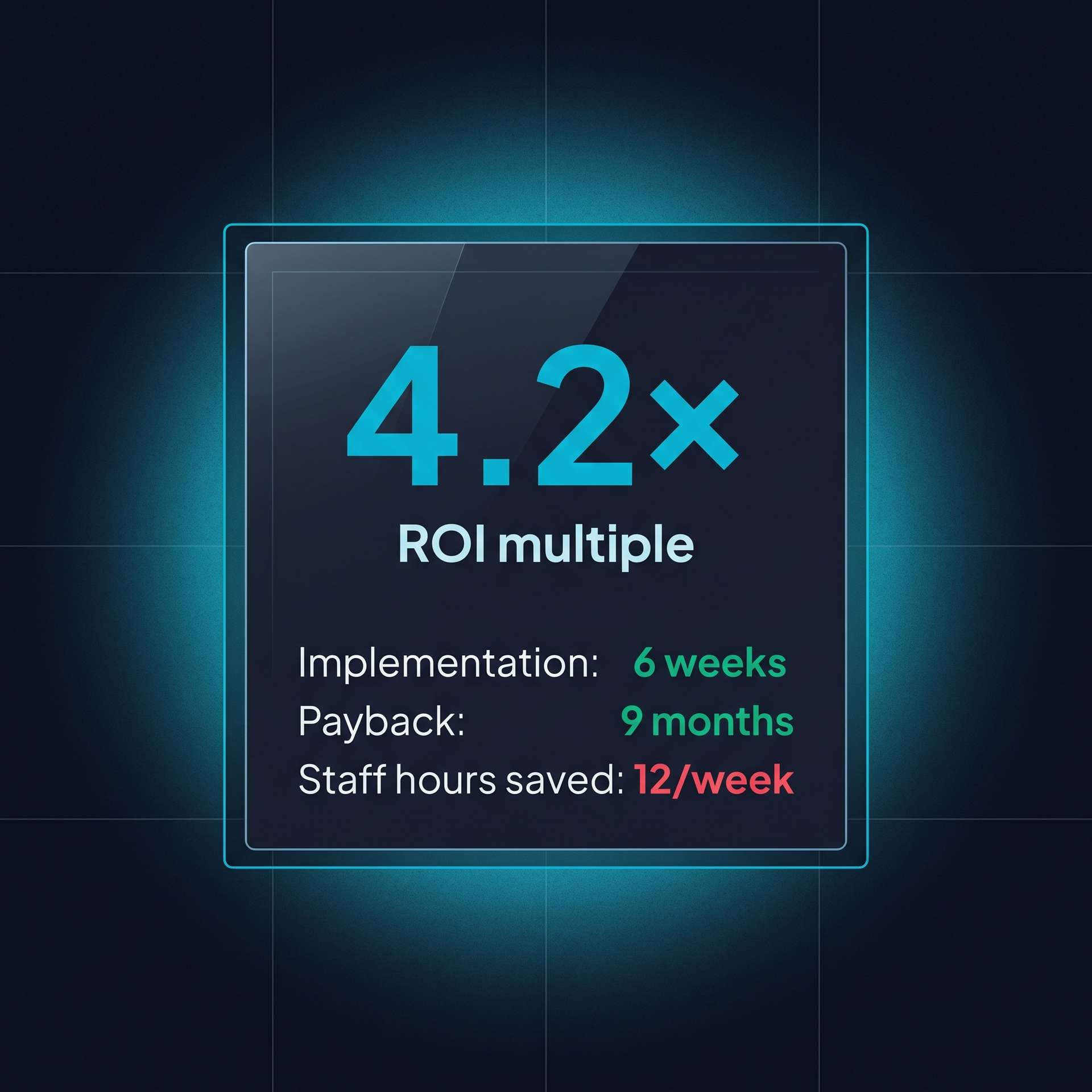
- Hotels can achieve significant ROI, including an estimated 5-8% RevPAR increase and a rapid 5-10 month payback period for a 100-room city hotel transitioning to an integrated system.
- The transition strategy requires a phased approach, prioritizing a cloud-native, API-first PMS core before expanding with revenue, CRM, and operational modules.
- Hotel technology is no longer merely an operational support tool but a core competitive strategy that drives enhanced guest experience, maximizes operational efficiency, and optimizes total revenue.
Embed this image on your site
<a href="https://otelciro.com/en/news/2026-hotel-tech-integrated-pms-for-optimal-performance-strategy-guide">
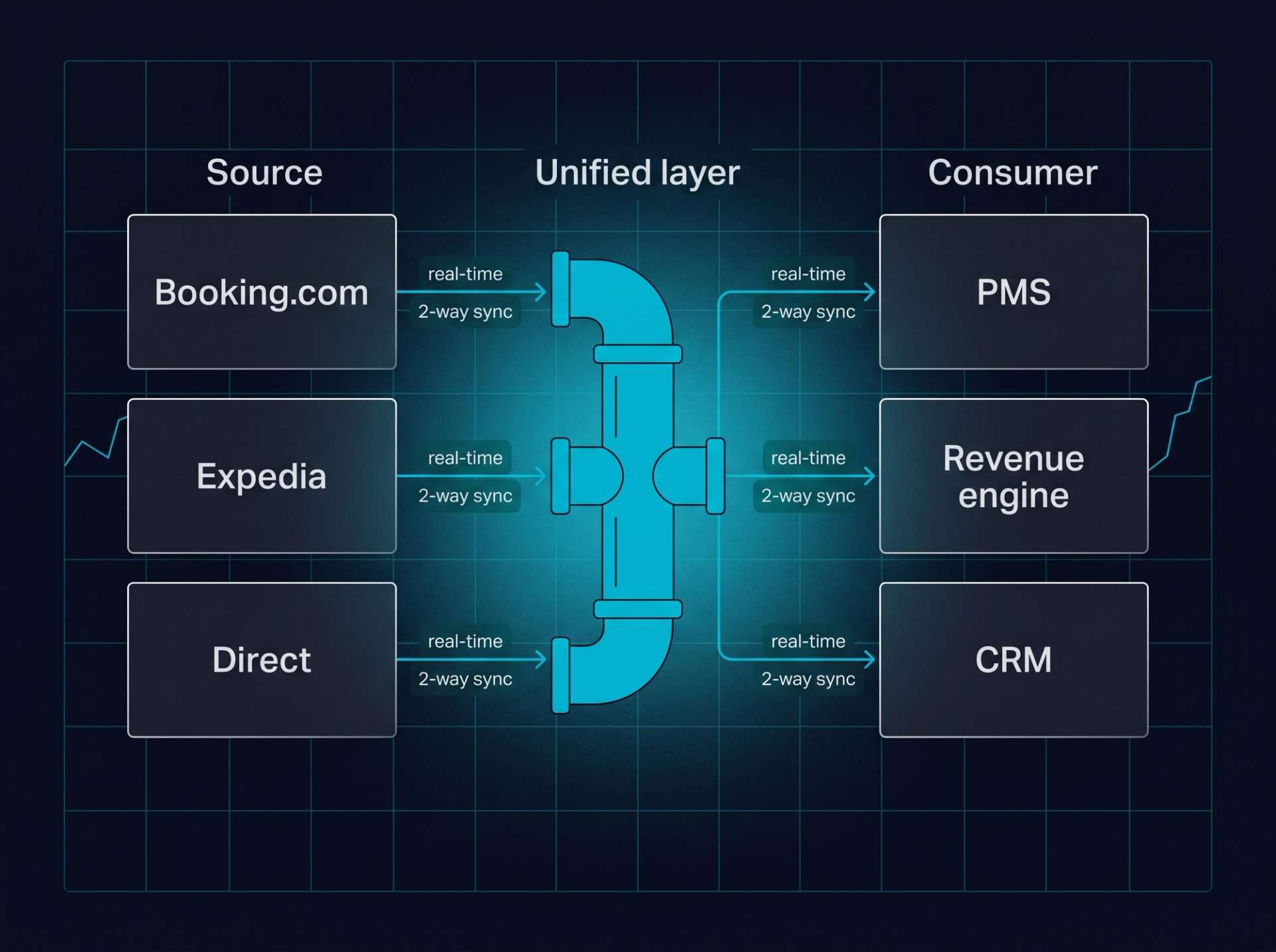
  <img src="https://cdn.sanity.io/images/1la98t0z/production/3ed37616fa340998b8d5efb1c26ab59f5d5cf690-2400x1792.jpg" alt="Data integration flow. Sources Booking.com, Expedia, Direct feed a central cyan unified layer; the layer feeds PMS, Revenue engine, CRM. Real-time, 2-way sync labels." width="800" />
</a>
<p>Source: <a href="https://otelciro.com">OtelCiro</a> — AI Hotel Revenue Management</p>
Why 2026 is a Turning Point in Hotel Technology
For decades, the hotel technology ecosystem has operated in a fragmented structure. The PMS on one side, the channel manager on another, CRM separate, revenue management separate, and guest experience platforms separate. Data flow between these systems, each running on its own database, interface, and logic, is often delayed, incomplete, or completely disconnected.
By 2026, this fragmented structure will no longer be sustainable. Three fundamental forces are compelling this transformation:
- Guest expectations: Demand for personalized, seamless experiences.
- Operational efficiency pressure: Rising labor costs and recruitment challenges.
- Revenue optimization: Dynamic pricing requiring real-time data.
Traditional vs. Integrated Architecture
| Feature | Traditional (Fragmented) | Integrated Architecture |
|---|---|---|
| Data Flow | Batch (hourly/daily) | Real-time (seconds) |
| Number of Systems | 8-15 independent software | Single platform + modules |
| Integration Cost | Annual €15,000-45,000 | Included within platform |
| Data Consistency | Frequent inconsistencies | Single source of truth |
| Staff Training | Separate for each system | Single interface |
| Decision Speed | Minutes-hours | Seconds |
| Personalization | Limited (data silos) | Comprehensive (unified profile) |
| Total Cost of Ownership | High (hidden costs) | Predictable |
Embed this image on your site
<a href="https://otelciro.com/en/news/2026-hotel-tech-integrated-pms-for-optimal-performance-strategy-guide">
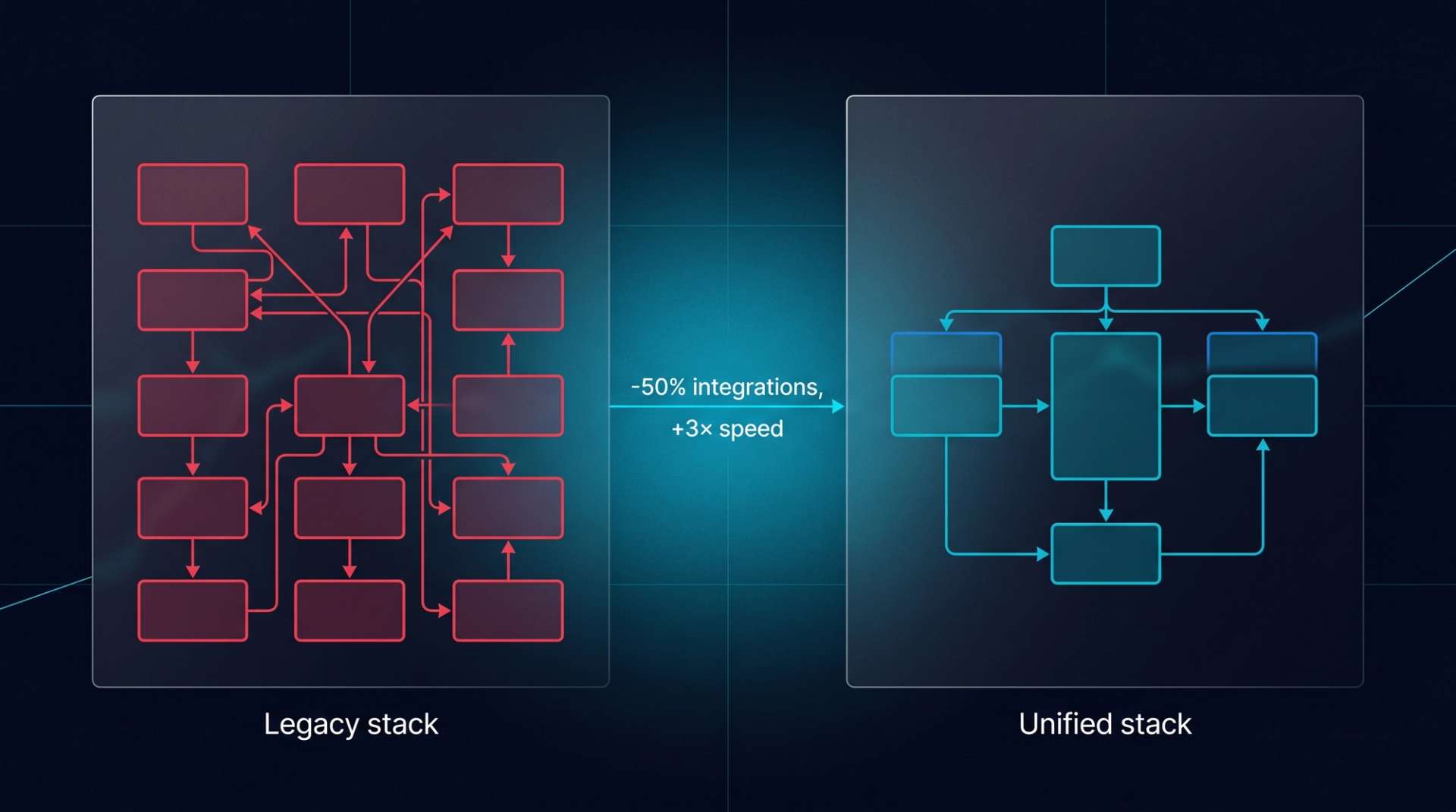
  <img src="https://cdn.sanity.io/images/1la98t0z/production/ce50985cf3edd519d2a1bbb27c2e9055df060f4f-2752x1536.jpg" alt="Legacy vs unified stack. Left in rose: 12 disconnected boxes with chaotic arrows. Right in cyan: 6 integrated boxes with orderly arrows. Center label: '-50% integrations, +3× speed'." width="800" />
</a>
<p>Source: <a href="https://otelciro.com">OtelCiro</a> — AI Hotel Revenue Management</p>
The 5 Layers of Integrated Architecture
Layer 1: Central Data Platform
The foundation of integrated architecture is based on the principle of a single source of truth. All guest data, reservation information, rate rules, and operational metrics reside in a single database.
Advantages provided by this layer:
- Guest profile consistent across all touchpoints.
- Revenue management decisions based on up-to-date data.
- Reporting from a single source, eliminating inconsistencies.
- GDPR and KVKK compliance managed from a single point.
Layer 2: Smart Orchestration Engine
Collecting data is not enough; automatic coordination of workflows between systems is essential. The orchestration engine manages the following scenarios:
Scenario: Guest Check-in Process
In a traditional approach:
- Reception checks in guest in PMS.
- Housekeeping system is updated (5-15 min delay).
- Minibar system is activated (manual).
- Information is sent to CRM (batch, end of night).
- F&B system is informed (often never informed).
In an integrated approach:
- Guest completes mobile check-in.
- Instantaneously: Room status is updated, housekeeping is informed, minibar activates, CRM profile is updated, F&B preferences are transmitted to the kitchen, loyalty points are calculated.
- Within 3 seconds: A personalized welcome message is sent.
- Total time: 3 seconds vs. 15+ minutes.
Layer 3: Revenue Strategy Integration
In an integrated architecture, the revenue management system is not an isolated tool but a decision engine connected to all operational data:
| Data Source | Impact on Revenue Management |
|---|---|
| PMS (occupancy, check-in/out) | Real-time demand signal |
| CRM (guest profile, history) | Segment-based pricing |
| Channel Manager | Channel-based profitability analysis |
| F&B POS data | Total guest value calculation |
| Housekeeping | Up-to-date salable room inventory |
| Reviews/Ratings | Price-quality perception optimization |
| Competitor Rates | Dynamic positioning |
| Event Calendar | Demand forecast accuracy |
This integration makes the concept of Total Revenue Management practically possible. It optimizes not only room revenue but also the total guest value, including F&B, spa, meeting spaces, and additional services.
Layer 4: Operational Personalization
Integrated architecture extends personalization beyond the marketing department to every layer of operations:
Housekeeping personalization:
- Pillow preference automatically determined from guest profile.
- Room preparation for allergic guests follows special protocols.
- Cleaning schedules optimized with estimated check-out times.
F&B personalization:
- Dietary preferences communicated to the kitchen at check-in.
- Restaurant recommendations sent via mobile app based on past orders.
- Special occasion information (birthday, anniversary) distributed to relevant departments.
Revenue personalization:
- Automatic room upgrade suggestions for high-value guests.
- Special rate rules for loyal customers.
- Upsell offers based on guest segment.
Layer 5: Analytics and Insights
The most powerful outcome of integrated architecture is its capacity for cross-data analytics:
| Analysis Type | Fragmented System | Integrated System |
|---|---|---|
| Guest Lifetime Value | Cannot be calculated | Automatically calculated |
| Channel-based total profitability | Estimated | Precise |
| Staff Efficiency | Department-based | Cross-departmental |
| Forecasting Accuracy | 60-70% | 82-90% |
| Anomaly Detection | Manual | Automatic alert |
Transition Strategy: From Fragmented to Integrated
Phase 1: Current State Mapping (1-2 Months)
- List all active software and integrations.
- Create a data flow diagram (which data goes where, how often?).
- Identify integration breakdown points.
- Calculate the total annual cost of each system.
Phase 2: Prioritization (1 Month)
Trying to change all systems simultaneously is the most common mistake. Prioritization matrix:
| System | Business Impact | Integration Difficulty | Priority |
|---|---|---|---|
| PMS + Channel Manager | Very High | Medium | 1 |
| Revenue Management | High | Low | 2 |
| CRM + Loyalty | High | Medium | 3 |
| F&B POS | Medium | High | 4 |
| Housekeeping | Medium | Low | 5 |
Phase 3: PMS Core Transition (3-6 Months)
The first step is always the PMS. Integrated architecture works PMS-centric:
- Selection of a cloud-native PMS (API-first approach is mandatory).
- Channel manager integration (2-way, real-time).
- Migration of existing data (at least 3 years of historical data).
- Parallel operation period (minimum 30 days).
Phase 4: Module Expansion (6-12 Months)
Once the PMS core is stable, add modules:
- Revenue management module integration.
- CRM and guest profile unification.
- Mobile check-in/check-out activation.
- Automation rule definition.
Phase 5: Optimization and Measurement (Continuous)
- Define KPIs: integration delay, data consistency, automation rate.
- Monthly system performance evaluation.
- Gather staff feedback and improve the interface.
- Evaluate new module requirements.
ROI Expectation
ROI for transitioning to an integrated architecture for a 100-room city hotel:
| Item | Annual Impact |
|---|---|
| Software license savings (consolidation) | €8,000-12,000 |
| Integration maintenance cost reduction | €5,000-8,000 |
| Staff productivity increase (15%) | €18,000-25,000 |
| Revenue management improvement (RevPAR +5-8%) | €35,000-55,000 |
| Upsell increase (personalization) | €12,000-18,000 |
| Total Annual Impact | €78,000-118,000 |
| Transition Cost (one-time) | €40,000-65,000 |
| Payback Period | 5-10 months |
Embed this image on your site
<a href="https://otelciro.com/en/news/2026-hotel-tech-integrated-pms-for-optimal-performance-strategy-guide">
  <img src="https://cdn.sanity.io/images/1la98t0z/production/8c21cfea734f0620fdcfad705c1be5b17dcfe186-2048x2048.jpg" alt="Tech ROI tile. 4.2× ROI headline with sub-rows: 6-week implementation, 9-month payback, 12 staff hours saved per week." width="800" />
</a>
<p>Source: <a href="https://otelciro.com">OtelCiro</a> — AI Hotel Revenue Management</p>
Conclusion: Technology: No Longer Support, But Strategy
In 2026, hotel technology is no longer "a tool supporting operations" but the competitive strategy itself. Integrated PMS architecture unifies guest experience, operational efficiency, and revenue optimization under a single system, providing hotels with both cost advantages and revenue growth.
Continuing to work with fragmented systems means an ever-increasing opportunity cost. Can your technology infrastructure communicate with your revenue strategy? Are your guest data unified in a single profile? The answers to these questions will determine your need for integrated architecture.
![Europe's Hotel Construction Boom: 2026 Oversupply Risks [Market Analysis]](https://cdn.sanity.io/images/1la98t0z/production/6dfe59137f56aa14bfcba86d9db3cf05ff89f406-2752x1536.jpg?w=1920&q=50&auto=format&fit=max)