![Zero Carbon Hotels: Sustainable Hospitality [2026 Guide]](https://cdn.sanity.io/images/1la98t0z/production/cd7f8df0a01d7ab2b16bd21658bea664a60dc623-1200x669.png?w=1920&q=65&auto=format&fit=max)
Key Takeaways
- Mandatory Shift: Sustainable accommodation is no longer optional; it's a necessity, driven by regulations like EU CSRD (2027) and Turkey's updated Green Star criteria (2026).
- Guest Demand & Willingness to Pay: 78% of travelers prefer sustainable stays, with 54% willing to pay 10-15% more for them.
- Strategic Roadmap: Achieving zero-carbon status involves a four-stage process: carbon footprint measurement, energy transformation (solar, heat pumps, LED), water and waste management, and green certifications (LEED, Green Key, Travelife).
- Operational Integration: Beyond infrastructure, daily practices like green procurement (local food, reusable alternatives) and guest engagement are crucial for significant emission reduction.
- Strong ROI: Green investments yield substantial financial returns, including 35-50% energy savings, 25-40% water savings, 11-26% higher ADR, 8-12% higher occupancy, and a typical payback period of 3-5 years for comprehensive transformations.
Sustainable Accommodation: No Longer a Preference, But a Necessity
The hospitality sector is responsible for 1% of global carbon emissions and 21% of the total tourism sector's emissions. The daily carbon footprint of a single hotel room generates an average of 31.1 kg CO₂ equivalent. These figures clearly show that the sector no longer has the luxury of ignoring its environmental impact.
The EU's CSRD (Corporate Sustainability Reporting Directive), set to take effect in 2027, and Turkey's updated Green Star criteria in 2026, are making ecological transformation a legal obligation. Research shows that 78% of travelers prefer sustainable accommodation, and 54% are willing to pay 10-15% more for it.
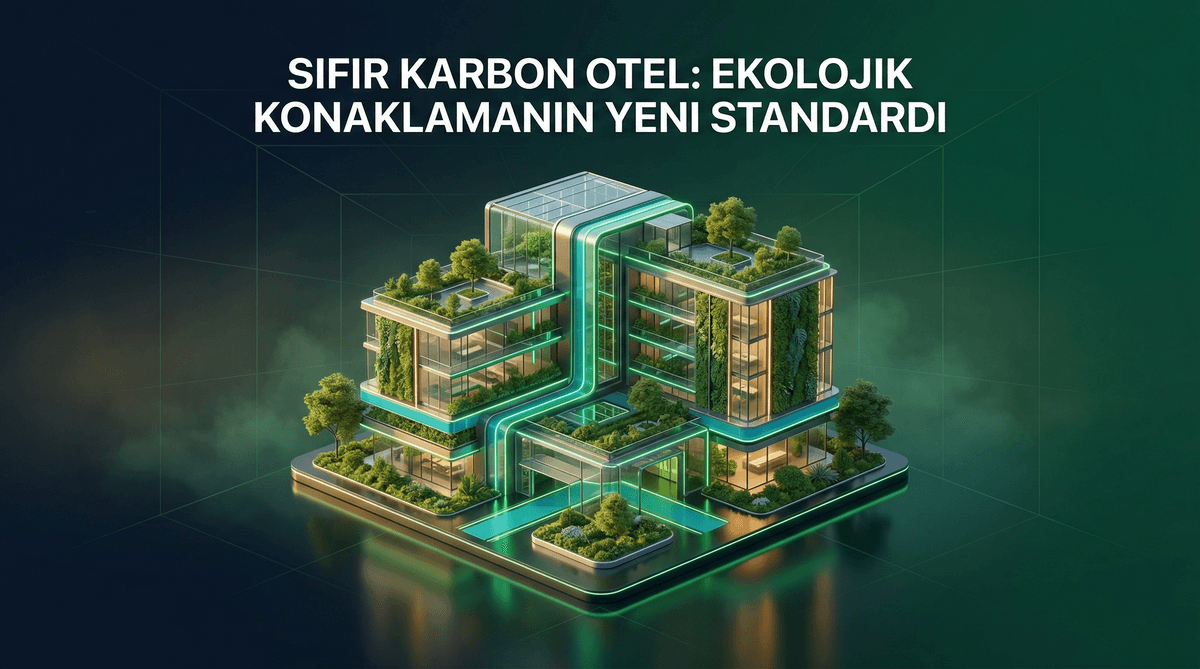
Embed this image on your site
<a href="https://otelciro.com/en/news/zero-carbon-hotels-sustainable-hospitality-2026-guide">
  <img src="https://cdn.sanity.io/images/1la98t0z/production/cd7f8df0a01d7ab2b16bd21658bea664a60dc623-1200x669.png" alt="Infographic: Ecological Hotel Zero Carbon Concept" width="800" />
</a>
<p>Source: <a href="https://otelciro.com">OtelCiro</a> — AI Hotel Revenue Management</p>
In this article, we delve into the core components, implementation strategies, and financial returns of the zero-carbon hotel concept.
Related reading: 8 Mega Trends in Hospitality in 2026
Zero Carbon Hotel Roadmap
Achieving a zero-carbon goal is not a one-time project but a strategic journey requiring continuous improvement. This journey consists of four main stages.
Stage 1: Carbon Footprint Measurement
Everything begins with knowing the current situation. Hotel carbon footprint is measured under three scopes:
- Scope 1 (Direct emissions): Natural gas boilers, generators, company vehicles — 20-30% of total emissions
- Scope 2 (Indirect energy emissions): Purchased electricity and heat — 40-50% of total emissions
- Scope 3 (Value chain emissions): Supply chain, guest transportation, waste — 25-35% of total emissions
The ISO 14064 standard or GHG Protocol is used for measurement. In Turkey, the number of accredited organizations offering this service increased to 45 as of 2026.
Stage 2: Energy Transformation
Energy consumption is the largest source of hotel carbon emissions and the most effective area for transformation.
Solar energy: Hotel rooftops and parking areas offer ideal surfaces for solar panels. A 100-room hotel can meet 40-60% of its electricity needs with a 250-400 kW solar energy system. The return on investment in sunny regions of Turkey is between 3.5-5 years.
Heat pumps: Replacing natural gas boilers, heat pumps reduce heating and cooling emissions by 60-75%. In areas close to geothermal sources, this rate can increase to 90%.
LED and smart lighting: Converting traditional lighting to LED reduces energy consumption by 65%, while motion sensors and daylight sensors provide an additional 20% saving.
Stage 3: Water and Waste Management
An average hotel guest consumes 300-400 liters of water per day. This figure can be reduced to 150-200 liters in ecological hotels through technology and behavioral changes.
- Gray water recycling: Treating shower and sink water for garden irrigation and toilet flushing reduces water consumption by 30%.
- Rainwater harvesting: Rainwater collected from rooftop areas is used for laundry and gardening.
- Smart fixtures: Low-flow faucets and water-saving showerheads reduce water consumption by 25% without compromising the guest experience.
The zero-waste goal in waste management is supported by composting, recycling, and supply chain optimization. Successful ecological hotels manage to recycle or compost 85-90% of their total waste.
Green Certifications and Standards
For ecological transformation to create marketing value, it must be documented with internationally recognized certifications.
LEED (Leadership in Energy and Environmental Design): The most prestigious green certification in building design and operations. LEED Gold or Platinum certification increases hotel value by 15-25%.
Green Key: An international eco-label specifically for the accommodation sector. As of 2026, 180+ hotels in Turkey hold Green Key certification.
Turkey Green Star: The national eco-label of the Ministry of Culture and Tourism. Its criteria were tightened with the 2026 update, making carbon measurement mandatory.
Travelife: A sustainability certification preferred by tour operators. Travelife-certified hotels are reported to gain 12% higher visibility in OTA rankings.
Related reading: Hotel IoT and Smart Room Technologies
Operational Sustainability Strategies
In addition to infrastructural transformation, strategies implemented in daily operations also significantly reduce the carbon footprint.
Green Procurement Policy
The carbon impact of the supply chain (Scope 3) is often overlooked but constitutes a significant portion of total emissions. A green procurement policy is based on the following principles:
- Reducing food transportation emissions by 60% through preference for local and seasonal food
- Using reusable alternatives instead of single-use plastics
- Using environmentally friendly cleaning products
- Requesting sustainability reports from suppliers
Guest Engagement
Guest engagement is a critical factor in ecological transformation. Research shows that when guests are informed about their carbon footprint, they participate 45% more in eco-friendly behaviors.
With OtelCiro's operational solutions, energy consumption, water usage, and waste data can be monitored in real-time, and sustainability scores can be presented to guests via in-room screens or an application.
Financial Returns: The ROI of Green Investment
Ecological transformation is not just an environmental responsibility but also a strong financial investment. Data clearly supports this:
- Energy savings: 35-50% reduction in annual energy costs with comprehensive energy transformation.
- Water savings: 25-40% decrease in annual water expenses with smart water management.
- Price premium: Green-certified hotels can charge 11-26% higher nightly rates compared to hotels in similar categories.
- Occupancy increase: Searches for sustainable accommodation increase by 42% annually, while the occupancy of certified hotels remains 8-12% above the industry average.
- OTA ranking advantage: Booking.com and Expedia give green-certified hotels badges and priority in search results.
For an average 100-room hotel, a comprehensive ecological transformation investment ranges between 2.5-5 million TRY, while annual savings and additional revenue range between 800,000-1,500,000 TRY. The payback period is estimated to be 3-5 years.
The zero-carbon hotel concept is one of the most critical transformation areas that will shape the future of the hospitality sector. Hotels that start today will be both ready for regulatory pressures and will capture the largest share of the demand for sustainable tourism.
![Europe's Hotel Construction Boom: 2026 Oversupply Risks [Market Analysis]](https://cdn.sanity.io/images/1la98t0z/production/6dfe59137f56aa14bfcba86d9db3cf05ff89f406-2752x1536.jpg?w=1920&q=50&auto=format&fit=max)