![Wellness Tourism Trends 2026: Strategic Guide for Hotels [2026 Guide]](https://cdn.sanity.io/images/1la98t0z/production/1750434556f89241cf440c5e7846291f2600eeac-1024x1024.png?w=1920&q=65&auto=format&fit=max)
Key Takeaways
- Wellness tourism has reached a $1.2 trillion market value in 2026, growing at double the rate of traditional tourism.
- Digital detox and sleep tourism packages offer significant premium pricing opportunities, often 35-60% above standard ADR.
- Mental health initiatives like mindfulness and sound baths yield high guest satisfaction (NPS) with relatively low capital investment.
- Specialized wellness nutrition and gut-health programs can increase F&B revenue by an average of 22%.
- Turkey remains a global leader by leveraging its 1,500+ thermal resources and authentic hammam culture to offer a competitive edge.
Wellness Tourism 2026: Mapping the Growing Market
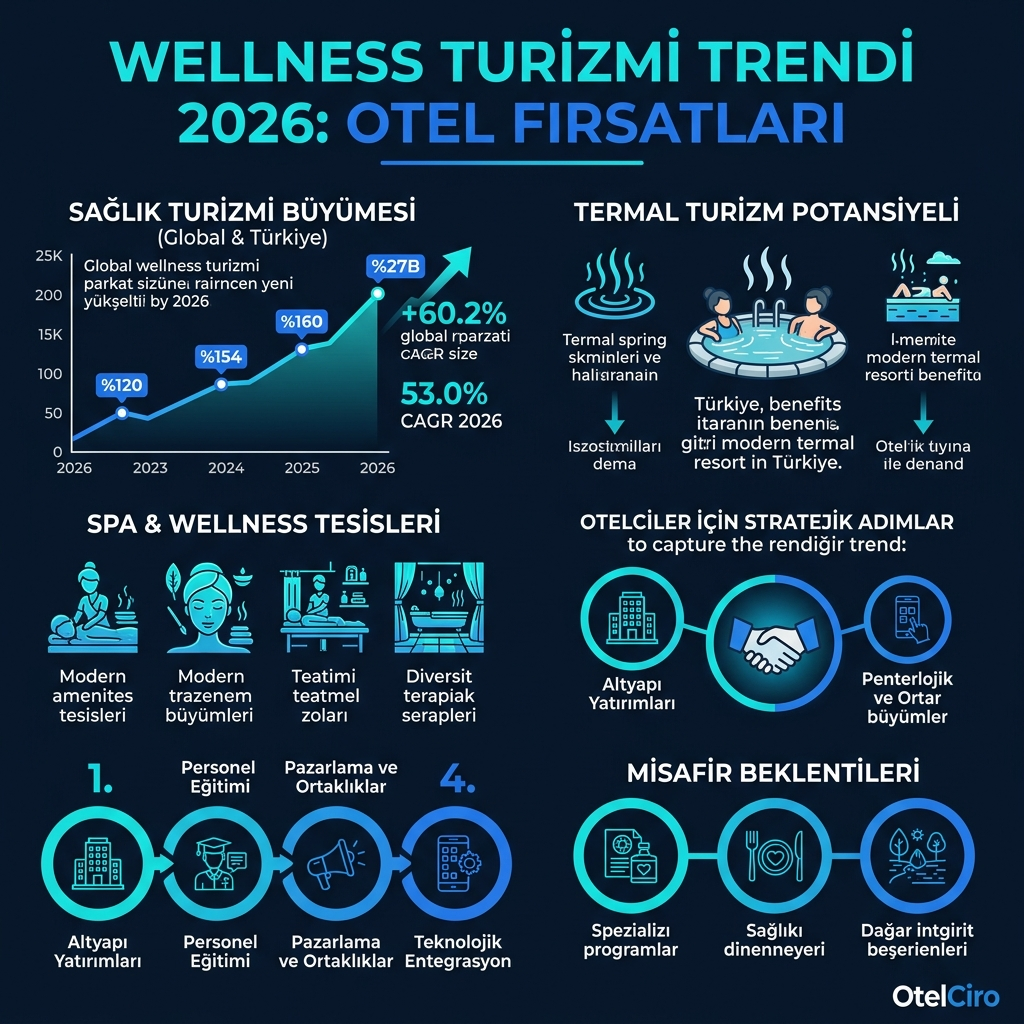
Wellness tourism is the fastest-growing segment of the global travel industry. According to Global Wellness Institute data, the wellness tourism market reached a size of $1.2 trillion in 2026, expanding at an annual growth rate of 16.6%—twice the speed of traditional tourism. Turkey, with its thermal resources, natural beauty, and competitive pricing advantages, stands as one of the leading countries poised to take a larger share of this market.
Wellness is no longer just about spas and massages. In 2026, wellness tourism has evolved into a multi-dimensional experience encompassing mental health, digital detox, gut health, sleep optimization, and holistic well-being. This evolution offers hotels revenue opportunities that extend far beyond traditional services.
Embed this image on your site
<a href="https://otelciro.com/en/news/wellness-tourism-trends-2026-strategic-guide-for-hotels-2026-guide">
  <img src="https://cdn.sanity.io/images/1la98t0z/production/1750434556f89241cf440c5e7846291f2600eeac-1024x1024.png" alt="Wellness Tourism Trends 2026 Infographic" width="800" />
</a>
<p>Source: <a href="https://otelciro.com">OtelCiro</a> — AI Hotel Revenue Management</p>
Related reading: 2026 Travel Trends: The Era of AI Assistants
Digital Detox Packages: The Luxury of Disconnecting
As screen addiction reached peak levels post-pandemic in 2026, digital detox has become one of the most in-demand wellness experiences. Research shows that 67% of adults spend more than 4 hours a day in front of a screen even while on vacation, and 74% feel dissatisfied with this habit.
Core package components:
- Tech-free zone design: Designate specific areas of the hotel as "quiet zones" free from Wi-Fi and cell phone signals. Gardens, meditation rooms, or a dedicated floor can be set aside for this purpose.
- Device storage ritual: Design a ritual where guests place their devices in a special safe during check-in. This symbolic act serves as the starting point for the detox experience.
- Alternative activities: Offer screen-free options such as daily yoga, nature hikes, art workshops, book clubs, and analog game nights.
- Gradual reentry: Provide a plan for a gradual return to technology at the end of a 3-day detox program. Returning suddenly to the digital world can diminish the effects of the detox.
Digital detox packages offer a 35-50% premium pricing opportunity compared to standard room rates. Furthermore, the average length of stay for this segment is 4.2 nights, double the general average.
Mindfulness and Meditation Programs
With increasing awareness of mental health, mindfulness programs have moved to the center of hotel wellness offerings:
Morning meditation: Organize guided meditation sessions every day at sunrise, either outdoors or in a dedicated meditation room. 82% of participants rate this as the most valuable part of their stay.
Breathwork workshops: 60-minute workshops teaching breathing techniques such as Pranayama and Box Breathing provide guests with practical tools they can use in their daily lives. These workshops boast an average NPS score of 87.
Sound Bath: Sound therapy sessions using Tibetan bowls, gongs, and crystal bowls are among the trendiest wellness experiences of 2026. 91% of participants report deep relaxation. Investment costs are low, while perceived value remains high.
Mindful dining experience: Offer special dining experiences themed around slow eating, conscious chewing, and food awareness. Mindful dining workshops led by a chef increase F&B revenue by 18% per stay.
Related reading: Hospitality Vision 2026: The Hotel of the Future
Sleep Tourism: The Sleep Tourism Trend
The most striking wellness trend of 2026 is sleep tourism. Millions of people suffering from chronic sleep issues are turning to hotel stays specifically for a high-quality sleep experience. This segment is the fastest-growing sub-branch of wellness tourism, with an annual growth of 28%.
Sleep room design:
- Completely dark and silent environments using blackout curtains and double glazing.
- Ideal temperature (18-20°C) and humidity (40-60%) control for sleep optimization.
- Organic cotton linens and memory foam pillows.
- Lavender and bergamot aromatherapy diffusers.
- Lighting systems with blue light filters.
Sleep program components:
- Sleep quality measurement (via smart beds or wearable devices).
- Sleep hygiene education and personalized sleep plans.
- Evening relaxation rituals (warm baths, herbal teas, meditation).
- Morning energy protocols (sunlight exposure, light exercise).
Sleep tourism packages can add a 40-60% premium to standard accommodation rates. Luxury chains such as Park Hyatt, Six Senses, and Mandarin Oriental have developed pioneering projects in this field.
Gut Health and Nutrition Programs
With the proliferation of gut-brain axis research, nutrition-focused wellness programs are attracting significant interest:
Detox and purification programs: 3-7 day detox packages include organic cold-pressed juices, probiotic-rich meals, and herbal teas. 76% of guests who participate in detox programs return the following year.
Functional food menus: Prepare thematic menus that are anti-inflammatory, immune-boosting, and energy-enhancing. Provide information about the nutritional value and health benefits of every dish. Hotels offering functional food menus see 22% higher F&B revenue.
Personalized nutrition counseling: Send a nutrition survey prior to arrival to learn about the guest's allergies, intolerances, and dietary preferences. Offer personalized menu planning in collaboration with a dietitian.
Cooking workshops: Workshops teaching healthy Mediterranean cuisine or wellness versions of Turkish cuisine are valuable for both experience and revenue. The average on-site spend of workshop participants is 35% higher.
Turkey's Wellness Advantages
Turkey possesses unique competitive advantages in wellness tourism:
Thermal resources: Ranking 7th in the world with over 1,500 thermal sources, Turkey is the natural capital of thermal wellness tourism. Destinations like Pamukkale, Afyon, and Bursa have global recognition.
Hammam culture: The centuries-old Turkish bath tradition, when combined with modern wellness experiences, creates a unique value proposition. Hotels offering authentic hammam experiences have a 45% higher international guest ratio.
Price advantage: Wellness programs of the same quality can be offered at prices 40-60% more affordable than competitors in Europe. This is a major draw for demand coming from the German, British, and Northern European markets.
Climate diversity: A variety of climates allows for year-round wellness tourism, balancing occupancy between summer and winter. Thermal and spa-focused programs can be offered in winter, while outdoor and sea-wellness programs can be featured in summer.
OtelCiro's operations ecosystem integrates wellness program management with facility management, unifying package creation, capacity planning, and guest experience tracking on a single platform. It ensures revenue optimization through dynamic pricing and demand forecasting specifically for the wellness segment.
In 2026, wellness tourism is not a niche but a mainstream travel motivation. Hotels that act early will gain a lasting competitive advantage in this growing market. The key is to design authentic and personalized experiences that center on the guest's holistic well-being.
![Europe's Hotel Construction Boom: 2026 Oversupply Risks [Market Analysis]](https://cdn.sanity.io/images/1la98t0z/production/6dfe59137f56aa14bfcba86d9db3cf05ff89f406-2752x1536.jpg?w=1920&q=50&auto=format&fit=max)