![Wellness Retreat Hotel Concept: A Comprehensive [2026 Strategy Guide]](https://cdn.sanity.io/images/1la98t0z/production/0bb8d25495e89ead59ad05c768dd8f8343cc8b03-1024x1024.png?w=1920&q=65&auto=format&fit=max)
Key Takeaways
- Wellness tourism is growing at 12.8% annually, doubling the growth rate of the general tourism sector.
- Specialized retreats can generate daily revenue 2-3 times higher than traditional luxury hotels.
- Biophilic design and natural materials can reduce guest cortisol levels by 18% and increase satisfaction scores by 25%.
- Successful wellness models achieve GOP margins of 40-55% with significantly lower seasonal fluctuations.
- Guest loyalty is driven by a holistic journey that extends from pre-arrival assessments to post-departure follow-up programs.
Wellness Tourism: A Trillion-Dollar Health Revolution
The global wellness tourism market reached $1.2 trillion in 2025 and is expanding at an annual growth rate of 12.8%, twice as fast as the general tourism industry. In the post-pandemic era, increased health consciousness, the search for stress management, and the strengthening "preventative health" trend have made the wellness retreat concept one of the most profitable segments in the hospitality industry.
Turkey continues to increase its share of the global wellness tourism pie every year, thanks to its rich thermal resources, climatic diversity, and competitive cost structure. In 2025, spending by wellness tourists visiting Turkey reached $4.8 billion, with a growth rate of 22% in this segment—well above general tourism growth.
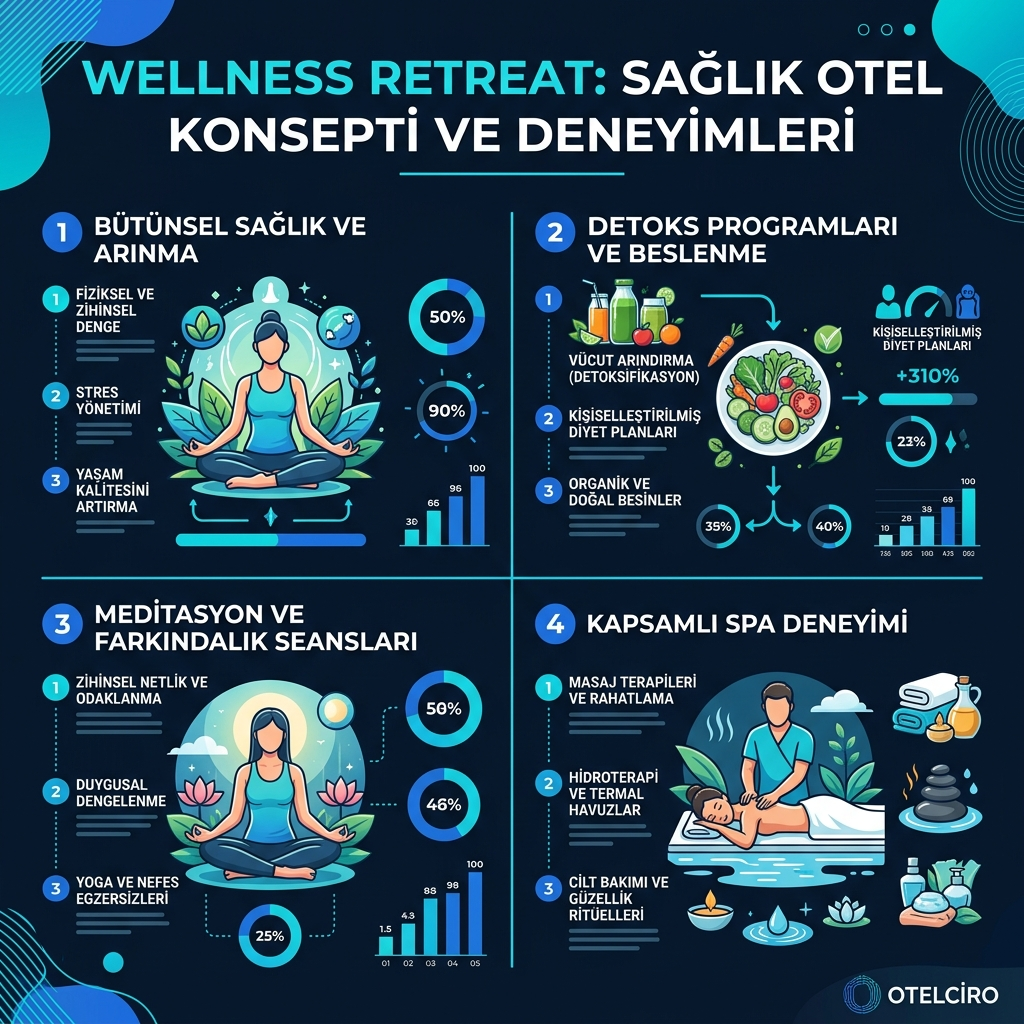
Embed this image on your site
<a href="https://otelciro.com/en/news/wellness-retreat-hotel-concept-a-comprehensive-2026-strategy-guide">
  <img src="https://cdn.sanity.io/images/1la98t0z/production/0bb8d25495e89ead59ad05c768dd8f8343cc8b03-1024x1024.png" alt="Wellness Retreat Health Hotel Concept Infographic" width="800" />
</a>
<p>Source: <a href="https://otelciro.com">OtelCiro</a> — AI Hotel Revenue Management</p>
In this article, we examine all dimensions of the wellness retreat concept, from design to operations and from programming to pricing.
Related reading: Health Tourism Check-up Packages: Hotel Integration
Wellness Retreat Types and Concept Selection
The concept of wellness covers a broad spectrum. Choosing the right concept is critical for target audience alignment and market positioning.
Detox and Cleansing Retreats
These offer programs combining digital detox, nutritional detox, and environmental detox. They are generally sold in 5-14 day packages. Average daily spend ranges between 4,000-8,000 TL. Target audience: ages 35-55, high-income group, urban professionals.
Yoga and Meditation Retreats
These provide traditional yoga practices, meditation techniques, and mindfulness programs. 3-10 day programs are common. Daily spend is between 2,000-5,000 TL. Target audience: ages 25-50, health-conscious, experience-oriented travelers.
Medical Wellness
This combines medical check-ups, physiotherapy, aesthetic procedures, and anti-aging programs with a hospitality experience. This is the segment with the highest income potential, with daily spend in the 8,000-20,000 TL range. It is often strengthened through hospital partnerships.
Thermal and Spa Retreats
This is the area where Turkey is most competitive due to its natural thermal resources. Facilities located in thermal regions—primarily Afyon, Bursa, Denizli, and Yalova—offer programs supported by healing waters. Annual occupancy rates are 15% higher than other wellness types because they are less affected by seasonality.
Program Design and the Guest Journey
The success of a wellness retreat depends more on program quality than accommodation quality. The guest journey should be designed as a holistic experience from the first contact to post-departure.
Pre-Arrival
The first contact with the guest begins after the reservation. Health surveys, nutritional preferences, allergy information, and personal goals are collected in advance. A personalized program is prepared based on this information and sent to the guest prior to arrival.
During the Stay
A typical daily program is structured as follows:
- 06:00-07:00 Morning meditation or yoga
- 07:30-09:00 Healthy breakfast (personalized menu)
- 09:30-12:00 Main wellness activities (therapy, fitness, workshops)
- 12:30-14:00 Lunch and rest
- 14:30-17:00 Spa, thermal water, or nature activities
- 17:30-18:30 Evening yoga/meditation
- 19:00-20:30 Dinner and social programming
Post-Departure
The retreat experience does not end upon leaving the facility. Successful wellness hotels offer guests a return-home program, including nutrition plans, exercise schedules, and online meditation sessions. This approach increases the repeat visit rate by 40%.
Spatial and Design Principles
Wellness retreat design differs fundamentally from traditional luxury hotel design: every space must serve the purpose of healing.
Natural materials: Wood, stone, bamboo, and natural fabrics are primarily used. Research shows that cortisol levels drop by 18% in spaces furnished with natural materials.
Biophilic design: Integration of greenery into interiors, maximization of natural light, and water elements. Guest satisfaction scores are 25% higher in hotels where biophilic design is applied.
Sound management: Acoustic design is often neglected in wellness spaces but is critically important. Silence zones, natural soundscapes, and noise isolation should be standard.
Color psychology: Earth tones, pastel greens, and blue shades create a stress-reducing effect. Vibrant and stimulating colors are avoided.
Related reading: Hotel Upselling and Cross-selling Techniques
Staffing and Expert Teams
The heart of a wellness retreat is the quality of the services provided. This quality depends directly on the caliber of the expert staff.
Mandatory positions:
- Wellness Director (program design and quality control)
- Certified yoga instructors (minimum 500-hour YTT)
- Massage therapists (licensed, knowledgeable in multiple techniques)
- Nutritionist/Dietitian
- Fitness instructor (certified personal trainer)
Optional experts:
- Psychologist/Life coach
- Acupuncturist
- Ayurveda practitioner
- Nature guide
Personnel costs account for 35-45% of the total operational expenses of a wellness retreat. This ratio is typically at the 25-30% level in traditional hotels. However, high staff quality enables premium pricing, ensuring a return on investment (ROI).
With OtelCiro's operations management solutions, staff scheduling, program planning, and guest satisfaction tracking can be managed in an integrated manner.
Pricing Strategy and Financial Performance
Wellness retreat pricing is structured on a package-based model rather than nightly room sales. This approach both integrates the guest experience and facilitates revenue optimization.
Package Structure
- Discovery Package (3 nights): Entry-level, price range 12,000-25,000 TL
- Transformation Package (7 nights): Most preferred, price range 25,000-55,000 TL
- Deepening Package (14 nights): Premium segment, price range 45,000-100,000 TL
- Corporate Wellness (2-3 days): For corporate groups, 8,000-15,000 TL per person
Financial Performance Indicators
Successful wellness retreats report the following metrics:
- Average Daily Revenue: 2-3 times higher than traditional luxury hotels
- GOP Margin: 40-55% (vs. 30-38% in traditional luxury hotels)
- Repeat Visit Rate: 35-45% (industry average is 20-25%)
- Guest Acquisition Cost: 50% lower due to referrals and word-of-mouth
- Seasonality Impact: 40% lower seasonal fluctuation compared to traditional hotels
Turkey's wellness tourism potential has not yet been fully realized. Natural thermal resources, a favorable climate, a rich gastronomic heritage, and a competitive cost structure offer Turkish hoteliers the opportunity to gain a strong position in the global wellness market. Facilities that capitalize on this opportunity with the right concept, high-quality expert staff, and a holistic guest experience will find themselves in the most profitable segment of the industry.
![Europe's Hotel Construction Boom: 2026 Oversupply Risks [Market Analysis]](https://cdn.sanity.io/images/1la98t0z/production/6dfe59137f56aa14bfcba86d9db3cf05ff89f406-2752x1536.jpg?w=1920&q=50&auto=format&fit=max)