![Urban Design Hotels: Targeting Millennial & Gen Z Travelers [2026 Guide]](https://cdn.sanity.io/images/1la98t0z/production/a8dcfb638418a1fc1b340e2f8bbc2428f5c4e8d3-1024x1024.png?w=1920&q=65&auto=format&fit=max)
Key Takeaways
- Millennials and Gen Z will account for 65% of global travel spending by 2030, demanding a shift away from traditional hotel models.
- The "Urban Design" concept prioritizes high-impact social spaces and "Instagram-worthy" aesthetics, which can increase organic social reach by 5x.
- Co-working spaces and "bleisure" amenities can contribute an additional €3,000–€8,000 in monthly non-room revenue.
- Successful urban hotels achieve a TRevPAR that is 35-45% higher than traditional room-only revenue through diversified F&B and digital services.
- Sustainability is no longer a perk but a baseline requirement, with 73% of Gen Z travelers avoiding hotels that lack eco-friendly practices.
The Young Generation Accommodation Market: A Revolution in Progress
As of 2026, Millennials (1981-1996) and Gen Z (1997-2012) account for 52% of global travel spending. This figure is expected to reach 65% by 2030. According to McKinsey & Company research, younger generation travelers are rejecting the traditional hotel experience—instead, they prefer accommodation facilities positioned as "living spaces," "social platforms," and "local discovery centers."
Young Generation Traveler Profile
| Feature | Millennials | Gen Z |
|---|---|---|
| Annual number of trips | 4.2 | 5.1 |
| Average length of stay | 3.8 nights | 2.6 nights |
| Average nightly spend | €95-150 | €65-120 |
| Direct booking rate | 28% | 35% |
| Mobile booking | 72% | 91% |
| Social media sharing | 65% | 88% |
| Sustainability sensitivity | 54% | 73% |
| Experience priority | High | Very high |
This data indicates that for the younger generation, your hotel's appearance on Instagram is more important than the decor in the lobby itself.
Related reading: Booking Conversion Funnel and Optimization
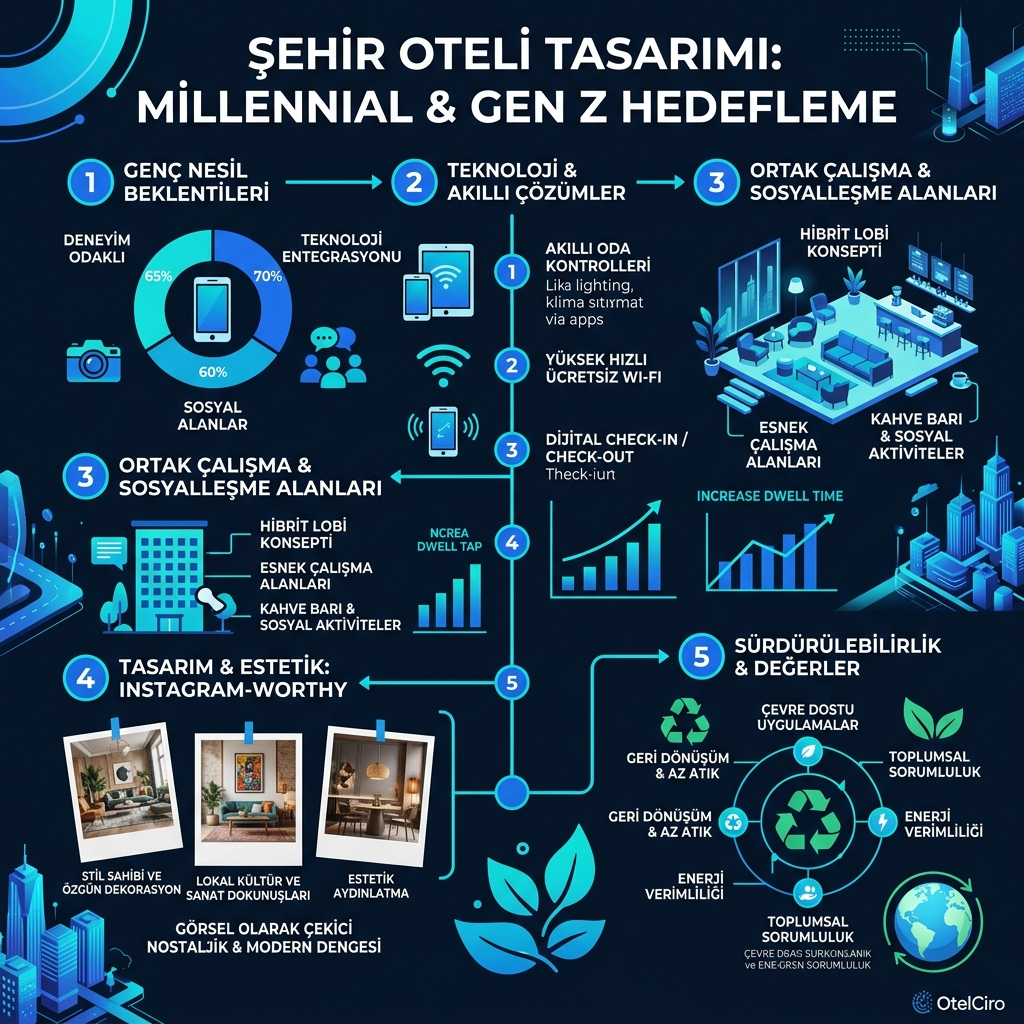
The Urban Design Hotel Concept
An urban design hotel is a design-oriented, technology-intensive accommodation concept located in city centers that encourages social interaction. This concept fundamentally redefines the traditional "bed + breakfast" formula.
Design Philosophy
Instagram-worthy aesthetics: Every corner of the facility should be a photo spot that guests want to share on social media. Research shows that hotels with "Instagrammable" designs have 5 times higher organic social media reach.
Local art integration: Giving the hotel a cultural identity through the works of local artists. The art hotel concept increases guest satisfaction by 22%.
Smart space usage: Small but smartly designed rooms (18-25 m2) are balanced with large social areas. The younger generation spends minimum time in the room—social areas are critical.
Area Distribution
| Area | Traditional Hotel | Urban Design Hotel | Difference |
|---|---|---|---|
| Room (total m2) | 65-70% | 45-55% | Small but smart room |
| Lobby and social area | 8-12% | 20-25% | Co-working + social |
| F&B area | 10-15% | 15-20% | Multi-concept |
| Fitness/wellness | 3-5% | 5-8% | Boutique fitness |
| Tech infrastructure | 2-3% | 5-8% | Digital experience |
Social Spaces: The Heart of Your Hotel
In an urban design hotel, the lobby is not a traditional reception area; it is a dynamic living space where a cafe, co-working space, bar, and social meeting point merge.
Lobby Concept
- Morning (07:00-12:00): Coffee cafe + co-working space — for digital nomads and remote workers.
- Noon (12:00-17:00): Casual dining + meeting point — interaction between locals and guests.
- Evening (17:00-24:00): Cocktail bar + music + social events — capturing the pulse of the city.
Co-Working Space
43% of younger generation travelers engage in "bleisure" (business + leisure) travel. A co-working space is critical to attracting this segment:
- High-speed Wi-Fi (minimum 200 Mbps)
- Ergonomic workstations
- Meeting rooms (hourly rental: €15-30/hour)
- Printing and scanning services
- Quiet work booths
A co-working area can contribute €3,000-8,000 monthly as non-accommodation revenue.
Event Programming
| Event | Frequency | Target | Cost | Impact |
|---|---|---|---|---|
| DJ night / live music | Weekly | Bar revenue | €300-500 | ADR +5% |
| Art exhibition opening | Monthly | Brand value | €500-1,000 | PR value |
| Local food workshop | Weekly | Extra income | €200-400 | €40-60/person |
| Yoga / fitness class | Daily | Guest satisfaction | €100-200 | Loyalty |
| Stand-up / open mic | Weekly | Local community | €200-400 | Awareness |
Embed this image on your site
<a href="https://otelciro.com/en/news/urban-design-hotels-targeting-millennial-gen-z-travelers-2026-guide">
  <img src="https://cdn.sanity.io/images/1la98t0z/production/a8dcfb638418a1fc1b340e2f8bbc2428f5c4e8d3-1024x1024.png" alt="Urban Design Hotel Concept" width="800" />
</a>
<p>Source: <a href="https://otelciro.com">OtelCiro</a> — AI Hotel Revenue Management</p>
Technology and Digital Experience
For the younger generation, technology is not an add-on but an integral part of the accommodation experience. The digital experience is just as important as the physical one.
Mobile-First Approach
- Digital check-in/check-out: Room entry without visiting reception — zero waiting time.
- Mobile room key: Opening doors with a smartphone (NFC/BLE).
- In-app services: Room service, housekeeping requests, and complaint management.
- Local guide: A city discovery guide within the hotel app (local restaurant, bar, and activity recommendations).
In-Room Technology
- Smart TV: Chromecast/AirPlay integration — Netflix and Spotify connectivity.
- Wireless charging: Qi charging areas on nightstands and desks.
- USB-C ports: Easy charging access at every point.
- Voice control: Room control via Google Home or Alexa (optional).
- Lighting: Smart lighting with adjustable color and intensity.
Digital Marketing Technology
- CRM and personalization: Tracking guest preferences and providing personal recommendations.
- Chatbot: 24/7 automated guest support (WhatsApp and website).
- Review management: Automated review collection and response system.
- Social listening: Tracking brand mentions and hashtags.
Pricing and Revenue Strategy
The urban design hotel is positioned with the promise of a "premium experience at an affordable price." It targets a segment that is highly price-sensitive but also has high experience expectations.
Pricing Model
| Room Type | Size | Price Range | Target Occupancy |
|---|---|---|---|
| Smart Single | 14-18 m2 | €65-100 | 80-85% |
| Design Double | 20-25 m2 | €90-140 | 75-80% |
| Loft Suite | 30-40 m2 | €150-220 | 65-70% |
| Rooftop Studio | 25-35 m2 | €130-200 | 70-75% |
Revenue Diversification
In addition to room revenue, additional revenue sources for an urban design hotel include:
- F&B (cafe + bar): 20-30% of revenue — lobby cafes and rooftop bars generate high turnover.
- Co-working: 5-8% of revenue — local users and guests.
- Events: 3-5% of revenue — brand events and private parties.
- Retail: 2-3% of revenue — local designer products and hotel-branded merchandise.
- Digital services: 1-2% of revenue — premium Wi-Fi and streaming packages.
Total TRevPAR typically realizes 35-45% above pure room revenue.
Related reading: Booking Mobile Ranking and Optimization
Marketing: Community-Focused Growth
Urban design hotel marketing is built on community building and user-generated content (UGC) rather than traditional advertising.
Social Media Strategy
- Instagram: Main channel — design details, guest stories, and event announcements.
- TikTok: Short video content — room tours, local discovery, and behind-the-scenes.
- Pinterest: Design inspiration and destination marketing.
- YouTube: City guide videos and hotel life vlogs.
Channel Strategy
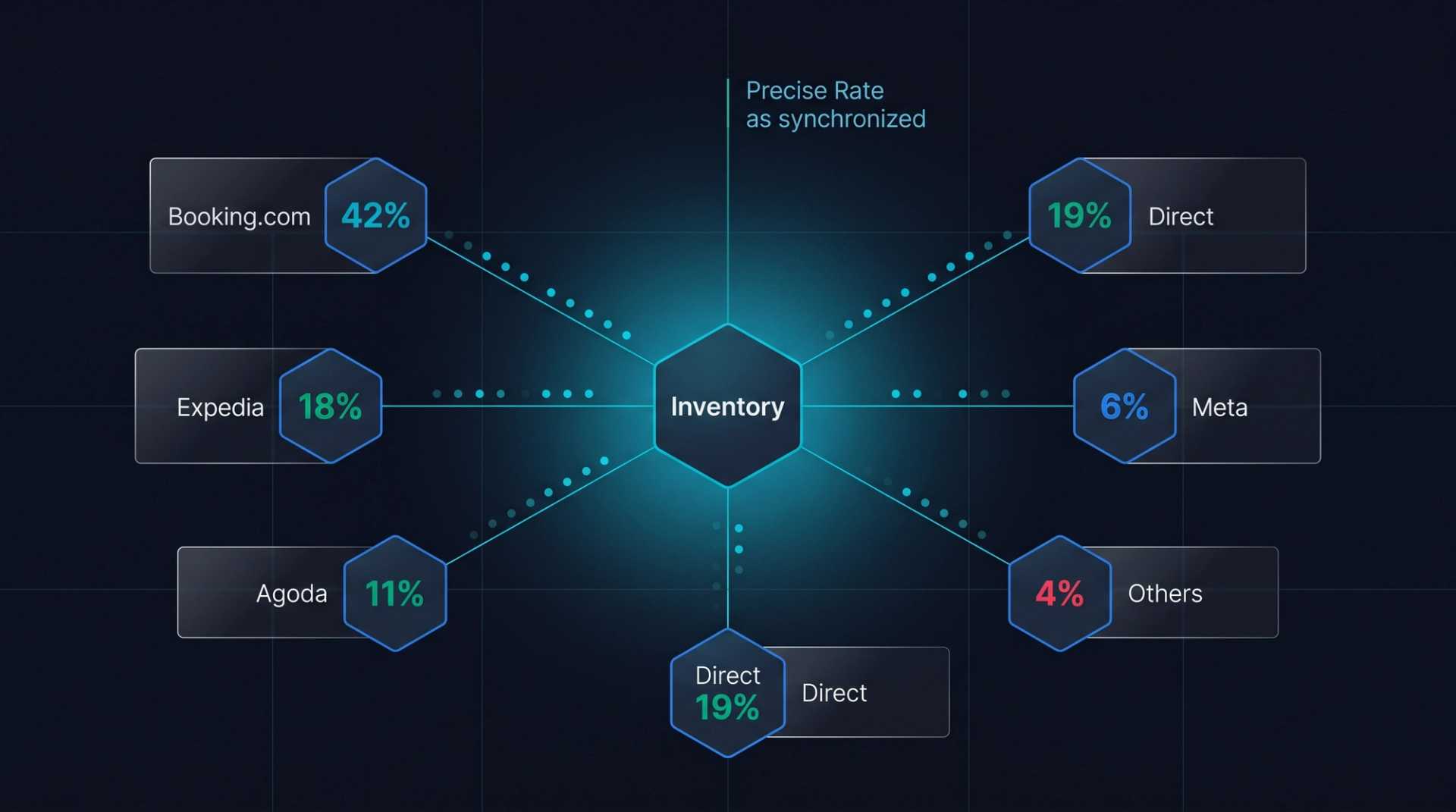
Ideal sales channel distribution for an urban design hotel:
- Direct website and app: 35-45% (with mobile-first design).
- Booking.com: 20-25% (for discoverability).
- Hostelworld / Generator-style platforms: 10-15%.
- Google Hotels: 10-15%.
- Social media direct: 5-10% (Instagram DM + WhatsApp).
Sustainability: Not a Value, but an Expectation
For Gen Z, sustainability is not a "value-add" but a core expectation. 73% avoid hotels that do not demonstrate environmental sensitivity.
Core practices include zero single-use plastics, sourcing 60% of the menu from local suppliers, energy savings via LED lighting, 30% water savings, and an 80%+ recycling rate target.
Conclusion: The Hotel of the Future Starts Today
The urban design hotel concept is the pioneer of a transformation shaping the future of the hospitality industry. The expectations of younger generation travelers—design, technology, social interaction, and sustainability—will become the standard hotel expectations of tomorrow.
Turkey's dynamic cities—Istanbul, Izmir, Ankara, Antalya—are perfect markets for urban design hotel investments. In these cities where the young tourist demographic is growing rapidly, a correctly positioned urban design hotel can achieve a 75-85% occupancy rate and an ADR 20-30% higher than a standard city hotel.
To optimize your hotel's digital marketing and sales performance, explore OtelCiro's sales ecosystem.
![Europe's Hotel Construction Boom: 2026 Oversupply Risks [Market Analysis]](https://cdn.sanity.io/images/1la98t0z/production/6dfe59137f56aa14bfcba86d9db3cf05ff89f406-2752x1536.jpg?w=1920&q=50&auto=format&fit=max)