![Unified Hotel Tech: Integrated Ecosystem for 2026 [Strategy Guide]](https://cdn.sanity.io/images/1la98t0z/production/0191504401d0475e926ebb1201ad05cb87b4e2f4-1376x768.jpg?w=1920&q=65&auto=format&fit=max)
Key Takeaways
- Fragmented software systems are a major issue for 62% of hotels, leading to data silos, integration problems, and operational inefficiencies.
- Integrated hotel ecosystems reduce total technology costs by 25-35% and boost operational efficiency by 18-22% compared to fragmented setups.
- A unified platform ensures a single source of truth, real-time data flow, and consolidated reporting across all modules for consistent data and actionable insights.
- Key components of an integrated ecosystem include Smart PMS, AI-driven Revenue Management, Channel Manager/CRS, Booking Engine, CRM, Operations Management, POS Integration, and Business Intelligence.
- Transitioning to an integrated system can be managed through a "Big Bang" approach or a gradual, modular strategy, mitigating risks like data migration and staff resistance.
8 Different Software, 8 Different Logins, 0 Integration
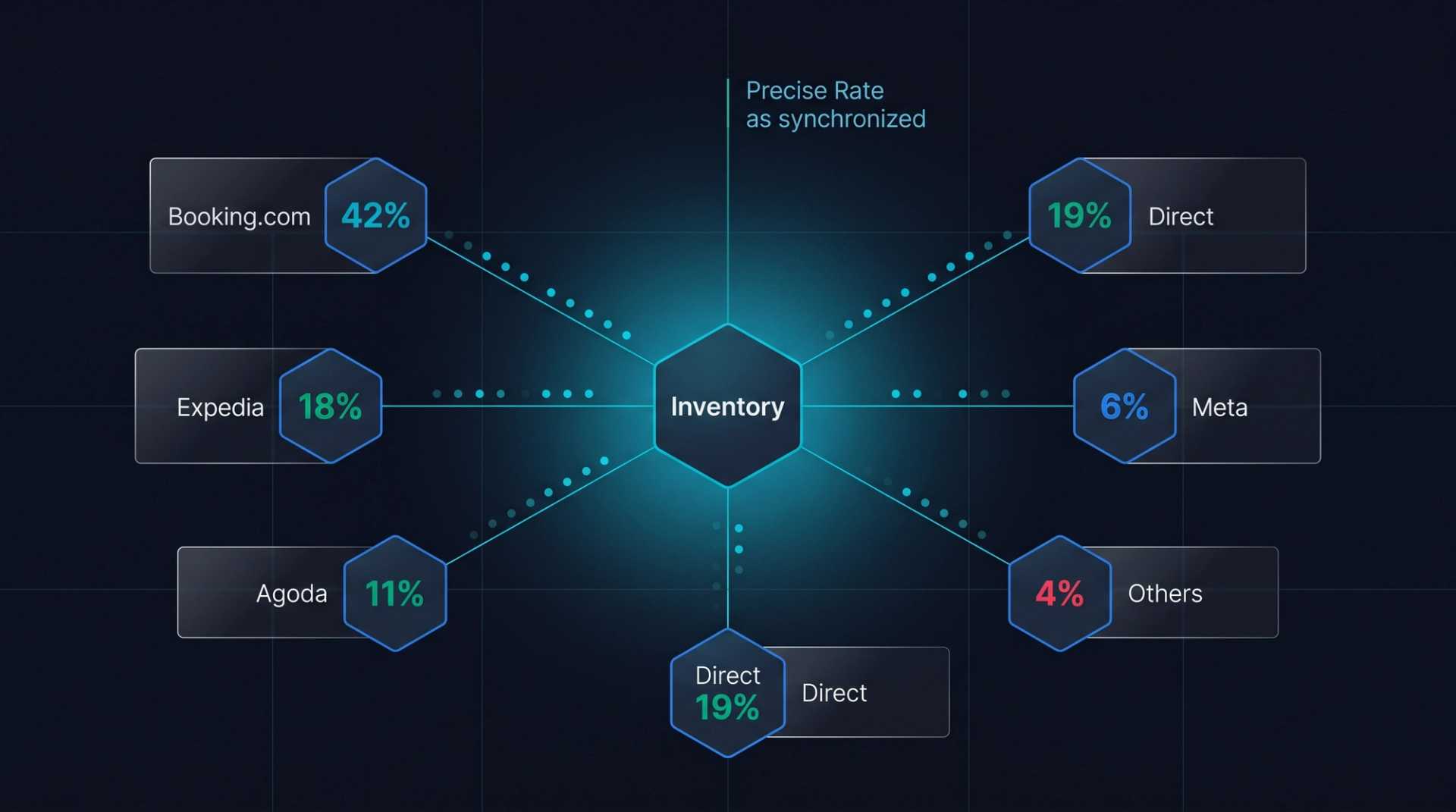
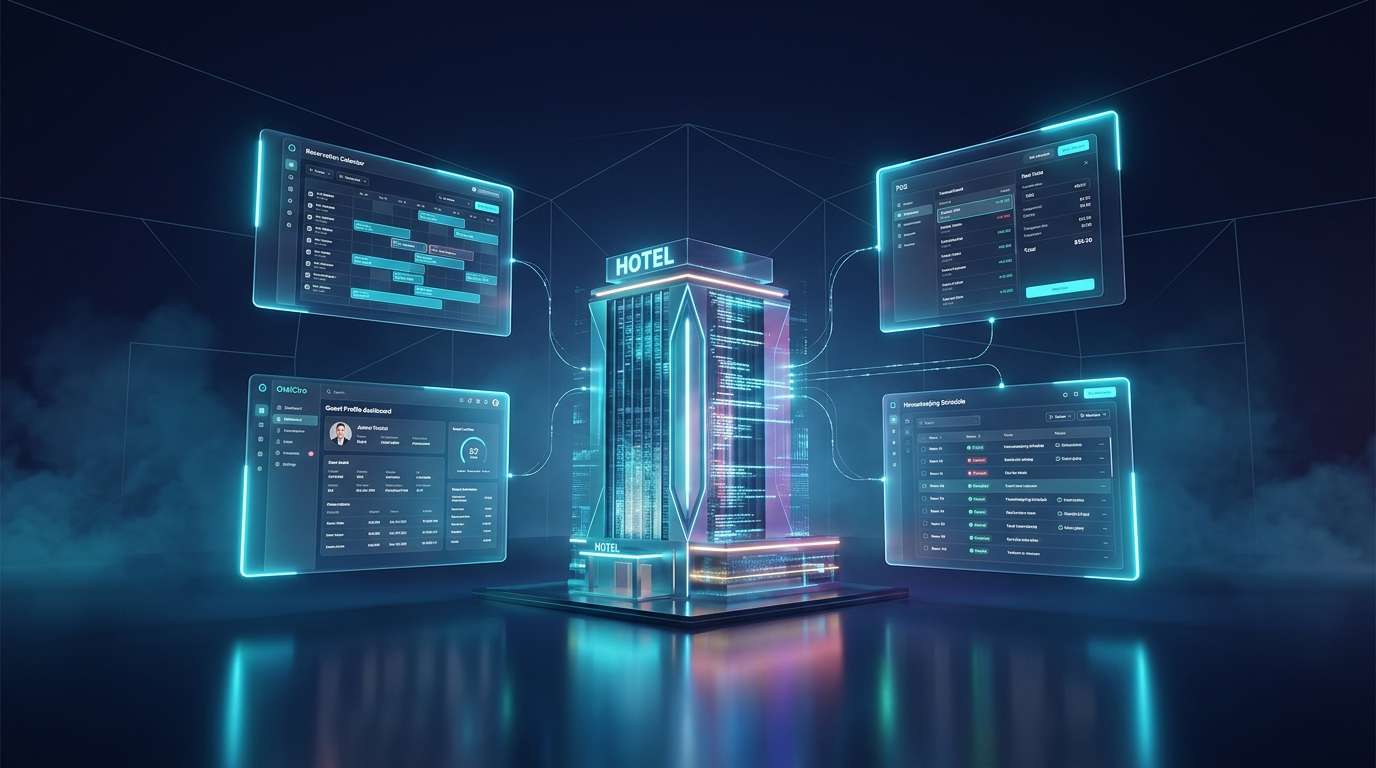
An average hotel uses 6-10 different software systems to run its daily operations. The PMS from one company, the channel manager from another, the RMS from a third, CRM separate, POS separate, accounting separate... This fragmented structure creates data silos, integration issues, and operational inefficiencies.
According to research by EHL (Ecole hoteliere de Lausanne), 62% of hotels using a fragmented software structure identify integration problems as their biggest technology challenge. Gartner's analysis indicates that hotels using integrated platforms achieve 25-35% lower total technology costs and 18-22% higher operational efficiency compared to those with fragmented setups.
Embed this image on your site
<a href="https://otelciro.com/en/news/unified-hotel-tech-integrated-ecosystem-for-2026-strategy-guide">
  <img src="https://cdn.sanity.io/images/1la98t0z/production/0191504401d0475e926ebb1201ad05cb87b4e2f4-1376x768.jpg" alt="Integrated hotel software ecosystem and single-point management" width="800" />
</a>
<p>Source: <a href="https://otelciro.com">OtelCiro</a> — AI Hotel Revenue Management</p>
Related reading: Hotel Management with Smart PMS: Transition from Traditional Systems to AI-Powered Platform
Related reading: Hotel AI Email Automation: Personalized Communication
Fragmented vs. Integrated System Comparison
| Criterion | Fragmented Structure | Integrated Ecosystem |
|---|---|---|
| Number of Vendors | 6-10 different companies | 1-2 companies |
| Integration Cost | High (each connection separate) | Included (native integration) |
| Data Consistency | Low (synchronization delays) | High (single database) |
| Reporting | Needs consolidation | Automatic unified reports |
| Training | Separate for each system | Single interface |
| Support | Separate application to each provider | Single point of contact |
| Update Risk | Integration may break when one system updates | Coordinated updates |
| Total Cost of Ownership | High | 25-40% lower |
Embed this image on your site
<a href="https://otelciro.com/en/news/unified-hotel-tech-integrated-ecosystem-for-2026-strategy-guide">
  <img src="https://cdn.sanity.io/images/1la98t0z/production/d1b59221deee7aa0860ba84a513185aa68d1b66a-1200x669.png" alt="Hotel IoT and smart room technologies" width="800" />
</a>
<p>Source: <a href="https://otelciro.com">OtelCiro</a> — AI Hotel Revenue Management</p>
Components of an Integrated Hotel Ecosystem
1. Smart PMS (Core)
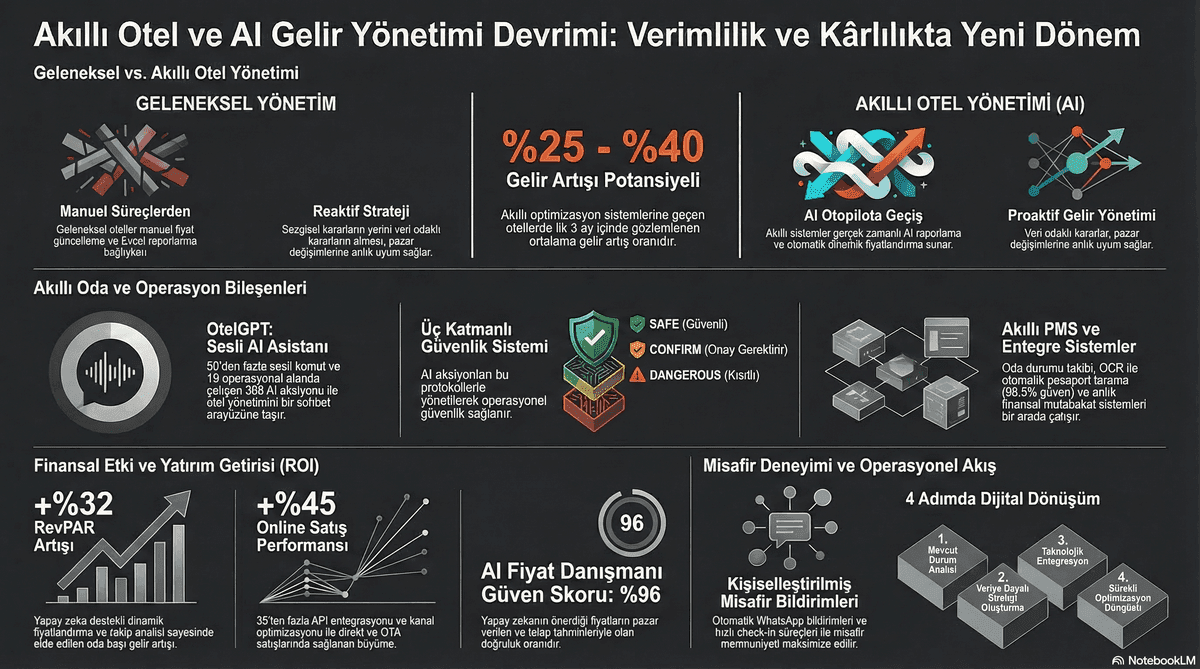
The heart of the entire system. It covers reservation management, guest profiles, room management, billing, and operational workflows. Cloud-based PMS should be preferred.
2. Revenue Management (AI Engine)
Dynamic pricing, demand forecasting, competitor monitoring, and price optimization. Data flows instantly thanks to native integration with the PMS.
3. Channel Manager / CRS
Inventory and price synchronization with all OTA channels. In an integrated system, changes made in the PMS are immediately reflected across all channels.
4. Booking Engine
The engine that allows direct bookings on the hotel website. In an integrated structure, the booking engine shares a single database with the PMS.
5. CRM and Communication
Guest relationship management, automated email flows, segmentation, and loyalty programs. Guest profiles enriched with PMS and POS data.
6. Operations Management
Housekeeping, maintenance, task assignment, and business process automation.
7. POS Integration
Automatic transfer of restaurant and bar sales to guest accounts.
8. Business Intelligence
Unified analysis and reporting of data flowing from all modules.
Related reading: E-Invoicing and Digital Accounting in Hotels: GİB Integration Guide (2026)
5 Key Advantages of an Integrated System
1. Single Source of Truth
All data is stored in a single database. Inconsistencies like "PMS says 72% occupancy, channel manager says 68%" are eliminated.
2. Instant Data Flow
Native integration is much faster than API-based connections. Price changes are reflected across all channels in milliseconds.
3. Consolidated Reporting
View all data by department, channel, segment, and time from a single dashboard. The need for manually combining separate reports is eliminated.
4. Lower Total Cost
The license fee for a single platform is lower than the combined total of multiple software licenses. Integration maintenance costs are also zero.
5. Staff Efficiency
Learning a single interface is much easier and faster than learning 6-10 different systems. Onboarding time for new staff is reduced by 50-60%.
Embed this image on your site
<a href="https://otelciro.com/en/news/unified-hotel-tech-integrated-ecosystem-for-2026-strategy-guide">
  <img src="https://cdn.sanity.io/images/1la98t0z/production/8a93e1fc60466341571b6624007b4e830262ba56-1200x670.png" alt="OtelCiro ecosystem all-in-one platform view" width="800" />
</a>
<p>Source: <a href="https://otelciro.com">OtelCiro</a> — AI Hotel Revenue Management</p>
Strategy for Transitioning to an Integrated System
Big Bang Approach
Migrating all systems to the integrated platform simultaneously. Advantage: rapid transition; Disadvantage: high risk.
Modular (Gradual) Approach
- Phase 1: PMS migration (core)
- Phase 2: Channel manager + booking engine
- Phase 3: Revenue management
- Phase 4: CRM + operations
- Phase 5: BI + advanced analytics
The gradual approach reduces risk and generates value at each stage.
Transition Risks and Management
- Data migration: Accurate transfer of data from existing systems is critical.
- Staff resistance: Change management and training plans are essential.
- Temporary performance dip: An adaptation period of 2-4 weeks initially.
- Existing contracts: Termination conditions of current software agreements.
Related reading: Housekeeping Automation: 7 Steps to Digitalize Hotel Operations
OtelCiro: Integrated Hotel Ecosystem
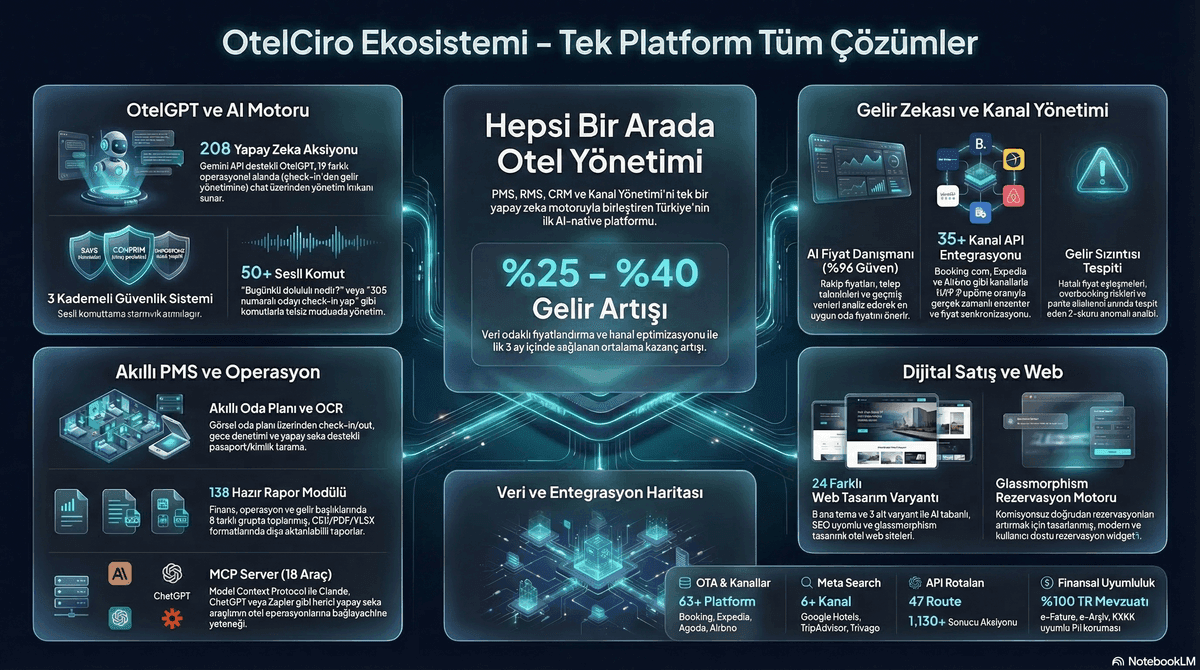
OtelCiro offers a fully integrated hotel management ecosystem with Smart PMS, AI Engine, Sales (channel manager + booking engine), Operations, and Reporting modules. Single platform, single interface, single database.
Discover the OtelCiro integrated ecosystem
Conclusion
Fragmented software structures belong to a past era of hospitality technology. In 2026, successful hotels are those that manage all business processes from a single, integrated platform.
Transitioning to an integrated system is a significant decision, but the long-term benefits far outweigh the challenges. Manage risk with a gradual transition approach and create tangible value at every step.
![Europe's Hotel Construction Boom: 2026 Oversupply Risks [Market Analysis]](https://cdn.sanity.io/images/1la98t0z/production/6dfe59137f56aa14bfcba86d9db3cf05ff89f406-2752x1536.jpg?w=1920&q=50&auto=format&fit=max)