![Smart Hotel Technology: The Rise of Fully Automated Stays [2026 Guide]](https://cdn.sanity.io/images/1la98t0z/production/b73146374d4d518ce3b39d4934172d2d9ed1770d-2048x2048.png?w=1920&q=65&auto=format&fit=max)
Key Takeaways
- Fully automated hotel models can reduce operational costs by 40-55% compared to traditional hotels.
- AI-powered concierge systems can automatically manage up to 85% of all guest communications.
- Smart room technologies and IoT integration reduce per-room energy consumption by 30-40%.
- Digital and biometric check-in systems reduce average wait times from 12 minutes to 90 seconds.
- Success in the Turkish market requires a hybrid approach that balances technical efficiency with traditional hospitality.
The Future of Hotels Today: The Fully Automated Accommodation Revolution
When Japan's Henn-na Hotel opened the world's first robot-staffed hotel in 2015, it was largely dismissed as a PR move. By 2026, the landscape has changed entirely: more than 2,400 hotels worldwide have shifted to full or semi-automated operational models, and this number is growing by 35% annually.
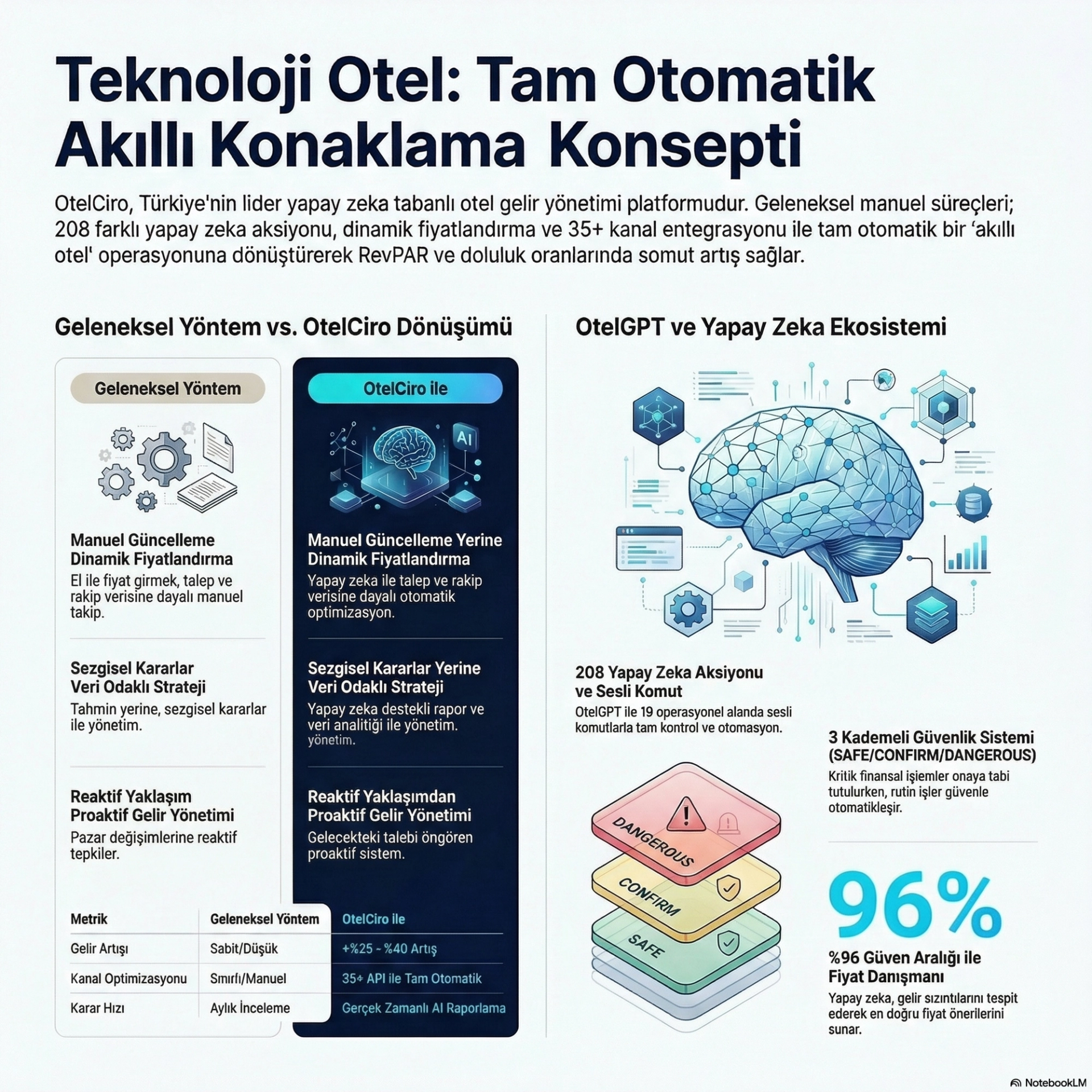
The "Technology Hotel" concept is an accommodation model that integrates Artificial Intelligence (AI), robotics, IoT, and automation technologies to minimize labor dependency, personalize the guest experience, and dramatically lower operational costs. Research indicates that fully automated hotels report 40-55% lower operational costs and 15-25% higher guest satisfaction scores compared to traditional establishments.
Embed this image on your site
<a href="https://otelciro.com/en/news/smart-hotel-technology-the-rise-of-fully-automated-stays-2026-guide">
  <img src="https://cdn.sanity.io/images/1la98t0z/production/b73146374d4d518ce3b39d4934172d2d9ed1770d-2048x2048.png" alt="Smart Hotel Concept Infographic" width="800" />
</a>
<p>Source: <a href="https://otelciro.com">OtelCiro</a> — AI Hotel Revenue Management</p>
In this article, we take a deep dive into the components of the technology hotel, implementation strategies, and the opportunities they present for the Turkish hospitality industry.
Related reading: Hotel IoT and Smart Room Technologies
The Five Core Layers of a Technology Hotel
A fully automated hotel consists of five technology layers working in integration. While each layer generates value independently, the true power emerges from their synchronized operation.
Layer 1: Smart Check-in and Authentication
The traditional reception desk is giving way to digital check-in systems. Guests check in via a mobile app before arriving at the hotel, with identity verification handled by AI-supported facial recognition or digital IDs.
- Self-service kiosks: Touchscreen kiosks similar to airport check-in banks reduce average check-in times from 12 minutes to 90 seconds.
- Mobile keys: Using a smartphone to unlock room doors, access elevators, and use common areas. This completely eliminates the need for physical key cards.
- Facial recognition: Instant recognition and personalized welcomes for returning guests. Security and comfort combined.
This layer reduces the need for front desk staff by 70-80%. In a 100-room hotel, this translates to annual labor savings of 1.2-1.8 million TL.
Layer 2: AI Concierge and Communication
AI-powered concierge systems, such as OtelGPT, automatically manage 85% of guest communications. Room service orders, restaurant recommendations, transfer requests, complaint management, and local information queries are handled 24/7 by AI.
Core capabilities of AI concierges in technology hotels include:
- Multilingual support: Service in 50+ languages simultaneously, without translation delays.
- Proactive communication: Activity suggestions during weather changes, restaurant occupancy updates, and room maintenance notifications.
- Personalization: Automatic suggestions based on guest preference history—pillow preference, room temperature, and minibar content.
- Sentiment analysis: Detecting dissatisfaction from message tones and initiating automatic escalation.
Layer 3: IoT and the Smart Room
IoT sensors and actuators fully automate the room experience. When a guest enters the room, their preferred temperature, lighting, and curtain positions are adjusted automatically.
Smart room components:
- Automated HVAC (based on occupancy and outdoor weather).
- Smart lighting (circadian rhythm-compatible, changing color temperature throughout the day).
- Voice assistants (room controls, information queries, service requests).
- Smart TVs (streaming account integration, automatic language settings).
- IoT sensors (monitoring humidity, CO₂, and noise levels).
- Smart minibars (automated consumption tracking and billing).
Smart room technologies reduce per-room energy consumption by 30-40% while increasing guest satisfaction scores by 20%.
Layer 4: Robotic Services
Robot technology is no longer experimental in the hospitality sector; it is an operational reality. It is becoming widespread in three main areas:
Delivery robots: Autonomous robots that handle room service, laundry delivery, and minibar replenishment. They can move between floors via elevator integration. Average delivery times are 40% faster than human staff, operating 24/7 without interruption.
Cleaning robots: Autonomous vacuum and mop robots automate common area cleaning by 60%. In guest rooms, robots handle the preparation phase (vacuuming, bathroom disinfection), while detailed cleaning remains with human staff.
Social robots: Robots used in the lobby and restaurant for greeting, wayfinding, and entertainment. They are particularly popular with families with children and tech-savvy guests.
Layer 5: Data Analytics and Automation
Data from all layers is analyzed on a central AI platform to automate operational decisions:
- Energy optimization: Floor-based HVAC management based on occupancy forecasts.
- Dynamic pricing: Automatic price updates using real-time demand analysis.
- Predictive maintenance: Detecting equipment failure before it occurs to prevent unplanned downtime.
- Staff optimization: Automatic shift planning based on occupancy and event calendars.
Related reading: Hotel Automation and Digitalization of Business Processes
Investment Model and Cost Analysis
A technology hotel investment requires a 25-40% higher initial cost compared to a traditional hotel. However, operational savings typically bridge this gap within 2-3 years.
Technology Investment Items (Based on 100 rooms)
| Component | Cost Range |
|---|---|
| Self check-in system | 400,000 - 800,000 TL |
| Smart room hardware (per room) | 25,000 - 60,000 TL |
| AI concierge platform | 200,000 - 500,000 TL |
| Robotic systems (3-5 robots) | 1,500,000 - 3,000,000 TL |
| Central automation platform | 300,000 - 700,000 TL |
| IoT infrastructure and network | 500,000 - 1,000,000 TL |
Operational Savings
Annual operational savings include:
- Staff costs: 35-50% reduction.
- Energy costs: 25-40% reduction.
- Maintenance costs: 20-30% reduction (via predictive maintenance).
- Guest acquisition costs: 15-25% reduction (via high satisfaction and repeat visits).
A 100-room technology hotel provides annual operational savings of 3-6 million TL compared to the traditional model.
The Human Factor: Balancing Technology and Empathy
The biggest risk of a technology hotel is the guest experience becoming cold and mechanical. Successful technology hotels correctly identify "when" automation should take over and "when" a human touch is required.
Ideal areas for automation: Check-in/check-out, room service delivery, routine information queries, energy management, and cleaning preparation.
Areas requiring a human touch: Complex complaint resolution, special celebration arrangements, support for guests with disabilities, crisis management, and personal concierge (VIP) services.
The hospitality culture in Turkey is strong, and a shift to a fully automated model may face cultural resistance. A hybrid model—automation for routine tasks and humans for emotional touchpoints—emerges as the most suitable approach for Turkey. When this balance is correctly established, the technology hotel concept has the potential to offer both a cost advantage and a superior guest experience.
![Europe's Hotel Construction Boom: 2026 Oversupply Risks [Market Analysis]](https://cdn.sanity.io/images/1la98t0z/production/6dfe59137f56aa14bfcba86d9db3cf05ff89f406-2752x1536.jpg?w=1920&q=50&auto=format&fit=max)