![Smart Hotel Security: AI Camera Monitoring [2026 Guide]](https://cdn.sanity.io/images/1la98t0z/production/7648a0a5e4cfa11800e47bc639e54e3c31f87707-1200x669.png?w=1920&q=65&auto=format&fit=max)
Key Takeaways
- Traditional hotel camera systems are passive recorders, leading to significant human monitoring failures; security guards miss up to 95% of events after 20 minutes.
- AI-powered camera systems proactively detect anomalies, offer real-time alerts, perform people counting, and analyze behavior, fundamentally transforming hotel security.
- These systems enhance safety and operational efficiency across various hotel areas, including lobbies, parking lots, F&B outlets, and pools, improving guest experience.
- Implementing AI surveillance requires strict adherence to privacy regulations like KVKK (Personal Data Protection Law), including clear signage, data inventory, defined retention periods, and explicit consent for advanced features such as facial recognition.
- An investment in AI camera systems demonstrates a strong ROI, with a typical payback period of 14-20 months for a 200-room city hotel, driven by staff optimization, theft prevention, and insurance savings.
Limitations of Traditional Camera Systems
Hotel security camera systems have been the industry's standard security tool for decades. However, traditional camera systems fundamentally operate as a "recording device": they capture images but do not analyze them. A security guard is is expected to monitor dozens of camera feeds simultaneously, a task far beyond human capacity.
Research shows that a security guard's attention on screens drops by 45% after 12 minutes and they miss 95% of significant events after 20 minutes. This means that in traditional systems, security cameras have essentially become a tool for "post-incident review" – not a preventive security element.
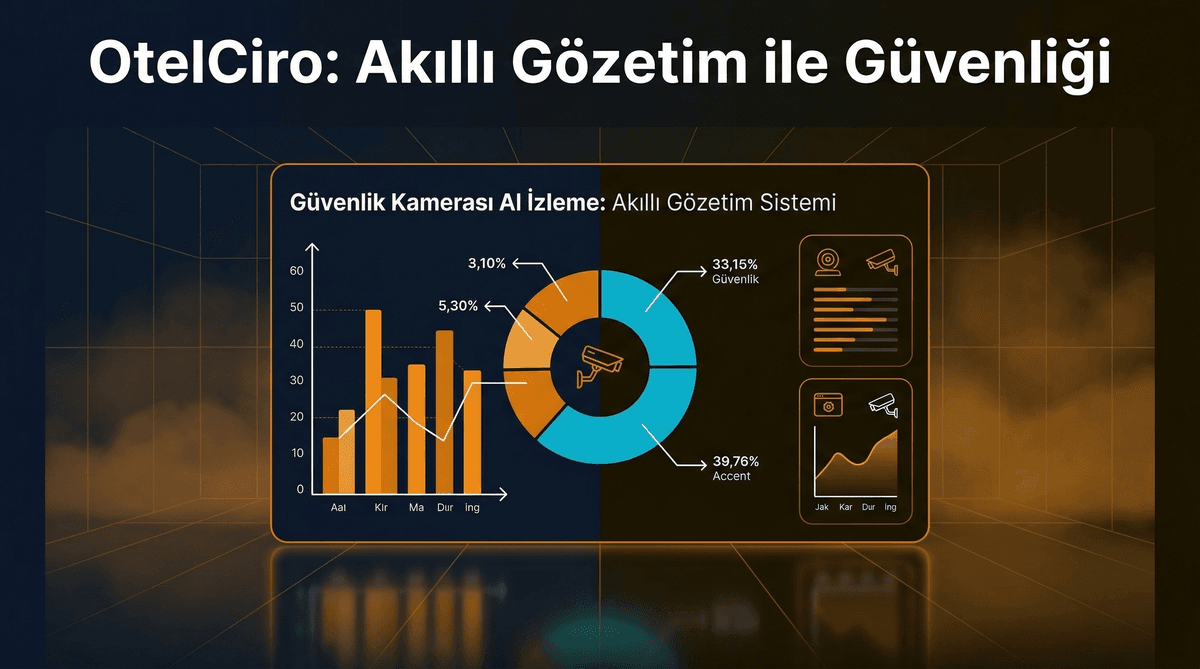
88% of hotels in Turkey use camera systems, but only 12% of them include any smart analysis technology. This indicates that the return on security investment remains very low.
Embed this image on your site
<a href="https://otelciro.com/en/news/smart-hotel-security-ai-camera-monitoring-2026-guide">
  <img src="https://cdn.sanity.io/images/1la98t0z/production/7648a0a5e4cfa11800e47bc639e54e3c31f87707-1200x669.png" alt="AI Security Camera Monitoring Infographic" width="800" />
</a>
<p>Source: <a href="https://otelciro.com">OtelCiro</a> — AI Hotel Revenue Management</p>
Related reading: Hotel Security and Emergency Plan
What Do AI-Powered Camera Systems Do?
Artificial intelligence (AI) powered security camera systems analyze video streams in real-time, automatically detecting anomalies and alerting relevant personnel. The core capabilities of these systems include:
Anomaly Detection
AI algorithms learn "normal" behavior patterns and trigger alarms when deviations occur:
- Unusual waiting in lobbies and corridors: A person waiting in a specific area longer than normal.
- Nighttime movement: Detecting out-of-hours movement in restricted areas.
- Abandoned items: Suspicious packages or bags left in lobbies or common areas.
- Crowd analysis: Detecting and alerting to excessive density in specific areas.
People Counting and Density Analysis
AI cameras track the number of people in different hotel areas in real-time:
- Instant occupancy rates for common areas such as lobbies, restaurants, and pools.
- Time-based density graphs for personnel planning.
- Maximum capacity control for fire safety.
- Participant count tracking for events and organizations.
Behavior Analysis
Advanced AI systems can detect specific behavior patterns:
- Fall detection: Immediate alerts if elderly or disabled guests fall.
- Fight/tension detection: Early detection of aggressive movements.
- Wrong-way movement: Progression in the opposite direction in one-way passages.
- Loitering: Prolonged waiting in security-sensitive areas.
Related reading: Hotel Cybersecurity and Data Protection
Applications of AI Cameras in Hotel Security
Entrance and Lobby Security
The main entrance and lobby area of a hotel are the busiest and most critical security points. AI cameras in this area can:
- Count and manage visitor flow.
- Flag suspicious behavior.
- Automatically notify of VIP guest arrivals (with optional facial recognition).
- Detect unauthorized entry attempts during nighttime hours.
Parking Lot and Outdoor Areas
The parking lot is one of the most vulnerable areas of a hotel. AI-powered monitoring provides:
- License plate recognition for vehicle entry-exit records.
- Vehicle theft or vandalism detection.
- Motion detection in dark corners.
- Parking lot occupancy analysis.
Food and Beverage Areas
In restaurant, bar, and kitchen areas, AI cameras provide valuable data for hygiene and security:
- Monitoring staff compliance with hygiene rules (e.g., glove, hairnet usage).
- Customer density and table occupancy analysis.
- Monitoring kitchen security protocols.
Pool and Beach Areas
The pool area has the highest security risk. AI cameras can:
- Drowning risk detection (sensing immobility in water).
- Identify dangerous behaviors like running by the pool.
- Pool occupancy analysis and capacity control.
- Instant alerts as a lifeguard support system.
Privacy and Legal Framework
Privacy and the protection of personal data are the most sensitive issues in the use of AI camera systems. In Turkey, under the KVKK (Personal Data Protection Law), for hotel camera systems:
Mandatory steps:
- Clear and visible warning signs must be present in camera surveillance areas.
- Camera recordings must be included in the data processing inventory.
- Recording retention periods must be defined (typically 30-90 days).
- Cameras are strictly prohibited in guest rooms and private areas (restrooms, changing rooms).
- Explicit consent must be obtained if facial recognition technology is used.
AI-specific considerations:
- Transparency of automated decision-making mechanisms.
- Definition of protocols to follow in case of false alarms.
- Definition of how long AI analysis data will be stored.
Related reading: Hotel Security Systems with Computer Vision 2026
Investment Analysis and ROI
The investment in an AI-powered camera system varies according to the hotel's size and existing infrastructure:
Cost items:
- AI-enabled cameras: 3,000-8,000 TL per unit.
- NVR/Server infrastructure: 50,000-150,000 TL.
- AI software license: 30,000-80,000 TL annually.
- Installation and integration: 20,000-60,000 TL.
- Annual maintenance and updates: 10-15% of total investment.
Sources of return:
- Security personnel optimization: 30-40% savings.
- Theft and damage prevention: 50,000-200,000 TL in protected value annually.
- Discount on insurance premiums: 10-20%.
- Increase in operational efficiency: Value derived from people counting and density data.
- Reputation protection: Increased guest satisfaction due to reduced security incidents.
For a 200-room city hotel, the typical ROI period is calculated to be 14-20 months.
Integration and Digital Ecosystem
An AI camera system should not be an isolated security tool but an integrated part of the hotel's digital ecosystem. A camera system working in conjunction with a hotel operations management platform can provide:
- PMS connectivity: Matching camera recordings with guest check-in/out information.
- Incident management: Automatic conversion of detected anomalies into work orders.
- Reporting: Generating daily security reports and trend analysis.
- Emergency integration: Coordination with fire alarms, evacuation, and emergency scenarios.
AI-powered security camera systems enable security in hotels to transform from a passive monitoring function to a proactive prevention mechanism. With proper implementation, respect for privacy rights, and continuous improvement, this technology significantly enhances both guest safety and operational efficiency.
![Europe's Hotel Construction Boom: 2026 Oversupply Risks [Market Analysis]](https://cdn.sanity.io/images/1la98t0z/production/6dfe59137f56aa14bfcba86d9db3cf05ff89f406-2752x1536.jpg?w=1920&q=50&auto=format&fit=max)