![Ski Resort Revenue Optimization [2026 Guide]](https://cdn.sanity.io/images/1la98t0z/production/baabb730ab15f4ecf9ef3c22293f24c34a30e6d6-1200x669.png?w=1920&q=65&auto=format&fit=max)
Key Takeaways
- The global ski tourism market is projected to reach $73 billion by 2026, with non-lift ticket revenues significantly increasing. Turkey is a key growth market.
- Winter revenue maximization relies on AI-driven dynamic pricing, tailored package strategies, and high-margin services like ski schools and equipment rental.
- Transforming into a "four-season mountain destination" is critical, with summer strategies focusing on adventure, nature, and wellness activities to generate 30-50% of winter revenue.
- Effective inter-seasonal management, including maintenance and corporate events, combined with strategic seasonal staff planning, ensures operational continuity and service quality.
- Leveraging technology for digital guest experiences (mobile apps, RFID) and operational efficiency (snowmaking automation, energy management) is crucial for modern resorts.
Ski Resort Market: 2026 Global Outlook
The global ski tourism market reached $73 billion in 2026. However, this market is rapidly transforming due to climate change, evolving demographics, and technological advancements. According to NSAA (National Ski Areas Association) data, 52% of ski resort revenues now come from non-lift ticket sources — a significant increase from just 31% a decade ago.
Turkey Ski Tourism Data
With 37 ski resorts and 8 million ski visitors annually, Turkey is one of Europe's fastest-growing ski markets:
| Metric | 2023 | 2024 | 2025 | 2026 (forecast) |
|---|---|---|---|---|
| Total skiers | 5.8M | 6.7M | 7.4M | 8.2M |
| Avg. spend/person | 185€ | 210€ | 235€ | 260€ |
| Share of foreign tourists | 12% | 16% | 20% | 24% |
| Avg. length of stay | 3.1 nights | 3.4 nights | 3.6 nights | 3.8 nights |
Turkey's ski resorts, especially Uludağ, Erciyes, Palandöken, and Kartalkaya, are recording strong growth in both domestic and international tourist segments.
Related reading: Hotel Yield Management and Revenue Optimization
Winter Season Revenue Maximization
The ski resort's winter season (typically mid-December to late March) accounts for 60-70% of annual revenue. Optimizing every day within this 14-16 week window is critical.
Dynamic Pricing Model
Pricing in ski resorts is shaped by different parameters compared to standard hotels:
| Parameter | Weight | Source |
|---|---|---|
| Snow depth / snowfall forecast | 25% | Meteorology API |
| Slope conditions | 15% | Resort data |
| Day of the week | 20% | Historical data |
| Occupancy rate | 15% | PMS data |
| Holiday/semester calendar | 15% | Education calendar |
| Competitor prices | 10% | Competitor tracking system |
An AI-powered pricing engine analyzes these parameters in real-time to determine the optimal price for each night. A price difference of 40-60% should be applied between a weekend with high snowfall expectation and a snowless weekday.
Package Strategy
Package sales in ski resorts increase revenue per guest by 25-40%:
| Package Type | Content | Price/Person/Night | ADR Impact |
|---|---|---|---|
| Basic ski | Room + lift ticket | 180-280€ | +15% |
| Premium ski | Room + lift + equipment | 230-350€ | +25% |
| All-in ski | Room + lift + equipment + meals | 300-450€ | +40% |
| Family package | 2A+2C room + lift + kids' course | 400-600€ | +35% |
| VIP experience | Suite + private instructor + heliski | 800-1.500€ | +120% |
Ski School and Equipment Rental
These two revenue streams constitute 15-25% of resort revenue and are highly profitable:
- Ski school: 50-120€ per lesson, 70-80% margin
- Equipment rental: 30-60€ per set/day, 65-75% margin
- VIP instructor: 100-250€ per hour, 60-70% margin
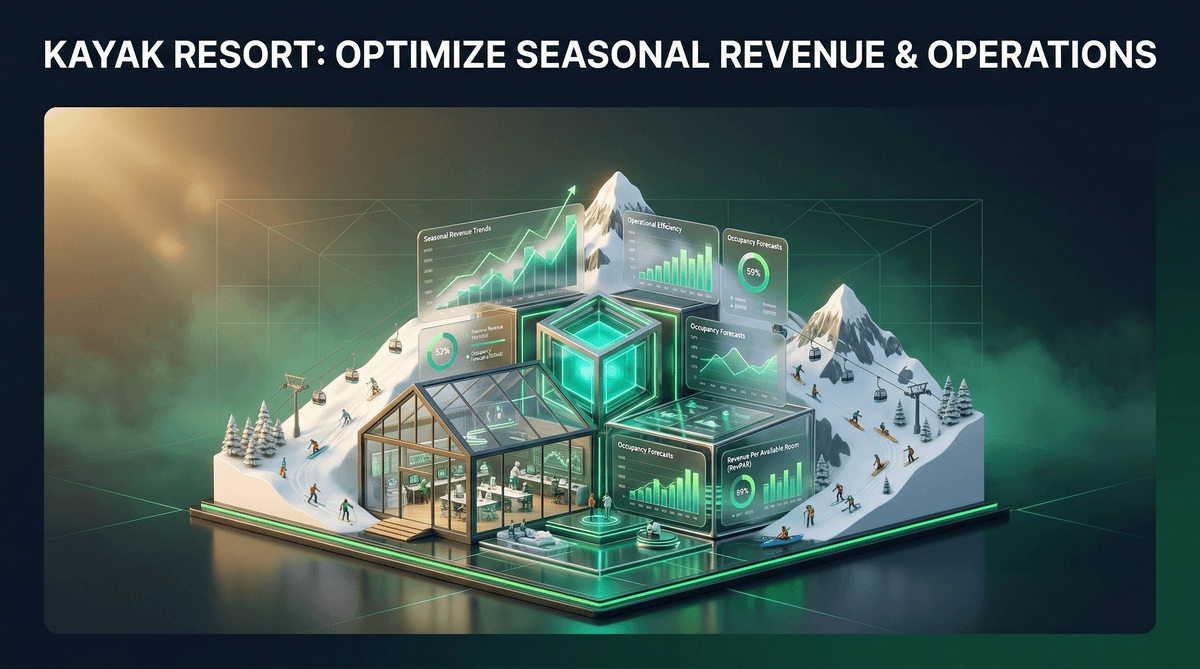
Embed this image on your site
<a href="https://otelciro.com/en/news/ski-resort-revenue-optimization-2026-guide">
  <img src="https://cdn.sanity.io/images/1la98t0z/production/baabb730ab15f4ecf9ef3c22293f24c34a30e6d6-1200x669.png" alt="Ski Resort Management Strategy" width="800" />
</a>
<p>Source: <a href="https://otelciro.com">OtelCiro</a> — AI Hotel Revenue Management</p>
Summer Season: Alternative Revenue Streams
The biggest challenge for ski resorts is maintaining high occupancy outside the winter season. Resorts that implement successful transformation strategies can achieve 30-50% of their winter revenues during the summer.
Summer Activities Portfolio
Adventure sports:
- Mountain biking (downhill and cross-country trails)
- Paragliding and paramotoring
- Via ferrata and rock climbing
- Ziplining and adventure parks
- Trekking and trail running
Nature experiences:
- Highland camps and glamping
- Botanical walks and flora identification
- Bird watching and wildlife photography
- Stargazing (high altitude advantage)
Wellness and retreat:
- Mountain yoga camps
- Digital detox programs
- Thermal spring integration (if available)
- Healthy living and nutrition retreats
Summer Revenue Performance
| Activity | Seasonal Revenue | Investment | ROI |
|---|---|---|---|
| Mountain bike trail | 150.000-400.000€ | 200.000-500.000€ | 18-24 months |
| Adventure park | 100.000-300.000€ | 150.000-400.000€ | 12-18 months |
| Glamping area | 80.000-200.000€ | 50.000-150.000€ | 6-12 months |
| Wellness center | 120.000-350.000€ | 300.000-800.000€ | 24-36 months |
Inter-Seasonal Transition Management
Transition periods between winter and summer seasons (April-May and October-November) are typically when occupancy rates are lowest. Strategic management of these periods is critical for annual revenue optimization.
Transition Period Strategies
- Maintenance and renovation: Facility maintenance, renovation, and staff training during the off-season
- Corporate events: Company seminars, team-building, and off-site meetings
- Festivals and events: Mountain festivals, music events, and gastronomic celebrations
- Early season discounts: First snow or first greenery campaigns
Personnel Management
Seasonal personnel management is one of the most complex operational issues for ski resorts:
- Core staff (12 months): Management, technical maintenance, security — 30-40% of total staff
- Seasonal staff (5-6 months): Ski instructors, housekeeping, F&B — 60-70% of total staff
- Part-time and on-call: Additional support during peak periods
Staff retention rates are a determinant of service quality. Competitive wages, accommodation options, and career development opportunities should be offered to seasonal employees.
Related reading: Hotel Automation and Business Processes Guide
Technology and Guest Experience
A modern ski resort is a technology-intensive operation. The right technology investments enhance both operational efficiency and guest satisfaction.
Digital Experience
- Mobile application: Lift queue tracking, slope status, restaurant reservations, and bill management
- RFID lift ticket: Contactless access and ski performance tracking
- Digital ski map: Real-time slope conditions and route suggestions
- AI chat assistant: 24/7 automated responses to guest inquiries
Operational Technology
- Snowmaking automation: IoT sensors for temperature and humidity tracking, automatic snow machine management
- Slope grooming optimization: GPS-supported piste basher management for fuel and time savings
- Energy management: Smart control of lift, lighting, and heating systems
- Safety and avalanche tracking: Sensor network and artificial intelligence for avalanche risk analysis
Marketing and Channel Strategy
Ski resort marketing must be planned in line with the seasonal cycle.
Marketing Calendar
| Period | Focus | Channel | Goal |
|---|---|---|---|
| June-August | Early booking | Email + SEO | Winter pre-sales |
| September-October | Season opening | Social media + PR | Awareness |
| November-December | Snow season | Google Ads + OTA | Conversion |
| January-February | Peak season | Retargeting + CRM | Occupancy |
| March-April | End of season | Discount campaigns | Last-minute sales |
| May-July | Summer promotion | Content + influencer | Summer conversion |
Channel Distribution
The ideal sales channel strategy for a ski resort:
- Direct website: 35-45% (early bookings and package sales)
- Booking.com / Expedia: 15-20%
- Tour operators (TUI, Corendon): 15-20% (charter and package tour groups)
- Ski platforms (OnTheSnow, SkiResort): 5-10%
- Corporate sales: 5-10%
Conclusion: Four-Season Mountain Destination
The future of ski resort management lies in the transformation from a "ski center" identity to a "four-season mountain destination" identity. The risk of climate change shortening the ski season makes this transformation imperative.
Successful ski resorts maximize winter revenues while developing alternative income streams during summer and transition periods. Turkey's ski resorts, with their high mountain geography, thermal springs, and nature tourism potential, are ideally positioned for this transformation.
OtelCiro's AI engine enables your ski resort to forecast seasonal demand changes and create optimal pricing strategies for every season.
![Europe's Hotel Construction Boom: 2026 Oversupply Risks [Market Analysis]](https://cdn.sanity.io/images/1la98t0z/production/6dfe59137f56aa14bfcba86d9db3cf05ff89f406-2752x1536.jpg?w=1920&q=50&auto=format&fit=max)