![Rate Fence Strategy: Maximize Hotel Revenue [2026 Guide]](https://cdn.sanity.io/images/1la98t0z/production/fcc0782ff5943bb3c6b0bfaf2e6250844dffe280-1200x669.png?w=1920&q=65&auto=format&fit=max)
Key Takeaways
- Rate fencing is a strategic revenue management tool enabling hotels to offer different prices for the same room type to various guest segments, potentially increasing RevPAR by 12-20%.
- It is not discrimination but a method of differentiation based on varying guest willingness to pay, offering distinct conditions and value propositions.
- Rate fences can be categorized into Physical, Time-Based, Transaction-Based, and Demographic types, each utilizing a different segmentation mechanism.
- Effective rate fence design adheres to principles like perceived value difference, difficult segment transition, simplicity (optimum 5-8 active rate plans), and consistency across all channels.
- Legal compliance (e.g., EU DMA, consumer protection laws) and ethical considerations are paramount, requiring transparent pricing and regular performance tracking for optimization.
What is Rate Fencing and Why Is It Necessary?
Rate fencing (price barrier) is a strategic revenue management tool that allows the same hotel to sell the same room type at different prices to different guest segments. This approach, successfully implemented in the airline industry for decades, is becoming increasingly sophisticated in hospitality.
The basic logic is simple: every guest has a different willingness to pay. There is a significant difference between the price a business traveler executive is willing to pay and a budget-conscious family tourist for the same room. The rate fence strategy aims to capture each of these different willingness-to-pay segments. When applied correctly, a rate fence strategy can increase RevPAR by 12-20%.
However, there's a critical point to note: rate fencing is not discrimination. Differentiation is achieved by offering different conditions and value propositions to each segment. Offering different prices to two guests under the same conditions is problematic, both ethically and legally.
Related reading: Hotel Open Pricing: An Open Pricing Strategy
Types of Rate Fences
Rate fences can be implemented in various dimensions. Each uses a different segmentation mechanism.
Physical Rate Fences: Price barriers based on tangible, concrete differences. Room type (standard vs. deluxe), floor height (high-floor premium), view type (sea view vs. city view), and bed configuration (king vs. twin) are the most common examples in this category. Physical fences allow guests to clearly perceive the difference in value received. A guest paying a 15-25% premium for a sea-view room finds this difference fair.
Time-Based Rate Fences: Prices differentiated by booking timing. Early booking discounts (30-90 days in advance, 10-25% discount), last-minute rates (within 7 days, variable), minimum stay requirements (3-night minimum = 8% discount), and prepayment conditions (non-refundable rates, 15-20% discount). These fences provide the hotel with cash flow assurance and demand forecasting advantages.
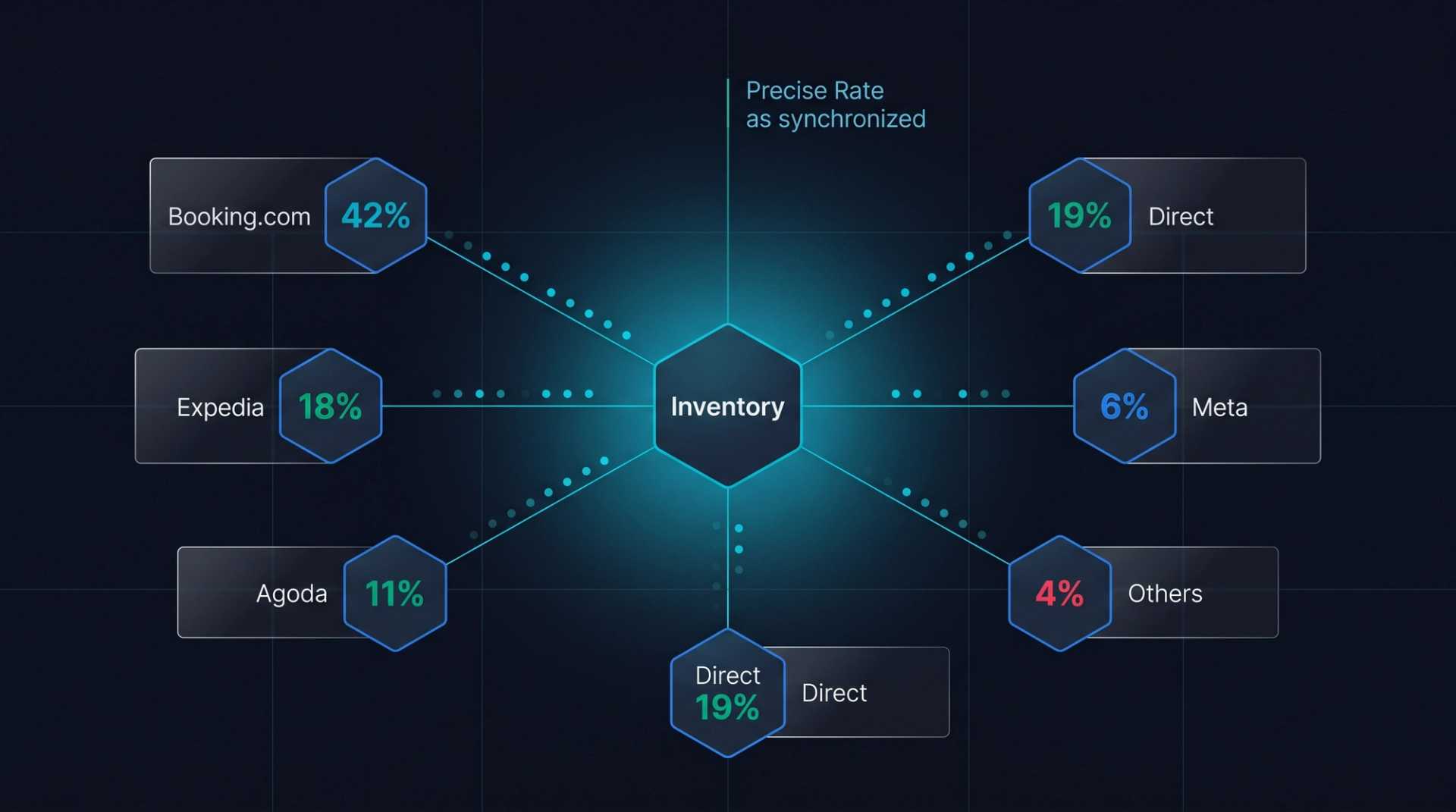
Transaction-Based Rate Fences: Price differences based on purchase conditions. Package rates (breakfast + room), channel-specific rates (direct website discount), loyalty program rates, and group rates fall into this category. Especially a direct channel discount (5-15%) encourages direct sales and increases guest loyalty by sharing a portion of OTA commission savings with the guest.
Demographic Rate Fences: Price differences based on guest profiles. Corporate agreements, government/military personnel rates, senior discounts, student rates, and loyalty program tiers belong to this group. Verification mechanisms are critical for these fences: segment verification is required through ID checks, company emails, or loyalty cards.
Golden Rules for Rate Fence Design
When designing an effective rate fence strategy, the following principles should be observed:
Rule 1 — Perceived Value Difference: Behind every price barrier, there must be a tangible value difference that the guest can perceive. Offering the same product at a different price under just a different name erodes guest trust and causes long-term damage.
Rule 2 — Difficulty of Segment Transition: It should be difficult for a guest in a higher-priced segment to transition to a lower-priced segment. For example, access to a corporate rate requires a valid company code. Without this code, access to this price is not possible.
Rule 3 — Simplicity: Too many rate plans create operational complexity and confuse the guest. Research shows that 5-8 active rate plans are optimum. More than 12 rate plans often decrease conversion rates.
Rule 4 — Consistency: The rate fence logic must be consistent across all channels (OTA, direct website, phone). A discount condition available on one channel should be valid under the same conditions on other channels.
Legal Compliance and Ethical Dimensions
Legal compliance in a rate fence strategy, particularly within the framework of European Union regulations and consumer protection laws in Turkey, must be handled carefully.
The EU's Digital Markets Act (DMA) regulation relaxed price parity restrictions on OTA platforms. This legally facilitated hotels' ability to offer lower prices on their direct channels. However, the same regulation also increased consumer transparency requirements: the reasons for price differences must be clearly stated.
In Turkey, Law No. 6502 on Consumer Protection prohibits misleading pricing practices. A rate presented as "discounted" must genuinely be lower than a reference price. Imaginary discounts and fake comparison prices are subject to penalties.
OtelCiro's sales ecosystem allows you to centrally manage your rate plans across all channels and automatically control price consistency. It helps you detect rate parity violations in real-time, protecting both legal compliance and revenue integrity.
Application Examples: Case Studies from Turkish Hotels
Case 1 — Antalya Resort Hotel (320 rooms): A rate combining early booking + non-refundable conditions was created with a 22% discount. This rate accounted for 35% of total sales, and the cancellation rate remained below 2%. Result: 14% increase in RevPAR.
Case 2 — Istanbul City Hotel (180 rooms): An LRA rate was applied for the corporate segment on weekdays, and a minimum 2-night stay rate was applied for the leisure segment on weekends. Weekday occupancy rose to 78%, and weekend occupancy to 85%. The inter-segment cannibalization rate remained below 4%.
Case 3 — Cappadocia Boutique Hotel (42 rooms): Through a view-based physical fence, fairy chimney view rooms were priced with a 30% premium, and valley view rooms with a 15% premium. ADR (Average Daily Rate) increased by 18%, and guest satisfaction scores did not decrease.
Performance Tracking and Optimization
Regular performance tracking is essential to measure the success of a rate fence strategy. Metrics to track include:
- Segment-based ADR: The contribution of each rate fence to the average daily rate.
- Cannibalization rate: The rate of shift from a higher-priced segment to a lower-priced segment (should be kept below 5%).
- Rate plan distribution: Each rate plan's share of total sales.
- Segment-based occupancy: Each segment's contribution to occupancy.
- Total RevPAR impact: The overall effect of the fence strategy on revenue performance.
A rate fence strategy cannot succeed with a set-it-and-forget-it approach. Market conditions, competitive dynamics, and guest behavior constantly change. Monthly performance evaluations and quarterly strategy revisions are the cornerstones of rate fence optimization.
![Europe's Hotel Construction Boom: 2026 Oversupply Risks [Market Analysis]](https://cdn.sanity.io/images/1la98t0z/production/6dfe59137f56aa14bfcba86d9db3cf05ff89f406-2752x1536.jpg?w=1920&q=50&auto=format&fit=max)