![Post-Stay: Boost Loyalty & Direct Bookings [2026 Guide]](https://cdn.sanity.io/images/1la98t0z/production/1a3f40b9fd3d33034ddab3d4f0e047483ba4b7ce-1200x669.png?w=1920&q=65&auto=format&fit=max)
Key Takeaways
- Post-stay communication is crucial for guest loyalty, repeat bookings, and direct revenue, with guest re-acquisition costing only 20-25% of new guest acquisition.
- Implement a phased post-stay strategy: immediate thank you, detailed feedback surveys, memorable content sharing, and personalized rebooking offers.
- Strategically collect online reviews by optimizing timing, steering guests to appropriate platforms, and prioritizing satisfaction before public requests.
- Boost repeat visits with segmented offers tailored for business, leisure, and family guests, alongside targeted loyalty program integration and win-back campaigns.
- Automate post-stay processes and monitor key KPIs like open rates, survey completion, review acquisition, and repeat visit rates to ensure strategy effectiveness and maximize ROI.
Check-Out: Not the End, But the Beginning of a Relationship
Most hotels believe the relationship ends once a guest checks out. However, the post-stay period is the most critical phase for determining guest loyalty, repeat visits, and organic marketing. The cost of re-acquiring a guest is only 20-25% of the cost of acquiring a new one.
Research shows that hotels with systematic post-stay communication achieve a 35% higher repeat visit rate, 3 times more online reviews, and a 20% higher direct booking share.
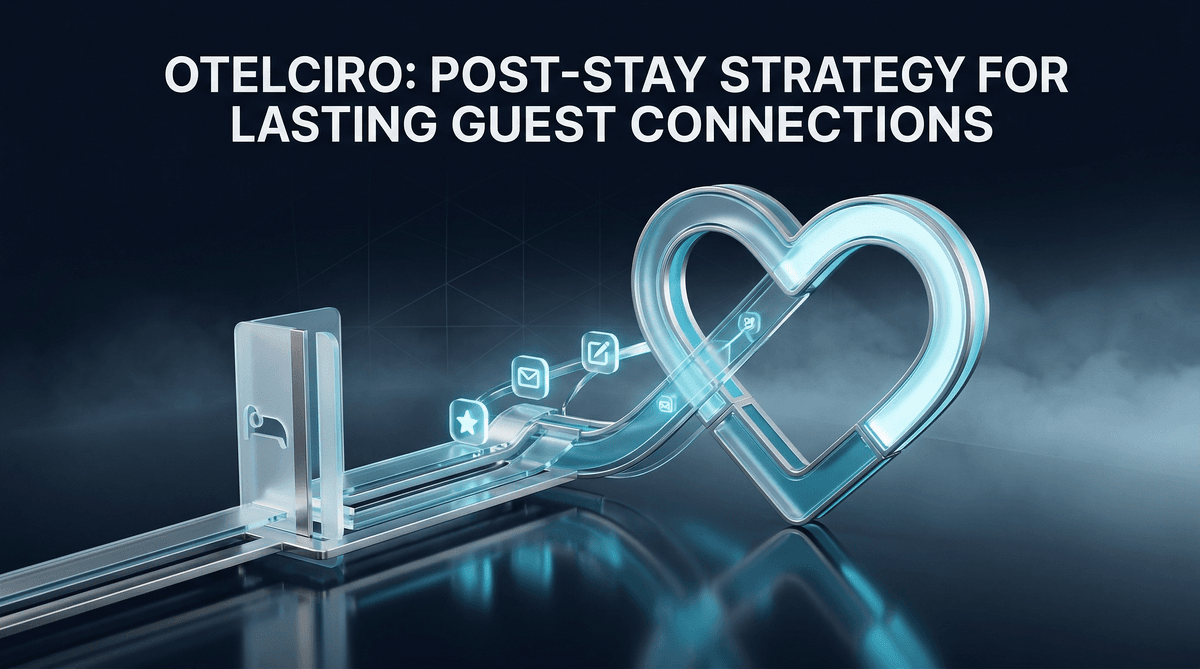
Embed this image on your site
<a href="https://otelciro.com/en/news/post-stay-boost-loyalty-direct-bookings-2026-guide">
  <img src="https://cdn.sanity.io/images/1la98t0z/production/1a3f40b9fd3d33034ddab3d4f0e047483ba4b7ce-1200x669.png" alt="Post-Stay Communication Infographic" width="800" />
</a>
<p>Source: <a href="https://otelciro.com">OtelCiro</a> — AI Hotel Revenue Management</p>
In this article, we detail how to build a post-stay communication strategy, from thank you messages to encouraging repeat visits.
Related reading: Pre-Arrival Communication: Your Welcome Strategy Before the Stay
Post-Stay Communication Timeline
Post-stay communication is more than just a single thank you message. It requires a strategic timeline to build long-term connections.
Phase 1 — Instant Thank You (Check-out + 2 hours): A sincere thank you message sent shortly after check-out. The goal is to reinforce the emotional connection and keep positive memories fresh.
Content suggestions:
- Personalized thank you: "Dear [Name], thank you for your 3-night stay"
- Stay summary: Dates, room type, services used
- Brief satisfaction question: "How would you summarize your experience in one word?"
- Review invitation (but not pushy): "If you'd like to share your experience..."
Phase 2 — Satisfaction Survey (Check-out + 24 hours): A detailed feedback survey. This should be sent while the experience is fresh but after the initial emotional intensity has subsided. The survey should have 8-10 questions and be completable in 3 minutes. For survey design details, refer to our satisfaction survey guide.
Phase 3 — Photo and Memory Sharing (Check-out + 3-5 days): If professional photos were taken during the guest's stay, share them. A message like "We captured a few memories for you" receives a high engagement rate. The open rate for this message is over 50% — because it holds high personal and emotional value.
Phase 4 — Repeat Visit Offer (Check-out + 2-4 weeks): A personalized repeat visit offer. A special rate or package tailored to the guest's stay period and segment. A format like "We'd love to host you again — enjoy a special 15% discount" is effective.
Phase 5 — Regular Connection (Monthly/Quarterly): Regular, value-driven communication that isn't sales-focused. Destination news, local events, seasonal recommendations, and updates from your hotel. The goal at this stage should be to keep the unsubscribe rate below 3%.
Review Collection Strategy
Online reviews directly influence the decision-making process of future guests. Post-stay communication dramatically increases your review collection rate.
Review collection optimization:
Timing: Sending the review request 24-48 hours after check-out is optimal. Sending it the same day can seem rushed, while sending it after a week can lead to details of the experience being forgotten.
Platform steering strategy: Instead of directing all guests to the same platform, use strategic steering:
- Google Reviews: The most valuable platform for SEO and Google Maps visibility. Offer the Google review link as a priority to all guests.
- TripAdvisor: Important for international guests. Direct English-speaking guests here.
- Booking.com: Only guests who booked through Booking can leave reviews on Booking.com — send specific reminders to these guests.
Targeting satisfied guests: Instead of asking all guests for reviews, first measure satisfaction and then direct satisfied guests to public platforms, while directing dissatisfied guests to a private feedback channel. This approach can increase your average online score by 0.3-0.5 points.
Review incentives: Directly asking for reviews in exchange for money or discounts is unethical and against platform rules. However, indirect incentives like "loyalty points for guests who leave a review" or "a welcome gift on their next stay for guests who provide feedback" can be implemented.
Related reading: Hotel Google Reviews Strategy
Repeat Visit Incentive Strategies
Re-engaging existing guests is the area of marketing investment that provides the highest return. Offering the right incentives during the post-stay period significantly increases the repeat visit rate.
Segment-based repeat visit offers:
Business travelers: Corporate agreement offers, frequent stay discounts, free room upgrades. Volume-based offers like "20% corporate discount on 10+ nights per year" are effective for this segment.
Leisure segment: Early bird offers, seasonal packages, "next time you visit" gifts. Sending an offer for the next holiday season 3-4 months after their stay is ideal. Offering a 10% loyalty discount to returning leisure guests increases the conversion rate by 22%.
Family segment: Free children's stay, family packages, school holiday special offers. Personal messages with a tone like "Your children are growing up, let's host them again next holiday."
Loyal guests: Special nights, VIP experience invitations, loyalty tier upgrades. Providing special treatment to your most valuable segment ensures they become your brand ambassadors.
Win-back campaign: A special "we miss you" campaign for former guests who haven't visited in the last 12-18 months. The conversion rate for these campaigns averages 5-8%, making them 3 times more cost-efficient than new customer acquisition campaigns.
Loyalty Program Integration
Post-stay communication is the most active touchpoint for your loyalty program. Increasing guest interaction with the loyalty program after their stay is critical for long-term loyalty.
Point notification: Notifying guests of points earned during their stay and their current balance. "You earned 2,500 points this stay. Your total balance: 8,750 points — enough for free spa access on your next stay!" Such messages increase program engagement by 45%.
Tier progression notification: Showing guests how close they are to the next loyalty tier. Motivational messages like "Only 2 nights left until Silver status!" trigger goal-oriented behavior.
Exclusive reward opportunities: Limited-time point redemption opportunities offered during the post-stay period. Urgent action triggers like "50% off a spa package with your points this weekend."
With the OtelCiro sales module, you can combine loyalty program communication with CRM data to create a fully automated post-stay flow.
Post-Negative Experience Recovery
Recovering dissatisfied guests (service recovery) during the post-stay period is critical for both revenue protection and reputation management.
Negative survey response protocol: Guests who give low scores or write negative reviews in surveys should be contacted personally within 48 hours. A phone call is 3 times more effective than an email.
Recovery process:
- Listen: Fully listen to and understand the guest's complaint.
- Empati and apology: Offer a sincere apology — it's important to be able to say "what you experienced is unacceptable."
- Concrete solution: Offer proportionate compensation. For minor issues, a room upgrade on their next stay; for major problems, a partial or full refund of their stay.
- Follow-up: Contact them again after 1 week to confirm satisfaction.
ROI of Recovery: After effective recovery, 40-60% of dissatisfied guests return, and 30% of these write positive reviews. In contrast, 91% of dissatisfied guests who do not receive recovery will never return and will tell an average of 9-15 people about their negative experience.
Automation and Performance Measurement
A scalable post-stay communication strategy requires automation infrastructure and regular performance tracking.
Automation requirements:
- PMS-integrated email and messaging automation platform.
- Segment-based message templates and personalization variables.
- Trigger rules: Check-out date, length of stay, segment, satisfaction score.
- A/B testing support: Subject line, send time, content variations.
Key KPIs:
- Thank you message open rate: Target 45%+
- Anket completion rate: Target 20%+
- Review acquisition rate: Target: 15%+ of all guests leave a review
- Repeat visit offer conversion rate: Target 5-10%
- Win-back campaign conversion: Target 3-5%
- Unsubscribe rate: Target below 2%
- Repeat visit rate within 12 months: Target 25%+
Cohort analysis: Track each group of guests who check out each month as a cohort. Analyses like "18% of the January 2026 cohort returned within 6 months" clearly demonstrate the effectiveness of your strategy.
A post-stay communication strategy is key to transforming your hotel's guest relationship from a one-time transaction to a continuous connection. Through sincere thank yous, strategic review collection, personalized repeat visit incentives, and effective negative experience management, you can turn your guests into lifelong loyal customers.
![Europe's Hotel Construction Boom: 2026 Oversupply Risks [Market Analysis]](https://cdn.sanity.io/images/1la98t0z/production/6dfe59137f56aa14bfcba86d9db3cf05ff89f406-2752x1536.jpg?w=1920&q=50&auto=format&fit=max)