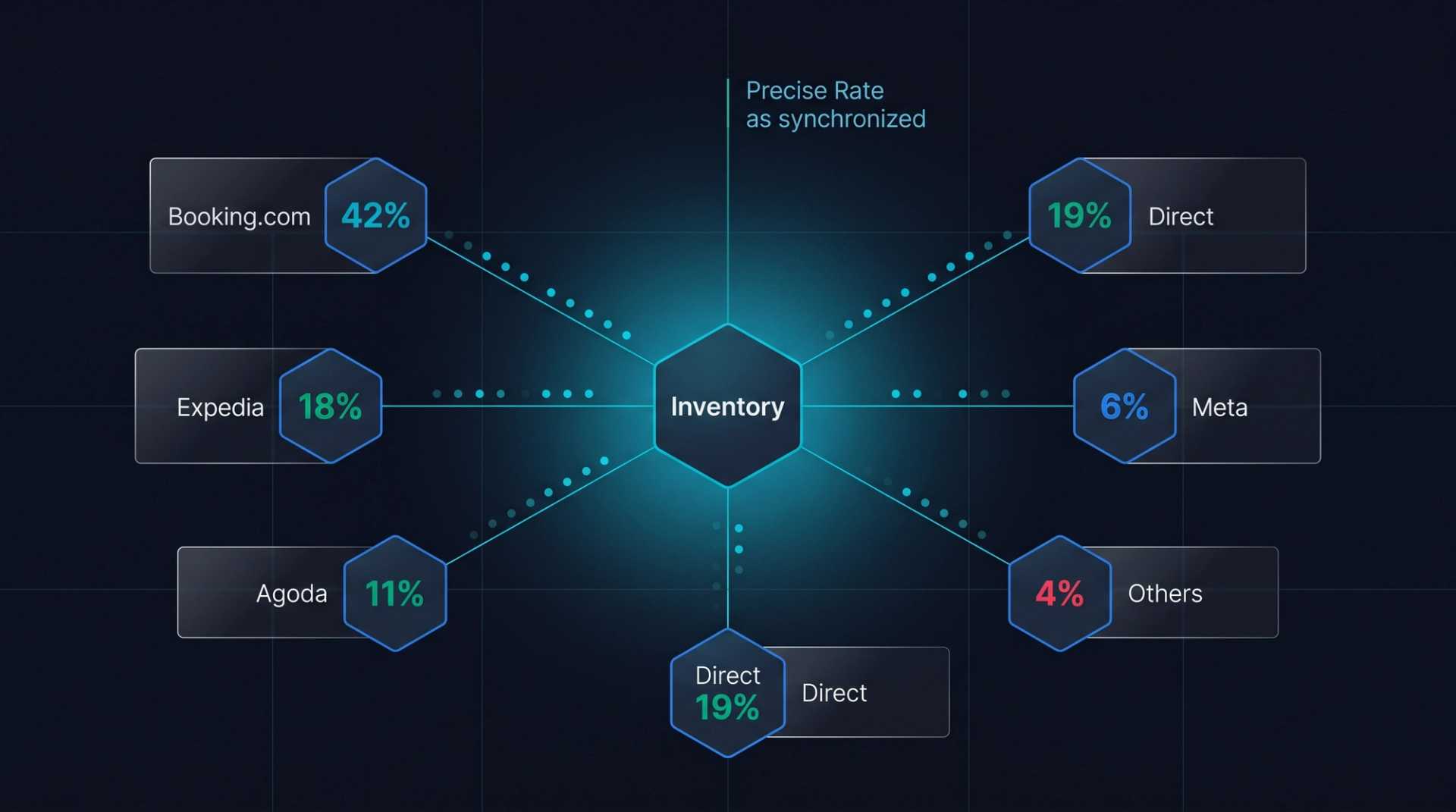
![Multi-Property Hotel Management [2026 Strategy Guide]](https://cdn.sanity.io/images/1la98t0z/production/2bbf62edd3d1dd3a5531f769a8c924fefefc3adc-1376x768.jpg?w=1920&q=65&auto=format&fit=max)
Key Takeaways
- Managing multiple hotels introduces significant operational complexity; 2 hotels can require 3-4 times the effort of managing one.
- Hotel groups utilizing centralized management systems achieve an average of 18% higher RevPAR compared to independently managed groups.
- Key challenges in multi-property operations include data silos, inconsistent pricing strategies, varying operational standards, and poor knowledge sharing.
- A centralized management model fosters coordinated pricing, consolidated real-time reporting, bulk purchasing advantages, and enhanced brand consistency.
- Successful multi-property operation relies on a unified technology stack (PMS, channel manager, revenue management) and standardized operating procedures (SOPs).
The Complexity of Managing Multiple Hotels
Hotel chains and group hotels are rapidly growing in Turkey. However, each new property exponentially increases operational complexity. Managing 2 hotels is not twice, but 3-4 times the work of managing 1 hotel. Different PMS systems, separate channel management, independent reporting structures, and inconsistent pricing strategies are among the most common problems in multi-property management.
According to industry research, hotel groups utilizing a centralized management system achieve an average of 18% higher RevPAR compared to independently managed groups. The reason is simple: consistency, efficiency, and data-driven decision-making.

Embed this image on your site
<a href="https://otelciro.com/en/news/multi-property-hotel-management-2026-strategy-guide">
  <img src="https://cdn.sanity.io/images/1la98t0z/production/2bbf62edd3d1dd3a5531f769a8c924fefefc3adc-1376x768.jpg" alt="Multi-property hotel management infographic" width="800" />
</a>
<p>Source: <a href="https://otelciro.com">OtelCiro</a> — AI Hotel Revenue Management</p>
Related reading: Competing with Airbnb: Alternative Accommodation Strategy for Hotels
Related reading: GDS 2026: Amadeus, Sabre, and Travelport Hotel Strategies
Key Challenges of Multi-Property Management
1. Data Silos
When each property has its own PMS, its own reporting format, and its own data structure, achieving a consistent performance overview across the group becomes nearly impossible. Management is forced to collect reports separately from each hotel, combine them in Excel, and analyze them — a process that is both time-consuming and prone to errors.
2. Inconsistent Pricing Strategy
The pricing strategies of two sister hotels in the same destination can harm each other. One aggressively discounting while the other loses occupancy is a classic example of intra-group cannibalization.
3. Operational Standard Discrepancies
When guest experience standards differ from property to property, brand value diminishes. Different check-in experiences, varying cleanliness standards, and inconsistent communication quality within two hotels of the same chain severely undermine guest loyalty.
4. Staff and Knowledge Sharing
Failure to share best practices between properties leads to each hotel repeating the same mistakes. An effective solution found at one property is often not transferred to other properties in decentralized structures.
Embed this image on your site
<a href="https://otelciro.com/en/news/multi-property-hotel-management-2026-strategy-guide">
  <img src="https://cdn.sanity.io/images/1la98t0z/production/b84b7437a6ec87c2fe5cca259f9ec9d95f7d36ae-1200x669.png" alt="Hotel distribution cost analysis" width="800" />
</a>
<p>Source: <a href="https://otelciro.com">OtelCiro</a> — AI Hotel Revenue Management</p>
Centralized Management Model vs. Independent Management
| Aspect | Independent Management | Centralized Management |
|---|---|---|
| Pricing strategy | Property-based, inconsistent | Group strategy, coordinated |
| Reporting | Separate, Excel-based | Consolidated, real-time dashboard |
| Purchasing | Each property independent | Bulk purchasing advantage |
| Staff management | Property-based | Pool system, rotation |
| Brand consistency | Low | High |
| Technology cost | High (multiple licenses) | Low (single platform) |
| Decision speed | Slow | Fast |
Related reading: Increase Direct Bookings: Reduce Reliance on OTAs
Related reading: Metasearch Advertising: Trivago, Google Hotels, and Kayak Strategy
Consolidated Reporting: All Hotels at a Glance
The foundation of successful multi-property management is consolidated reporting. From a single dashboard, you should be able to see:
- Property-based RevPAR, ADR, occupancy comparison
- Channel performance — Which OTA performs better for which property?
- Revenue forecasts — 90-day projection for the entire group
- Cost analysis — Property-based operational costs and margin comparison
This data requires the application of revenue metrics tracking on a group basis.
Embed this image on your site
<a href="https://otelciro.com/en/news/multi-property-hotel-management-2026-strategy-guide">
  <img src="https://cdn.sanity.io/images/1la98t0z/production/8a93e1fc60466341571b6624007b4e830262ba56-1200x670.png" alt="OtelCiro ecosystem all-in-one platform view" width="800" />
</a>
<p>Source: <a href="https://otelciro.com">OtelCiro</a> — AI Hotel Revenue Management</p>
Inter-Group Pricing Coordination
Avoiding Cannibalization
Your two hotels in the same city should not compete but complement each other:
- Targeting different segments — One hotel for business travelers, the other for leisure
- Price band separation — A clear distinction between the prices of your economy and upscale hotels
- Cross-selling — Directing guests from a fully booked hotel to another property within the group
Dynamic Group Pricing
Dynamic pricing is much more powerful when applied at a group level. AI-based systems analyze demand data from all properties collectively to determine optimal price points.
Technology Infrastructure Requirements
The technology stack for multi-property management must possess the following features:
- Single PMS platform — All properties on the same system, with central management
- Integrated channel manager — All property channels managed from a single panel
- Consolidated revenue management — Group-based price optimization
- Centralized CRM — Guest profiles shared across properties
- Role-based access — General manager sees all, property manager sees their own hotel
5 Golden Rules for Successful Multi-Property Operation
- Establish Standard Operating Procedures (SOPs) and implement them across all properties.
- Reduce material and service costs through centralized purchasing.
- Promote knowledge sharing with staff rotation.
- Hold weekly group performance meetings.
- Centralize technology investment — A single platform instead of separate systems for each property.
Related reading: Expedia Group Hotel Strategies: Including Hotels.com and Vrbo
Multi-Property Management with OtelCiro
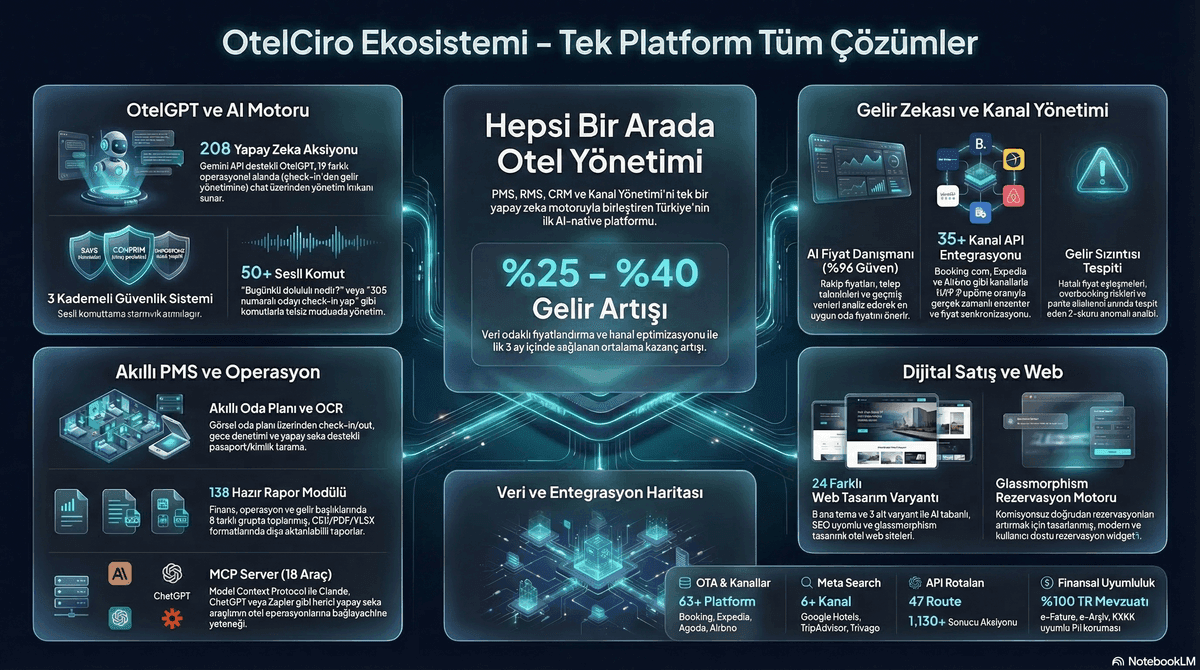
OtelCiro's Smart PMS solution allows you to manage multiple properties from a single center. With a consolidated dashboard, group-based revenue reports, and centralized pricing management, it simplifies your multi-property operations.
Centralize your multi-property management with OtelCiro Smart PMS
Conclusion
Multi-property management, without the right technology and process structure, creates unsustainable complexity. Transitioning to a centralized management model is essential for breaking down data silos, delivering a consistent brand experience, and optimizing revenue across the entire group.
Discover how OtelCiro's Smart PMS can automate your multi-property management processes.
![Europe's Hotel Construction Boom: 2026 Oversupply Risks [Market Analysis]](https://cdn.sanity.io/images/1la98t0z/production/6dfe59137f56aa14bfcba86d9db3cf05ff89f406-2752x1536.jpg?w=1920&q=50&auto=format&fit=max)