![Minimum Wage Hikes & Hotel Operations [2026 Strategy]](https://cdn.sanity.io/images/1la98t0z/production/0cd3e584847bb3f084136218fc85bce68a7af4bf-1200x669.png?w=1920&q=65&auto=format&fit=max)
Key Takeaways
- Minimum wage increases are a major factor for hotel operational costs, with personnel expenses making up 35-45% of total costs.
- Automation and digital transformation (e.g., self check-in, AI-powered housekeeping) are crucial for managing labor costs and increasing efficiency.
- Balancing strategies should include dynamic pricing, developing ancillary revenue streams, and optimizing OTA channels to offset rising expenses.
- Enhancing staff productivity through cross-training and performance-based incentive programs can improve efficiency by 30-35% and reduce turnover.
- Proactive legal compliance, risk management, and continuous monitoring of cost-revenue balance are essential for long-term sustainability.
Minimum Wage Increases and the Hotel Industry
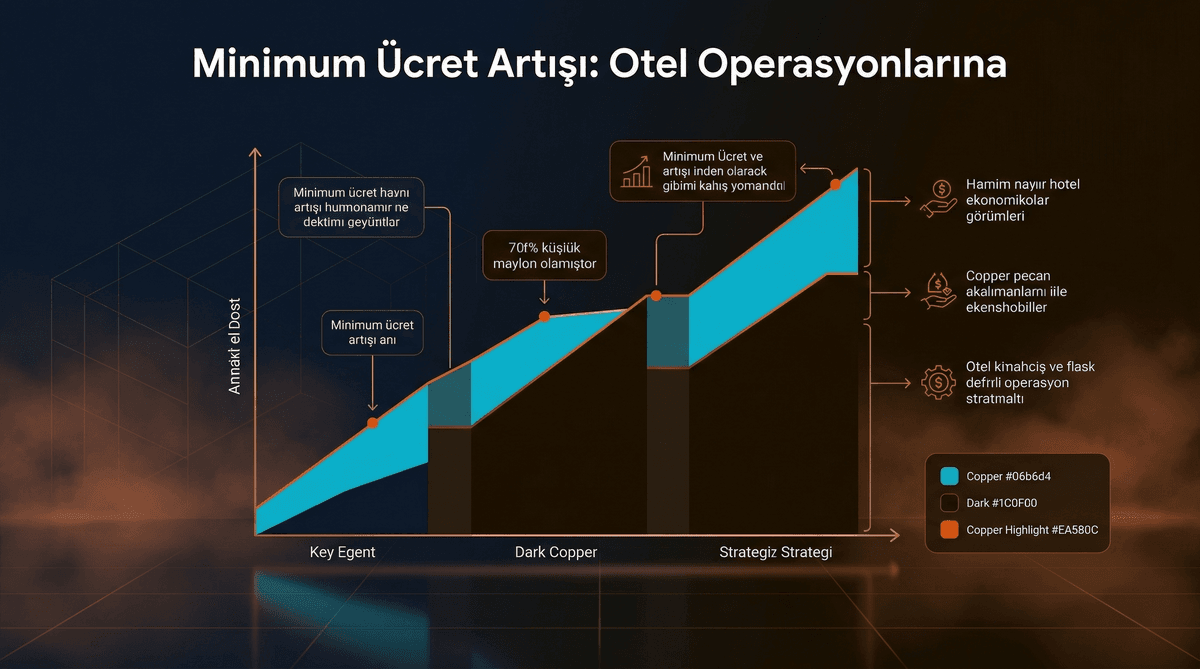
In recent years, minimum wage increases in Turkey have become one of the most pressing discussion topics in the hotel industry. As of 2026, the minimum wage continues to be one of the most significant variables directly affecting the sector's personnel costs. Across the industry, personnel expenses constitute 35-45% of total operational costs, and every 10% increase in the minimum wage leads to a 3.5-4.5% rise in a hotel's total costs.
Particularly in the labor-intensive hotel industry, the high number of employees in departments such as housekeeping, kitchen, front desk, and security makes this impact even more pronounced. According to STR Global data, 62% of hotels in Turkey have struggled to reflect wage increases in their prices over the past three years.
Embed this image on your site
<a href="https://otelciro.com/en/news/minimum-wage-hikes-hotel-operations-2026-strategy">
  <img src="https://cdn.sanity.io/images/1la98t0z/production/0cd3e584847bb3f084136218fc85bce68a7af4bf-1200x669.png" alt="Impact of Minimum Wage Increases on Hotel Operations" width="800" />
</a>
<p>Source: <a href="https://otelciro.com">OtelCiro</a> — AI Hotel Revenue Management</p>
Related reading: Hotel Revenue Crisis: Why Is Your Hotel Losing 15-30% Revenue Annually?
Direct Impact on Cost Structure
To understand the impact of minimum wage increases on hotel operations, it is first necessary to examine the cost structure in detail. A hotel's personnel cost is not solely composed of gross wages; SGK (social security) premiums, severance pay provisions, food and transportation allowances, training expenses, and overtime payments are also included in this category.
Department-Specific Impact Analysis
- Housekeeping: Accounts for 25-30% of total personnel costs. This is the department most affected by minimum wage increases because of its high number of employees, most of whom are employed at minimum wage levels.
- Kitchen and Food & Beverage: Covers 20-25% of total personnel costs. While positions like head chef and chefs are typically above minimum wage, dishwashing, prep, and service staff are directly impacted.
- Front Desk and Front Office: Holds a 10-15% share. Due to language proficiency requirements, wages are often above the minimum wage, but the impact is felt in night reception and concierge positions.
- Technical Service and Security: With a 10-12% share, these departments are relatively less affected, but it is common for security personnel to work at minimum wage rates.
Research shows that a hotel's annual personnel cost increases by an average of 18-22% after a minimum wage hike. To counteract this increase, it is inevitable for hotels to develop various strategies.
Cost Management Through Automation and Technology
The most sustainable way to manage the cost pressure created by minimum wage increases is to invest in automation and digitalization of operational processes. This approach aims not to eliminate personnel entirely, but to automate repetitive and low-value tasks, enabling existing staff to work more efficiently.
Areas for Savings Through Automation
Self check-in/check-out kiosks: Can reduce the need for front desk staff by 1-2 people per shift. While 40% of guests prefer kiosks or mobile check-in, this rate rises to 68% among Gen Z.
Digital housekeeping management: AI-powered room assignment and cleaning scheduling systems can increase housekeeping efficiency by 25-30%. OtelCiro's reporting and analysis module allows for real-time tracking of department-specific efficiency metrics.
Chatbots and digital concierge: 55-60% of guest requests consist of simple information queries. Automating these requests significantly lightens the workload of front desk and switchboard staff.
Automated inventory and purchasing: Digitizing inventory management in the food and beverage department reduces waste by 20% while minimizing the manual workload in the purchasing process.
Related reading: Hotel Automation and Business Processes: An Efficiency Guide
Balancing Strategies on the Revenue Side
Attempting to manage cost increases solely through expense reduction may be insufficient. Balancing strategies must also be implemented on the revenue side. Dynamic pricing, ancillary revenue sources, and segment-based optimization form the foundation of these strategies.
Pricing Strategies
After minimum wage increases, 78% of hotels find it necessary to update their room rates. However, this update should not be a flat increase but rather applied segment by segment, based on demand sensitivity.
- High demand periods: Price increases of 10-15% can be applied, as demand elasticity is low during these periods.
- Low demand periods: Price increases should be limited to 3-5% to remain competitive.
- Corporate segment: Annual agreements can be renegotiated to reflect a portion of the cost increase in this segment.
- OTA channels: Net revenue can be increased by optimizing commissions.
Developing Ancillary Revenue Sources
Creating ancillary revenue sources beyond room revenue is an effective way to balance cost increases. While the average ancillary revenue rate for hotels in Turkey is only 12% of total turnover, hotels that increase this rate to 20-25% can manage cost pressures much more easily.
Spa, restaurant, parking, transfer services, late check-out and early check-in fees, room upgrade sales, and experience packages are the most common ancillary revenue streams. You can monitor the performance of each item in OtelCiro's reporting panel to determine which areas need development.
Methods for Increasing Personnel Productivity
Beyond reducing costs, it is also important to gain more efficiency from existing staff. Cross-training programs, performance-based incentive systems, and digital workflows are the most effective methods in this regard.
Hotels implementing cross-training have increased personnel productivity rates by 30-35% while also boosting employee engagement scores by 22%. This approach prevents overstaffing during low-occupancy periods and provides flexibility during peak times.
In performance-based incentive systems, sharing a portion of RevPAR targets with employees upon achievement increases motivation and aligns employee motivation with the hotel's revenue goals. 67% of hotels implementing such systems reported a decrease in employee turnover in the first year.
Legal Compliance and Risk Management
Minimum wage increases also bring legal compliance requirements. Processes such as updating SGK premium bases, calculating severance and notice period ceilings, and readjusting overtime wages must be carefully followed.
Penalties for non-compliance can far exceed the cost of wage increases. In 2025, more than 4,200 accommodation establishments in Turkey were subjected to administrative fines for personnel regulation violations.
Recommendations for risk management:
- Digitize all payroll processes and activate automatic regulatory updates.
- Monitor the personnel budget not annually, but monthly and even weekly.
- Model minimum wage increase scenarios in advance and include them in budget planning.
- Evaluate outsourcing alternatives; however, do not compromise on service quality standards.
Preparing for the Future: Sustainable Human Resources Model
Minimum wage increases will continue as a structural reality of the Turkish economy. Therefore, hotels need to adopt a proactive rather than reactive approach. Technology investments, efficiency-oriented organizational structures, and employee development programs will, in the long run, both control costs and improve service quality.
With OtelCiro's revenue management and reporting solutions, you can make the right decisions at the right time by monitoring the cost-revenue balance in real-time. Hotels that view the increase in personnel costs not as a threat but as an opportunity for operational transformation will always be one step ahead in the competition.
![Europe's Hotel Construction Boom: 2026 Oversupply Risks [Market Analysis]](https://cdn.sanity.io/images/1la98t0z/production/6dfe59137f56aa14bfcba86d9db3cf05ff89f406-2752x1536.jpg?w=1920&q=50&auto=format&fit=max)