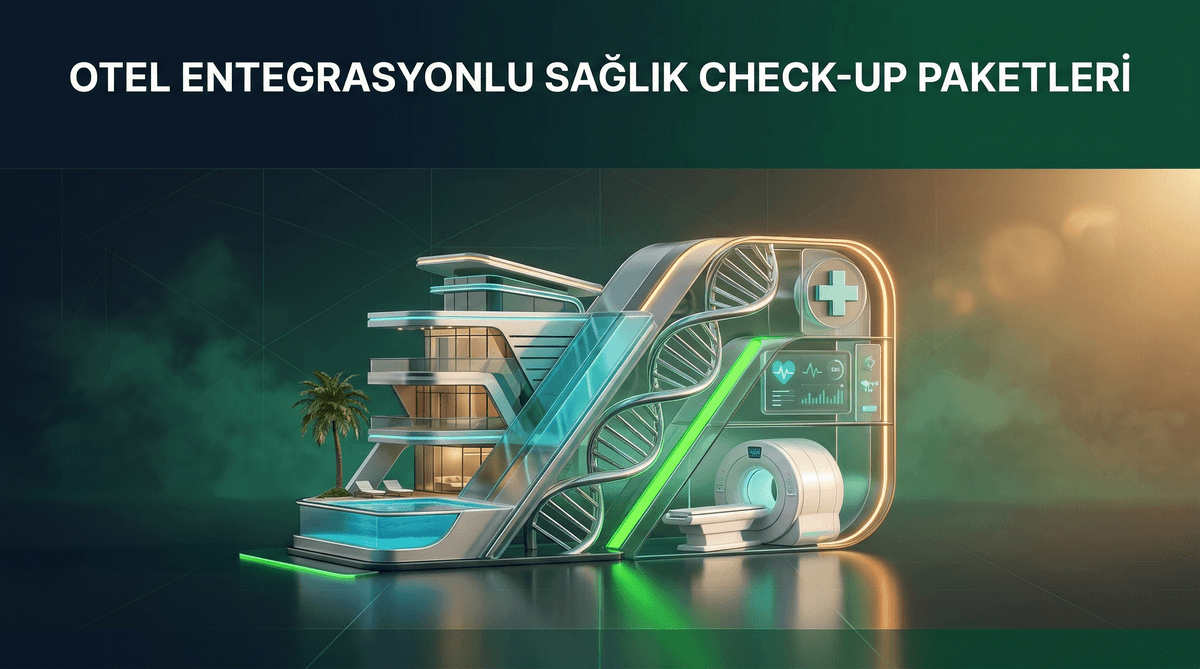
![Maximizing Hotel Revenue via Health Tourism Check-up Packages [2026 Guide]](https://cdn.sanity.io/images/1la98t0z/production/b85f95a51a11abac1423a073bc6a54903a791592-1200x669.png?w=1920&q=65&auto=format&fit=max)
Key Takeaways
- Turkey's health tourism revenue is projected to exceed $12 billion by 2028, with 2.1 million visitors in 2025.
- Health tourists stay significantly longer (5-12 days) and spend 35-50% more daily than leisure travelers.
- Success depends on choosing the right integration model, ranging from commission-based referrals to on-site clinics.
- Integrated check-up packages can increase a hotel's ADR by 30-50% and stabilize year-round occupancy.
- Specialized staff training in medical terminology and multi-language support is essential for service quality.
Health Tourism: Turkey's Multi-Billion Dollar Opportunity
Turkey rose to fifth in the world rankings in 2025, hosting 2.1 million health tourists. While revenue from health tourism reached $7.6 billion, this figure is expected to surpass $12 billion by 2028. Turkey is a global leader in the quality-price balance, particularly in check-ups, eye surgery, dental treatments, and aesthetic surgery.
The hospitality sector is one of the primary beneficiaries of this growth. The average length of stay for health tourists is 5-12 days, much longer than that of leisure travelers, and their daily expenditures are 35-50% higher. However, the number of facilities that have professionally structured hotel-hospital integration remains limited—this presents a significant window of opportunity.
Embed this image on your site
<a href="https://otelciro.com/en/news/maximizing-hotel-revenue-via-health-tourism-check-up-packages-2026-guide">
  <img src="https://cdn.sanity.io/images/1la98t0z/production/b85f95a51a11abac1423a073bc6a54903a791592-1200x669.png" alt="Health Tourism Check-up Package Hotel Infographic" width="800" />
</a>
<p>Source: <a href="https://otelciro.com">OtelCiro</a> — AI Hotel Revenue Management</p>
In this article, we examine the hotel integration of health tourism check-up packages, collaboration models, and revenue optimization strategies.
Related reading: Wellness Retreat: Health and Well-being Focused Hotel Concepts
Health Tourism Market and Guest Profile
Health tourism guests represent one of the most valuable segments of the hospitality industry. Understanding their profile is the foundation for service design and marketing strategy.
Source Markets
The distribution of health tourists coming to Turkey by source market is as follows:
- Europe (38%): Primarily Germany, the UK, the Netherlands, and France. Motivation: avoiding waiting times and cost advantages.
- Middle East (28%): Iraq, Saudi Arabia, Kuwait, and the UAE. Motivation: quality treatment and cultural proximity.
- Turkic Republics (18%): Azerbaijan, Turkmenistan, and Kazakhstan. Motivation: language proximity and JCI-accredited hospitals.
- Other (16%): Africa, Russia, and the Balkans. Motivation: low cost and flight accessibility.
Spending Profile
The average total expenditure of a health tourist (including treatment) ranges between $5,000 and $25,000. Of this figure, 15-25% is allocated to accommodation and related services. In the check-up tourism segment, the average accommodation spend per person is $1,200-$3,000. When companion accommodation is added, the revenue potential increases by 40-60%.
Hotel-Hospital Collaboration Models
Health tourism accommodation integration can be structured through different collaboration models. Each model has distinct advantages and risks.
Model 1: Commission-Based Referral
The simplest model. The hotel receives patient referrals from contracted hospitals and provides accommodation services. The hospital receives a commission of 10-15% of the accommodation fee for each patient referred, or the hotel pays a referral fee of $50-150 per referral to the hospital.
Advantages: Low risk, fast start, flexibility. Disadvantages: Limited integration, disconnect in guest experience.
Model 2: Package Deals
The hotel and hospital design and market the check-up + accommodation package together. Pricing is done via a single invoice, and revenue is shared at pre-determined rates.
Advantages: Integrated guest experience, high conversion rate, strong marketing. Disadvantages: Revenue-sharing negotiations, service quality coordination.
Model 3: On-site Clinic
A health service unit is established within the hotel: check-up laboratory, imaging center, and consultation rooms. An operational partnership is formed with a hospital.
Advantages: Full integration, highest revenue potential, competitive advantage. Disadvantages: High investment, legal regulations, operational complexity.
Model 4: Digital Platform Partnership
Patient referrals are obtained through health tourism platforms (e.g., Health Tourism Turkey, Medical Tourism Association). The platform acts as a digital bridge between the hotel and the hospital.
Advantages: Wide reach, low cost, scalable. Disadvantages: Platform dependency, high commission rates (15-25%).
Related reading: Hotel Ancillary Revenue Sources: Ancillary Revenue Strategies
Check-up Package Design
A successful health tourism check-up package seamlessly combines medical services with the stay experience. Key elements to consider in package design:
Package Content
Standard Check-up Package (3 nights/4 days):
- VIP airport transfer (round trip)
- 3 nights accommodation (including breakfast)
- Comprehensive blood tests and biochemistry panel
- Full-body ultrasound
- EKG and cardiology examination
- Eye examination
- Internal medicine consultation
- Result report (multi-lingual)
- City tour or spa experience
- Price range: 15,000-30,000 TL
Premium Check-up Package (5 nights/6 days):
- In addition to the standard package:
- MRI imaging
- Full-body PET-CT scan
- Genetic predisposition testing
- Nutrition counseling
- Special diet menu
- Spa and wellness program
- Price range: 35,000-70,000 TL
Guest Journey Design
The guest journey for a check-up tourist differs from that of a standard hotel guest:
Pre-arrival: Online health survey, blood type and allergy information, medical history form, visa support letter. Day 1: VIP welcome, check-in, preliminary meeting with the hospital. Day 2-3: Medical tests (morning), city tour or spa (afternoon). Day 4: Delivery of the result report, doctor consultation, free time for the remainder of the day. Post-departure: Digital health report, online follow-up appointment, annual check-up reminder.
Operational Requirements
Health tourism accommodation involves specific requirements beyond standard hotel operations.
Room Features
- Extra comfortable bed and pillow options for post-treatment rest.
- Mini-fridge facilities for storing medication.
- Emergency call button or 24/7 nurse support line.
- Room service tailored to special diet menus.
- Accessible design (wheelchair-accessible bathrooms).
Staff Competencies
Staff serving health tourism guests must possess additional competencies:
- Language proficiency: At minimum English and Arabic (German or Russian depending on the target market).
- Medical terminology: Knowledge of basic health terms and procedures.
- Empathy training: Stress and anxiety management during the treatment process.
- Crisis protocol: Medical emergency procedures and coordination with the hospital.
With OtelCiro’s sales solutions, health tourism packages can be easily marketed on online channels, the reservation process can be automated, and coordination with the hospital can be managed digitally.
Financial Impact and Growth Strategy
Health tourism integration contributes significantly to hotel financial performance:
- ADR Increase: Health tourism packages provide 30-50% higher nightly revenue compared to standard room rates.
- Occupancy Stabilization: Health tourism is less affected by seasonality—providing occupancy support during winter months.
- Longer Stays: An average stay of 5-8 nights results in more efficient operations compared to short stays.
- Ancillary Revenue: Extra income from side services such as transfers, translation, spa, and tour organizations.
- Referral Effect: 55% of satisfied health tourists refer at least one other person.
When a 100-room hotel allocates 15-20% of its capacity to health tourism, it can generate 2-4 million TL in additional annual revenue. This revenue provides stable cash flow throughout the year with low seasonal fluctuation.
Turkey's competitive advantage in health tourism—JCI-accredited hospitals, expert physician staff, and affordable costs—offers a unique revenue diversification opportunity for hoteliers. Hotels that capitalize on this opportunity through professional package design and hospital collaboration will stand out in the industry.
![Europe's Hotel Construction Boom: 2026 Oversupply Risks [Market Analysis]](https://cdn.sanity.io/images/1la98t0z/production/6dfe59137f56aa14bfcba86d9db3cf05ff89f406-2752x1536.jpg?w=1920&q=50&auto=format&fit=max)