Key Takeaways
- Global Investment Hotspot: Istanbul has ascended to the 8th spot globally for hotel investment attractiveness in 2026, a significant leap from its 23rd position in 2020.
- Robust Market Performance: The city's hotel market reached $11.7 billion in 2026, driven by an average ADR of $168 (14% annual increase) and RevPAR of $124 (17% annual increase).
- Year-Round Demand: Istanbul benefits from consistent 12-month demand, with occupancy rates never falling below 62%, offering a crucial advantage for sustained investment returns.
- Diverse Investment Segments: While luxury and upper-midscale segments show strong performance, the boutique and lifestyle segment is the fastest-growing, with 28% annual revenue increase.
- Strategic Recommendations: Success hinges on data-driven decision-making, selecting the right location and segment, and leveraging technology (e.g., AI-powered revenue management for a 5-7 point GOP margin increase) to mitigate risks and maximize returns.
Istanbul: The New Darling of Global Hotel Investment
Istanbul is positioned as one of the most remarkable cities on the global hotel investment map in 2026. According to JLL's Global Hotel Investment Outlook report, Istanbul has climbed to the 8th position worldwide in hotel investment attractiveness—a dramatic leap compared to its 23rd rank in 2020. The city's high occupancy rates, strong ADR growth, and relatively low construction costs consistently attract international investors.
In 2026, the Istanbul hotel market reached a size of $11.7 billion. The total number of licensed rooms in the city is 98,400, with expectations for this figure to exceed 115,000 by 2028. But is this growth sustainable? Which segments should investors target?
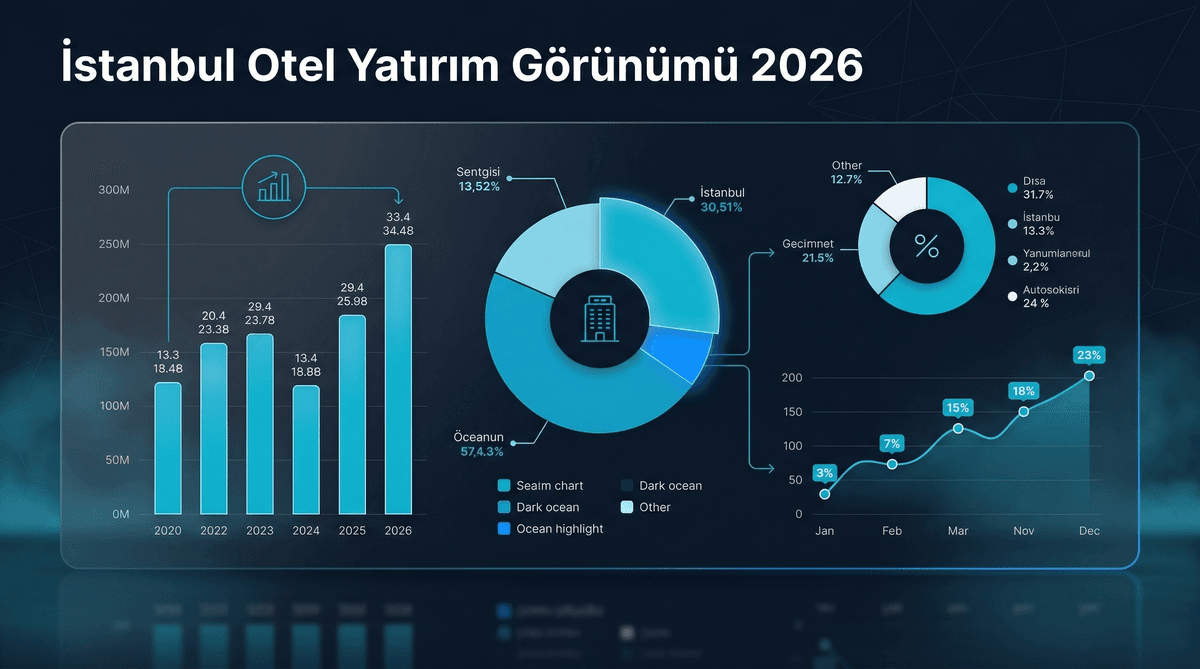
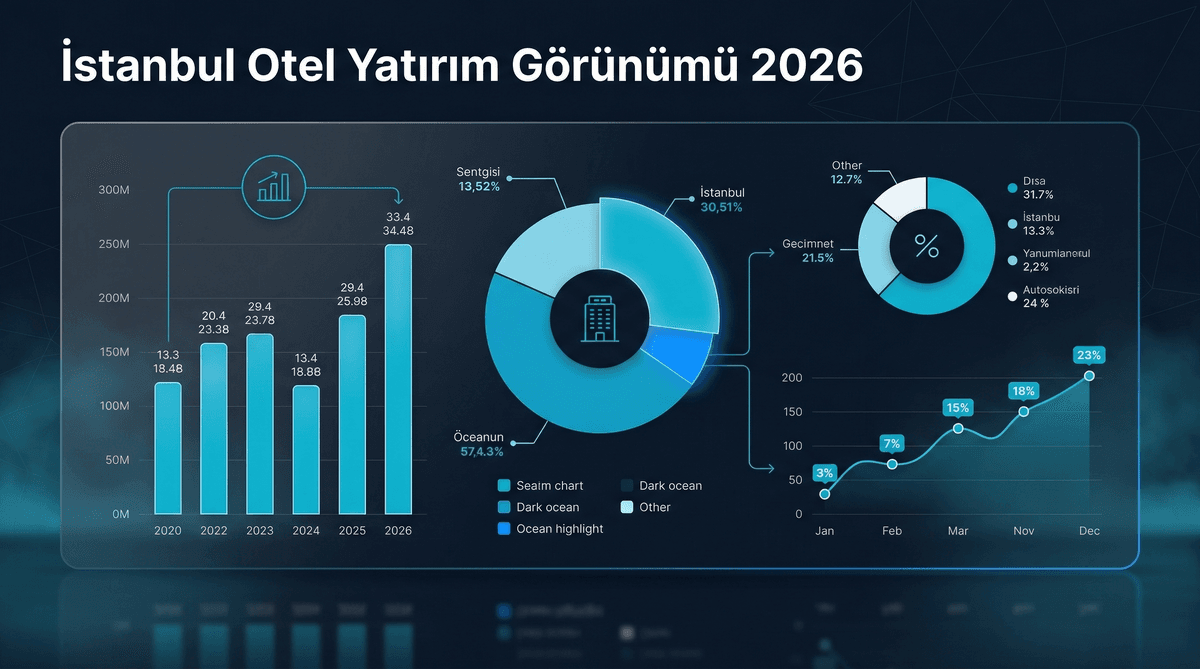
Embed this image on your site
<a href="https://otelciro.com/en/news/istanbul-hotel-investment-2026-outlook-strategy-guide">
  <img src="https://cdn.sanity.io/images/1la98t0z/production/7d12e61a33d89e148b6e70cccbe47f6f7ca559c1-1200x669.png" alt="Istanbul Hotel Investment Outlook Infographic" width="800" />
</a>
<p>Source: <a href="https://otelciro.com">OtelCiro</a> — AI Hotel Revenue Management</p>
Related reading: Turkey Hotel Market Size 2026: Detailed Analysis
Key Performance Indicators
Istanbul's hotel market performance metrics for 2026 send strong signals to investors:
- Average ADR: $168 (14% annual increase)
- Occupancy rate: 74% (12-month average)
- RevPAR: $124 (17% annual increase)
- Average length of stay: 3.2 nights
- RevPAR growth excluding currency effects: 9%
Istanbul's strongest asset is its high demand throughout all 12 months. Unlike seasonal destinations such as Antalya or Bodrum, Istanbul's lowest occupancy rate never drops below 62%. This provides a critical advantage in return on investment calculations.
Segment-Based Performance
Different hotel segments in Istanbul show varying dynamics:
Luxury Segment (5-star international chain): ADR $320, occupancy 71%. Constitutes 18% of the total room stock but generates 34% of revenue. Brands like Four Seasons, Mandarin Oriental, and Raffles are expanding their presence in Istanbul with new investments.
Upper-Midscale Segment (4-5-star local brand): ADR $145, occupancy 76%. The segment with the highest occupancy. Strongly fueled by business travel and MICE (meetings-incentives-conferences-exhibitions) demand.
Boutique & Lifestyle: ADR $195, occupancy 68%. The fastest-growing segment—annual revenue increase of 28%. Concentrated in the Historical Peninsula and Karaköy-Galata regions.
Economy Segment: ADR $65, occupancy 79%. The segment with the highest occupancy rate. Continuously attracts demand from backpackers and budget travelers.
Regional Investment Opportunities
When evaluating hotel investments in Istanbul, location selection is the most critical factor directly determining return on investment.
Historical Peninsula (Sultanahmet-Eminönü)
The center of cultural tourism. Although nearing saturation in terms of room count, historical building conversion projects still offer high returns. Converting an Ottoman mansion into a boutique hotel yields an average of 16% annual ROI. However, restoration costs are high, and bureaucratic processes are lengthy.
Beyoğlu-Karaköy-Galata
The most dynamic hotel district of the last five years. It has become the hub for lifestyle hotel concepts. Hotel projects integrated with art galleries, independent restaurants, and nightlife can command premium pricing. Annual ROI: 13-17%.
Bosphorus Line (Beşiktaş-Ortaköy-Sarıyer)
The new address for the luxury segment. ADR for Bosphorus-view hotels can reach up to $450. However, land costs are very high, and opportunities for new construction are limited. Focusing on existing structure conversions is recommended.
Airport Region (Arnavutköy-Başakşehir)
A rapidly growing new hotel cluster around Istanbul Airport. Strong demand for transit passenger accommodation. ADR is currently low ($85), but occupancy is the city's highest at 82%. An attractive opportunity for volume-oriented investors.
Related reading: Hotel Business Intelligence and Reporting: Data-Driven Decision Making
New Projects and Pipeline Analysis
Significant hotel projects planned for completion in Istanbul during the 2026-2028 period:
- Galataport hotels: Peninsula Istanbul (177 rooms) and related accommodation projects — total 450 rooms
- Istanbul Finance Center: 3 new business hotels — total 1,200 rooms
- Historical building restoration projects: 8 different projects — total 380 rooms
- Airport region expansion: 5 new hotels — total 2,400 rooms
- Kadıköy-Moda region: 4 boutique hotel projects — total 280 rooms
Total pipeline: 4,710 new rooms. Whether this increase in supply can be met by existing demand is a critical question. However, Istanbul's annual tourist growth trend (8-10%) appears strong enough to absorb this supply.
Return on Investment and Financing
Average costs and return expectations for Istanbul hotel investments:
Construction Costs (Per Room):
- Luxury Segment: $280,000-$450,000
- Upper-Midscale Segment: $120,000-$200,000
- Economy Segment: $55,000-$85,000
- Historical Building Conversion: $180,000-$350,000 (including restoration)
Return Expectations:
- Gross Operating Profit (GOP) Margin: 35-45% (varies by segment)
- Payback Period: 7-12 years
- Annual Net Return (Cap Rate): 7-11%
Hotels utilizing AI-powered revenue management reports achieve a GOP margin that is, on average, 5-7 points higher than those that do not. This difference translates to an additional $1.2-1.8 million in annual revenue for a 200-room hotel.
Risk Assessment
Risks to consider in Istanbul hotel investments:
Earthquake Risk: Istanbul's anticipated major earthquake directly impacts structural safety and insurance costs for hotel investments. Strict adherence to earthquake regulations in new constructions increases building costs by 15-20% but provides long-term safety and insurance advantages.
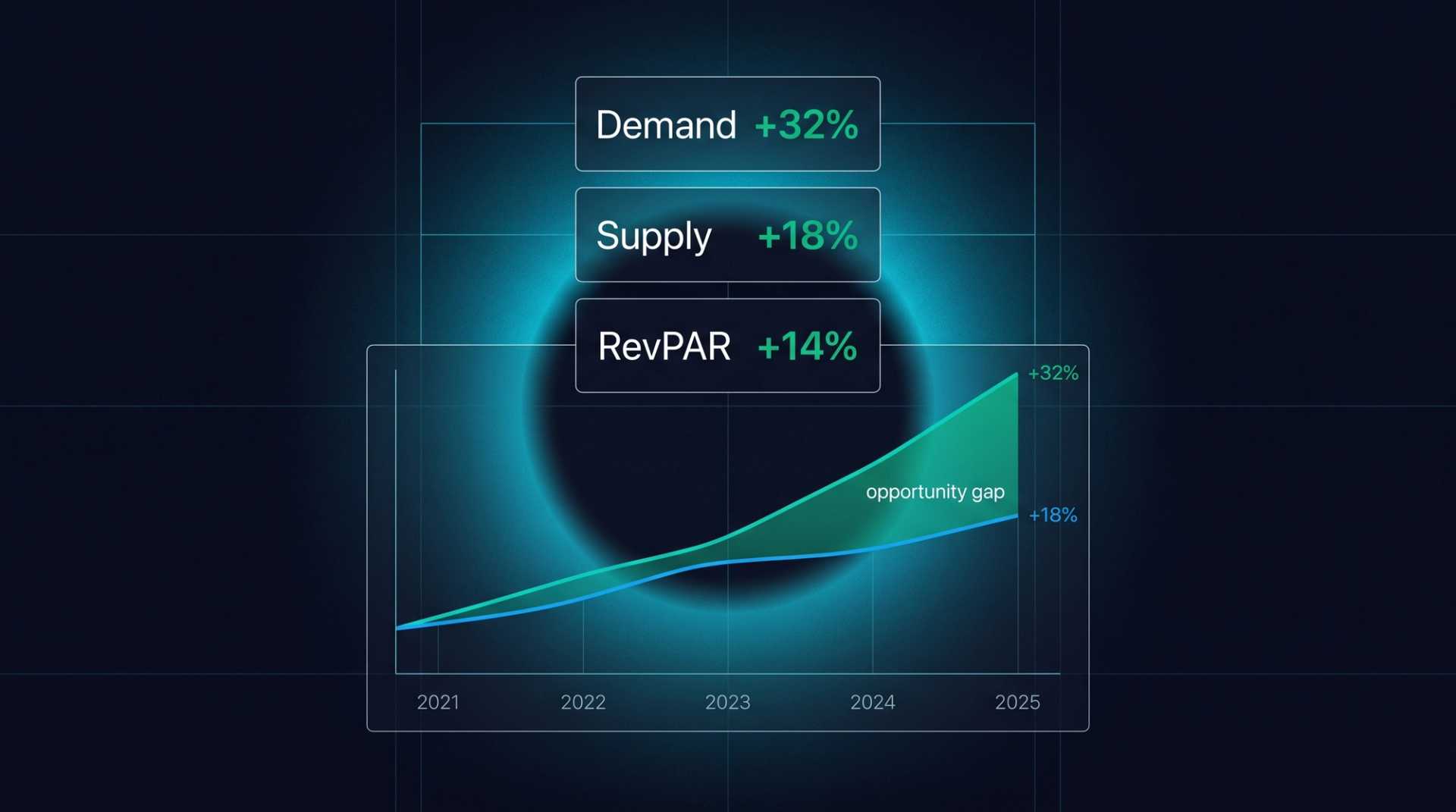
Oversupply Risk: Rapid hotel development in the Airport Region may create price pressure in this area in the short term. However, this risk is expected to diminish in the medium term as the airport's passenger capacity increases.
Regulatory Changes: Policy changes regarding short-term rentals (Airbnb) and tourism taxes may affect investment calculations.
Conclusion and Strategic Recommendations
Istanbul's hotel investment landscape in 2026 is built on strong foundations. The city's unique location, 12-month demand structure, and continuous tourist growth paint a positive picture for medium-to-long-term investments. However, successful investment hinges on critical success factors such as correct location selection, segment focus, and technological infrastructure. Investors establishing data-driven decision-making mechanisms will maximize returns from this dynamic market.
![Europe's Hotel Construction Boom: 2026 Oversupply Risks [Market Analysis]](https://cdn.sanity.io/images/1la98t0z/production/6dfe59137f56aa14bfcba86d9db3cf05ff89f406-2752x1536.jpg?w=1920&q=50&auto=format&fit=max)