![Ice Hotels: Experiential Tourism & Revenue Strategies [2026 Guide]](https://cdn.sanity.io/images/1la98t0z/production/ed58398ee3f1cd21a54eaabe75900247427b9f81-2752x1536.jpg?w=1920&q=65&auto=format&fit=max)
Key Takeaways
- Ice hotels epitomize the experience economy, attracting high demand in the unique accommodation segment, which is part of the $1.4 trillion global experiential tourism market.
- Their seasonal operation (5 months) is turned into an advantage, enabling premium pricing 3-5 times higher than standard hotels and efficient revenue optimization.
- Marketing focuses on "story selling," leveraging social media (e.g., #icehotel posts get 340% more engagement) and content creation around the art, construction, and unique guest experiences.
- Operational challenges include precise temperature management, guest safety (hypothermia risk), seasonal staff recruitment, and continuous structural maintenance.
- Turkey's eastern provinces like Kars, Erzurum, and Ağrı offer significant untapped potential for ice hotel development, supported by suitable climate and potential tourism incentives.
Ice Hotels: Accommodation Where Nature Transforms into Art
Ice hotels represent one of the most striking and unique concepts in the hospitality sector. This trend, which began with the establishment of ICEHOTEL in Jukkasjärvi, Sweden in 1990, has now spread to many countries including Finland, Norway, Canada, and Romania. Rebuilt annually, these properties are entirely constructed from ice and snow, maintaining a constant temperature of -5°C, offering one of the most compelling examples of the experience economy.
The global experiential tourism market reached $1.4 trillion in 2025. Unique accommodation experiences constitute 8% of this market, with ice hotels being the most highly demanded sub-category within this segment.
Embed this image on your site
<a href="https://otelciro.com/en/news/ice-hotels-experiential-tourism-revenue-strategies-2026-guide">
  <img src="https://cdn.sanity.io/images/1la98t0z/production/ed58398ee3f1cd21a54eaabe75900247427b9f81-2752x1536.jpg" alt="Ice Hotel Concept" width="800" />
</a>
<p>Source: <a href="https://otelciro.com">OtelCiro</a> — AI Hotel Revenue Management</p>
In this article, we examine the marketing strategies, seasonality management, operational challenges, and revenue optimization approaches of the ice hotel concept.
Related reading: Hotel Seasonality Management: Off-Season Revenue Strategies
Ice Hotel Business Model: Turning Seasonality into an Advantage
The greatest paradox of ice hotels is their existence exclusively during winter months. A typical ice hotel operates for a 5-month season between December and April. However, this short operational period, when managed correctly, yields an extremely profitable model.
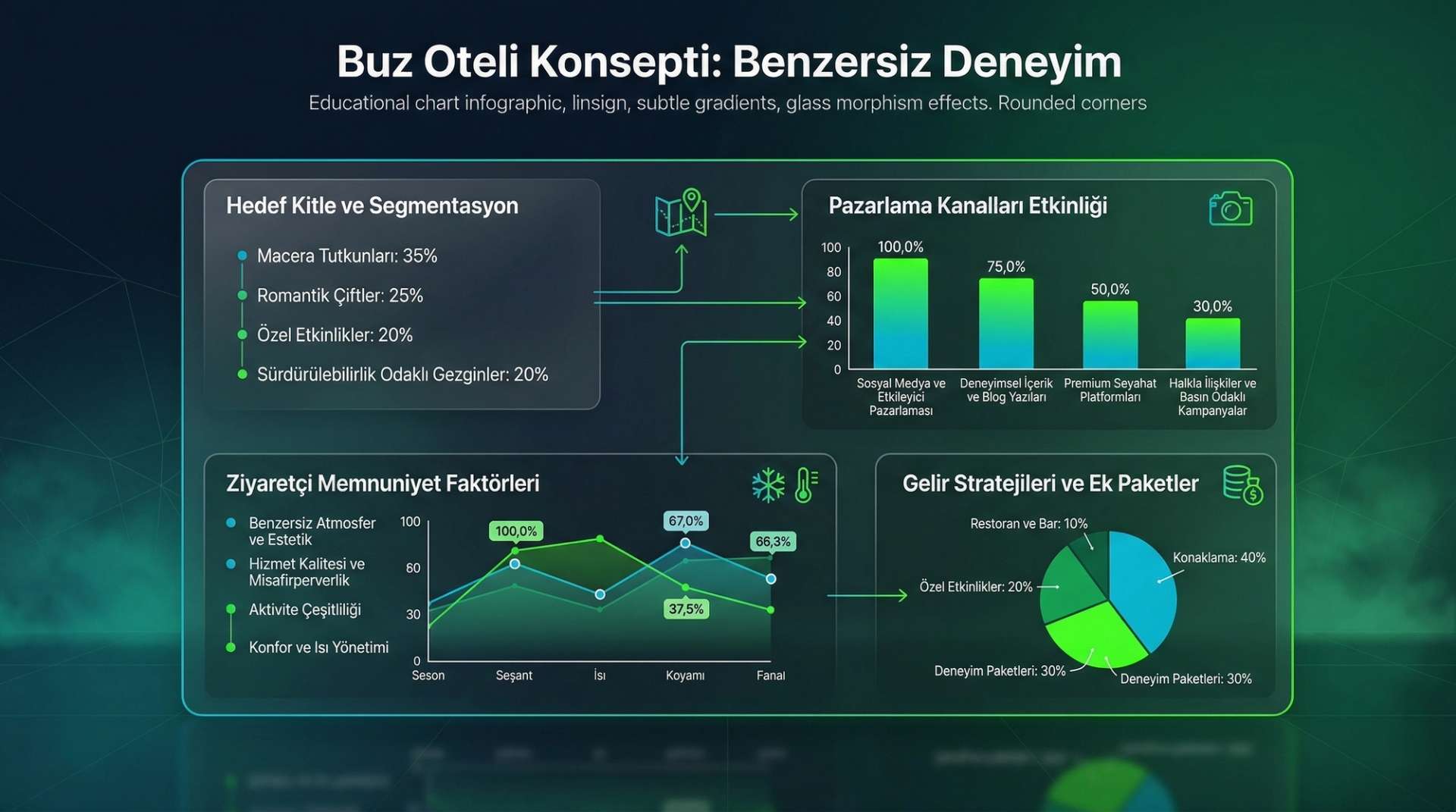
Revenue Structure
The revenue distribution for ice hotels differs significantly from traditional hotels:
| Revenue Stream | Share | Description |
|---|---|---|
| Accommodation | 40% | Premium pricing ranging from €500-€2,500 per night |
| Day visits | 25% | Property tours and ice bar experiences without overnight stay |
| F&B (Food & Beverage) | 15% | Special menus served in ice glasses |
| Events/Weddings | 12% | Ice churches and event spaces |
| Merchandise | 8% | Souvenirs and special photography services |
Premium pricing is a fundamental element of this concept. An average ice hotel room sells for 3-5 times the price of a standard hotel in the same destination, and guests accept this price based on the value of a "once-in-a-lifetime experience."
Off-Season Strategy
To generate revenue during the remaining 7 months of the year, successful ice hotels implement the following strategies:
- Summer activities: River rafting, nature walks, fishing tours, and midnight sun experiences.
- Artist residencies: Offering workshop spaces to ice sculptors to attract creative tourism.
- Corporate events: Team-building programs and leadership camps.
- Design competitions: International competitions to select artists who will design the ice rooms for the upcoming season, generating free PR.
Experience Marketing: Selling a Story
In ice hotel marketing, it's not the product that's sold, but the story. Guests don't buy a room; they buy the experience of "sleeping inside a work of art made of ice." This approach shapes the entire marketing strategy.
Social Media Strategy
Ice hotels are one of the types of accommodation with the highest organic viral potential on social media. Content shared with the #icehotel tag on Instagram receives an average of 340% more engagement compared to traditional hotel content.
Effective social media tactics:
- Construction process documentaries: Sharing time-lapse videos of the hotel being built from scratch. This content creates anticipation and curiosity.
- Artist stories: Narrating the story of the ice sculptor who designed each room.
- Guest experiences: Capturing real guests' "first night" reactions.
- Melting process: The hotel melting back into nature in spring conveys a nostalgic and environmentally conscious message.
Content Marketing and SEO
For ice hotels, search engine optimization should focus on unique keywords:
- "Ice hotel experience"
- "Unique accommodation ideas"
- "Winter holiday different experience"
- "Romantic winter getaway"
Blog content, "how-to prepare" guides, and guest stories attract organic traffic. Additionally, offering complimentary stays to travel magazines and influencers provides high-value backlinks and media coverage.
Related reading: OTA Profile Anatomy: Visibility and Conversion Optimization
Operational Challenges and Solutions
Operating an ice hotel involves radically different operational challenges from standard hotel management:
Temperature management: The indoor temperature must be maintained between -5°C and -8°C. Structural risks arise when the outdoor temperature drops below -30°C or rises above 0°C. Continuous monitoring with sensor networks is essential.
Guest safety: Slippery floors, hypothermia risk, and emergency evacuation procedures require specialized training. Guests must be provided with thermal sleeping bags, guidance, and safety briefings.
Staff management: The short season necessitates a seasonal employment model. Finding and training qualified staff anew each year is a costly process.
Structural maintenance: The ice structure requires continuous monitoring and repair. A cracked wall or melting ceiling can halt the entire operation.
Sales and operations management solutions allow these challenges to be managed with digital tools. Reservation management, capacity planning, and guest communication can be handled from a single platform.
Ice Hotel Potential in Turkey
The concept of an ice hotel presents a viable investment opportunity in Turkey's eastern provinces. In cities like Erzurum, Kars, Ağrı, and Ardahan, winter temperatures regularly drop below -20°C, and these regions have not yet fully realized their tourism potential.
Potential locations and advantages:
- Kars (Sarıkamış): Existing ski tourism infrastructure; an ice hotel could create an additional attraction.
- Erzurum: A university city and winter sports hub. Integrated packages with Palandöken ski resort could be offered.
- Ağrı (Doğubayazıt): An iconic ice hotel location with Mount Ağrı views.
An ice hotel project in Turkey can be realized with an estimated initial investment of 2-4 million euros. This cost can be supported by 30-40% through government tourism incentives and regional development funds.
Revenue Optimization and Digital Management
Revenue optimization in ice hotels relies on making the most efficient use of the short season. Key strategies include:
- Early booking campaigns: Pre-sales starting 6-8 months before the season opens ensure guaranteed occupancy. Early bookings constitute 55-65% of total revenue.
- Package sales: Comprehensive packages like "Accommodation + Northern Lights tour + Ice bar experience" increase revenue per room by 40%.
- Dynamic pricing: Premium pricing during weekends and holidays, discounted rates on weekdays.
- Corporate events: Company meetings and launch events are a high-volume, high-margin revenue stream.
The ice hotel concept represents one of the most daring and creative investment models in the hospitality sector. The constraint of seasonality, with the right strategy, can be transformed from a disadvantage into an advantage that creates scarcity value. A hotel open only a few months each year sustains premium pricing through the perception of an "unmissable experience."
![Europe's Hotel Construction Boom: 2026 Oversupply Risks [Market Analysis]](https://cdn.sanity.io/images/1la98t0z/production/6dfe59137f56aa14bfcba86d9db3cf05ff89f406-2752x1536.jpg?w=1920&q=50&auto=format&fit=max)