Key Takeaways
- Approximately 38% of global hotels have adopted hybrid work models for specific back-office positions as of 2026.
- Departments like Revenue Management, Digital Marketing, and Accounting can operate 55-65% remotely using cloud-based systems.
- Hybrid work increases back-office productivity by an average of 13% due to reduced interruptions and commute stress.
- Implementing these models can significantly lower staff turnover rates from industry averages of 60-80% down to 25-30%.
- A robust cloud-based PMS and cybersecurity protocols are the essential foundations for successful remote hotel operations.
Hybrid Work Models in Hospitality: Is It Possible?
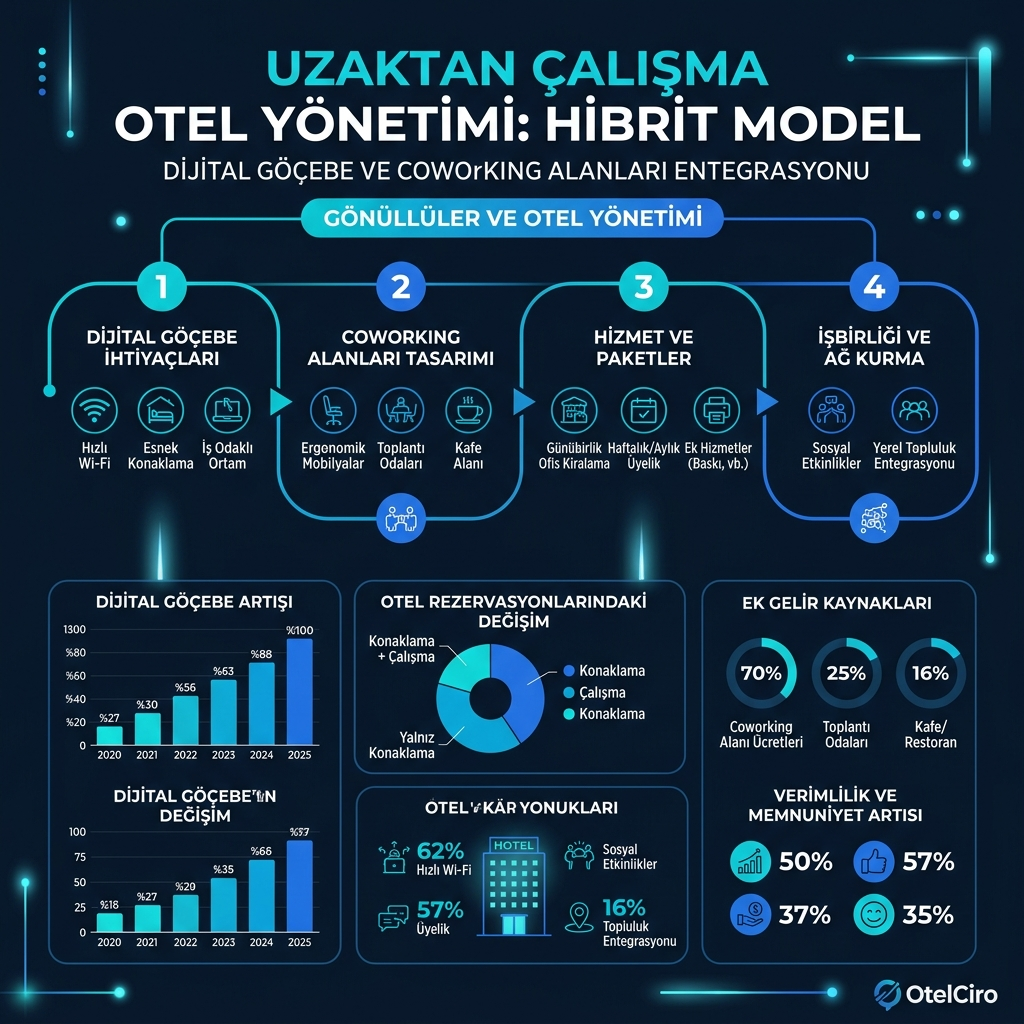
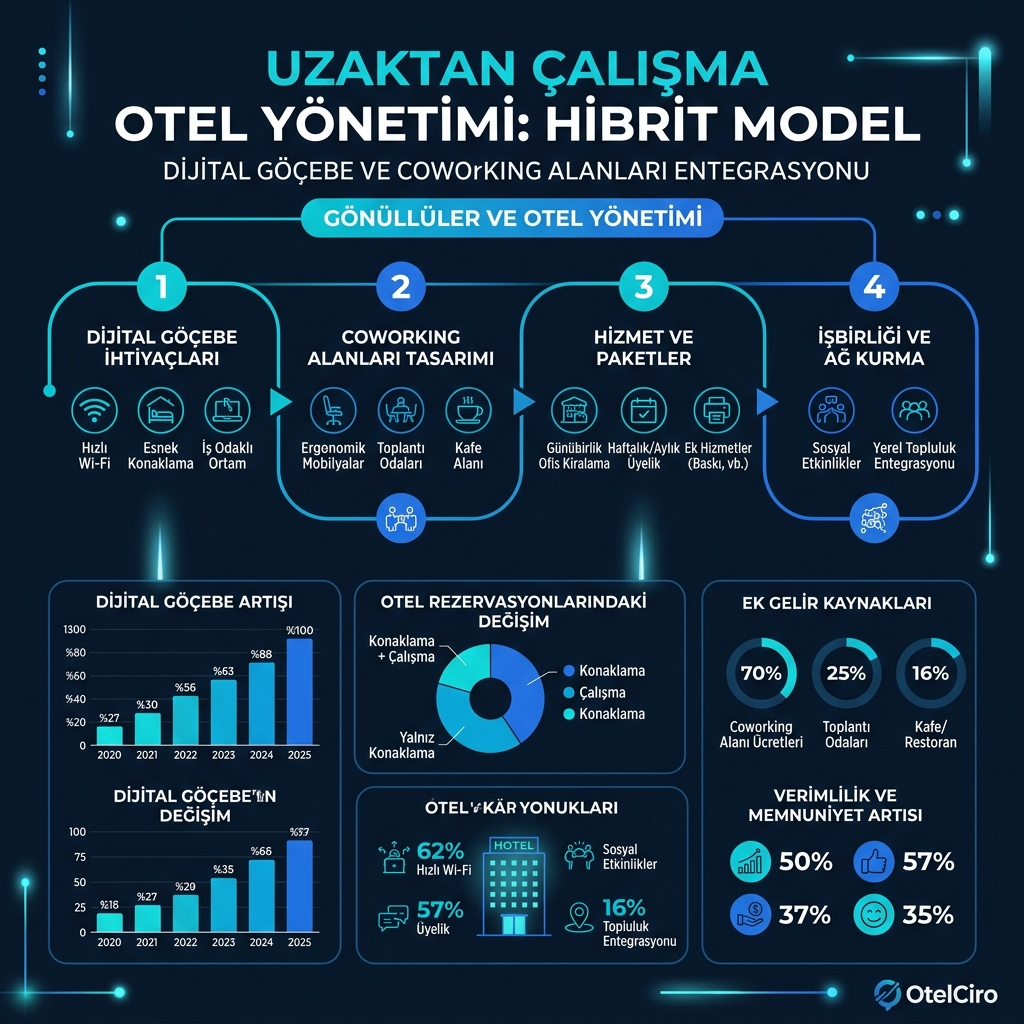
The remote work trend, which radically changed the business world post-pandemic, has found resonance even in sectors where physical service is at the forefront, such as hospitality. The question "Is remote work possible in hotel management?" is no longer a theoretical debate; in 2026, 38% of hotels worldwide are implementing hybrid work models for specific positions.
Of course, housekeeping staff or front desk clerks cannot work from home. However, back-office functions such as revenue management, digital marketing, accounting, human resources, sales coordination, and IT are highly suitable for remote work. According to McKinsey reports, 55-65% of hotel back-office tasks are capable of being performed remotely.
Embed this image on your site
<a href="https://otelciro.com/en/news/hybrid-work-models-in-hotel-management-2026-strategy-guide">
  <img src="https://cdn.sanity.io/images/1la98t0z/production/973fe02549c2885c5ef8699626eb759e8bb2b6ac-1024x1024.png" alt="Remote Work and Hotel Management Hybrid Model" width="800" />
</a>
<p>Source: <a href="https://otelciro.com">OtelCiro</a> — AI Hotel Revenue Management</p>
Related reading: Digitalize Hotel Management with Smart PMS
Departments and Positions Suitable for Hybrid Models
The suitability of each hotel department for hybrid work varies. Identifying the right positions is the first step of a successful hybrid model.
Positions Suitable for Full Remote Work
- Revenue Management: Pricing decisions and competitor analysis are performed entirely through digital tools. Thanks to cloud-based systems like OtelCiro's Smart PMS platform, revenue managers can monitor and optimize hotel performance from anywhere in the world.
- Digital Marketing: SEO, SEM, social media management, email campaigns, and content production are areas that can be managed independently of location.
- Accounting and Finance: 90% of payroll, invoicing, budget planning, and financial reporting processes can be conducted in a digital environment.
- Sales Coordination: Group sales, corporate accounts, and MICE segment tracking can be managed remotely, with field visits scheduled for specific days.
Positions Suitable for Hybrid Models (2-3 Days in the Office)
- Human Resources: While recruitment interviews and training programs are conducted face-to-face, personnel affairs and performance tracking can be handled remotely.
- Assistant General Managers: Can be on-site during operational audit days and work remotely during strategy and planning days.
- IT and Technical Support: While 70% of problems can be solved via remote access tools, on-site presence is required for hardware interventions.
Positions Required On-Site
Operational positions such as housekeeping, front desk, kitchen, restaurant service, security, and technical maintenance inherently require a physical presence. However, even the managers of these departments can work remotely on designated days.
Digital Infrastructure Required for the Hybrid Model
A successful hybrid work model requires a strong digital infrastructure. Cloud-based systems, communication platforms, and security solutions are the core components of this infrastructure.
Cloud-Based Management Systems
The backbone of the hybrid model is cloud-based hotel management systems that are accessible from anywhere. Tools such as the PMS, channel manager, revenue management system, and CRM must all operate in the cloud. For hotels using on-premise (server-based) systems, a hybrid model is practically impossible to implement.
OtelCiro's Smart PMS solution provides secure access to all hotel data from anywhere with its cloud-based architecture. Real-time occupancy, revenue, and performance data are presented in a single dashboard.
Project and Task Management
The productivity of remote teams depends on clear task definitions and tracking mechanisms. With digital project management tools:
- Daily/weekly tasks for each employee are defined and monitored.
- Inter-departmental coordination is provided through digital channels.
- Meetings are conducted via video conferencing and recorded.
- Performance metrics are based on objective data.
Cybersecurity and Data Protection
Remote work increases cybersecurity risks. Protecting sensitive data such as guest information, credit card data, and financial records is critical. VPN access, two-factor authentication, encrypted communication channels, and device management policies should be implemented as standards.
Research shows that 43% of hotels that transitioned to remote work experienced at least one cybersecurity incident in the first year. Establishing security protocols in advance and providing regular training for employees reduces this risk by 75%.
Related reading: Hotel Cybersecurity and Data Protection Guide
Productivity and Performance Measurement
The biggest concern regarding the hybrid model is the possibility of decreased employee productivity. However, data shows the exact opposite: according to research from Stanford University, the productivity of back-office personnel working in a hybrid model increases by an average of 13%. The main reasons for this include:
- Increased focus time: Interruptions in the office environment (meetings, visits, casual chats) are minimized on remote work days. Employees complete tasks requiring deep thought more efficiently at home.
- Reduced commute stress: In Turkey, the average daily commute time for employees in large cities is 85 minutes. Reclaiming this time increases both productivity and employee satisfaction.
- Flexibility and autonomy: Allowing employees to partially determine their own working hours strengthens motivation and loyalty.
Performance Measurement Criteria
In a hybrid model, a transition should be made from "hourly control" to "result-oriented" performance measurement:
- For Revenue Management: RevPAR target achievement rate, pricing response time, forecast accuracy rate.
- For Digital Marketing: Website conversion rate, campaign ROI, organic traffic growth.
- For Accounting: Closing report submission time, error rate, regulatory compliance score.
- For Sales: Lead-to-booking conversion rate, corporate account growth rate.
All of these metrics can be monitored in real-time through OtelCiro's reporting dashboard.
Impact on Employee Satisfaction and Loyalty
The hybrid work model is an effective tool for reducing high staff turnover rates, which is one of the biggest problems in the hospitality industry. While the annual staff turnover rate in the sector ranges between 60-80%, the turnover rate for back-office personnel in hotels offering a hybrid model drops to 25-30%.
Employee satisfaction surveys reveal that in hotels implementing a hybrid model:
- General satisfaction scores are 28% higher.
- Work-life balance scores increased by 35%.
- Trust in management scores rose by 18%.
- Intent to leave decreased by 42%.
These figures demonstrate that the hybrid model is a strategic advantage, especially in attracting and retaining qualified back-office talent.
Implementation Steps and Success Factors
The transition to a hybrid model should be a planned and gradual process. Recommended steps for a successful transition:
Month One: Identification of positions suitable for the hybrid model, digital infrastructure assessment, and conducting employee surveys.
Month Two: Launching a pilot application. Starting with the revenue management or digital marketing department is usually the least risky option. You can begin with 2 days of remote work per week.
Month Three-Four: Analyzing pilot results, making necessary adjustments, and expanding the model to other departments.
Month Five and Beyond: Establishing a permanent hybrid work policy, solidifying the performance measurement system, and initiating a continuous improvement cycle.
The hybrid work model is a major trend shaping the future of human resource management in the hospitality industry. When implemented with the right positions, strong digital infrastructure, and result-oriented performance management, it provides a win-win that increases both employee satisfaction and operational efficiency. OtelCiro's cloud-based Smart PMS platform enables hotels to transition to the hybrid model with confidence by providing the necessary technological infrastructure for this transformation.
![Europe's Hotel Construction Boom: 2026 Oversupply Risks [Market Analysis]](https://cdn.sanity.io/images/1la98t0z/production/6dfe59137f56aa14bfcba86d9db3cf05ff89f406-2752x1536.jpg?w=1920&q=50&auto=format&fit=max)