Key Takeaways
- Vacation rentals like Vrbo now account for 22% of the global lodging market as of 2026.
- Hotels can leverage consistent service standards and 24/7 support to counter Vrbo’s frequent quality and communication fluctuations.
- Adapting room configurations to include family suites and kitchenettes helps recapture the group travel segment.
- Ancillary services such as spas, gyms, and professional concierge desk provide a competitive value-add that most rentals lack.
- Digital visibility through SEO, destination-based content, and Google Hotels integration is essential for competing with rental platforms.
The Vacation Rental Revolution and Its Impact on the Hotel Industry
Vrbo (Vacation Rentals by Owner), operating under the Expedia Group, is a vacation rental platform that lists more than 2 million properties worldwide. In 2026, the vacation rental market accounts for 22% of the global hospitality industry, and this share continues to grow annually.
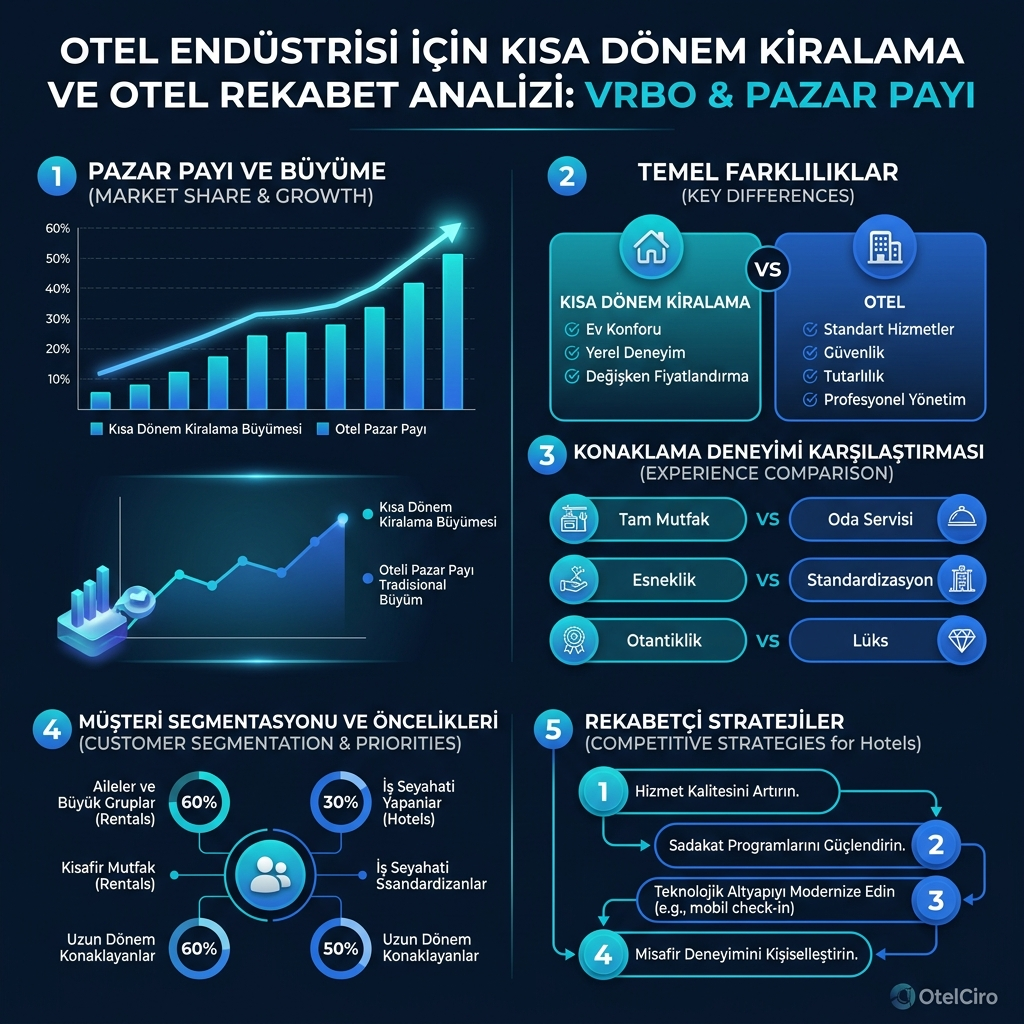
According to McKinsey data, vacation rental platforms have captured 18% of the market share from the traditional hotel sector over the last five years. This loss has been felt most acutely in the family segment, long stays, and resort destinations. In Turkey, the total active listings on Vrbo and Airbnb have exceeded 180,000 units; this figure corresponds to 25% of the total hotel room capacity in the country.
For hotels, remaining silent against this competition is no longer an option. Strategic differentiation and digital transformation are the keys to growing beyond mere survival.
Embed this image on your site
<a href="https://otelciro.com/en/news/how-hotels-can-compete-with-vrbo-2026-strategy-guide">
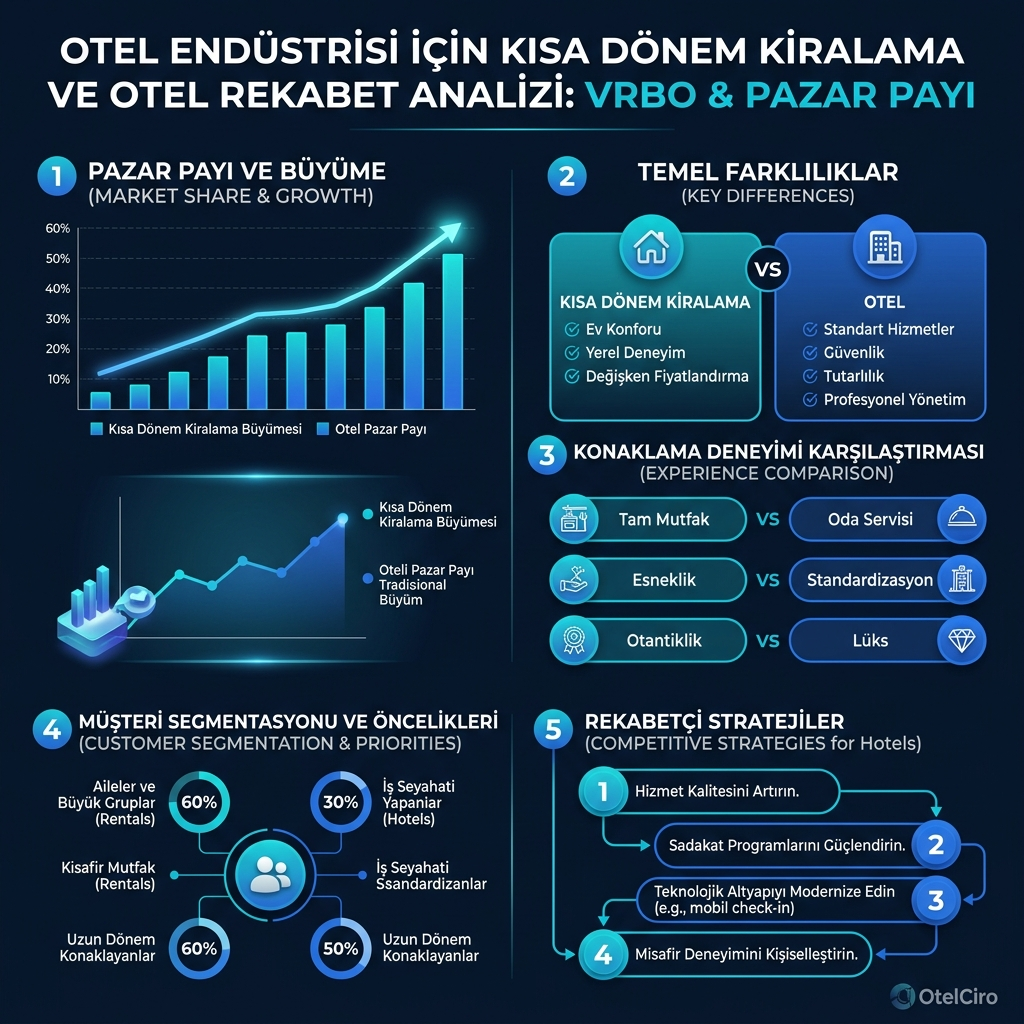
  <img src="https://cdn.sanity.io/images/1la98t0z/production/aaca8df041a3fe8cd23e31a1f26491652e52a26f-1024x1024.png" alt="Infographic of Vrbo vacation rental and hotel competition strategies" width="800" />
</a>
<p>Source: <a href="https://otelciro.com">OtelCiro</a> — AI Hotel Revenue Management</p>
Related reading: Dynamic vs. Static Pricing: Which is More Profitable?
Vrbo’s Competitive Advantages
Understanding the factors that make Vrbo a serious competitor for hotels is the first step in developing an effective counter-strategy.
Space and Flexibility
73% of Vrbo listings consist of properties with two or more bedrooms. For families and groups, a fully equipped villa or apartment is more attractive than a standard hotel room in terms of both cost and comfort. The per-person cost in an average Vrbo property can be 30-45% lower than an equivalent hotel stay.
Kitchen and Living Areas
For long stays, kitchen access is a critical decision factor. 89% of Vrbo properties offer fully equipped kitchens. The ability to reduce dining-out costs by 60% during a seven-night family vacation is a powerful draw for price-sensitive travelers.
Perception of Local Experience
The "live like a local" trend is a decisive factor, especially for Gen Z and young families. Vrbo has placed this perception at the center of its marketing strategy. Positioning a local coffee shop instead of a hotel lobby, and a local market experience instead of room service.
The Hotel Industry’s Competitive Weapons
Despite Vrbo’s advantages, hotels still hold powerful trump cards. The key is to use these assets correctly.
Consistent Service Quality
Quality standards in Vrbo properties vary greatly. 28% of guest reviews mention cleanliness issues, while 19% involve communication problems. Hotels can emphasize the element of trust through standardized service quality, professional housekeeping, and 24/7 front desk support.
Research shows that 62% of travelers visiting a destination for the first time prefer staying in a hotel. Guaranteed quality in a familiar environment reduces uncertainty during the exploration process.
Ancillary Service Ecosystem
The spa, restaurant, pool, fitness center, and concierge services offered by hotels are values that vacation rental properties mostly cannot provide. Offering these services as optional packages rather than including them in the base pricing provides both a competitive base rate and additional revenue opportunities.
A resort hotel can use the OtelCiro sales ecosystem to offer these packages consistently across all distribution channels, maintaining price competition with Vrbo while increasing total revenue.
Related reading: Hotel Upselling and Cross-selling Techniques
Segment-Based Competition Strategies
Competing with Vrbo in each guest segment requires a different approach.
Family Segment
Families are Vrbo's strongest segment. The counter-move for hotels:
- Family suites: The concept of two rooms + a kitchenette provides the Vrbo alternative within the hotel.
- Children's programs: Kids clubs, animation, and babysitting services are advantages not found on Vrbo.
- Bundle pricing: Reducing per-person costs with room + breakfast + activity packages.
Business Travel and Bleisure
The remote work trend has grown the "bleisure" segment, which combines business travel with vacation. While Vrbo is gaining strength in this segment, hotels' business infrastructure advantage continues:
- Guaranteed high-speed internet (99.5% uptime)
- Access to meeting rooms and business centers
- Loyalty programs and corporate agreements
- Location advantage (city centers, transportation networks)
Romantic Getaways and Couples
This segment is still dominated by hotels. 78% of Vrbo properties are designed with a family focus and do not offer customized experiences for couples. Boutique hotels can protect this segment with adults-only concepts, spa packages, and gastronomic experiences.
The Digital Marketing and Visibility Battle
In a period where "vacation rental" queries on Google have increased by 340%, maintaining the digital visibility of hotels is critical.
SEO and Content Strategy
Vrbo properties often appear ahead of hotels in organic Google search results. The counter-strategy for hotels:
- Destination content: Attracting organic traffic with regional guides and local event calendars.
- Google Hotels integration: Transferring price and availability information directly to Google.
- Review management: Actively managing Google and TripAdvisor reviews (targeting a 4.5+ rating).
Social Media Differentiation
While Vrbo properties use the "home comfort" theme on Instagram, hotels should highlight "luxury experience" and "professional service" themes. User-generated content (UGC) is the most effective way to show how the hotel experience differs from Vrbo.
Future Outlook and Action Plan
The growth of the vacation rental market is not stopping; however, this growth does not necessarily have to be an absolute loss for hotels. A strategy of taking a larger share of a growing pie should be adopted instead of fighting over a shrinking one.
Urgent action plan for hotels:
- Add family suites and apartment-style room types to the portfolio.
- Increase total guest value with ancillary service packages.
- Direct digital marketing budgets toward vacation rental keywords.
- Offer consistent pricing and content across all platforms with centralized channel management.
Competition is inevitable; but with the right strategy, hotels do not just play defense—they reclaim their market share.

![Europe's Hotel Construction Boom: 2026 Oversupply Risks [Market Analysis]](https://cdn.sanity.io/images/1la98t0z/production/6dfe59137f56aa14bfcba86d9db3cf05ff89f406-2752x1536.jpg?w=1920&q=50&auto=format&fit=max)