![Hotelbeds & B2B: Bed Bank Price Management [2026 Guide]](https://cdn.sanity.io/images/1la98t0z/production/abff83803ab3e810d960f4f4aa9e4bdb10f5671f-1200x669.png?w=1920&q=65&auto=format&fit=max)
Key Takeaways
- Bed banks (Hotelbeds, WebBeds, Dertour) account for 12% of global hotel distribution, but their uncontrolled pricing causes significant OTA parity issues.
- 43% of hotels experience price leakage from bed banks, leading to 8-12% ADR drops and €25k-€60k in annual OTA parity penalties.
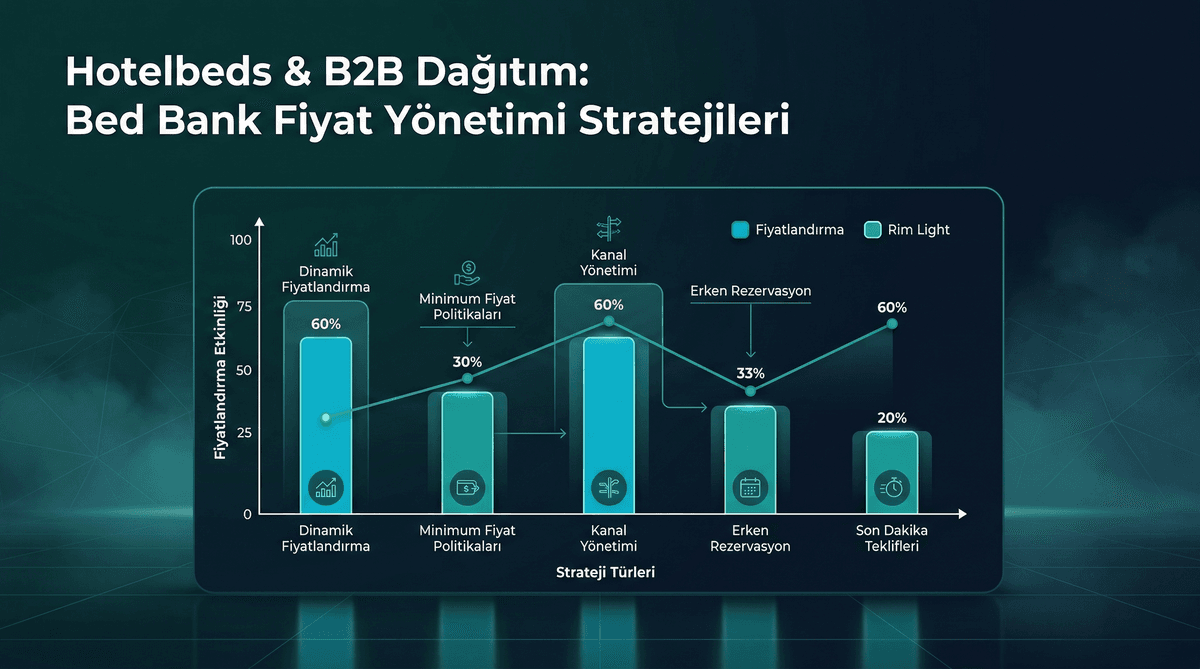
- Implement strict contract clauses (closed distribution, sub-distribution limits, audit rights) and dynamic pricing strategies for bed bank partners like Hotelbeds.
- Utilize price monitoring tools (OTA Insight, Rate Gain) and automated intervention protocols to detect and resolve price leakages promptly.
- Maintain bed bank channel dependency under 15% of total revenue and proactively manage seasonal channel weight for optimal margin protection.
What Are Bed Banks and Why Are They So Controversial?
Bed banks are intermediary organizations that purchase rooms from hotels at wholesale prices and distribute this inventory to travel agencies, tour operators, and other B2B channels. Hotelbeds, WebBeds (Destinations of the World + JacTravel), Dertour, and W2M are the largest players in this sector.
In 2026, the bed bank channel's share in global hotel distribution stands at 12%. However, the true impact of this channel extends far beyond its market share. Uncontrolled distribution of bed bank rates creates a domino effect, disrupting OTA parity and threatening overall revenue management.
According to Phocuswright research, 43% of hotels experience price leakage issues stemming from the bed bank channel. These leakages trigger the rate parity mechanisms of major OTAs like Booking.com and Expedia, leading to penalties for hotels.
In Turkey, the situation is even more complex: 65% of hotels in holiday destinations work with at least one bed bank, yet 52% of these hotels do not actively monitor price leakage problems.
Embed this image on your site
<a href="https://otelciro.com/en/news/hotelbeds-b2b-bed-bank-price-management-2026-guide">
  <img src="https://cdn.sanity.io/images/1la98t0z/production/abff83803ab3e810d960f4f4aa9e4bdb10f5671f-1200x669.png" alt="Infographic on bed bank price management and B2B distribution strategies" width="800" />
</a>
<p>Source: <a href="https://otelciro.com">OtelCiro</a> — AI Hotel Revenue Management</p>
Related reading: Hotel Bed Bank and Wholesaler Distribution Guide
The Price Leakage Problem: How Does It Occur?
Price leakage occurs when the wholesale rate provided to a bed bank reaches the end consumer uncontrollably through the distribution chain. The process typically works as follows:
The Leakage Chain
- Hotel provides a net 80€ rate to Hotelbeds
- Hotelbeds sells to a sub-distributor for 90€
- The sub-distributor sells to a small OTA for 95€
- The small OTA displays 105€ to the end consumer
- The same room is listed on Booking.com for 120€
- The consumer sees the price difference and opts for the cheaper channel
- Booking.com detects a parity violation and penalizes the hotel
While each link in this chain may seem to be conducting legitimate business, the outcome undermines the hotel's revenue management. A Booking.com parity penalty can reduce a hotel's ranking score by 20-30%; this translates to a loss of thousands of euros in direct revenue monthly.
Leakage Dimensions
According to SiteMinder data:
- Bed bank-induced price leakages reduce ADR by an average of 8-12% in affected hotels
- Hotels where leakage is detected see their OTA ranking drop by an average of 15 positions
- The annual cost of parity violation penalties ranges from €25,000 to €60,000 for a mid-sized hotel
Hotelbeds Strategy: A Guide to Proper Use
Hotelbeds is the leader in the bed bank sector, with a portfolio of 180,000+ hotels and 60,000+ distribution points. With the right strategy, it's possible to generate high-volume, controlled revenue from the Hotelbeds channel.
Rate Setting Rules
- Markup margin: The net rate you provide to Hotelbeds should be at least 25-30% lower than your Booking.com/Expedia rate. This margin covers additions in the distribution chain and makes leakage more difficult.
- Dynamic pricing: Use seasonal and occupancy-based dynamic pricing instead of fixed annual rates. Increase the bed bank rate by 15-20% during high occupancy to reduce the risk of leakage.
- Room type restriction: Exclude premium room types from the bed bank channel. Open only standard and economy rooms.
Contract Terms
Be sure to include the following clauses in your Hotelbeds contract:
- Closed Distribution: A guarantee that the rate will remain exclusively within B2B channels and not be displayed on B2C sites.
- Rate Parity Clause: Automatic correction if the bed bank rate is displayed to the end consumer below the OTA retail rate.
- Sub-distribution Limit: Restriction on how many levels of sub-distributors Hotelbeds can transfer the rate to.
- Audit Right: Your hotel's authority to audit price distribution.
WebBeds and Dertour Strategies
WebBeds (DOTW + JacTravel)
WebBeds is the second-largest bed bank after Hotelbeds. It is particularly strong in the Middle East and Asian markets.
- Source market control: Only open rates for WebBeds in your targeted source markets.
- Stop-sale flexibility: Mandate the ability to implement immediate stop-sales during high occupancy periods.
- Minimum length of stay: Filter out low-revenue, short-stay bookings with a 2+ night minimum.
Dertour (DER Touristik)
Dertour is a tour operator and bed bank hybrid structure focused on the German market. 22% of German tourists visiting Turkey book through the Dertour group.
- Guaranteed allotment: The German market is strong in high season; you can offer an additional 5-8% discount in exchange for a guaranteed allotment.
- Early booking support: Participation in Dertour's Frühbucher (early booking) campaigns can increase sales by 30% between November and February.
- Catalog placement: When discussing additional commission for premium catalog placement, request digital catalog metrics (views, clicks).
Related reading: OTA Profile Anatomy: How to Increase Visibility?
Rate Monitoring and Automation
The most effective way to prevent bed bank price leakage is to establish a continuous monitoring and automated intervention system.
Monitoring Tools
Key rate monitoring solutions on the market include:
- OTA Insight (Lighthouse): Real-time parity monitoring, 50+ channel scanning.
- Rate Gain: B2B and B2C rate comparison, leakage detection.
- Triptease: Combination of rate widget and parity monitoring.
These tools can be integrated with the OtelCiro sales ecosystem to create a centralized rate control panel. When leakage is detected, automated alerts and direct notifications are sent to the bed bank.
Automated Intervention Protocol
- Detection: Monitoring tool detects price leakage.
- Verification: Source and extent of leakage are determined.
- Notification: Official warning is sent to the bed bank (SLA: correction within 24 hours).
- Escalation: If correction is not made, temporarily close the channel.
- Evaluation: In cases of recurring leakage, contract renegotiation or termination.
Margin Protection: A Holistic Strategy
Completely closing the bed bank channel is unrealistic for most hotels, especially given the ongoing need for volume during low seasons. However, controlled use minimizes margin loss:
- Do not make more than 15% of your total revenue dependent on the bed bank channel.
- Actively manage seasonal channel weight: bed banks open during low season, restricted during high season.
- Review bed bank performance every quarter: calculate net RevPAR contribution.
- Keep the rate monitoring system active 24/7.
- Renegotiate contract terms annually.
Conclusion: Controlled B2B Distribution
Bed banks can add value as part of a hotel's distribution strategy, but only within a controlled and monitored framework. Preventing price leakage, tightening contract terms, and establishing a continuous monitoring system are the three fundamental conditions for profitably leveraging the bed bank channel.
![Europe's Hotel Construction Boom: 2026 Oversupply Risks [Market Analysis]](https://cdn.sanity.io/images/1la98t0z/production/6dfe59137f56aa14bfcba86d9db3cf05ff89f406-2752x1536.jpg?w=1920&q=50&auto=format&fit=max)