![Hotel Waste Management: Your 2026 Sustainability Guide [Strategy]](https://cdn.sanity.io/images/1la98t0z/production/3d4cfaad59b8961640744bca59777efd1256646e-1200x669.png?w=1920&q=65&auto=format&fit=max)
Key Takeaways
- An average hotel guest generates 1.5-2.5 kg of waste daily, with 35-40% being food waste.
- Only 28% of hotels in Turkey implement systematic waste sorting, significantly below the European average of 65%.
- Implementing the waste hierarchy (prevention, reuse, recycling) can reduce waste collection costs by 25-40% and save 5-12% on food expenses.
- Effective food waste management through measurement, menu engineering, and donation can reduce food waste by 20-30%.
- Systematic waste management programs offer significant ROI, with a case study demonstrating annual net savings of 420,000 TL for a 200-room resort.
The Hotel Waste Problem: Understanding the Scale
The hospitality sector is a significant source of global waste generation. An average hotel guest produces 1.5-2.5 kg of waste per day. For a 200-room hotel with 70% occupancy, this translates to 210-350 kg daily and 75-125 tons annually.
An analysis of waste composition in Turkish hotels reveals: 35-40% food waste, 20-25% paper and cardboard, 15-20% plastic, 8-10% glass, 5-8% textile, and the remaining 5-10% consists of other waste types.
The vast majority of this waste is recyclable or recoverable if managed correctly. However, only 28% of hotels in Turkey implement a systematic waste sorting program. This rate is significantly below the European average of 65%.
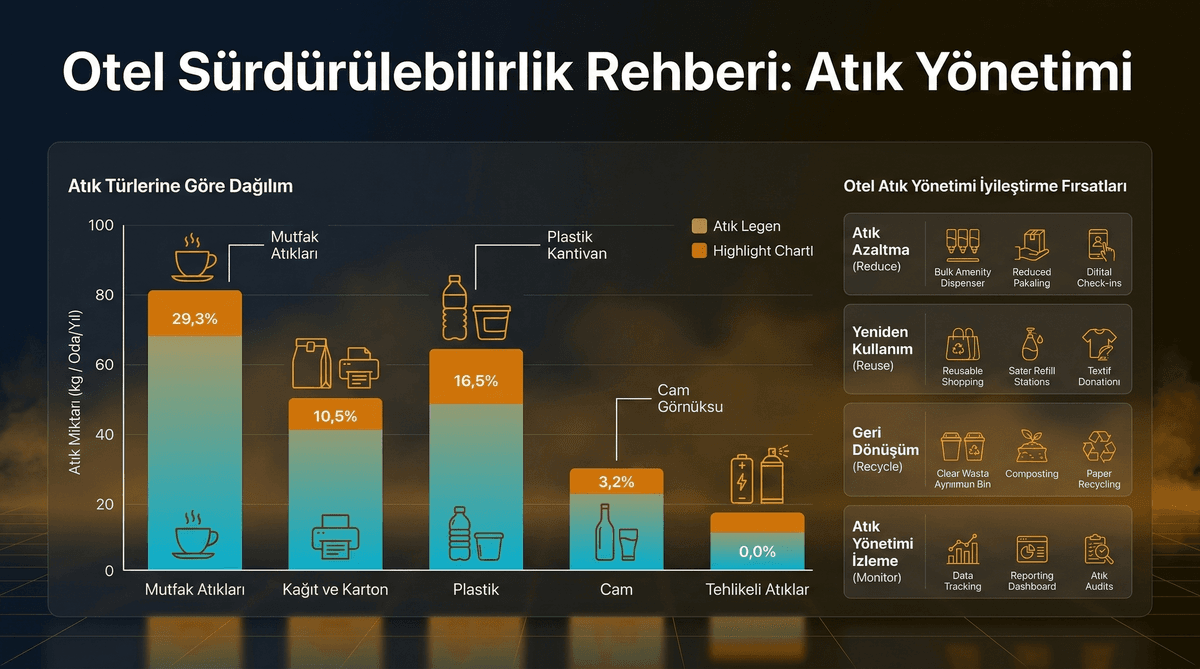
Embed this image on your site
<a href="https://otelciro.com/en/news/hotel-waste-management-your-2026-sustainability-guide-strategy">
  <img src="https://cdn.sanity.io/images/1la98t0z/production/3d4cfaad59b8961640744bca59777efd1256646e-1200x669.png" alt="Atık Yönetimi ve Geri Dönüşüm İnfografiği" width="800" />
</a>
<p>Source: <a href="https://otelciro.com">OtelCiro</a> — AI Hotel Revenue Management</p>
Related reading: Hotel Garden and Landscape Management: A Four-Season Strategy
The Waste Hierarchy: A Prioritized Approach
Effective waste management is based on the "waste hierarchy" principle. This hierarchy consists of five stages, from most preferred to least preferred:
1. Prevention (Most Prioritized)
Preventing waste before it is generated is the most effective and economical strategy:
- Food waste prevention: Portion planning, production based on demand forecasting, a la carte options instead of buffets. Smart food management systems can reduce food waste by 30-50%.
- Single-use product reduction: Wall-mounted dispenser systems instead of mini shampoos/soaps, steel alternatives instead of plastic straws. This transition saves 50,000-150,000 TL annually.
- Digital transformation: Digitalization of paper invoices, brochures, and informational materials.
2. Reuse
Bringing products back into use before they become waste:
- Towel and linen program: Offering guests the option to reuse towels during multi-day stays. This program alone reduces laundry costs by 15-20%.
- Furniture and equipment donation: Donating items that are still usable but being replaced to non-governmental organizations.
- Packaging return: Agreements with suppliers for recyclable packaging.
3. Recycling
Transforming sorted waste into new products through industrial processes:
- Paper and cardboard: Office papers, packaging, newspapers, and magazines
- Plastic: PET bottles, packaging materials, cleaning product containers
- Glass: Bottles, jars
- Metal: Cans, aluminum tins
- Electronic waste: Old computers, televisions, phones
4. Energy Recovery
Generating energy from non-recyclable waste:
- Biogas production (from food waste)
- Waste-to-energy facilities
5. Disposal (Last Resort)
Landfilling is the final step, to be resorted to only when other options are exhausted.
Establishing an In-Hotel Waste Sorting System
Department-Based Sorting Points
Kitchen: Food waste (cooked/raw separation), oil waste, plastic packaging, cardboard boxes, glass bottles, metal cans. Kitchen waste sorting points should have at least 6 categories.
Housekeeping: Waste generated during room cleaning (plastic, paper, glass, general waste). Adding a 4-compartment waste system to housekeeping carts increases sorting efficiency by 70%.
Office and administrative areas: Paper, toner cartridges, electronic waste, batteries.
Garden and outdoor areas: Organic waste (leaves, pruning scraps), packaging waste.
Color-Coded Container System
Color coding in accordance with international standards:
- Blue: Paper and cardboard
- Yellow: Plastic and metal
- Green: Glass
- Brown: Organic waste
- Gray: General (mixed) waste
- Red: Hazardous waste (batteries, chemicals, medical)
Related reading: Hotel Operations Automation: Digital Transformation in Business Processes
Food Waste Management: The Biggest Opportunity
Food waste constitutes 35-40% of a hotel's total waste and accounts for over 50% of waste management costs. Effective food waste management strategies:
Measurement and monitoring: The principle "you can't manage what you don't measure" applies here. Weighing and recording daily food waste provides a basis for improvement. Digital weighing and recording systems automate this process.
Menu engineering: Eliminating slow-selling menu items, optimizing portion sizes, and cross-utilization (using leftover ingredients from one dish in another) can reduce food waste by 20-30%.
Buffet optimization: Frequent replenishment with smaller serving dishes without reducing food variety. Implementing a rule not to open new containers one hour before the end of service.
Food donation: Collaborating with platforms like Too Good To Go, Fazla Gıda, or local food banks to deliver edible surplus food to those in need.
Composting: Turning non-edible food waste into compost and using it in the hotel garden. A medium-scale composting system investment is approximately 30,000-60,000 TL and provides annual fertilizer savings of 15,000-25,000 TL.
Economic Benefits: The ROI of Waste Management
Tangible results achieved by hotels implementing systematic waste management programs:
- Reduction in waste collection costs: 25-40% (less general waste, more sorted waste)
- Recycling revenue: 20,000-80,000 TL annually (depending on hotel size)
- Food cost savings: 5-12% (less purchasing due to waste reduction)
- Energy savings: 3-5% (less waste processing and transport)
- Increased brand value: Opportunity for higher pricing with sustainability certifications
A case study of a 200-room Antalya resort hotel demonstrates annual net savings of 420,000 TL through a comprehensive waste management program.
Certification and Reporting
Certification programs to document waste management success and create marketing value:
- Green Key: An international eco-label program that considers waste management as one of its core criteria.
- Travelife: Sustainable tourism certification.
- ISO 14001: Environmental management system standard.
- Zero Waste Certificate: A national certificate awarded by the Ministry of Environment, Urbanization and Climate Change of Turkey.
A hotel operations management platform automatically collects waste data, generates reports, and creates the necessary documentation for certification processes.
Sustainable waste management is no longer a "goodwill" project but a strategic business decision. A correctly implemented program both reduces costs and creates a competitive advantage by meeting guest expectations. While the zero-waste goal is challenging, every step brings you closer to it and provides tangible financial returns.
![Europe's Hotel Construction Boom: 2026 Oversupply Risks [Market Analysis]](https://cdn.sanity.io/images/1la98t0z/production/6dfe59137f56aa14bfcba86d9db3cf05ff89f406-2752x1536.jpg?w=1920&q=50&auto=format&fit=max)