![Hotel Uniform Management: Stock, Distribution & Care [2026 Guide]](https://cdn.sanity.io/images/1la98t0z/production/ec7498200e830c1b9e99c9a77db5d8e8b6c17d9c-1200x669.png?w=1920&q=65&auto=format&fit=max)
Key Takeaways
- Brand Image & Guest Perception: Uniforms are a hotel's walking brand identity; 45% of guests judge hotel quality based on staff appearance.
- Costly Inefficiency: Many hotels (65% in Turkey) manage uniforms manually, leading to 15-25% of the annual uniform budget being wasted due to losses and inefficient processes.
- Digital Inventory & Tracking: Implementing digital systems with unique identifiers (barcodes/RFID), detailed inventory cards, and size databases is crucial for accurate tracking, distribution, and life cycle management.
- Integrated Laundry Management: RFID-based tracking integrated with laundry cycles optimizes washing programs, tracks usage, and reduces uniform loss rates from 2-5% to under 1%.
- Strategic Budget Optimization: Systematic planning based on uniform lifespan, seasonal needs, and supplier management can optimize budgets by 15-25%, with a typical ROI of 6-12 months for digital system implementation.
Uniforms: The Hotel's Walking Brand Identity
A hotel guest's first interaction with staff begins visually. A clean, coordinated, and professional uniform creates an impression of trust and quality. Conversely, faded colors, worn fabric, or ill-fitting sizes directly damage the hotel's overall image. Research shows that 45% of guests evaluate staff appearance as an indicator of hotel quality.
In a 200-room hotel, an average of 120-180 staff members are employed, and each requires 3-5 sets of uniforms. This translates to 400-900 uniform pieces. Different models for various departments, seasonal changes, size alterations, and wear-and-tear requiring replacement – all these factors demand systematic management, making it a complex operation.
65% of hotels in Turkey still manage uniforms using Excel spreadsheets or paper ledgers. This method leads to inventory loss, inequitable distribution, and budget overruns. Annually, 15-25% of the uniform budget is wasted due to inefficient management.
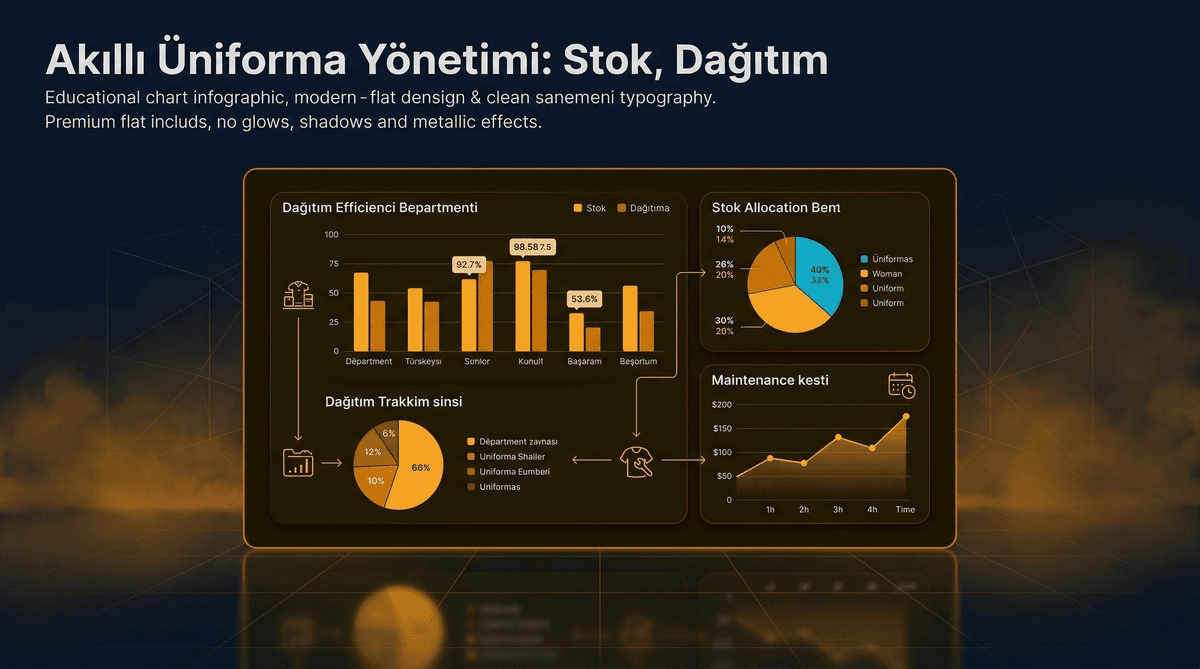
Embed this image on your site
<a href="https://otelciro.com/en/news/hotel-uniform-management-stock-distribution-care-2026-guide">
  <img src="https://cdn.sanity.io/images/1la98t0z/production/ec7498200e830c1b9e99c9a77db5d8e8b6c17d9c-1200x669.png" alt="Staff Uniform Management Infographic" width="800" />
</a>
<p>Source: <a href="https://otelciro.com">OtelCiro</a> — AI Hotel Revenue Management</p>
Related reading: Operations Management with the OtelCiro Ecosystem
Uniform Inventory Management System
Effective uniform management tracks each piece individually. A digital inventory management system consists of the following components:
Digital Inventory Card
Each uniform piece is identified with a unique barcode or RFID tag. The digital card includes the following information:
- Item ID: Unique number, barcode
- Department and position: Front Desk, Housekeeping, Kitchen, Security, etc.
- Model and color: 2026 winter model, navy blazer
- Size: From XS to XXXL
- Assigned personnel: To whom it was issued
- Issue date: Date of first use
- Status: In active use, in laundry, in storage, scrapped
- Wash count: Total wash cycles (tracks fabric lifespan)
This level of detail allows monitoring the life cycle of each piece. It enables predicting when each item will need replacement.
Size Management
Staff turnover in the Turkish hospitality sector is annually between 35-50%. Finding appropriate sizes for each new staff member and retrieving uniforms from departing staff is an ongoing process.
Size database: All current staff size information is maintained digitally. It is updated when size changes occur.
Stock-size matrix: The quantity of uniforms available and needed for each size is continuously monitored. For example, if the stock of size L shirts in the kitchen department falls below 3, an automatic order is triggered.
New staff package: A standard package is defined for new hires (3 shirts, 2 pants, 1 jacket, name tag, etc.). Upon receiving size information, it is prepared from stock or ordered.
Departing staff return: The check-out form includes a uniform return check. Missing items are deducted from the final salary or a report is filed.
Laundry Cycle Integration
The most complex aspect of uniform management is the laundry process. Staff members drop off their dirty uniforms daily and pick up clean ones. Efficient management of this cycle is critical for both hygiene and cost.
RFID-based tracking: An RFID chip on the uniform automatically records laundry check-in and check-out. It tracks when staff members drop off and pick up their uniforms.
Wash program optimization: Different department uniforms require different wash programs:
- Kitchen uniforms: High-temperature antibacterial wash
- Front Desk uniforms: Delicate wash and ironing
- Housekeeping uniforms: Standard wash, stain removal
Wash count tracking: The number of times each piece has been washed is automatically counted using RFID. Items approaching the maximum wash count determined by fabric type are added to the "replacement list." An average polyester-cotton blend shirt lasts 150-200 washes.
Loss detection: RFID system is used to match laundry check-ins and check-outs. Items that enter but do not exit are reported as lost. Laundry loss rates are typically 2-5%; this rate can be reduced to under 1%.
Related reading: Housekeeping Automation: Digitizing Hotel Operations
Budget Planning and Cost Control
The uniform budget constitutes 1-2% of a hotel's total operational expenses. Though seemingly small, for a 200-room hotel, this means 200,000-500,000 TL annually. With systematic planning, this budget can be optimized by 15-25%.
Annual replacement plan: Uniform lifespan varies by department:
- Kitchen: 8-12 months (intensive use, stains, high temperatures)
- Housekeeping: 10-14 months (physical activity, chemical contact)
- Front Desk: 14-18 months (less wear-and-tear)
- Security: 12-16 months (outdoor conditions)
Based on these lifespan calculations, an annual replacement schedule is created. Bulk ordering reduces unit cost – it is 15-20% cheaper compared to piecemeal orders.
Seasonal planning: Summer and winter uniforms are stocked separately. During transition periods (April-May, October-November), both sets are kept ready.
Supplier management: Work with at least two alternative suppliers. Conduct annual evaluations based on quality, delivery time, and price. Dependence on a single supplier creates both price and supply risks.
Cost items (200 staff, annually):
| Item | Cost (TL) |
|---|---|
| New uniform procurement | 120,000-250,000 |
| Washing and maintenance | 40,000-80,000 |
| Repairs and alterations | 10,000-25,000 |
| Accessories (name tags, belts, shoes) | 20,000-40,000 |
| Reserve stock | 15,000-30,000 |
| Total | 205,000-425,000 |
Quality Standards and Appearance Audit
Uniform quality management should not be limited to inventory tracking alone. Daily appearance standards are also part of the system.
Daily appearance checklist:
- Is the uniform clean and spotless?
- Is it ironed?
- Are all buttons intact?
- Is the name tag worn?
- Are shoes clean and appropriate?
- Are accessories worn according to rules?
Pre-shift check: The department manager checks staff appearance at the beginning of each shift and records it in the digital system. Staff members who do not meet standards are directed to get a clean uniform.
Periodic fabric quality control: Uniform pieces are checked every three months for color fading, fabric thinning, and seam integrity. Items falling below standard are replaced with reserves.
Guest perception measurement: Guest surveys include a question about "staff appearance." This data measures the impact of uniform quality on guest perception and supports budget decisions.
Digital System Setup and ROI
Uniform management system implementation plan:
Phase 1 — Inventory and Digitization (2-4 weeks): Counting all existing uniforms, barcode/RFID tagging, and entry into the digital system. Cost: 15,000-30,000 TL.
Phase 2 — Software and Integration (2-4 weeks): Installation of uniform management software, integration with laundry and HR systems. Cost: 20,000-40,000 TL.
Phase 3 — Training and Deployment (1-2 weeks): Training for warehouse manager, department managers, and laundry staff. Cost: 5,000-10,000 TL.
Total setup cost: 40,000-80,000 TL Annual software license: 12,000-24,000 TL RFID tag cost (annual): 5,000-10,000 TL
Expected savings:
- Reduced inventory loss: 15,000-40,000 TL/year
- Bulk order optimization: 20,000-50,000 TL/year
- Laundry efficiency: 10,000-25,000 TL/year
- Extended item lifespan: 15,000-30,000 TL/year
- Total annual savings: 60,000-145,000 TL
Return on investment (ROI): 6-12 months.
While uniform management may seem like an operational detail, it directly impacts a hotel's brand perception and staff satisfaction. A systematic, digital approach both controls costs and ensures a professional appearance for staff. Ultimately, every staff member is a walking billboard for the hotel – and these billboards must always look impeccable.
![Europe's Hotel Construction Boom: 2026 Oversupply Risks [Market Analysis]](https://cdn.sanity.io/images/1la98t0z/production/6dfe59137f56aa14bfcba86d9db3cf05ff89f406-2752x1536.jpg?w=1920&q=50&auto=format&fit=max)