![Hotel Security & Emergency Planning [2026 Guide]](https://cdn.sanity.io/images/1la98t0z/production/7324779a4e2efe188f952e93c636e3a202fd8cb0-1200x669.png?w=1920&q=65&auto=format&fit=max)
Key Takeaways
- Security as a Strategic Imperative: Security is a critical, often silent, component of guest satisfaction and operational continuity. 34% of hotels globally experienced a serious security incident in the last five years, with 60% of losses exacerbated by insufficient preparation.
- Comprehensive Planning is Essential: Given regional risks like earthquakes in Turkey, high fire risks in summer, and post-pandemic health crises, a comprehensive hotel security plan is a necessity, not a luxury.
- Effective Crisis Management Preserves Reputation: Hotels with well-managed crisis processes can reduce reputation score loss by 70% following an incident.
- Technology Enhances Response: Modern operation management systems can cut emergency response times by an average of 40% through automated notifications, digital checklists, and real-time tracking.
- Communication is Paramount: Robust internal communication chains (first response, coordination) and transparent external communication (guest alerts, media statements) are critical before, during, and after a crisis.
What's the Cost of a Hotel Without a Security Plan?
In the hospitality sector, security is the silent yet most critical component of guest satisfaction. Globally, 34% of hotels have experienced at least one serious security incident in the last five years, with losses magnified in 60% of these cases due to insufficient preparation. Given Turkey's location in an earthquake zone, the high risk of fires during summer seasons, and post-pandemic health crises, a comprehensive hotel security plan is no longer a luxury, but a necessity.
Preparing an emergency plan is not just a legal obligation; it is a strategic investment that protects your hotel's reputation, your guests' trust, and your operational continuity. According to Cornell University research, the average rating of hotels that experienced a security incident drops by 0.8 points within 6 months after the event, while well-managed crisis processes reduce score loss by 70%.
In this guide, we detail step-by-step how to create your hotel security plan from scratch, how to prepare for emergency scenarios, and how to establish an effective communication chain in times of crisis.
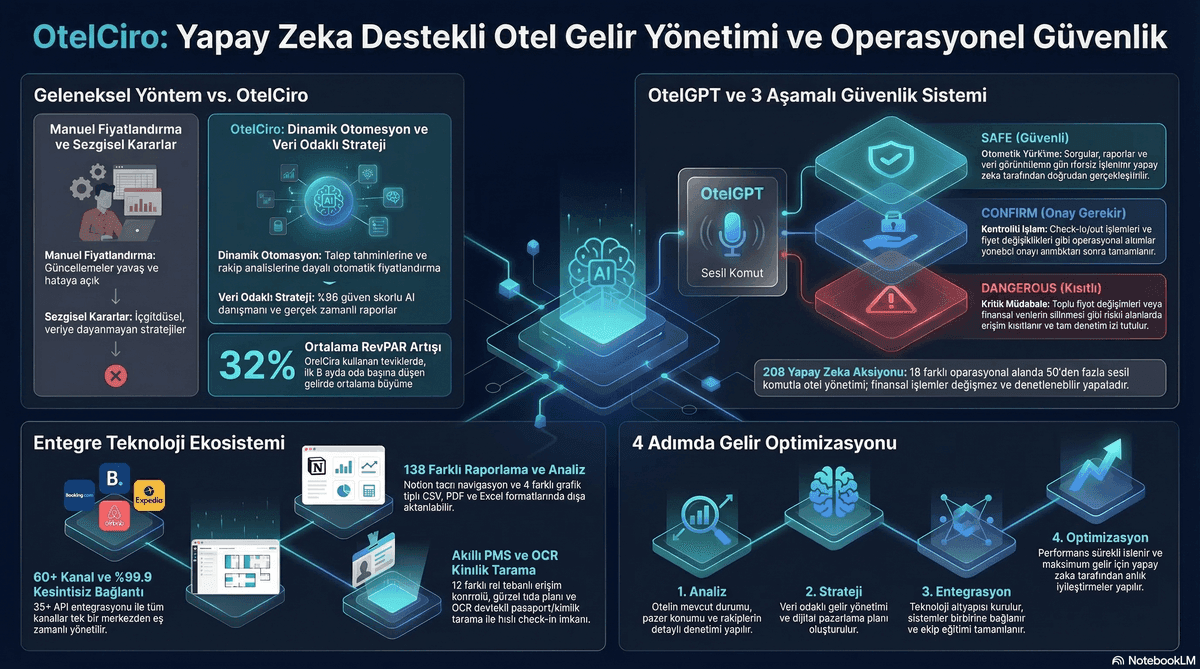
Embed this image on your site
<a href="https://otelciro.com/en/news/hotel-security-emergency-planning-2026-guide">
  <img src="https://cdn.sanity.io/images/1la98t0z/production/7324779a4e2efe188f952e93c636e3a202fd8cb0-1200x669.png" alt="Hotel security and emergency plan guide infographic — emergency types, action plan, and evacuation procedures" width="800" />
</a>
<p>Source: <a href="https://otelciro.com">OtelCiro</a> — AI Hotel Revenue Management</p>
Related reading: Hotel Preventive Maintenance: Reduce Costs with Preventive Maintenance
Related reading: Hotel Inventory and Stock Management: Digital Control Systems
Emergency Types and Risk Assessment
Each hotel has a different risk map depending on its geographical location, size, and guest profile. However, five basic emergency categories apply to all hotels:
| Emergency Type | Risk Level (Turkey) | Preparation Priority | Average Impact Duration |
|---|---|---|---|
| Fire | High | 1st priority | 2-7 days |
| Earthquake | Very High | 1st priority | 7-30 days |
| Health crisis (epidemic) | Medium-High | 2nd priority | 30-180 days |
| Security breach (theft, assault) | Medium | 2nd priority | 1-3 days |
| Natural disaster (flood, storm) | Regional | 3rd priority | 3-14 days |
Fire Emergency Plan
Fire is the most common emergency in hotels and requires the fastest response. An average of 150 hotel fires are reported annually in Turkey. Your fire emergency plan must include the following elements:
- Detection system: Smoke detectors, heat sensors, and automatic sprinkler systems on all floors and common areas
- Evacuation routes: At least two independent exits from each floor, phosphorescent directional signs
- Assembly points: Designated safe areas outside the building, suitable for the number of guests
- Staff duties: Assignment of floor supervisors, evacuation coordinators, and first response team
- Communication: Announcement system for guests, direct line to the fire department, management notification chain
Earthquake Preparedness Protocol
Turkey's location on active fault lines makes earthquake preparedness mandatory. Your earthquake plan should include:
- Keeping structural safety inspection reports up-to-date
- Teaching the "Drop, Cover, and Hold On" procedure to all staff
- Having emergency kits ready on each floor
- Defining a post-earthquake damage assessment protocol
- Placing guest information cards in rooms (Turkish and English)
Embed this image on your site
<a href="https://otelciro.com/en/news/hotel-security-emergency-planning-2026-guide">
  <img src="https://cdn.sanity.io/images/1la98t0z/production/ca584d448cd6c3a6150a46c0e1881553f42a99b2-1200x669.png" alt="Hotel automation and business process workflow" width="800" />
</a>
<p>Source: <a href="https://otelciro.com">OtelCiro</a> — AI Hotel Revenue Management</p>
Communication Chain and Command Structure
In times of crisis, the biggest chaos arises from the unanswered question of "who will call whom, and when." An effective communication chain consists of three layers:
Layer 1 — Initial Response (0-5 minutes):
- Personnel detecting the incident → Front Desk/Security Center
- Security Center → General Manager + Relevant emergency services (112/110/155)
Layer 2 — Coordination (5-30 minutes):
- General Manager → Crisis Management Team
- Crisis Team → Department managers
- Department managers → All personnel
Layer 3 — External Communication (30 minutes-2 hours):
- Public Relations → Press release
- Sales/Marketing → OTA and agency notification
- Accounting → Insurance company notification
Drill Schedule
Regular drills are essential to ensure the plan doesn't just stay on paper:
- Fire evacuation drill: At least twice a year (one during peak season)
- Earthquake drill: At least once a year
- Tabletop crisis simulation: Once every 3 months
- First aid training renewal: Once every 6 months
- Security system test: Once a month
Related reading: Hotel Check-in/Check-out Process Improvement: Eliminate Waiting
Related reading: Hotel F&B Cost Control: Food & Beverage Profitability Guide
Empower Security Management with Technology
Modern hotel security management is much more successful in facilities that effectively use technology. Hotel operations management systems provide critical support in the following areas:
- Automated notification system: Instant push notifications to all relevant personnel when an emergency is triggered
- Digital checklists: Step-by-step digital checklists for each scenario, completion tracking
- Incident logging: Recording all security incidents with date, time, location, and intervention details
- Staff location: Tracking the location of personnel during a crisis
- Guest count: Verification of guest count after evacuation with real-time occupancy data
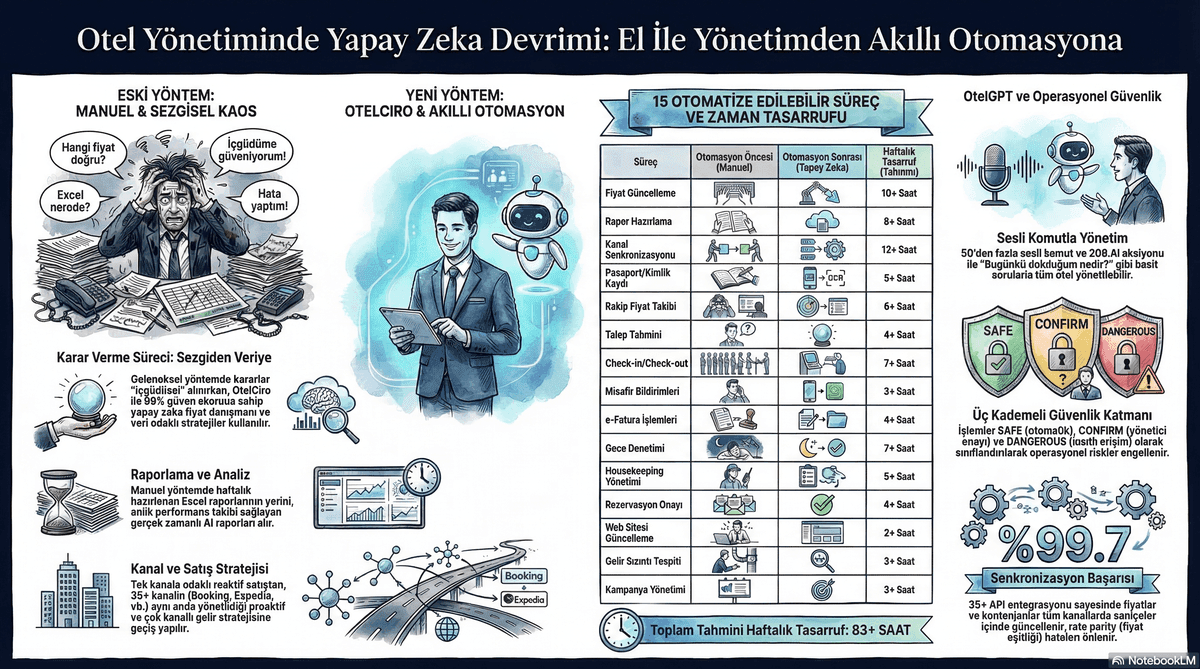
Hotels using operations management software reduce incident response times by an average of 40%. We cover this topic in more detail in our article on Hotel Staff Shortage and Technological Solutions.
Embed this image on your site
<a href="https://otelciro.com/en/news/hotel-security-emergency-planning-2026-guide">
  <img src="https://cdn.sanity.io/images/1la98t0z/production/8a93e1fc60466341571b6624007b4e830262ba56-1200x670.png" alt="OtelCiro ecosystem all-in-one platform view" width="800" />
</a>
<p>Source: <a href="https://otelciro.com">OtelCiro</a> — AI Hotel Revenue Management</p>
Guest Safety and Communication Strategy
Communicating with guests during a crisis is key to controlling panic:
- In-room information: Emergency instructions prominently displayed in rooms, in at least 3 languages
- Digital channels: Instant information via hotel app or SMS
- Front desk protocol: Security briefing during check-in (fire exit, assembly point)
- Vulnerable groups: Special evacuation plans for disabled guests, families with children, and elderly guests
From an hotel reputation management perspective, post-crisis guest communication is as important as crisis management itself. Personal contact with affected guests, compensation policies, and follow-up processes should be planned.
Related reading: Hotel Energy Management: Smart Solutions for 30% Savings
Conclusion
A hotel security and emergency plan is your hotel's most valuable insurance. A well-prepared plan prevents loss of life, minimizes material damage, and protects your hotel's reputation. After creating your plan, it is critical to turn it into a living system with regular drills and technology support.
With OtelCiro's operations management module, you can digitize your security protocols, ensuring that the right actions are taken within seconds during a crisis.
![Europe's Hotel Construction Boom: 2026 Oversupply Risks [Market Analysis]](https://cdn.sanity.io/images/1la98t0z/production/6dfe59137f56aa14bfcba86d9db3cf05ff89f406-2752x1536.jpg?w=1920&q=50&auto=format&fit=max)