![Hotel Roof Management: Maintenance, Insulation, & Solar [2026 Guide]](https://cdn.sanity.io/images/1la98t0z/production/2d703195fa641711eb55124cb2ad65d16ca6777a-2752x1536.jpg?w=1920&q=65&auto=format&fit=max)
Key Takeaways
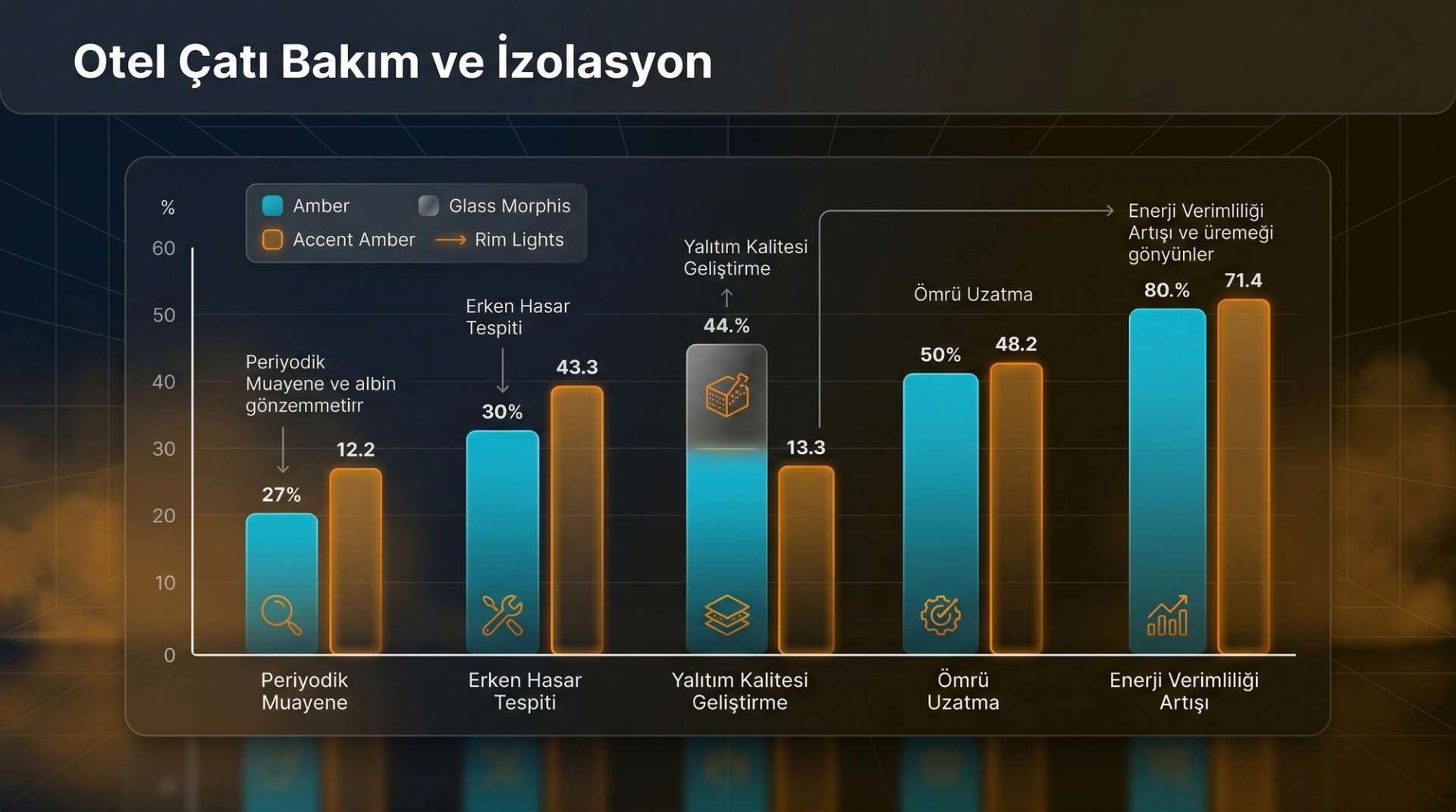
- Neglected roofs are costly: 47% of hotels in Turkey face roof leaks, leading to 2,000-5,000 TL daily revenue loss per unsellable room and potential health risks from mold.
- Waterproofing is critical: Proper material selection based on climate (e.g., UV-resistant membranes for coastal areas) and a well-maintained drainage system are essential for preventing leaks.
- Thermal insulation drives savings: Roof insulation can reduce a hotel's heating and cooling energy consumption by an average of 25%, with fire resistance being a key factor in material choice.
- Solar panels boost revenue & sustainability: Integrating solar panels can cut electricity costs by 30-50%, offer additional income from excess energy sales, and provide a 3-5 year ROI.
- Proactive maintenance is key: Shifting from reactive to proactive, digitally tracked seasonal maintenance can decrease roof-related fault costs by an average of 65%.
The Roof: A Hotel's Most Expensive Neglected Area
Hotel executives often prioritize lobby renovations, room refurbishments, and technology investments when planning budgets. However, the roof—the building's most weather-exposed surface—is often overlooked until a problem arises. This neglect is the primary reason 47% of hotels in Turkey experience roof-related water leakage issues.
The cost of roof-related problems extends beyond repairs. A room rendered unsellable due to water leakage means a daily revenue loss of 2,000-5,000 TL. Mold formation caused by leaks can also spread throughout an entire floor via the ventilation system, becoming a health risk that requires extensive restoration.
Embed this image on your site
<a href="https://otelciro.com/en/news/hotel-roof-management-maintenance-insulation-solar-2026-guide">
  <img src="https://cdn.sanity.io/images/1la98t0z/production/2d703195fa641711eb55124cb2ad65d16ca6777a-2752x1536.jpg" alt="Hotel Roof Maintenance and Insulation Management Infographic" width="800" />
</a>
<p>Source: <a href="https://otelciro.com">OtelCiro</a> — AI Hotel Revenue Management</p>
Related reading: Hotel IoT and Smart Room Technologies
Waterproofing: The Roof's Primary Line of Defense
Insulation Material Selection
Key waterproofing materials used for hotel roofs and their characteristics:
- Bituminous membrane: The most common method. Adhered by heating with a torch. Has a lifespan of 15-20 years. Suitable for flat roofs.
- PVC/TPO membrane: Mechanically fastened single-ply membrane. High UV resistance, reflects solar heat with light color options. 25-30 year lifespan.
- Liquid membrane: Sprayable or roller-applied liquid coating. Conforms to complex surfaces. 10-15 year lifespan.
- Green roof system: Vegetated roof layer. Provides waterproofing, thermal insulation, and aesthetic value. High initial cost, but %40 energy savings in the long term.
When making a selection, roof slope, regional climatic conditions, existing insulation status, and budget should be considered. Hotels in the Mediterranean and Aegean regions should prefer light-colored membranes with high UV resistance; for the Black Sea region, double-layer bituminous membranes suitable for heavy rainfall are recommended.
Drainage System
The effectiveness of waterproofing is directly related to the drainage system. Water accumulation on roofs with clogged gutters or insufficient slope will eventually penetrate even the highest quality membrane.
- The roof slope must be a minimum of %2.
- Rain gutter capacity must be calculated based on regional maximum rainfall intensity.
- Overflow points and emergency drain holes must be present.
- Leaf filter guards must be cleaned seasonally.
Thermal Insulation: The Invisible Enemy of Energy Costs
30-40% of energy consumption in a hotel comes from heating and cooling systems. A significant portion of this energy is lost due to inadequate roof insulation. According to data from the Ministry of Energy and Natural Resources, roof insulation application provides an average of %25 energy savings.
Insulation Materials and Comparison
| Material | Thermal Conductivity (W/mK) | Thickness (cm) | Cost | Lifespan |
|---|---|---|---|---|
| EPS (Styrofoam) | 0,035-0,040 | 8-12 | Low | 30+ years |
| XPS | 0,028-0,036 | 6-10 | Medium | 30+ years |
| Stone Wool | 0,035-0,040 | 8-12 | Medium | 50+ years |
| Polyurethane Spray | 0,022-0,028 | 5-8 | High | 25+ years |
| PIR Panel | 0,022-0,025 | 4-7 | High | 30+ years |
The most critical parameter in hotel roof insulation is fire resistance. Stone wool, with its A1 class non-flammability, is the safest option. Polyurethane spray offers the highest insulation with the lowest thickness, providing an advantage for retrofit applications on existing roofs.
Related reading: Automation in Hotel Operations: Digitizing Business Processes
Solar Panel Integration: Turning the Roof into a Revenue Source
In 2026, %18 of hotels in Turkey utilize rooftop solar panels (GES), and this rate is rapidly increasing. Hotel roofs often provide large, unobstructed, south-facing surfaces, making them ideal areas for GES.
Advantages of hotel rooftop GES:
- %30-50 savings in electricity costs.
- Additional income from selling excess production to the grid.
- Reduction of carbon footprint and sustainability certification.
- Investment payback period in Turkish conditions is 3-5 years.
Points to consider:
- The roof's static load must support the panel weight (15-25 kg/m²).
- Waterproofing must be complete and robust before panel installation.
- Ventilation beneath the panels must be ensured; otherwise, the roof surface will heat up, reducing insulation performance.
- A minimum 60 cm corridor must be left between panel arrays for maintenance access.
Periodic Maintenance Schedule and Digital Tracking
Systematizing roof maintenance means transitioning from a reactive (after a problem occurs) to a proactive (before a problem occurs) approach. This transition reduces roof-related fault costs by an average of %65.
Seasonal maintenance schedule:
- Spring (March-April): General inspection for winter damage, drainage system cleaning, membrane check.
- Summer (June-July): GES panel cleaning, temperature-induced expansion control, terrace insulation inspection.
- Autumn (September-October): Winter preparation, gutter and drain cleaning, repair of loose membrane edges.
- Winter (December-January): Snow load check, ice accumulation inspection, emergency drain point opening check.
With the OtelCiro operations management module, roof maintenance schedules can be digitally planned, photographic inspection reports can be generated, and maintenance costs can be analyzed by area.
Conclusion: Every Investment in the Roof Has a Return
While hotel roof maintenance and insulation management may appear as a cost in the short term, it is one of the investments with the highest return rate in the long run. Proper waterproofing prevents room losses, effective thermal insulation reduces energy bills, and solar panels transform the roof into a revenue source.
As energy costs and sustainability expectations rapidly increase in 2026, hotels that invest in their roofs will outperform their competitors in terms of both operational efficiency and guest perception.

![Europe's Hotel Construction Boom: 2026 Oversupply Risks [Market Analysis]](https://cdn.sanity.io/images/1la98t0z/production/6dfe59137f56aa14bfcba86d9db3cf05ff89f406-2752x1536.jpg?w=1920&q=50&auto=format&fit=max)