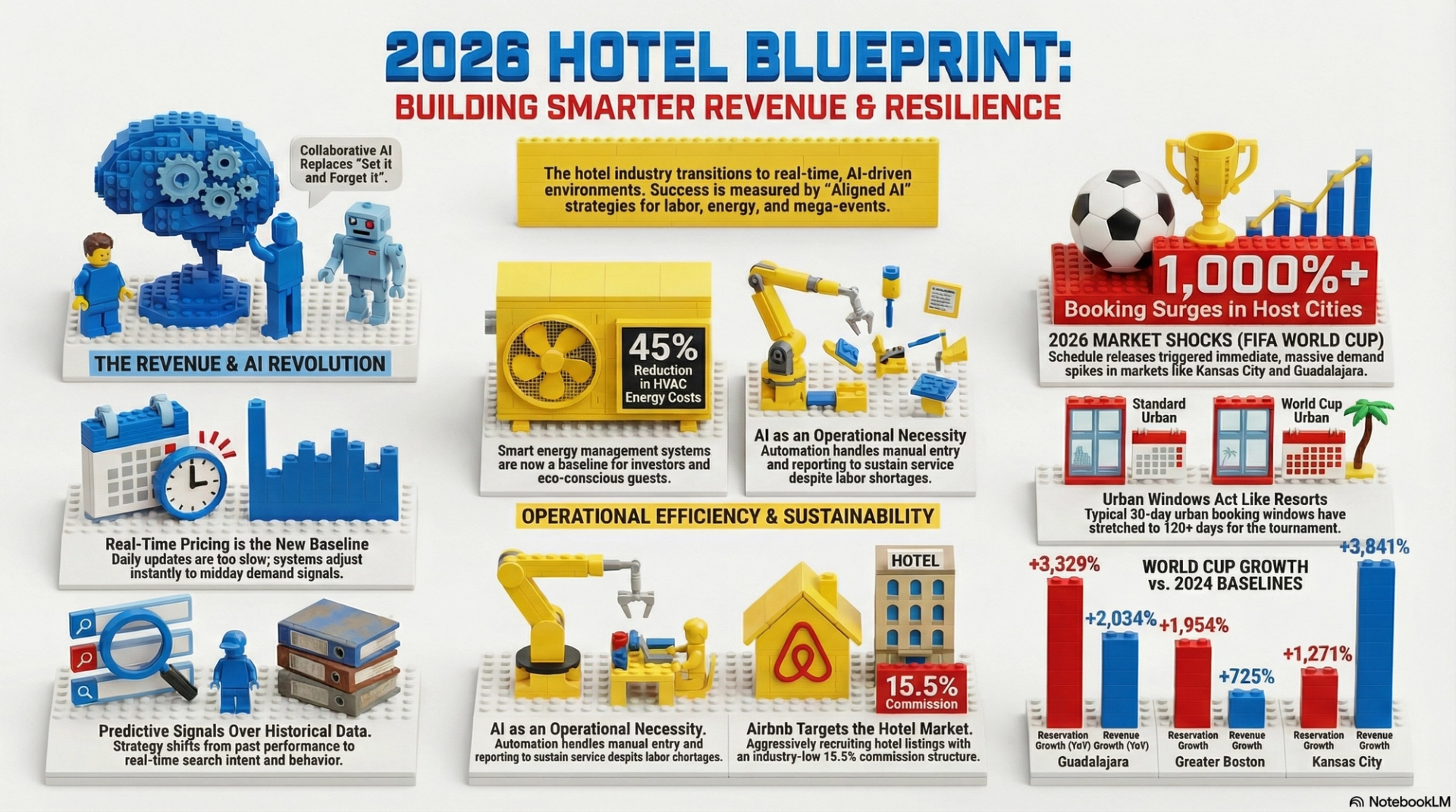
![Hotel Reputation Management: Complete Guide [2026]](https://cdn.sanity.io/images/1la98t0z/production/4986ef92c7f1a19d4b89cec2a91c045a8425f856-1376x768.jpg?w=1920&q=65&auto=format&fit=max)
Your Online Reputation Is Your Revenue Engine
A Cornell University study found that a one-point increase in a hotel's review score (on a 5-point scale) allows it to raise prices by 11.2% while maintaining the same occupancy. Conversely, a 0.5-point decline can reduce bookings by 15-25%. In 2026, online reputation is not a marketing metric — it is a financial instrument that directly drives revenue.
The average traveler reads 6-10 reviews before making a booking decision. 93% say online reviews influence their hotel choice. And the impact extends beyond individual bookings — review scores influence OTA ranking algorithms, Google search visibility, and even corporate travel program eligibility.

Embed this image on your site
<a href="https://otelciro.com/en/news/hotel-reputation-management-guide">
  <img src="https://cdn.sanity.io/images/1la98t0z/production/4986ef92c7f1a19d4b89cec2a91c045a8425f856-1376x768.jpg" alt="Hotel online reputation management infographic" width="800" />
</a>
<p>Source: <a href="https://otelciro.com">OtelCiro</a> — AI Hotel Revenue Management</p>
Related reading: Hotel Loyalty Program Design: Building Guest Retention in 2026
The Review Landscape in 2026
Platform Market Share for Hotel Reviews
| Platform | Share of Hotel Reviews | Key Characteristic |
|---|---|---|
| 38% | Highest search visibility | |
| Booking.com | 28% | Verified stay reviews only |
| TripAdvisor | 18% | Largest total review volume |
| Expedia Group | 10% | Post-stay verified reviews |
| Others | 6% | Niche platforms, social media |
The Review Score Benchmarks
Industry benchmarks by hotel segment (composite score on 10-point scale):
- Luxury: 9.0+ expected, 8.7 average
- Upper midscale: 8.5+ expected, 8.2 average
- Midscale: 8.0+ expected, 7.8 average
- Economy: 7.5+ acceptable, 7.2 average
Falling below your segment benchmark by more than 0.3 points signals a competitive disadvantage that requires immediate attention.
Embed this image on your site
<a href="https://otelciro.com/en/news/hotel-reputation-management-guide">
  <img src="https://cdn.sanity.io/images/1la98t0z/production/d2071d97fead43e0ad7397aaa4b3feefc6d1625f-1200x669.png" alt="Hotel guest special request management" width="800" />
</a>
<p>Source: <a href="https://otelciro.com">OtelCiro</a> — AI Hotel Revenue Management</p>
The Reputation Management Framework
Pillar 1: Review Generation
Most satisfied guests do not leave reviews unless prompted. A systematic review generation strategy can increase review volume by 200-400%.
Tactics:
- Post-stay email requesting a review (send 24-48 hours after checkout)
- In-room QR code linking to review platform
- Front desk verbal request to departing satisfied guests
- Follow-up SMS for mobile-savvy demographics
Timing matters: Reviews requested within 48 hours of checkout are 3x more likely to be positive than those solicited a week later.
Pillar 2: Review Response
Responding to reviews — both positive and negative — is a ranking factor on Booking.com and Google. But more importantly, future guests read your responses to judge how you handle feedback.
Response framework for negative reviews:
- Acknowledge: "Thank you for sharing your feedback about [specific issue]."
- Apologize: "We sincerely apologize for the inconvenience you experienced."
- Address: Explain what happened and what has been done to fix it.
- Action: Describe the specific improvement implemented.
- Invite: "We would love the opportunity to welcome you back."
Response framework for positive reviews:
- Thank: Express genuine gratitude.
- Personalize: Reference a specific detail from their review.
- Reinforce: Mention the team or aspect they praised.
- Invite: Encourage them to return.
Response time targets:
- Negative reviews: Within 24 hours
- Positive reviews: Within 48 hours
- All reviews: 100% response rate
Pillar 3: Review Analysis
Individual reviews tell stories; aggregate data reveals patterns. Systematic analysis identifies:
- Recurring complaints: Issues mentioned in 10%+ of reviews require operational fixes
- Seasonal patterns: Some issues are seasonal (AC complaints in summer, heating in winter)
- Departmental performance: Separate scores for rooms, F&B, reception, housekeeping
- Competitive comparison: How your scores compare to your comp set
Pillar 4: Operational Improvement
Reputation management is not just about managing reviews — it is about fixing the operational issues that generate negative reviews in the first place.
The Review-to-Action Process:
- Categorize negative feedback by department and issue type
- Identify the top 3 most frequent complaints
- Create action plans with owners and deadlines
- Implement fixes and track review sentiment change
- Report results monthly
The Revenue Impact of Reviews
| Review Score Change | ADR Impact | Occupancy Impact | RevPAR Impact |
|---|---|---|---|
| +0.5 points | +5-8% | +3-5% | +8-13% |
| +1.0 point | +10-15% | +5-8% | +15-23% |
| -0.5 points | -5-8% | -5-10% | -10-18% |
| -1.0 point | -12-18% | -10-15% | -22-33% |
These numbers make reputation management one of the highest-ROI investments a hotel can make.
Embed this image on your site
<a href="https://otelciro.com/en/news/hotel-reputation-management-guide">
  <img src="https://cdn.sanity.io/images/1la98t0z/production/8a93e1fc60466341571b6624007b4e830262ba56-1200x670.png" alt="OtelCiro ecosystem all-in-one platform overview" width="800" />
</a>
<p>Source: <a href="https://otelciro.com">OtelCiro</a> — AI Hotel Revenue Management</p>
Advanced Reputation Strategies
Sentiment Analysis
AI-powered sentiment analysis goes beyond star ratings to understand the emotional content of reviews. A 4-star review with phrases like "disappointing" and "expected more" carries different intelligence than one with "good value" and "will return."
Competitive Benchmarking
Track your review scores relative to your 5-10 closest competitors. Month-over-month trends in the gap between your score and the comp set average are a leading indicator of market share shifts.
Review Fraud Detection
Monitor for suspicious patterns: clusters of 1-star reviews from new accounts, reviews mentioning issues that do not match your property, or coordinated attacks. Report suspected fraud to platforms promptly.
OtelCiro: AI-Powered Reputation Management
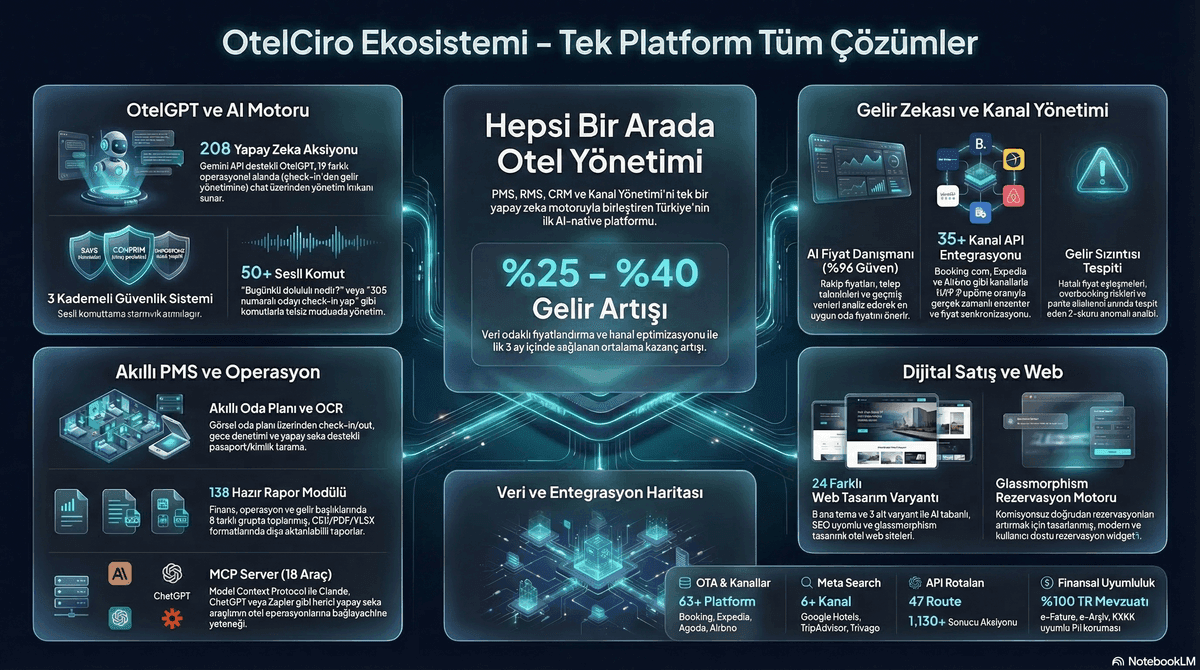
OtelCiro's OtelGPT automates review management with AI-generated response suggestions, sentiment analysis across all platforms, and operational insight dashboards that connect review themes to actionable improvements.
For related reading, explore our reputation management ROI analysis and guest experience personalization guide.
Conclusion
Online reputation management is a discipline that pays compound dividends. Every operational improvement that raises your review score creates a virtuous cycle: higher scores attract more bookings, more bookings create more review opportunities, more reviews (if the experience is strong) further raise scores. The hotels that systematize this process outperform their competitors not by a small margin, but by a transformative one.
Discover how OtelCiro's OtelGPT can automate your reputation management and turn guest feedback into your most powerful revenue growth engine.
![Hotel Loyalty Programs: Build Guest Retention [2026]](https://cdn.sanity.io/images/1la98t0z/production/f66974d43b9a051f4fd8198d1de277c824e8cf2e-1376x768.jpg?w=1920&q=50&auto=format&fit=max)
![Hotel Guest Personalization: Proven AI Strategies [2026]](https://cdn.sanity.io/images/1la98t0z/production/833166adc6638b67c30d3468569499b6adacc1c9-1376x768.jpg?w=1920&q=50&auto=format&fit=max)