Key Takeaways
- Strategic Imperative: Changing your Property Management System (PMS) is a critical, often unavoidable "heart transplant" for your hotel's digital infrastructure, essential for combating revenue loss and operational inefficiency.
- Industry Trend & Challenge: 38% of hotels plan a PMS change within the next two years, yet 25% of these transitions exceed their planned timelines and budgets.
- Comprehensive Roadmap: A successful PMS migration follows a detailed 10-step process, from initial needs analysis and budget planning to vendor selection, data cleaning, integration, staff training, go-live, and continuous optimization.
- Risk Mitigation: Proactive strategies are crucial for managing risks like data loss, integration failures, staff resistance, budget overruns, and temporary service disruptions.
- Long-Term Investment: Timely PMS migration is a high-impact investment in your hotel's technology infrastructure, ensuring modern capabilities (AI, automation) and sustained operational excellence.
Changing Your PMS: Daunting Yet Necessary
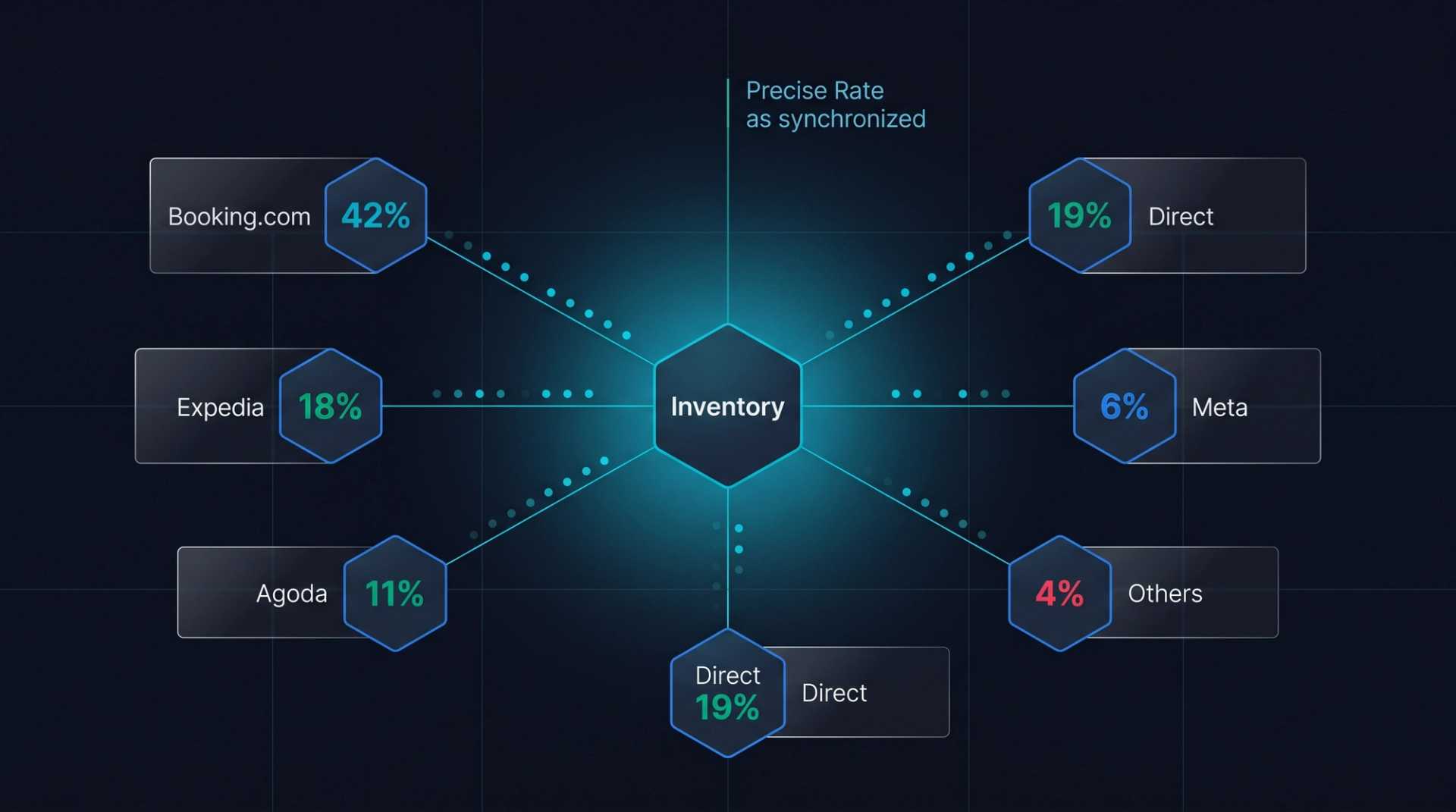
A PMS (Property Management System) is the digital backbone of a hotel. Changing a PMS is like a "heart transplant operation"—critical, risky, yet sometimes inevitable. An old, unsupported, or inadequate PMS leads to daily revenue loss and operational inefficiencies.
According to Hospitality Technology's 2025 research, 38% of hotels plan to change their PMS within the next 2 years. However, 25% of PMS migrations exceed their planned timelines, incurring additional costs.
In this guide, we will present a 10-step roadmap to ensure a smooth PMS transition.

Embed this image on your site
<a href="https://otelciro.com/en/news/hotel-pms-migration-a-2025-strategy-guide">
  <img src="https://cdn.sanity.io/images/1la98t0z/production/2b62328aaf95a015ef3ba88eebade42a390840c1-1376x768.jpg" alt="Hotel PMS migration roadmap" width="800" />
</a>
<p>Source: <a href="https://otelciro.com">OtelCiro</a> — AI Hotel Revenue Management</p>
Related reading: Hotel Management with Smart PMS: Transitioning from Traditional Systems to AI-Powered Platforms
Related reading: Hotel AI Email Automation: Personalized Communication
Is It Time to Change Your PMS?
If you observe 3 or more of the following symptoms, it might be time to change your PMS:
- Software no longer receives updates or support has ended
- API integrations are unsupported or very limited
- No cloud access (only accessible from in-house hotel network)
- Mobile access is not supported
- Reporting is insufficient or does not meet current needs
- Channel manager integration is problematic
- Staff constantly complain
- The interface is old and cumbersome to use
- License/maintenance costs are rapidly increasing
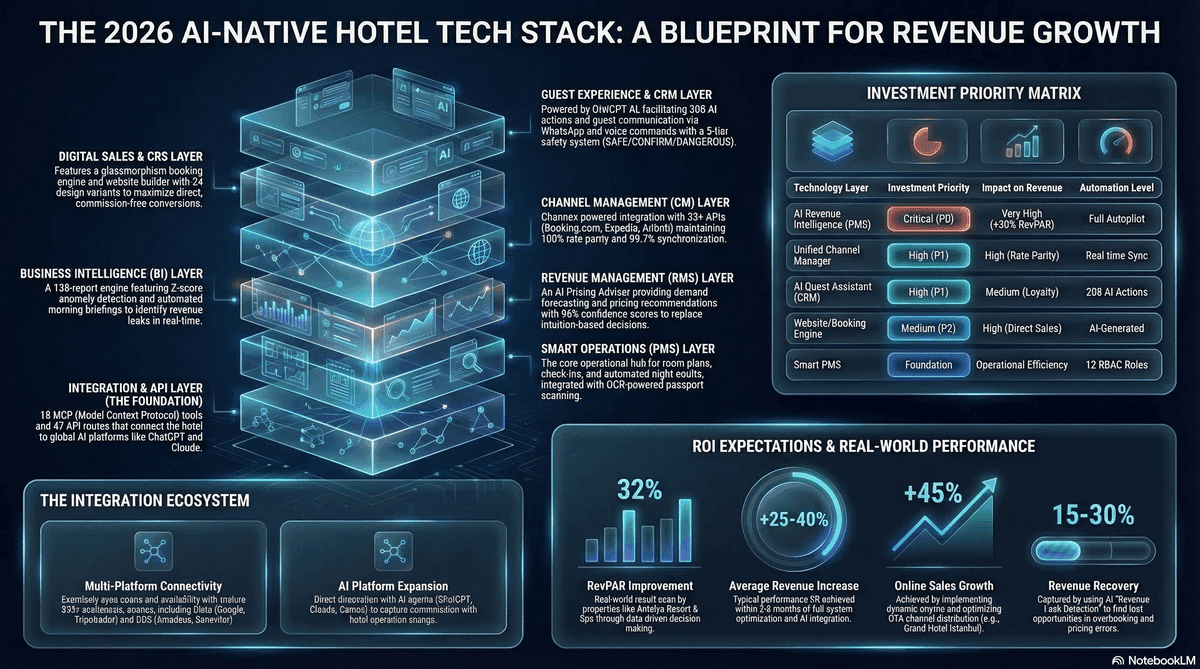
- New features (AI, automation) cannot be added
Embed this image on your site
<a href="https://otelciro.com/en/news/hotel-pms-migration-a-2025-strategy-guide">
  <img src="https://cdn.sanity.io/images/1la98t0z/production/81bc7a877e8a45c5e6bf4db244cf9b8cb0d343dd-1200x669.png" alt="Essential hotel technology infrastructure tools" width="800" />
</a>
<p>Source: <a href="https://otelciro.com">OtelCiro</a> — AI Hotel Revenue Management</p>
10-Step PMS Migration Roadmap
Step 1: Needs Analysis (2 weeks)
Identify what your current PMS does well and where it falls short. Gather feedback from all departments:
- Front Desk: Check-in/out speed, interface usability
- Revenue: Reporting quality, pricing flexibility
- Sales: Channel management, CRM integration
- Accounting: Invoicing, financial reporting
- IT: Integration, security, maintenance cost
Step 2: Budget and Timeline (1 week)
Determine the total migration budget:
- New PMS license/subscription cost
- Data migration cost
- Integration setup cost
- Staff training cost (and temporary productivity loss)
- Consulting cost (if necessary)
Step 3: Vendor Selection (3-4 weeks)
Conduct demos with at least 3 vendors. Evaluation criteria:
| Criteria | Weight |
|---|---|
| Functional fit | %25 |
| Integration capability | %20 |
| Cloud infrastructure quality | %15 |
| Support quality | %15 |
| Pricing | %10 |
| References | %10 |
| Migration support | %5 |
Step 4: Contract and Planning (2 weeks)
- Clarify SLA terms (uptime, support response time)
- Check data ownership clauses
- Include an exit strategy in the contract
- Document the migration timeline and responsibilities in writing
Step 5: Data Cleansing (2-4 weeks)
Cleanse data from the old PMS before migration:
- Consolidate duplicate guest records
- Archive outdated data
- Determine historical data scope (last 3-5 years is usually sufficient)
- Check data format (character encoding, date format)
Step 6: Data Migration (2-4 weeks)
Critical data to migrate:
- Guest profiles and stay history
- Future reservations (must be transferred completely)
- Corporate agreements and rate plans
- Rate plans and restrictions
- Accounting data (fiscal year)
Step 7: Integration Setup (2-4 weeks)
Connecting all linked systems to the new PMS:
- Channel manager
- Booking engine
- POS system
- Accounting software
- Payment gateway
- Housekeeping system
- RMS
Test each integration individually.
Step 8: Staff Training (1-2 weeks)
- Department-specific training plan
- Minimum 2 full days of hands-on training
- Train "super users"—one person from each department
- Prepare training materials (manuals, videos)
Step 9: Go-Live (1-2 weeks)
Timing is critical: Go live during a low occupancy period. Absolutely avoid going live in the middle of high season.
First week:
- Onsite support from the vendor
- Daily data verification
- Issue logging and rapid resolution
- Keep the old system parallel for a few more days
Step 10: Optimization (continuous)
After go-live:
- First 30 days: Configure automation rules
- First 60 days: Customize reporting dashboards
- First 90 days: Activate business process automation
- Ongoing: Staff feedback, additional training, feature discovery
Related reading: E-Invoicing and Digital Accounting in Hotels: GİB Integration Guide (2026)
Migration Risks and Management
| Risk | Likelihood | Impact | Management Strategy |
|---|---|---|---|
| Data loss | Low | Very High | Multiple backups, verification |
| Integration failure | Medium | High | Comprehensive testing, backup plan |
| Staff resistance | High | Medium | Early communication, training |
| Budget overrun | Medium | Medium | 20% contingency budget |
| Temporary service disruption | Low | High | Low-season transition |
Embed this image on your site
<a href="https://otelciro.com/en/news/hotel-pms-migration-a-2025-strategy-guide">
  <img src="https://cdn.sanity.io/images/1la98t0z/production/e7bafa9293f887b24a2d4d0d26684221705d0113-1200x669.png" alt="Cloud-based PMS advantages and comparison" width="800" />
</a>
<p>Source: <a href="https://otelciro.com">OtelCiro</a> — AI Hotel Revenue Management</p>
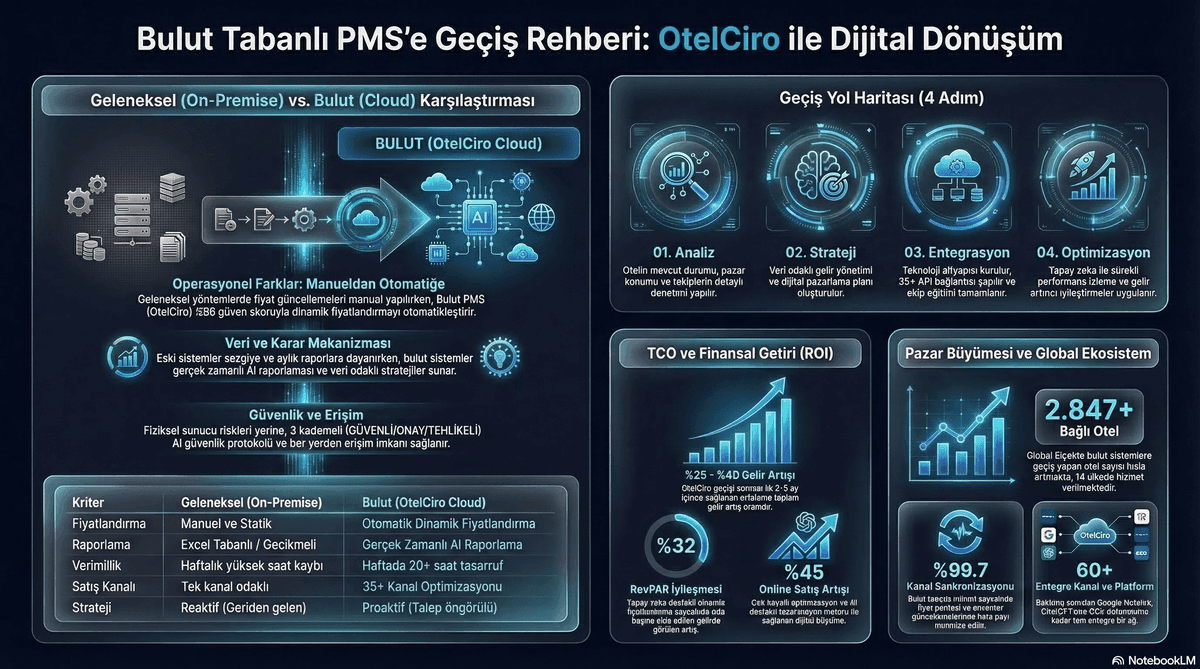
Migrating to OtelCiro Smart PMS
OtelCiro provides end-to-end support for the PMS migration process. We guarantee a smooth transition with data migration tools, integration support, staff training, and onsite go-live assistance.
Related reading: Housekeeping Automation: 7 Steps to Digitizing Hotel Operations
Conclusion
PMS migration is one of the most impactful investments a hotel can make in its technology infrastructure. With proper planning, comprehensive testing, and phased implementation, risks can be minimized.
Delaying migration means ongoing operational inefficiency and revenue loss every day. Choose the right PMS, plan well, and transition boldly.
![Europe's Hotel Construction Boom: 2026 Oversupply Risks [Market Analysis]](https://cdn.sanity.io/images/1la98t0z/production/6dfe59137f56aa14bfcba86d9db3cf05ff89f406-2752x1536.jpg?w=1920&q=50&auto=format&fit=max)