Key Takeaways
- A single pest sighting can severely damage a hotel's reputation and lead to significant financial losses, with 94% of affected guests not returning.
- Negative pest-related reviews reduce hotel scores by an average of 1.2 points, taking 6-12 months to recover.
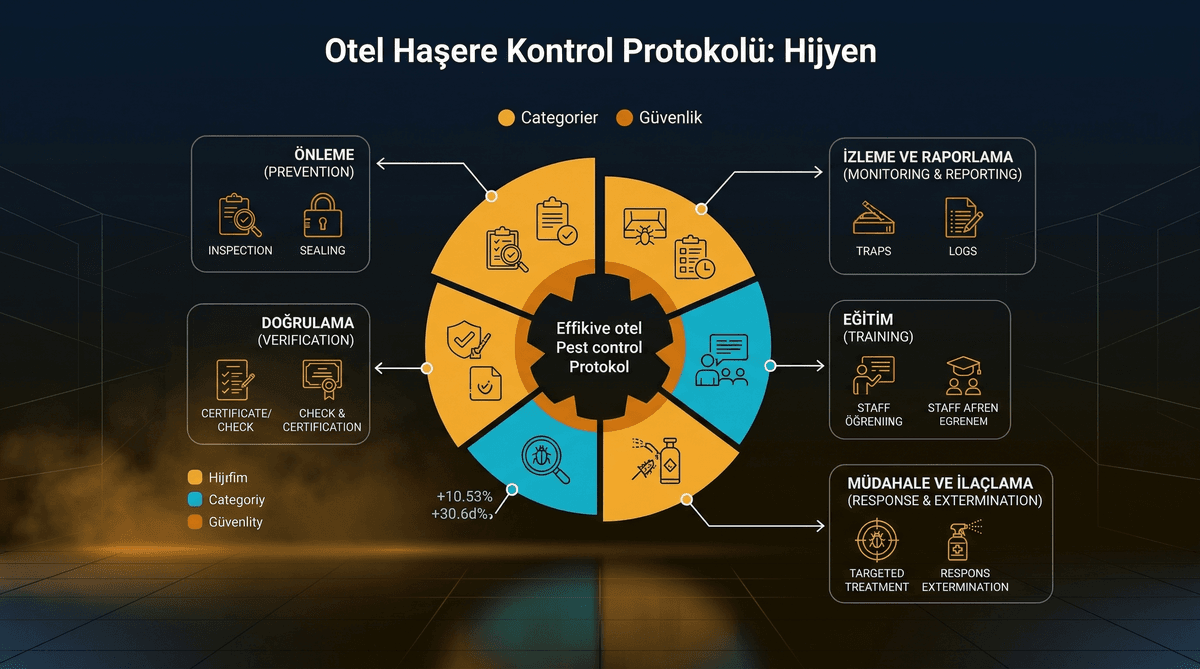
- An Integrated Pest Management (IPM) approach, prioritizing exclusion, sanitation, and monitoring over chemical use, is the gold standard for effective control.
- Implementing a systematic pest control calendar (daily, weekly, monthly, quarterly, yearly) and comprehensive staff training can drastically reduce complaint rates and detection times.
- Digital pest management tools enhance compliance, automate tasks, provide trend analysis, and can reduce intervention costs by 70-80% through early detection.
The Pest Problem: A Leading Reputation Risk for Hotels
In the hotel industry, reputation is built over years but can be shattered in minutes by a single pest sighting. In the age of social media, a photo of a single cockroach seen by a guest in their room can reach thousands, dramatically lowering the hotel's rating.
According to TripAdvisor data, negative pest-related reviews reduce a hotel's overall score by an average of 1.2 points, and it takes 6-12 months to recover from this score loss. Even more critically, 94% of guests who encounter a pest problem state they will not return to the same hotel.
65% of hotels in Turkey receive at least one pest-related guest complaint annually. This rate drops below 8% for hotels implementing a systematic pest control protocol.
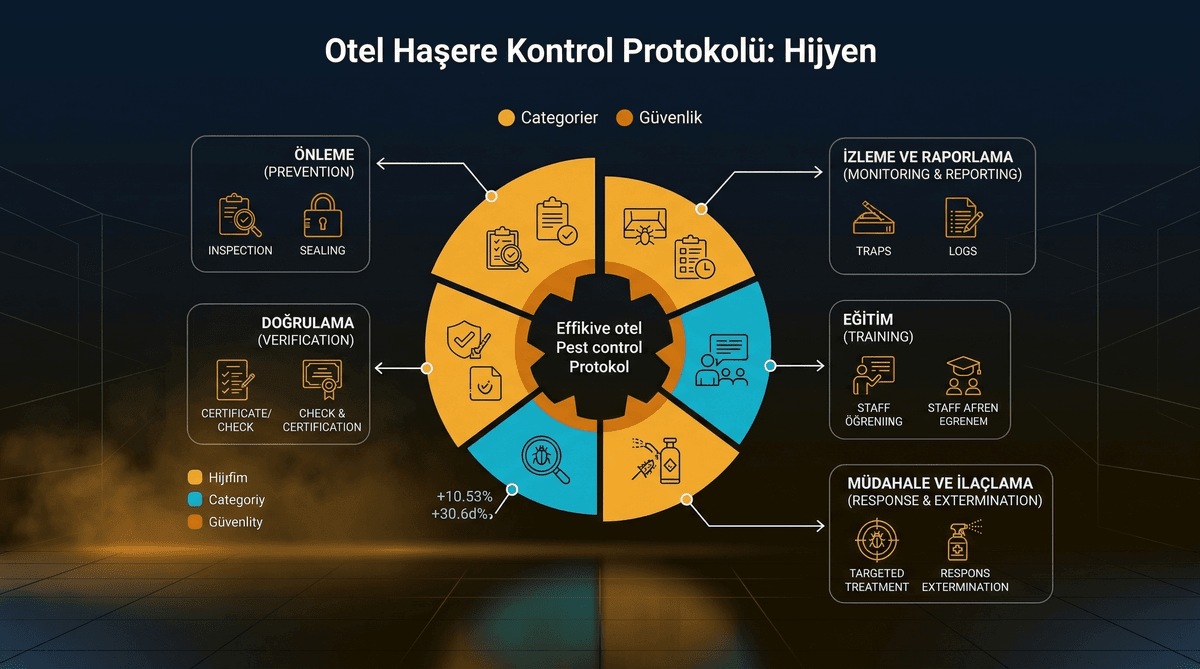
Embed this image on your site
<a href="https://otelciro.com/en/news/hotel-pest-control-protocol-a-2024-strategy-guide">
  <img src="https://cdn.sanity.io/images/1la98t0z/production/4978ffe312f570fd2503f4c0a92bf28b2a601852-1200x669.png" alt="Haşere Kontrol Protokolü İnfografiği" width="800" />
</a>
<p>Source: <a href="https://otelciro.com">OtelCiro</a> — AI Hotel Revenue Management</p>
Related reading: Hotel Security and Emergency Plan
Most Common Pest Types in Hotels
Cockroaches
These are the number one enemy of hotels. They prefer damp, warm, and dark areas. Kitchens, laundries, basements, and bathroom areas are their primary habitats. A female cockroach can lay 300-400 eggs per year, making early detection critical.
Bed Bugs
A globally resurgent threat in recent years, bed bugs are carried from hotel to hotel in guest luggage. A bed bug infestation can render a room unusable for days, with treatment costs ranging from 5,000-15,000 TL per room.
Rodents
Mice and rats pose problems, especially in food storage areas and on the building exterior. They carry high health risks, and their detection may lead to legal notification obligations.
Ants
They concentrate in kitchen and food and beverage areas, particularly during summer months. While not a severe health risk on their own, they negatively affect guest perception.
Flying Insects
Flies, mosquitoes, and moths create issues, especially in outdoor restaurants and lobby areas. They must be controlled for guest comfort as well as food safety.
Integrated Pest Management (IPM) Approach
In modern pest control, the "Integrated Pest Management" (IPM) approach is the gold standard. This approach views chemical treatment as a last resort, prioritizing prevention, monitoring, and physical control methods.
1. Exclusion
Preventing pests from entering the building is the most effective and economical way to control them:
- Door sweeps: All exterior doors should have no gaps wider than 3 mm.
- Window screens: All operable windows must be equipped with screens.
- Pipe penetrations: Gaps around all pipes passing through walls and floors must be sealed.
- Roof and facade repair: Cracks, holes, and worn surfaces should be regularly repaired.
2. Sanitation
Eliminating the three basic factors that attract pests: food, water, and shelter:
- Kitchens must be thoroughly cleaned at the end of each shift.
- Trash containers must be cleaned daily and kept covered.
- Water puddles and leaks must be rectified within 24 hours.
- "Off-the-floor storage" principles should be applied in storage areas.
3. Monitoring and Early Detection
Regular monitoring is essential to catch a small problem before it turns into a major infestation:
- Sticky traps: Traps placed at critical points are checked weekly.
- Visual inspection: Daily routine checks are performed by trained personnel.
- Digital recording system: All detection and intervention records are maintained digitally.
4. Chemical Control (Last Resort)
Pesticide application is only employed when other methods prove insufficient. In a hotel environment:
- Odorless and residue-free formulations should be preferred in guest rooms.
- Sufficient ventilation time after application must be ensured.
- Only food safety-certified products should be used in food areas.
Related reading: Housekeeping Automation: 7 Steps to Digitalization
Pest Control Calendar
An effective pest control program requires a regular and systematic approach:
Daily: Inspection of kitchen and food & beverage areas, trash area checks.
Weekly: Sticky trap checks, exterior facade inspection, storage area checks.
Monthly: General application by a professional pest control firm, analysis of trap data.
Quarterly: Comprehensive building inspection, review of exclusion measures, seasonal risk assessment.
Annually: IPM plan revision, supplier performance evaluation, staff training refresh.
Staff Training and Awareness
Pest control is the responsibility of all hotel staff, not just the pest control firm. The training program should cover:
- Recognizing common pest types.
- Initial detection procedures and notification chain.
- Food safety practices.
- Relationship between cleaning standards and pests.
- Communication protocol in case of guest complaints.
In hotels with trained personnel, the average pest detection time decreases from 72 hours to 12 hours. This early detection reduces intervention costs by 70-80%.
Digital Pest Management Tools
A modern hotel operations management system digitizes pest control processes:
- Automated task assignment: Automatic assignment of planned inspections to relevant personnel.
- Photo reporting: Instant photographic documentation of detected issues.
- Trend analysis: Visualization of where and when problems are most concentrated.
- Compliance tracking: Tracking the validity of legal requirements and pest control certifications.
- Supplier management: Performance evaluation and contract tracking for pest control firms.
Pest control is one of the silent heroes of a hotel. When managed well, nobody notices; when managed poorly, everyone talks. A systematic IPM program protects the hotel's reputation and guest safety while keeping costs under control.

![Europe's Hotel Construction Boom: 2026 Oversupply Risks [Market Analysis]](https://cdn.sanity.io/images/1la98t0z/production/6dfe59137f56aa14bfcba86d9db3cf05ff89f406-2752x1536.jpg?w=1920&q=50&auto=format&fit=max)