![Hotel ML: Demand & Price Forecasting [2026 Guide]](https://cdn.sanity.io/images/1la98t0z/production/bfa123a3143572832d44eaf7a5ee49408590fe7b-1376x768.jpg?w=1920&q=65&auto=format&fit=max)
Key Takeaways
- Machine Learning (ML) transforms hotel revenue management by analyzing vast datasets to uncover complex demand and pricing patterns, surpassing traditional statistical methods.
- Hotels utilizing ML-based forecasting systems can achieve 15-25% more accurate predictions and an 8-12% increase in RevPAR compared to conventional approaches.
- ML applications in hospitality are diverse, including precise demand forecasting, dynamic price optimization, cancellation prediction, customer lifetime value (CLV) estimation, and sentiment analysis from guest reviews.
- Implementing ML involves a structured pipeline: data collection, preparation, model training (using algorithms like Random Forest, XGBoost, LSTM), validation, prediction, and continuous learning to adapt to new data.
- While offering significant advantages, successful ML adoption requires high-quality data, careful management of overfitting risks, and essential human oversight to intervene during unprecedented events or system anomalies.
Why Machine Learning is Transforming Hotel Management
Traditional revenue management relies on simple statistical analysis of historical data. The assumption, "Last year's occupancy for this period was 75%, so this year will be similar," works in stable markets. However, in the dynamic market conditions of 2026 — with shifting travel patterns, sudden demand fluctuations, and digital transformation — this approach falls short.
Machine learning (ML) analyzes hundreds of variables simultaneously, detecting patterns that the human brain cannot comprehend. According to Phocuswright's research, hotels using ML-based forecasting systems achieve 15-25% more accurate predictions and 8-12% higher RevPAR compared to traditional methods.
In this article, we will examine the types of ML models used in hospitality, their application areas, and their comparison with traditional methods.

Embed this image on your site
<a href="https://otelciro.com/en/news/hotel-ml-demand-price-forecasting-2026-guide">
  <img src="https://cdn.sanity.io/images/1la98t0z/production/bfa123a3143572832d44eaf7a5ee49408590fe7b-1376x768.jpg" alt="Machine learning and forecasting models in hotels" width="800" />
</a>
<p>Source: <a href="https://otelciro.com">OtelCiro</a> — AI Hotel Revenue Management</p>
Related reading: Smart PMS for Hotel Management: Transition from Traditional Systems to AI-Powered Platforms
Related reading: Hotel AI Email Automation: Personalized Communication
Applications of ML in Hospitality
1. Demand Forecasting
This is the most critical application area. An ML model analyzes historical data, events, weather, competitor prices, and macroeconomic indicators to predict future demand.
Input variables:
- Historical occupancy and revenue data (2-3 years)
- Booking pace data
- Competitor prices and occupancy
- Regional event calendar
- Weather forecasts
- Air/bus ticket prices
- Search trend data (Google Trends)
2. Dynamic Price Optimization
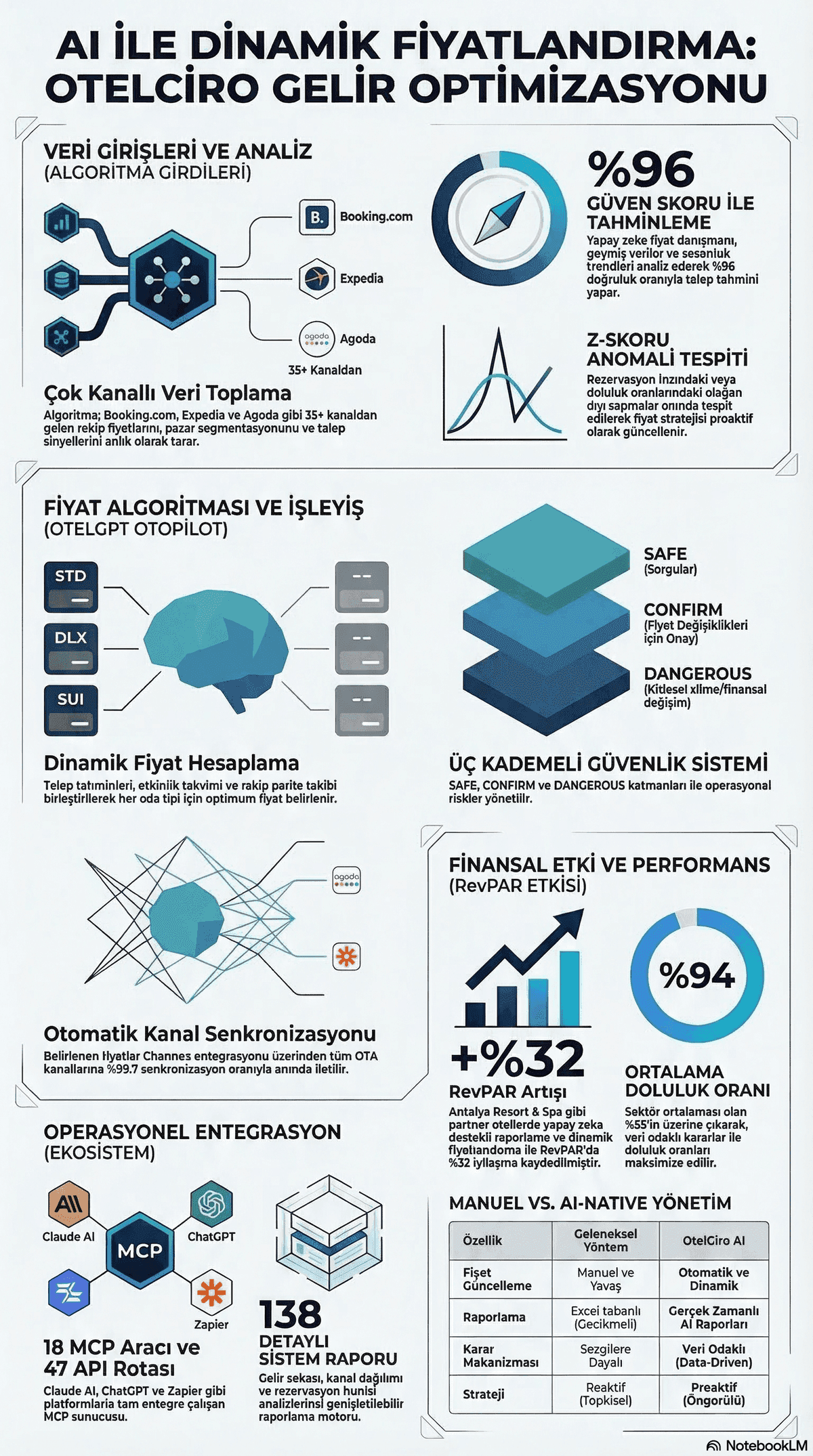
ML determines the optimum price for each room type, channel, and date, based on demand forecasts. While a human revenue manager might adjust prices once a day, an ML system can do so on a minute-by-minute basis.
3. Cancellation Prediction Model
Which reservations are likely to be canceled? ML analyzes reservation characteristics (lead time, source channel, past guest behavior, payment type) to predict the probability of cancellation.
| Variable | Cancellation Correlation |
|---|---|
| Free cancellation policy | High (+) |
| Long lead time (90+ days) | High (+) |
| OTA channel | Medium (+) |
| Returning guest | Low (-) |
| Non-refundable rate | Very low (-) |
| Short lead time (0-7 days) | Low (-) |
4. Customer Lifetime Value (CLV)
ML analyzes guest profiles to predict how much revenue they will generate for your hotel in the future. By paying special attention to high-CLV guests, you can increase loyalty.
5. Sentiment Analysis
Comment Analysis with NLP automatically categorizes thousands of guest reviews to identify your strengths and weaknesses.
Embed this image on your site
<a href="https://otelciro.com/en/news/hotel-ml-demand-price-forecasting-2026-guide">
  <img src="https://cdn.sanity.io/images/1la98t0z/production/ca584d448cd6c3a6150a46c0e1881553f42a99b2-1200x669.png" alt="Hotel automation and business process flow" width="800" />
</a>
<p>Source: <a href="https://otelciro.com">OtelCiro</a> — AI Hotel Revenue Management</p>
ML Pipeline: From Data to Action
1. Data Collection
Data extraction from PMS, channel manager, rate shopper, web analytics, and external sources.
2. Data Preparation
Filling in missing data, cleaning outliers, feature engineering.
3. Model Training
Model training on historical data. Common algorithms:
- Random Forest: Strong for demand forecasting
- Gradient Boosting (XGBoost): Popular for price optimization
- LSTM (Neural Network): Effective for time series forecasting
- Ensemble Methods: Combination of multiple models
4. Model Validation
Model accuracy is measured with test data kept separate from the training set. Key metric: MAPE (Mean Absolute Percentage Error). In hospitality, 5-8% MAPE is considered good.
5. Prediction and Action
The model goes live, generates predictions, and is integrated into pricing and inventory decisions.
6. Continuous Learning
The model is regularly updated with new data, and its accuracy improves over time.
Related reading: e-Invoice and Digital Accounting in Hotels: GİB Integration Guide (2026)
Related reading: Hotel API Integration: The Foundation of Modern Hotel Management
Traditional vs. ML-Based Forecasting
| Criterion | Traditional (Statistical) | ML-Based |
|---|---|---|
| Number of variables | 3-5 | 50-200+ |
| Accuracy (MAPE) | 12-18% | 5-10% |
| Adaptation speed | Slow (manual update) | Fast (automatic learning) |
| Response to unexpected events | Weak | Medium-Good |
| Segment-based forecasting | Limited | Detailed |
| Initial setup time | Short | Long (data preparation) |
| Operational cost | Low | Medium |
| Transparency | High (understandable formula) | Low (black box risk) |
Embed this image on your site
<a href="https://otelciro.com/en/news/hotel-ml-demand-price-forecasting-2026-guide">
  <img src="https://cdn.sanity.io/images/1la98t0z/production/6a97229e7f35d7df9e4e8a2cd6f4cfebc97cdc5b-1200x2150.png" alt="AI-powered dynamic pricing process" width="800" />
</a>
<p>Source: <a href="https://otelciro.com">OtelCiro</a> — AI Hotel Revenue Management</p>
Considerations for ML Implementation
Data quality is paramount: An ML model is limited by the quality of its input data. The "garbage in, garbage out" principle is particularly true in ML.
Risk of overfitting: If the model is optimized too well to fit past data, it will fail in future predictions. Do not skip validation processes.
Human oversight is essential: While ML recommendations can be applied automatically, the revenue manager's oversight and intervention mechanisms must be maintained. Especially in unexpected situations (war, natural disaster, pandemic), the model can err.
Minimum data requirement: Reliable ML models require at least 2-3 years of historical data. Newly opened hotels should start with rule-based systems and transition to ML once sufficient data has accumulated.
Related reading: Housekeeping Automation: 7 Steps to Digitalize Hotel Operations
OtelCiro AI Engine: ML-Powered Revenue Management
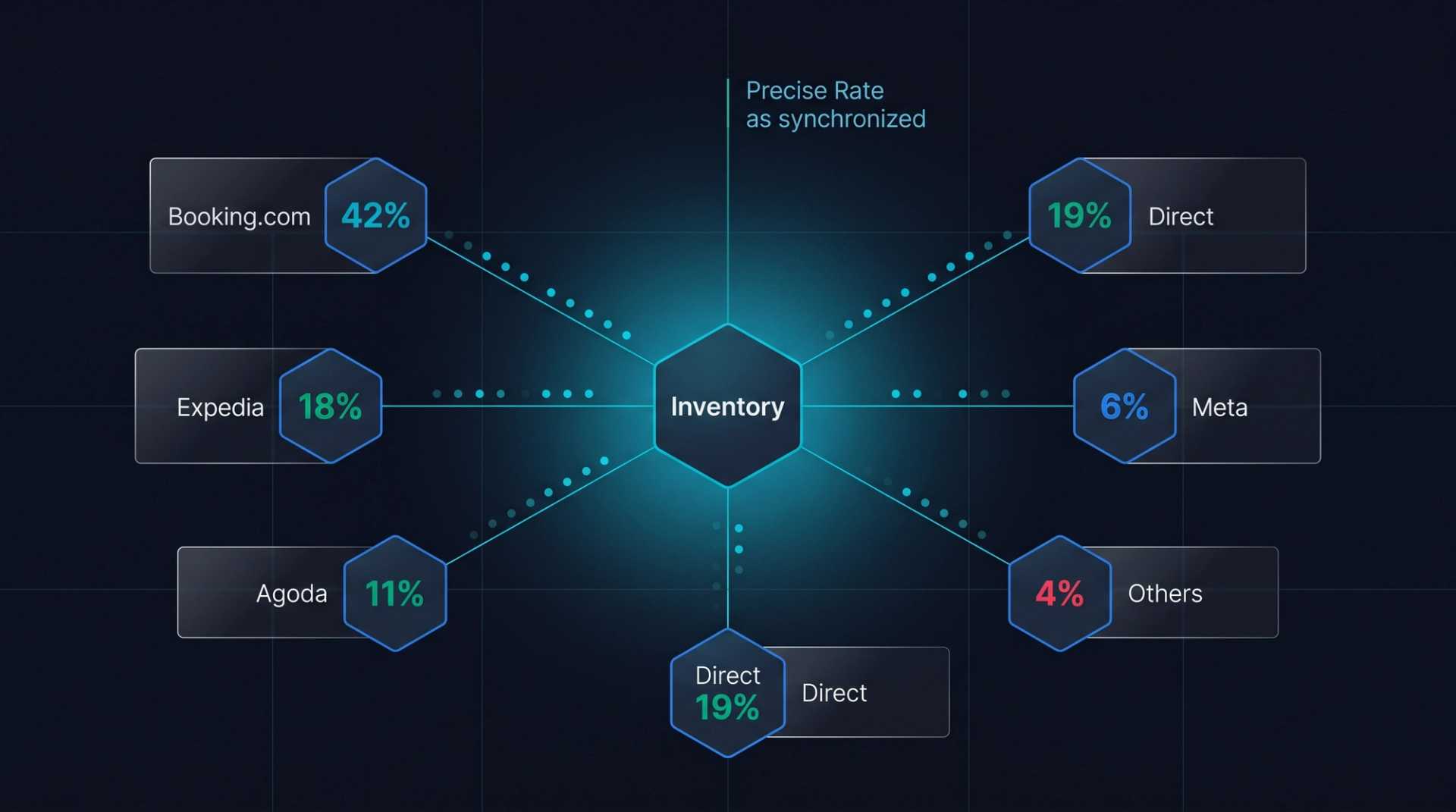
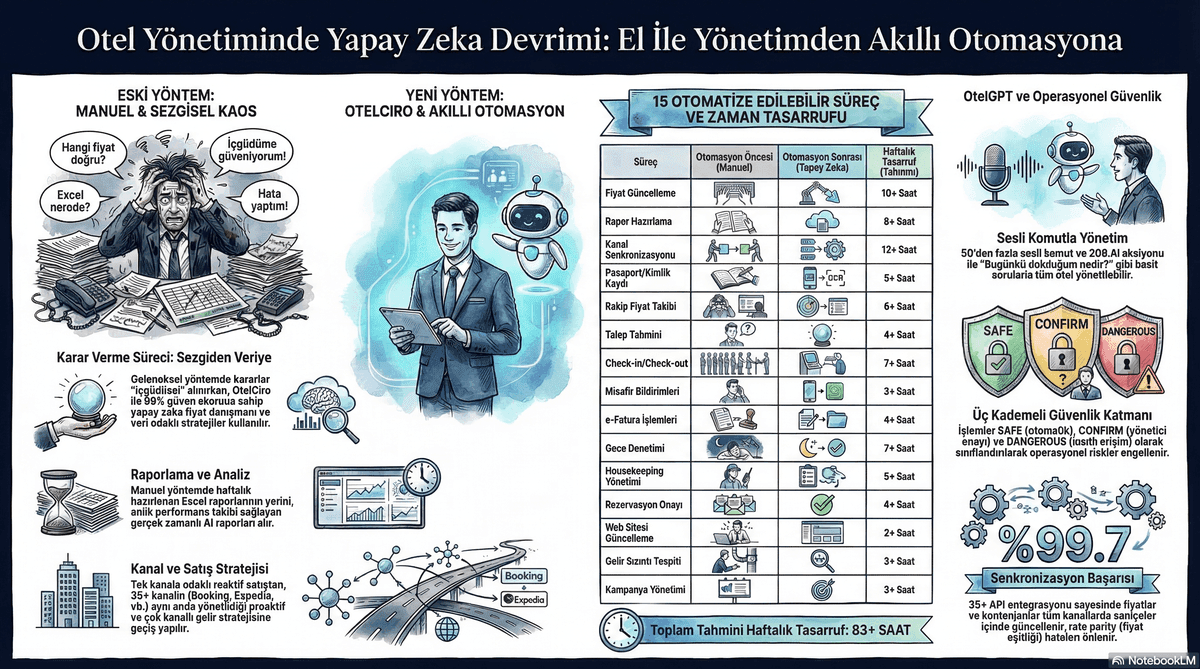
OtelCiro's AI Engine module offers machine learning-based demand forecasting and price optimization. By analyzing hundreds of variables in real-time, it generates optimum price recommendations for every date and room type.
ML-Powered Revenue Management with OtelCiro AI Engine
Conclusion
Machine learning represents a revolutionary technological shift in hotel revenue management. The transition from Excel spreadsheets to AI-powered forecasting systems is a complex process, but its benefits are tangible and measurable.
You don't have to immediately transition to a full ML system. Start with rule-based automation, improve your data quality, and gradually integrate ML predictions.
Discover how you can automate this process with OtelCiro's AI Engine.
![Europe's Hotel Construction Boom: 2026 Oversupply Risks [Market Analysis]](https://cdn.sanity.io/images/1la98t0z/production/6dfe59137f56aa14bfcba86d9db3cf05ff89f406-2752x1536.jpg?w=1920&q=50&auto=format&fit=max)