![Hotel Lobby Experience 2026: Design for Engagement [Strategy Guide]](https://cdn.sanity.io/images/1la98t0z/production/d946122165ef371d14a3404145c2938b422ddec7-1200x669.png?w=1920&q=65&auto=format&fit=max)
Key Takeaways
- Lobby Evolution: By 2026, hotel lobbies are transforming from traditional waiting areas into dynamic, multi-functional spaces that facilitate living, working, socializing, and revenue generation.
- Strategic Zoning: Effective modern lobby design incorporates five distinct zones—welcome, co-working, socializing, F&B, and art/culture—to cater to diverse guest needs and behaviors.
- Integrated Technology: Smart lobbies leverage hidden technology like intelligent lighting (extending usage by 25%), ambient sound, digital concierges, and scent marketing (boosting brand recall by 35%) for enhanced guest engagement.
- Diverse Revenue Opportunities: Beyond F&B, lobbies can become significant profit centers through models like co-working memberships, pop-up shops, event space rentals, and curated experience packages.
- Performance Optimization: Hotels consistently tracking metrics such as dwell time, F&B revenue per seat, and co-working utilization rates can improve lobby experience and revenue by 35% within 6 months.
The Lobby: The Face, Soul, and First Impression of a Hotel
The lobby is the area that most clearly reflects a hotel's DNA. The moment a guest steps through the door, the lobby's atmosphere encapsulates the hotel's entire promise in a matter of seconds. However, in 2026, the concept of the lobby is undergoing a radical transformation: evolving from its traditional role as a "reception and waiting area" into a multi-functional experience space that is living, working, socializing, and revenue-generating.
According to JLL Hotels & Hospitality's 2025 report, hotels investing in the lobby experience have a general satisfaction score that is 0.6 points higher (out of 5). Even more striking is that hotels with a good lobby experience see F&B revenue that is 22% higher—because guests are more likely to spend money the longer they spend time in the lobby.
In Turkey, however, a "display" oriented approach still dominates lobby design: giant chandeliers, marble floors, and massive empty spaces that make guests feel small. While this "wow effect" works for the first 10 seconds, after 10 minutes, guests are left wondering, "What do I do here?"
Embed this image on your site
<a href="https://otelciro.com/en/news/hotel-lobby-experience-2026-design-for-engagement-strategy-guide">
  <img src="https://cdn.sanity.io/images/1la98t0z/production/d946122165ef371d14a3404145c2938b422ddec7-1200x669.png" alt="Hotel Lobby Experience Infographic" width="800" />
</a>
<p>Source: <a href="https://otelciro.com">OtelCiro</a> — AI Hotel Revenue Management</p>
Related reading: Check-in Experience Design: First Impressions Are Everything
Lobby Zoning: Five Functions, One Space
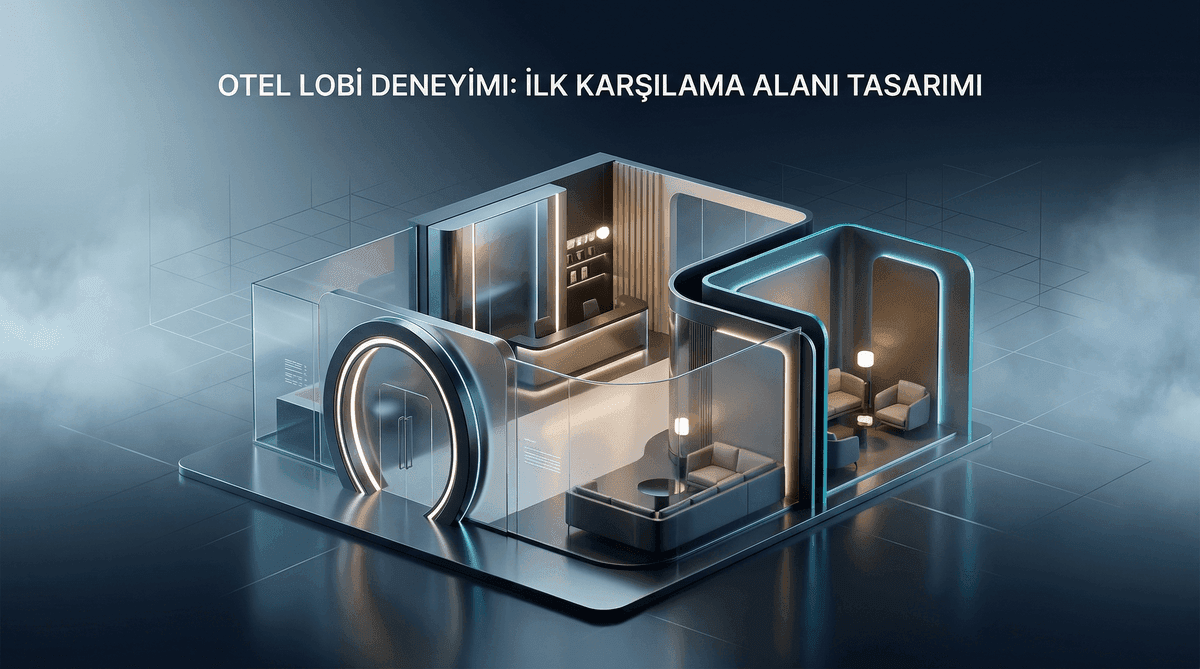
Modern lobby design should be divided into zones that meet different needs. Each zone supports a different guest behavior:
1. Welcome and Guidance Zone
The first 5 meters from the entrance is the guest's navigation and initial contact point:
- Clear line of sight to easily locate the reception
- Digital information screen (hotel services, weather, event calendar)
- Welcome scent (scent marketing — reinforcing brand identity with fragrance)
- Preference for natural lighting (alignment with guest's biological clock)
Research shows that guests entering the lobby form their overall impression within the first 3 seconds through visuals, followed by scent in the next 2 seconds, and sound within 5 seconds.
2. Co-Working and Digital Workspace
With the rise of the bleisure (business + leisure) trend, 64% of business travelers are looking for workspaces in the lobby:
- Ergonomic chair and desk arrangements
- Fast and reliable Wi-Fi (minimum 100 Mbps)
- Power outlets and USB charging points at every desk
- Quiet zone and phone booths
- Printer and scanner access
- Coffee and light snack service
Hotels with co-working spaces have an 18% higher market share in the business travel segment. This area can also serve as an additional revenue stream by selling memberships to local entrepreneurs and freelancers—500-1,500 TL per person monthly.
3. Socializing and Waiting Area
Comfortable seating arrangements where guests can interact with each other or with locals:
- Various seating options (single armchairs, two-seater sofas, group benches)
- Communal table concept (large dining table style, conversation-starter)
- Fireplace or water feature (visual and auditory tranquility)
- Book and magazine corner
- Board game access
4. Lobby Bar and F&B Point
The revenue-generating heart of the lobby:
- Coffee-cocktail bar (morning coffee, evening cocktail transition)
- Light meal menu (all-day dining concept)
- Display patisserie or bakery (visual and olfactory impact)
- Open kitchen or barista performance
Lobby bar revenue can constitute 20-35% of total F&B revenue. The key is to position the lobby bar not as a "temporary stop" but as a "destination."
5. Art and Culture Corner
An area reflecting the hotel's cultural identity:
- Works by local artists (seasonal exhibition)
- Displays of regional handicrafts
- Digital art installations
- Book exchange shelf
Related reading: Local Experience Packages: Authentic Activity Design
Technology Integration: The Smart Lobby
A modern lobby should be equipped with unseen but felt technology:
Smart lighting: Automatic color temperature adjustment according to daylight and time. Energetic white tones in the morning, warm amber tones in the evening. This transition extends guest lobby usage by 25%.
Ambient sound design: Background music or nature sounds that change with the time of day. Bird sounds in the morning, soft jazz at noon, lounge music in the evening. Sound level should not exceed 45 dB.
Digital concierge: Interactive screen or tablet located in the lobby area providing hotel services, local information, restaurant recommendations, and reservations. 30% of guests prefer digital concierge over going to the reception.
Scent marketing: A diffuser system that continuously disperses the hotel's brand scent throughout the lobby area. Research indicates that a consistent scent identity increases brand recall by 35%. 80% of world-renowned hotel chains use a unique scent profile.
With OtelCiro operations management](/tr/ecosystem/operations), you can track lobby area usage data, F&B performance, and guest interaction metrics in real-time.
Lobby Revenue Models
Creative ways to generate revenue from the lobby area:
Pop-up stores: Periodically leasing space in the lobby corner to local brands. Monthly rental income: 5,000-20,000 TL. A win-win for both revenue and guest experience.
Event space rental: Leasing the lobby area for launches, networking, or private events in the evening. Revenue per event: 10,000-50,000 TL.
Lobby experience packages: Themed experiences such as "Lobby afternoon tea," "Lobby wine tasting," or "Lobby jazz night." Per person: 300-800 TL.
Advertising and sponsorship: Local business advertisements or brand sponsorship on digital screens. Monthly revenue: 3,000-10,000 TL.
Measurement and Optimization
To measure the effectiveness of the lobby experience:
- Dwell time: Average time guests spend in the lobby (target: over 20 minutes)
- Lobby F&B revenue: Average daily revenue per seat
- Co-working utilization rate: Desk occupancy and average sitting time
- Guest feedback: Lobby atmosphere and service scores
- Social media sharing: Number of shares and reach from the lobby
Hotels that track these metrics weekly report that they improved their lobby experience and revenue by 35% within 6 months.
Conclusion: The Lobby Is Not a Transition Area, It Is an Experience Area
In 2026, successful hotels are those that transform the lobby from "a corridor to pass through on the way to the elevator" into "a place I want to be." With functional zoning, technology integration, F&B experiences, and cultural touches, the lobby becomes the hotel's most valuable and most memorable area.
Remember: Guests sleep in their rooms, eat in the restaurant, swim in the pool—but they live in the lobby. Spaces lived in are remembered, and remembered places are revisited.
![Europe's Hotel Construction Boom: 2026 Oversupply Risks [Market Analysis]](https://cdn.sanity.io/images/1la98t0z/production/6dfe59137f56aa14bfcba86d9db3cf05ff89f406-2752x1536.jpg?w=1920&q=50&auto=format&fit=max)