Key Takeaways
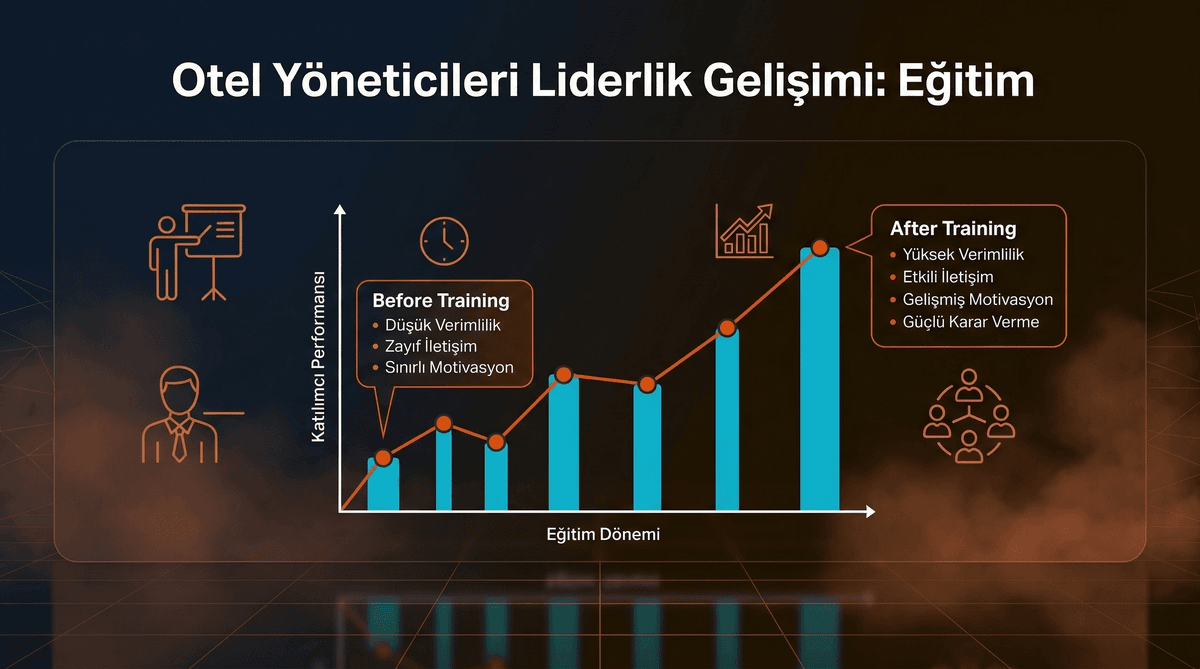
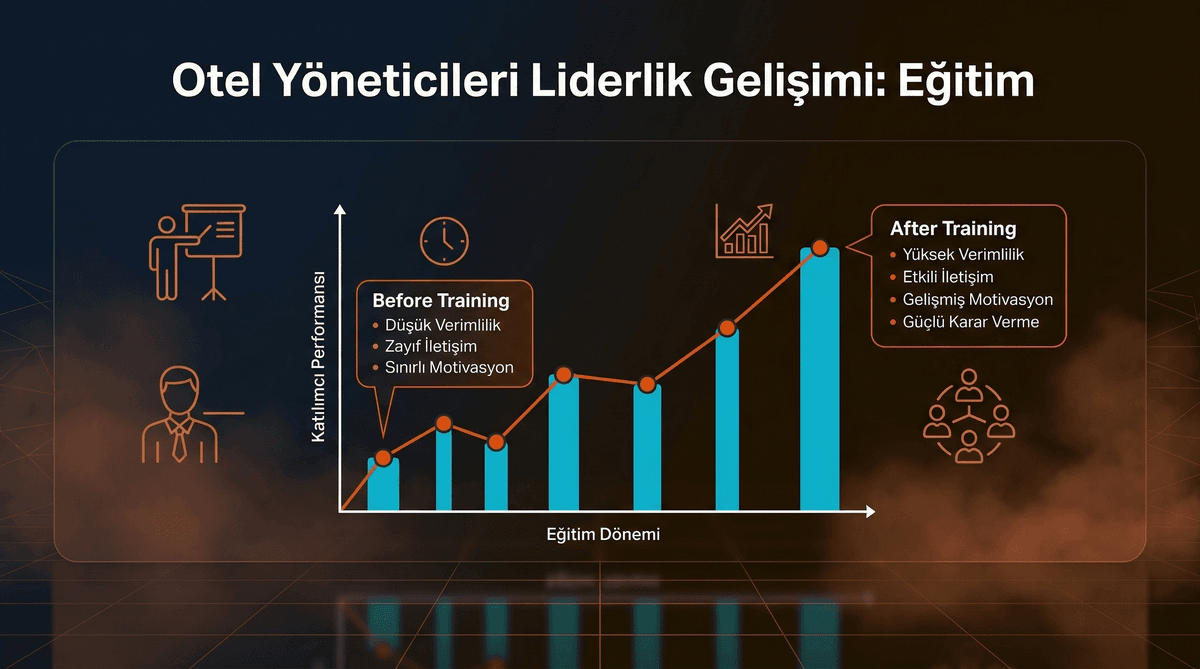
- The hospitality sector faces a significant leadership gap, often promoting skilled specialists without adequate leadership training, leading to high turnover and inefficiencies.
- Effective hotel leadership requires unique competencies like emotional intelligence, situational leadership, multicultural management, operational agility, and financial literacy.
- A structured, multi-tiered leadership development program (for new, experienced, and senior managers) tailored to the specific needs of the hotel industry is crucial.
- Implement a "70-20-10" learning model, prioritizing on-the-job experience (70%), mentorship/coaching (20%), and formal training (10%) for lasting impact.
- Measure the program's ROI using the Kirkpatrick model and tangible metrics like reduced staff turnover (20-35%), increased employee engagement (25-30%), and improved guest satisfaction (8-15%).
The Leadership Gap in Hospitality
The hospitality sector often has a structure where technical expertise is high, but opportunities for leadership skill development are limited. A successful front desk agent is promoted to front office manager, an experienced chef to kitchen head; however, these promotions often occur without sufficient leadership training. As a result, the industry loses a good specialist and gains an inadequate manager.
According to Korn Ferry research, 62% of mid-level managers in the hospitality sector were promoted to management positions without receiving any leadership training. Of these managers, 71% reported feeling inadequate in areas such as team management, conflict resolution, and strategic planning. This situation directly contributes to increased staff turnover rates, declining service quality, and operational inefficiency.
Studies show that 52% of employees leave their jobs due to their managers. This rate is almost three times higher than those who leave due to salary (19%). Therefore, investing in leadership development is the most effective way to reduce staff turnover costs.
Embed this image on your site
<a href="https://otelciro.com/en/news/hotel-leadership-development-a-2026-strategy-guide">
  <img src="https://cdn.sanity.io/images/1la98t0z/production/61de7a5f71a1d1f13f70267fda323a756004040b-1200x669.png" alt="Liderlik Gelişimi Otel Yöneticileri" width="800" />
</a>
<p>Source: <a href="https://otelciro.com">OtelCiro</a> — AI Hotel Revenue Management</p>
Related reading: Exit Interview Analysis: Understanding the Causes of Staff Loss
Hotel-Specific Leadership Competencies
Hotel management requires different competencies compared to management roles in other industries. 24/7 operations, high staff turnover, seasonal demand fluctuations, and instantaneous guest expectations are factors that make hotel leadership unique.
Core Leadership Competencies
Emotional intelligence: In hospitality, managers must manage the emotional states of both employees and guests. Remaining calm in a stressful kitchen environment, approaching an angry guest with empathy, and motivating a low-morale employee make emotional intelligence the most critical competency in the sector.
Situational leadership: Applying different leadership styles to different employees and situations is imperative in hospitality. A coaching approach might be suitable for an experienced chef, while a directive approach may be necessary for a new intern. Authoritative leadership is required during a crisis, whereas participatory leadership is more effective in a strategic planning meeting.
Multicultural management: Hotel managers serving international guests and working with multicultural teams must be competent in cultural awareness and sensitivity.
Operational agility: Plans can change instantly; situations like group cancellations, surprise VIP arrivals, or technical malfunctions require quick decision-making and adaptability.
Financial literacy: The ability to understand financial metrics such as RevPAR, ADR, GOP, EBITDA, and make operational decisions based on these metrics is essential for managers at all levels.
Designing a Leadership Development Program
An effective leadership development program should be designed with a long-term perspective, balancing theory and practice, and enriched with hotel-specific case studies.
Tier-Based Program Structure
Level 1: New Managers (Supervisor / Assistant Manager)
A 3-month foundational program for employees transitioning into management for the first time:
- Transition to a managerial role: Mental shift from specialist to leader
- Basic communication skills: Giving feedback, active listening, difficult conversations
- Time and priority management: Strategic thinking amidst operational hustle
- Fundamental team management: Task delegation, motivation techniques, performance tracking
- Legal knowledge: Labor law, social security, anti-mobbing regulations
Level 2: Experienced Managers (Department Head)
A 6-month advanced program for employees with 2+ years of management experience:
- Strategic thinking and planning
- Financial management and budgeting
- Change management and organizational transformation
- Conflict resolution and negotiation skills
- Interdepartmental collaboration and project management
Level 3: Senior Management (General Manager / Regional Manager)
A continuous development program for top-level leaders:
- Vision setting and strategic direction
- Employer branding and organizational culture building
- Crisis management and media relations
- Innovation management and digital transformation leadership
- Mentorship and coaching skills
Related reading: Diversity and Inclusion: Hotel Workforce Policies
Training Methods and Tools
Classroom training alone is insufficient. Implementing the "70-20-10" model increases learning retention: 70% of learning occurs through on-the-job experience, 20% through mentorship and coaching, and 10% through formal education.
On-the-Job Learning (70%)
- Stretch assignments: Taking on projects outside the manager's comfort zone. For example, a front office manager leading a food & beverage renovation project.
- Job rotation: Working in different departments or different properties for specific periods to broaden perspective.
- Job shadowing: Learning by observing successful senior managers. A powerful tool, especially for new managers.
Mentorship and Coaching (20%)
Mentorship program: Assigning an experienced mentor to each new manager. The mentor-mentee relationship should last at least 6 months with regular monthly meetings. Hotels implementing mentorship programs have a 40% higher manager success rate.
Professional coaching: Working with an external professional coach enhances a manager's self-awareness and develops their leadership style. Managers who receive coaching show an average 28% increase in performance.
Peer learning groups: Structured groups where managers at the same level regularly meet to share their experiences, challenges, and solutions.
Formal Training (10%)
- Certificate programs (online programs from institutions like Cornell, AHLA, EHL)
- Participation in industry conferences and seminars
- E-learning platforms and micro-learning modules
- Case study workshops
Performance Coaching and Feedback Culture
One of the most critical components of leadership development is for managers to acquire the ability to provide effective feedback to their employees. Performance coaching is a continuous, development-oriented feedback approach that goes beyond the formal annual appraisal.
SBI Model (Situation-Behavior-Impact)
One of the most effective methods for giving feedback is the SBI model:
- Situation: "During yesterday's VIP guest check-in..."
- Behavior: "You noted the guest's special request and immediately communicated it to housekeeping."
- Impact: "As a result, when the guest arrived in their room, they found their request had been met and were very satisfied."
This model makes both positive and constructive feedback concrete and understandable. The quality of feedback from managers who receive SBI model training increases by 45%.
Regular One-on-One Meetings
Every manager holding bi-weekly, 15-30 minute one-on-one meetings with each team member forms the foundation of the leadership relationship. These meetings are not performance evaluations but rather development and support-focused conversations.
Measuring Program ROI
Measuring the return on investment (ROI) of a leadership development program is critical for its sustainability.
Evaluation with the Kirkpatrick Model
- Level 1 - Reaction: Participant satisfaction with the training (target: 90%+ positive evaluation)
- Level 2 - Learning: Measurement of knowledge and skill acquisition (pre-post test comparison)
- Level 3 - Behavior: Change in workplace behavior (via 360-degree feedback)
- Level 4 - Results: Impact on business outcomes (staff turnover, satisfaction, revenue metrics)
Tangible Metrics
Measurable outcomes of a leadership development program:
- Staff turnover rate in departments led by participating managers decreases by 20-35%.
- Employee engagement score (eNPS) increases by 25-30%.
- Guest satisfaction scores rise by 8-15%.
- Internal promotion rate increases by 40% (reducing the need to search for external managers).
- Operational efficiency indicators improve by 10-18%.
You can measure the operational impact of your leadership development program by monitoring department performance metrics with OtelCiro's operations management solutions. Strong leaders build strong hotels. Investing in leadership development is the most strategic investment a hotel can make in its most valuable asset: its people.
![Europe's Hotel Construction Boom: 2026 Oversupply Risks [Market Analysis]](https://cdn.sanity.io/images/1la98t0z/production/6dfe59137f56aa14bfcba86d9db3cf05ff89f406-2752x1536.jpg?w=1920&q=50&auto=format&fit=max)