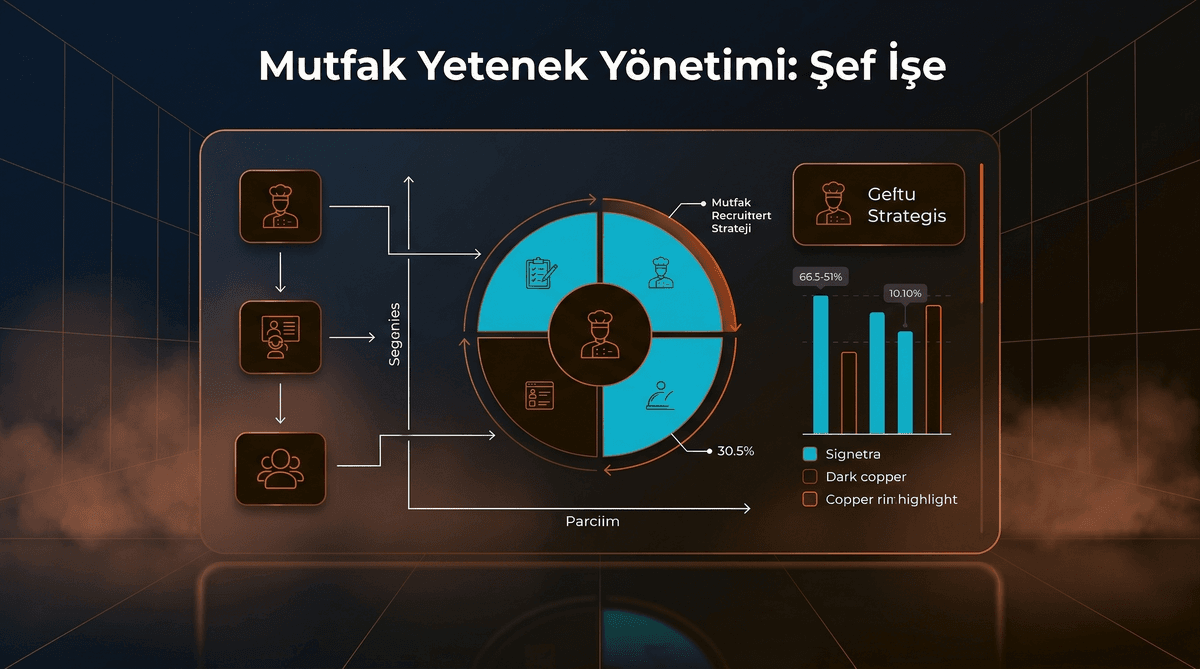
![Hotel Kitchen Recruitment & Talent Management [Strategy Guide]](https://cdn.sanity.io/images/1la98t0z/production/0ea9dc3fe420d62ae1027447ac3be9d9c89e4fc5-1200x669.png?w=1920&q=65&auto=format&fit=max)
Key Takeaways
- Address the current 35% chef shortage through proactive talent sourcing and relationship management.
- Recognize that kitchen quality accounts for 40% of the guest experience and directly impacts reputation scores.
- Implement a 4-stage evaluation process—including a practical "stage"—to reduce hiring errors by 55%.
- Combat the 60% turnover rate caused by lack of growth through clear career mapping and progression paths.
- Utilize AI-driven demand forecasting to reduce kitchen waste by 20-30% and optimize food costs.
The War for Talent in the Hotel Kitchen
Hotel kitchens are the most challenging departments for finding qualified personnel in the hospitality industry. In Turkey, the shortage of experienced chefs has reached 35%, and this rate continues to rise annually. As gastronomy tourism grows, the demand for talented chefs comes not only from hotels but also from independent restaurants, catering firms, and international brands.
Embed this image on your site
<a href="https://otelciro.com/en/news/hotel-kitchen-recruitment-talent-management-strategy-guide">
  <img src="https://cdn.sanity.io/images/1la98t0z/production/0ea9dc3fe420d62ae1027447ac3be9d9c89e4fc5-1200x669.png" alt="Chef and Talent Management Infographic" width="800" />
</a>
<p>Source: <a href="https://otelciro.com">OtelCiro</a> — AI Hotel Revenue Management</p>
A hotel's kitchen quality constitutes 40% of the overall guest experience. According to TripAdvisor data, 32% of hotel reviews mention the food and beverage experience, making it the category that most influences the general rating. Finding and retaining the right chef directly impacts not only F&B revenue but also the hotel's total reputation.
In this article, we examine strategic talent management, recruitment processes, and career development programs for the hotel kitchen in detail.
Related reading: Hotel Staff Retention Strategies: AI-Powered Solutions
Strategic Planning of Kitchen Staffing
Building a hotel kitchen staff requires different dynamics than a standalone restaurant. Providing service across a wide spectrum—from breakfast to gala dinners, room service to pool bar menus—hotel kitchens require versatile talent.
Staffing Structure and Position Definitions
The modern hotel kitchen hierarchy includes the following positions:
- Executive Chef: The strategic leader managing the culinary side of the entire F&B operation.
- Sous Chef: The right hand of the executive chef, managing daily operations.
- Chef de Partie: Responsible for specific sections (hot, cold, pastry, grill).
- Demi Chef: Assistant to the section chef, a chef in the development stage.
- Commis: An entry-level cook at the beginning of their career.
- Intern: Students from tourism and gastronomy schools.
Distinct competency profiles, experience expectations, and career paths should be defined for each position.
Needs Analysis
Kitchen staffing needs are determined by the following factors:
| Factor | Calculation Criteria |
|---|---|
| Number of Outlets | Separate teams for each restaurant/bar |
| Service Hours | 24/7 room service vs. dinner only |
| Menu Complexity | A la carte vs. buffet vs. both |
| Seasonal Changes | Winter/Summer staffing variance |
| Banquet Capacity | Backup capacity for major event periods |
OtelCiro's operations management system automatically calculates kitchen staffing needs based on occupancy forecasts and F&B revenue targets.
Talent Discovery and Candidate Sourcing
The biggest challenge in finding qualified chefs is that top talent is rarely actively looking for work. Proactive talent discovery strategies are essential.
Traditional Sources
- Gastronomy Schools: Over 80 gastronomy departments in Turkey serve as sources for internships and employment.
- Hotel Schools: F&B management programs at tourism faculties.
- Industry Associations: Chefs' associations and culinary platforms.
- Competitions: Identifying talent at regional and national culinary competitions.
Modern Sources
- Social Media: Tracking talent via Instagram culinary accounts.
- Culinary Events: Networking at food festivals and chef’s table events.
- Referral Networks: Finding candidates through the acquaintances of current chefs (50% more successful).
- International Platforms: English-language job boards for chefs seeking global culinary experience.
Passive Candidate Management
Tracking talent you may not want to hire immediately but wish to work with in the future is a critical strategy. An AI-supported candidate tracking system:
- Monitors the career movements of potential candidates.
- Sends automatic notifications when a candidate signals they may be leaving their current job.
- Creates a relationship maintenance schedule (communicating 2-3 times a year).
Interview and Evaluation Process
A classic interview is not enough for kitchen recruitment. Practical competence must be tested in a real environment.
Four-Stage Evaluation
Stage 1: Portfolio Review
- Past menu designs.
- Food styling and presentation photos.
- Ratings of previous workplaces.
- Awards and certifications received.
Stage 2: Technical Interview
- Menu cost calculation competency (food cost target 28-32%).
- Knowledge of HACCP and food safety.
- Experience in supply chain management.
- Ability to plan menus based on season and region.
Stage 3: Practical Exam (Stage)
- 2-4 hour kitchen application.
- Creative dish preparation using specified ingredients.
- Observation of time management and performance under stress.
- Evaluation of team communication and leadership behavior.
Stage 4: Cultural Fit
- Alignment between the candidate’s philosophy and the hotel’s gastronomic vision.
- Meeting the existing team and assessing compatibility.
- Alignment of long-term career goals with hotel plans.
This four-stage process reduces hiring errors by 55%.
Related reading: Hotel Staff Performance Evaluation: A Fair and Effective System
Career Development and Retention Strategies
Retaining talented chefs requires a strategic approach as much as attracting them does. 60% of kitchen staff turnover is due to a lack of career development and the feeling of not being appreciated.
Career Roadmap
A clear path of progression should be defined for every position:
- Commis → Demi Chef: 1-2 years, developing core competencies.
- Demi Chef → Chef de Partie: 2-3 years, experience in section management.
- Chef de Partie → Sous Chef: 3-5 years, leadership and menu development.
- Sous Chef → Executive Chef: 5-8 years, strategic management and business development.
Concrete criteria, training requirements, and evaluation processes must be defined for each transition.
Development Programs
- Internship Rotation: Periodic work in different kitchen sections.
- External Training Budget: 1-2 culinary trainings or workshops per year.
- Menu Development Projects: Opportunities for young chefs to design special menus.
- International Experience: Sister property exchange programs in chain hotels.
- Competition Support: Sponsorship for participation in national and international competitions.
Motivation Tools
- Chef’s Special Menu: An opportunity for a chef to present their own menu every month.
- Supplier Trips: Visits to local producers and farm tours.
- Social Media Promotion: Sharing chefs' stories on the hotel’s digital channels.
- Bonus System: Performance bonuses for the team when food cost targets are met.
Kitchen Management with Technology
Modern kitchen management cannot be considered separate from technology. AI-supported systems allow chefs to focus on creativity while automating routine tasks.
AI Contributions to Kitchen Operations
- Demand Forecasting: Production quantity suggestions based on occupancy and guest profiles.
- Food Cost Optimization: Menu suggestions based on ingredient price changes.
- Waste Reduction: Reducing waste by 20-30% through consumption pattern analysis.
- Recipe Standardization: Standard recipe management for consistent quality.
- Procurement Automation: Automatic order creation based on stock levels.
OtelCiro's operations management platform digitalizes kitchen operations, lightening the administrative burden on chefs and allowing them more time for creativity.
Related reading: Career Paths in the Hospitality Sector: Development Map
![Europe's Hotel Construction Boom: 2026 Oversupply Risks [Market Analysis]](https://cdn.sanity.io/images/1la98t0z/production/6dfe59137f56aa14bfcba86d9db3cf05ff89f406-2752x1536.jpg?w=1920&q=50&auto=format&fit=max)