![Hotel Guest Expectation Management: Rapid Response Strategy [2026 Guide]](https://cdn.sanity.io/images/1la98t0z/production/f15b44e0c2cfc166fa2e4a512192c20be9ea826b-1200x669.png?w=1920&q=65&auto=format&fit=max)
Key Takeaways
- Proactive expectation management is critical, as 68% of guest complaints arise from unmet expectations, not service failures.
- Manage expectations across four key stages: research, reservation, pre-arrival, and in-stay, with specific strategies for each.
- Implement a rapid response system to guest inquiries, aiming for under 5 minutes, to boost guest satisfaction by 40%.
- Practice transparent communication, proactively delivering any bad news to reduce disappointment by 60%, and using the LEARN model for resolving issues.
- Create memorable "wow" moments through micro-surprises and personalization, which can increase repeat visits by 30%.
The Gap Between Expectation and Reality
From the moment a guest steps into your hotel, an expectation map is active in their mind. This map is shaped by photos on the website, OTA reviews, social media posts, and personal experiences. The problem is that every negative difference between this expectation and reality directly translates into dissatisfaction.
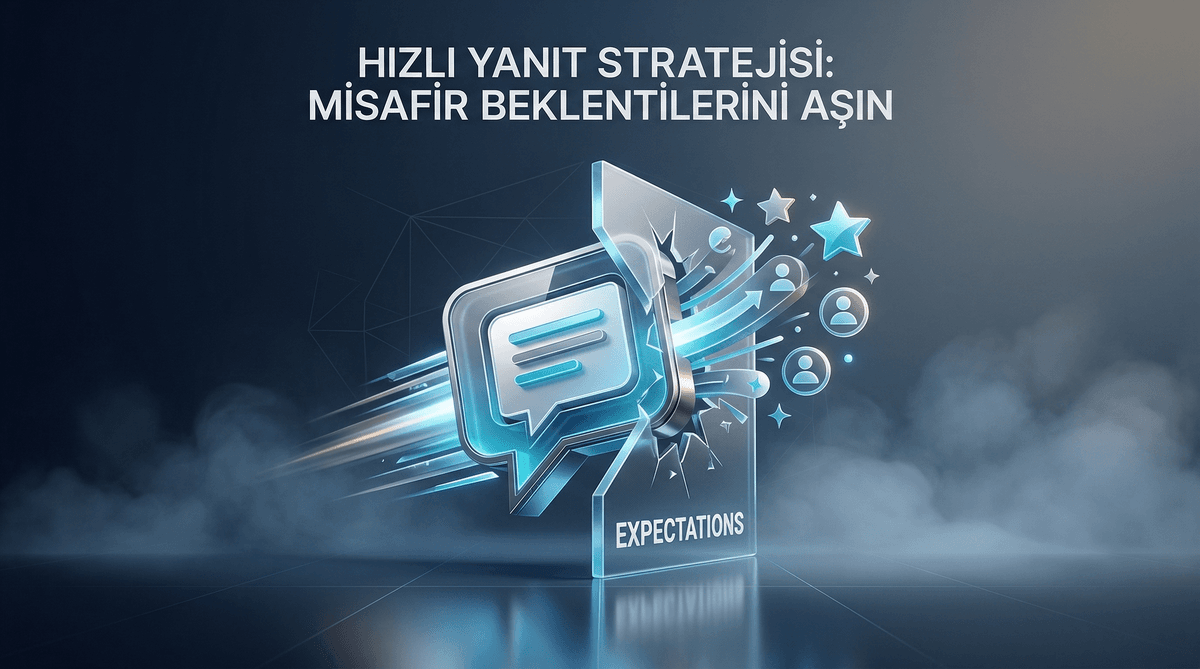
According to research, 68% of guest complaints stem from a lack of expectation management — meaning it's not due to poor service quality, but rather incorrectly set expectations. This striking statistic demonstrates why expectation management is as crucial as operational excellence.
Embed this image on your site
<a href="https://otelciro.com/en/news/hotel-guest-expectation-management-rapid-response-strategy-2026-guide">
  <img src="https://cdn.sanity.io/images/1la98t0z/production/f15b44e0c2cfc166fa2e4a512192c20be9ea826b-1200x669.png" alt="Guest Expectation Management Infographic" width="800" />
</a>
<p>Source: <a href="https://otelciro.com">OtelCiro</a> — AI Hotel Revenue Management</p>
In this article, we explore how you can proactively manage guest expectations, set up rapid response systems, and turn negative situations into opportunities.
Related reading: The Real Cost of a Bad Review
Stages of Expectation Formation and Management
Guest expectations are shaped in four stages, and different management strategies should be applied at each stage:
Stage 1 — Research and discovery: The guest discovers your hotel on OTAs, Google, or social media. At this stage, photos, descriptions, and reviews determine expectations. It is critical for photos to be realistic and up-to-date. Overly retouched or old photos are the most common cause of the expectation-reality gap.
Stage 2 — Reservation and confirmation: The confirmation message sent after a reservation is complete is an opportunity to clarify expectations. Room type, included services, check-in time, and transportation information should be shared clearly and concisely. A lack of information at this stage accounts for 23% of guest complaints.
Stage 3 — Pre-arrival: A message sent 24-48 hours before check-in should gather the guest's special requests and remind them of the experiences your hotel offers. OtelGPT AI assistant automates this communication, ensuring consistency.
Stage 4 — During stay: While the guest is at the hotel, expectations should be monitored and managed in real-time. A brief conversation at check-in is the most effective way to understand the guest's expectations.
Setting Up a Rapid Response System
Response speed to guest requests is a direct factor influencing satisfaction. Research shows that reducing the first response time to under 5 minutes increases guest satisfaction by 40%.
Multi-channel communication infrastructure: Guests want to communicate through various channels — WhatsApp, hotel app, phone, front desk, email. All these channels must be connected to a single central system, ensuring no message is lost.
Priority classification system: Classify every incoming request into three priority levels:
- Urgent (0-5 minutes): Safety, health, room access issues, AC/hot water malfunction
- High (5-15 minutes): Cleaning requests, missing amenities, noise complaints
- Normal (15-30 minutes): Information requests, restaurant recommendations, transportation inquiries
Automated responses and routing: AI-powered chatbots can answer 70% of frequently asked questions without human intervention. Standard questions like location information, Wi-Fi passwords, and restaurant hours are answered automatically, while complex requests should be routed to the correct department.
Follow-up and closure: Every request should be recorded, resolution time monitored, and a brief satisfaction confirmation obtained from the guest after the request is closed. Asking "Was your request resolved?" makes the guest feel valued.
Transparent Communication: Delivering Bad News Effectively
The most challenging aspect of expectation management is handling negative situations. The pool might be undergoing maintenance, the restaurant might be closed for renovation, or the requested room type might be unavailable. How you communicate these situations determines the outcome.
Proactive information rule: Deliver bad news before the guest discovers it. If the pool is undergoing maintenance, informing the guest before their stay, rather than when they arrive and see a closed pool, reduces disappointment by 60%.
Managing negative situations with the LEARN model:
- L (Listen): Listen to the guest, do not interrupt
- E (Empathize): Show empathy: "I understand, this situation is inconvenient"
- A (Apologize): Apologize: "We apologize for this situation"
- R (React): Offer a concrete solution: "We are preparing an upgraded room for you"
- N (Notify): Follow up on the outcome: "Is everything okay, do you need anything else?"
Compensation strategy: Proportional compensation should be offered for every negative situation. For minor inconveniences, a free drink or spa discount, and for major issues, a room upgrade or stay refund can be considered. The cost of compensation is typically 10% of the long-term revenue impact of a bad review.
Related reading: Reputation Management ROI: The Real Revenue Impact of Reviews
Exceeding Expectations: Creating 'Wow' Moments
The most powerful aspect of expectation management is not just meeting expectations, but exceeding them. Small but unexpected gestures leave a lasting impression in the guest's memory and generate organic marketing.
Micro-surprise system: Aim to offer at least one unexpected gesture to each guest during their stay. This could be a handwritten note left in the room, a birthday cake, a local delicacy, or a toy for children. These low-cost, high-impact gestures can increase satisfaction scores by 0.5 points.
Personalized touches: Utilize guest's previous stay data to offer personalized experiences. If they ordered red wine during their last visit, a complimentary bottle of red wine could be waiting in their room this time. Such personalization increases repeat visit rates by 30%.
Local experience integration: Suggest or organize local experiences that the guest might not discover on their own: a hidden local restaurant, a morning market tour, a workshop. These suggestions enrich the guest's travel experience and position your hotel as an experience curator.
Scaling Expectation Management with Technology
Manual expectation management might work for a 50-room boutique hotel, but for a property with 200+ rooms, a systematized approach is essential.
AI-powered sentiment analysis: AI that analyzes guest messages and reviews in real-time automatically triggers alarms upon detecting negative sentiment. When phrases like "disappointment" or "different from what I expected" are detected, the relevant department is immediately informed.
Guest profile management: A CRM system that creates and updates each guest's expectation profile scales personalization. Expectation management for a first-time guest should differ from that of a loyal guest on their fifth visit.
Performance dashboard: Rapid response times, resolution rates, satisfaction scores, and repeat visit rates should be monitored on a single dashboard. Departmental performance comparisons should be made, and monthly targets set.
Automated feedback loop: Short surveys (2-3 questions) sent after check-out are the most effective way to measure expectation management performance. The question "Did your stay meet your expectations?" provides more specific information than NPS.
Guest expectation management and a rapid response strategy are the most powerful tools for elevating your hotel's perceived service quality. Set expectations correctly, respond quickly, be transparent, and exceed expectations at every opportunity — your guests will reward you with both high ratings and repeat visits.
![Europe's Hotel Construction Boom: 2026 Oversupply Risks [Market Analysis]](https://cdn.sanity.io/images/1la98t0z/production/6dfe59137f56aa14bfcba86d9db3cf05ff89f406-2752x1536.jpg?w=1920&q=50&auto=format&fit=max)