![Hotel Dishwashing: Efficiency & Hygiene [2026 Guide]](https://cdn.sanity.io/images/1la98t0z/production/dccf68e6060cb4600577d3cffff7ad2f2366425f-2048x1143.png?w=1920&q=65&auto=format&fit=max)
Key Takeaways
- Hidden Cost Center: Hotel dishwashing operations, often overlooked, account for 12-18% of F&B costs and consume vast resources, with potential for 20-30% cost reduction through optimization.
- Workflow & Capacity are Core: Proper "dirty-to-clean" workflow design and capacity planning (120% of peak demand) are fundamental to boosting staff efficiency and preventing service delays.
- Smart Savings & Rapid ROI: Implementing water and energy-saving technologies like heat recovery systems and automatic chemical dosing can reduce consumption by up to 50% and offer an average ROI of 14-18 months.
- Non-Negotiable Hygiene: Strict adherence to HACCP-compliant temperature controls (82-85°C final rinse), regular testing, and proper chemical management are crucial for guest health and safety.
- Tech & Talent Integration: Modern IoT sensors, automation, predictive maintenance, and ergonomic work environments significantly enhance operational efficiency by 25% and reduce high staff turnover.
Dishwashing: Your Hotel's Hidden Cost Center
While hotel managers focus on revenue optimization, marketing, and guest experience, dishwashing operations are often overlooked. However, the numbers tell a different story: a mid-sized hotel's dishwashing area consumes an average of 2.5 million liters of water and 85,000 kWh of energy annually, constituting 12-18% of total F&B operational costs. With the right optimization strategies, it's possible to reduce these costs by 20-30%.
In 2026, sustainability pressures and rising energy prices have made dishwashing efficiency a strategic priority. According to data from the European Hotel Association, energy costs have increased by 45% in the last 3 years, and dishwashing operations are one of the areas most impacted by this increase.
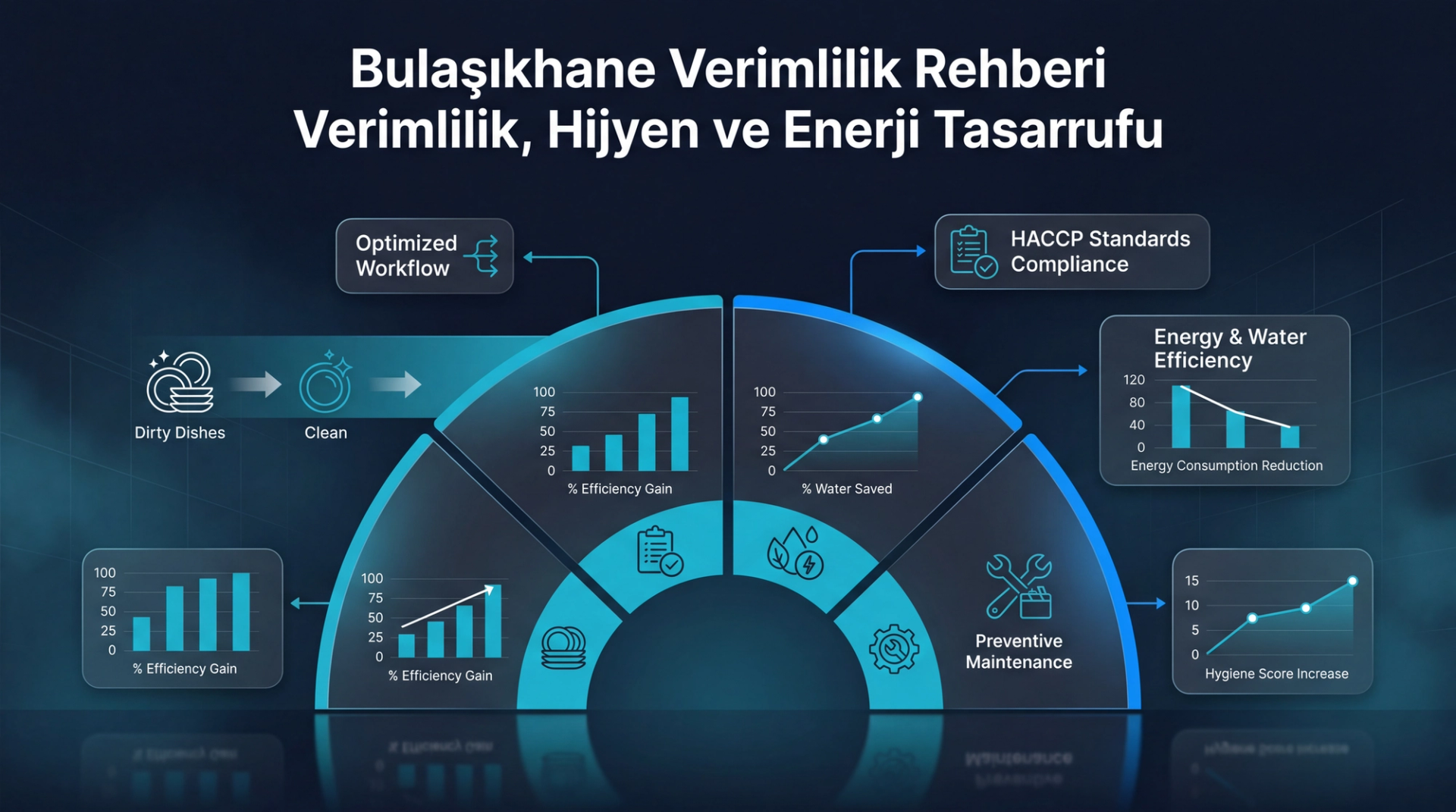
Embed this image on your site
<a href="https://otelciro.com/en/news/hotel-dishwashing-efficiency-hygiene-2026-guide">
  <img src="https://cdn.sanity.io/images/1la98t0z/production/dccf68e6060cb4600577d3cffff7ad2f2366425f-2048x1143.png" alt="Otel Bulaşıkhane Verimlilik ve Hijyen Optimizasyonu" width="800" />
</a>
<p>Source: <a href="https://otelciro.com">OtelCiro</a> — AI Hotel Revenue Management</p>
Related reading: Hotel Automation and Business Processes Guide
Workflow Design and Layout Optimization
The foundation of dishwashing efficiency lies in proper workflow design. A one-way flow, following the "dirty-in, clean-out" principle, must be ensured. This eliminates the risk of cross-contamination and prevents unnecessary staff movement.
An optimal dishwashing layout should include:
- Pre-wash area: Where food scraps are removed and initial rinsing occurs.
- Machine wash line: Where conveyor belt or rack-type dishwashers are positioned.
- Rinse and dry: The area where clean dishes are dried by air drying or hot rinsing.
- Storage area: A shelving system for organized storage of clean plates, glasses, and service equipment.
Research shows that a well-designed workflow increases staff efficiency by 35%. The distance an employee walks per wash cycle, which averages 45 meters in a poorly designed layout, decreases to 12 meters in an optimized layout.
Capacity Planning
Dishwashing capacity should be planned according to the hotel's F&B capacity:
| Hotel Segment | Daily Plate Capacity | Machine Type | Staff Requirement |
|---|---|---|---|
| 50-room boutique | 800-1,200 | Rack-type | 2-3 people |
| 150-room city | 2,500-4,000 | Conveyor belt | 4-6 people |
| 300-room resort | 6,000-10,000 | Flight-type | 8-12 people |
| 500+ room MICE | 12,000-20,000 | Multi-line | 15-20 people |
Inadequate capacity during peak hours leads to service delays and hygiene issues. Therefore, capacity planning should be based on 120% of the busiest period.
Water and Energy Saving Strategies
Dishwashing accounts for 15-25% of a hotel's total water consumption and 8-12% of its energy consumption. With modern technologies and correct practices, this consumption can be significantly reduced.
Water-saving methods:
- Heat recovery system: Use the heat from waste hot water to pre-heat fresh water. This system alone can reduce energy consumption by 30%.
- Automatic dosing: Control detergent and rinse aid dosing with automatic systems. Manual dosing leads to up to 40% excessive detergent use.
- Pre-wash optimization: Reduce water consumption by 50% with high-pressure, low-flow pre-rinse spray guns.
- Gray water recycling: Final rinse water can be reused in the pre-wash phase.
Energy-saving methods:
- Condensing heat recovery: Energy recovery from steam and hot air.
- Frequency-controlled pumps: Prevent unnecessary energy consumption with variable-flow pumps.
- Timing optimization: Plan intensive washing cycles outside peak electricity hours.
Calculated with energy prices in Turkey, the average return on investment for these measures is 14-18 months.
Hygiene Standards and HACCP Compliance
Dishwashing hygiene is critically important for guest health. 42% of foodborne illnesses originate from inadequate dishwashing and cleaning procedures.
Temperature Control Protocol
The most critical parameter for effective dishwashing is water temperature:
| Stage | Minimum Temperature | Duration | Purpose |
|---|---|---|---|
| Pre-wash | 35-40°C | 30 sec | Remove food residues |
| Main Wash | 55-65°C | 60-120 sec | Cleaning with detergent |
| Final Rinse | 82-85°C | 10-15 sec | Thermal disinfection |
| Drying | 60°C+ | Natural | Prevent bacterial growth |
Mandatory practices for HACCP compliance:
- Daily temperature records must be kept and stored digitally.
- Microbiological swab tests must be performed weekly.
- Detergent concentration tests must be checked every shift.
- Staff hygiene training must be renewed at least twice a year.
Chemical Management
Correct detergent selection is crucial for both hygiene and cost. Alkaline detergents are effective against protein and fat-based soiling, while acidic detergents dissolve limescale and mineral deposits. An alkaline and acidic wash rotation should be applied on a weekly basis.
Related reading: Hotel Cleaning Standard Operating Procedures (SOP)
Staff Management and Training
Dishwashing staff turnover is among the highest departments in the hospitality industry—an annual average of 65-80%. This translates to continuous training costs and loss of efficiency.
Ways to increase staff efficiency:
- Ergonomic work environment: Anti-fatigue mats, adjustable working heights, and proper ventilation.
- Shift planning: Allocate additional staff for peak hours (lunch: 1:00 PM-3:00 PM, dinner: 9:00 PM-11:00 PM).
- Performance metrics: Track dishes washed per hour, breakage/damage rate, absenteeism.
- Career path: Offer advancement opportunities such as dishwashing supervisor, or transition to kitchen assistant roles.
According to industry data, hotels that implemented ergonomic improvements saw a 40% reduction in staff turnover.
Technology and Automation Solutions
In 2026, dishwashing technology is rapidly evolving. Dishwashing performance can be monitored in real-time with operational management platforms.
Modern dishwashing technologies:
- IoT sensor-equipped machines: Instant monitoring of water temperature, detergent levels, and machine performance.
- Automatic basket system: Tracking wash cycles with RFID-tagged baskets.
- Energy monitoring dashboard: Real-time water and energy consumption data.
- Predictive maintenance: Sensor systems that detect machine malfunctions in advance.
The integration of these technologies can achieve a 25% increase in dishwashing operational efficiency and a 20% reduction in costs.
ROI Calculation Example
Dishwashing modernization investment for a 200-room city hotel:
| Item | Amount (TL) |
|---|---|
| Heat recovery system | 45,000 |
| Automatic dosing | 18,000 |
| IoT sensor package | 25,000 |
| Pre-rinse spray gun replacement | 8,000 |
| Total Investment | 96,000 |
| Annual Savings (water + energy + chemical) | 78,000 |
| Return on Investment Period | ~15 months |
Sustainability and Environmental Impact
Dishwashing optimization plays a significant role in reducing a hotel's environmental footprint. Dishwashing efficiency is one of the evaluation criteria for sustainability certifications (Green Key, EarthCheck, LEED).
- A waste oil collection and recycling system should be established.
- Biodegradable detergents should be preferred.
- Water consumption per room per day target: maximum 15 liters.
- Food waste composting should contribute to the zero-waste goal.
Sustainability-focused dishwashing management not only provides environmental benefits but also positively impacts guest perception. Research shows a 12% higher willingness to pay for green-certified hotels.
Conclusion and Action Plan
Dishwashing optimization is an area of operational improvement that yields high returns with low investment. Here are 5 steps you can start today:
- Measure your current water and energy consumption and compare it with benchmark values.
- Conduct a workflow analysis to identify unnecessary movements.
- Digitize temperature and detergent dosing records.
- Perform a staff ergonomics assessment.
- Track all dishwashing metrics from a single panel with the OtelCiro operational platform.
With the right optimization strategies, you can reduce your dishwashing costs by 25% while elevating your hygiene standards to an international level.
![Europe's Hotel Construction Boom: 2026 Oversupply Risks [Market Analysis]](https://cdn.sanity.io/images/1la98t0z/production/6dfe59137f56aa14bfcba86d9db3cf05ff89f406-2752x1536.jpg?w=1920&q=50&auto=format&fit=max)